Section IV

The Human Figure

The White Figure · The Angel · The Child · The Crowned · The Couple · The Hanged · The Dancer

The Woman in White

The Soul's Direct Image
Appears In

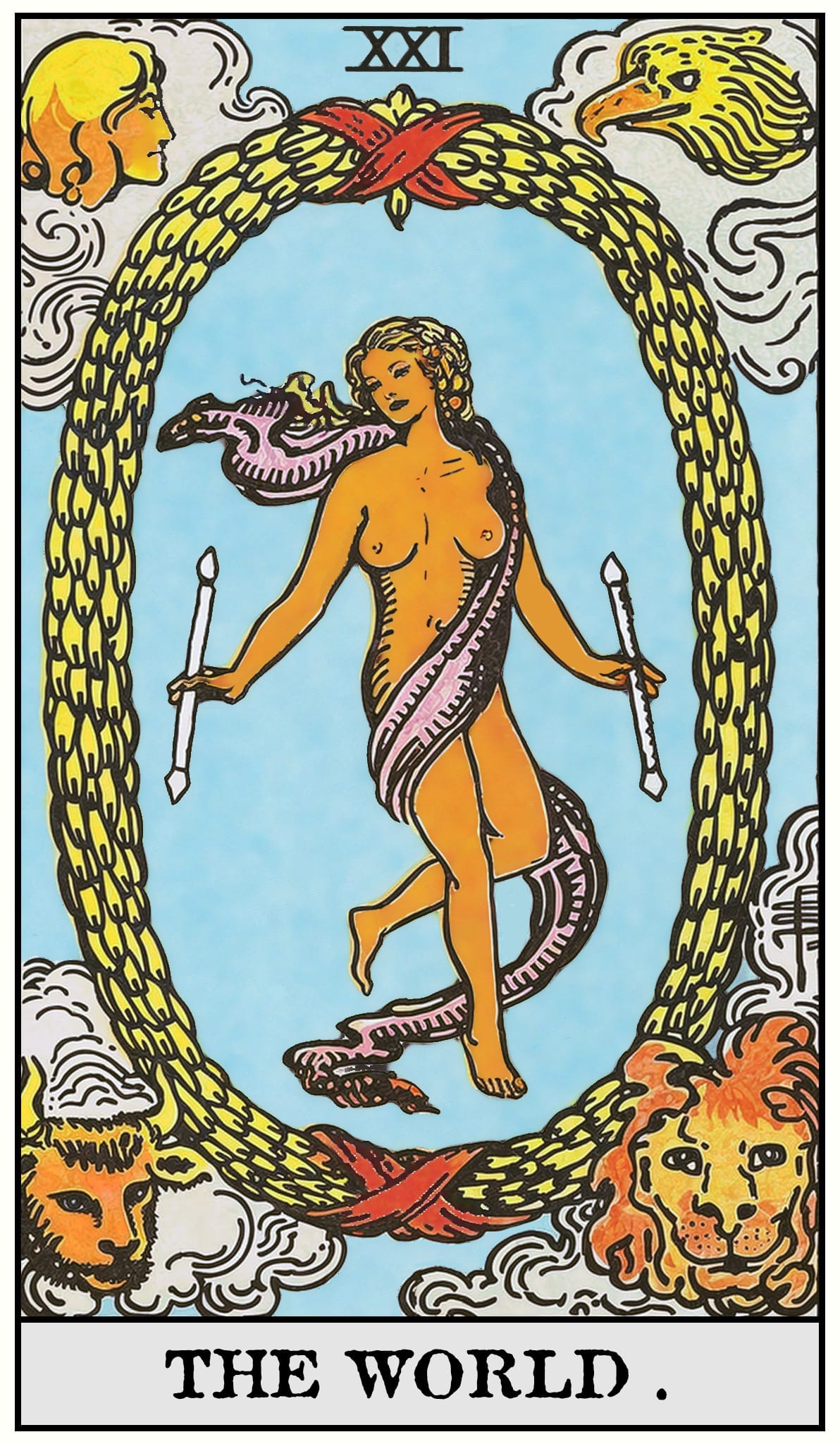
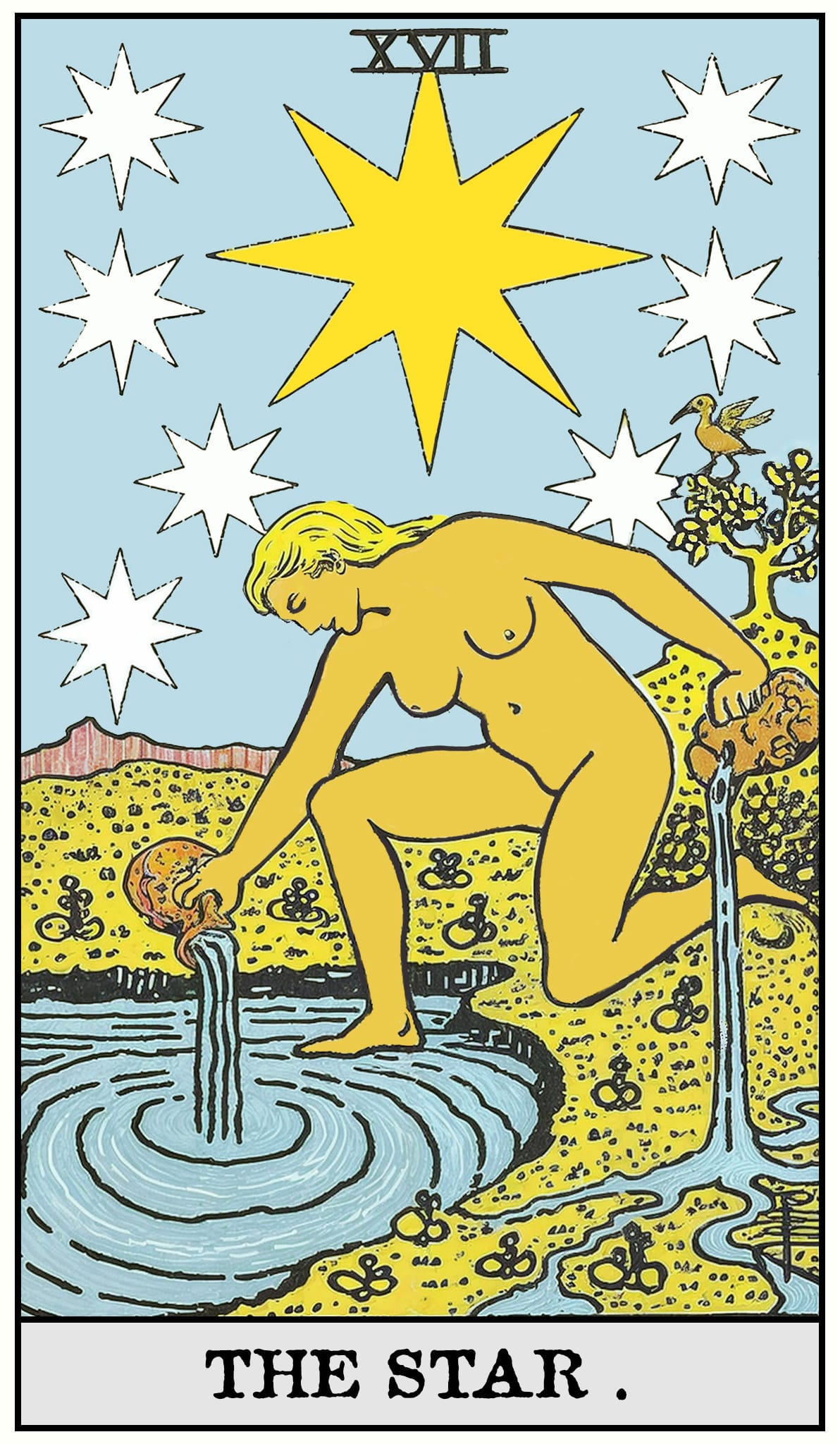
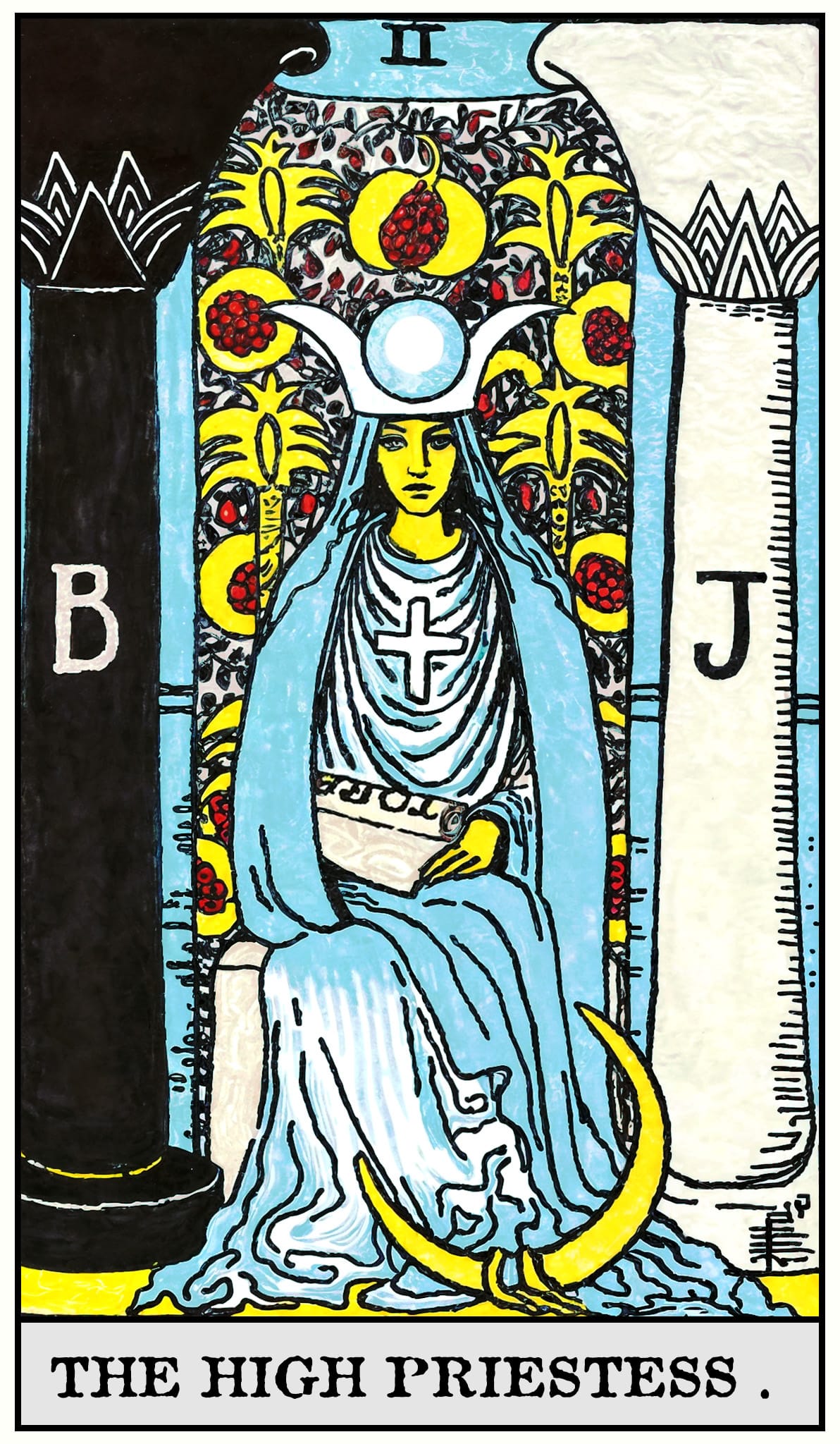
The white-robed female figure is the tarot's primary image of the soul in its direct relationship with the archetypal world. In the World she dances — the only figure in the Major Arcana who truly moves freely. In the Star she pours without anxiety, into pool and earth simultaneously. In the High Priestess she knows without acting. Pollack reads these three images of the same symbolic figure as spanning the full arc of the Major Arcana: the High Priestess as the threshold guardian, the Star as continuation after devastation, the World dancer as culmination. She holds two wands in the World — the opposites the Magician and High Priestess embodied separately, now carried in two hands simultaneously.

In Shadow

The white figure as shadow trap is the idealised image of the self that cannot be inhabited — perfect, complete, untouched by the dark, the standard by which the actual self is always found wanting. The person who projects this figure onto others and cannot claim it for themselves.

Integrated

The World dancer dances within the wreath of completion. She does not wear it; she is held within it. Integration does not produce a figure above conflict. It produces a figure who has passed through it. The dance is not the performance of wholeness but the living fact of it.
The Angel

The Archetype in Address
Appears In

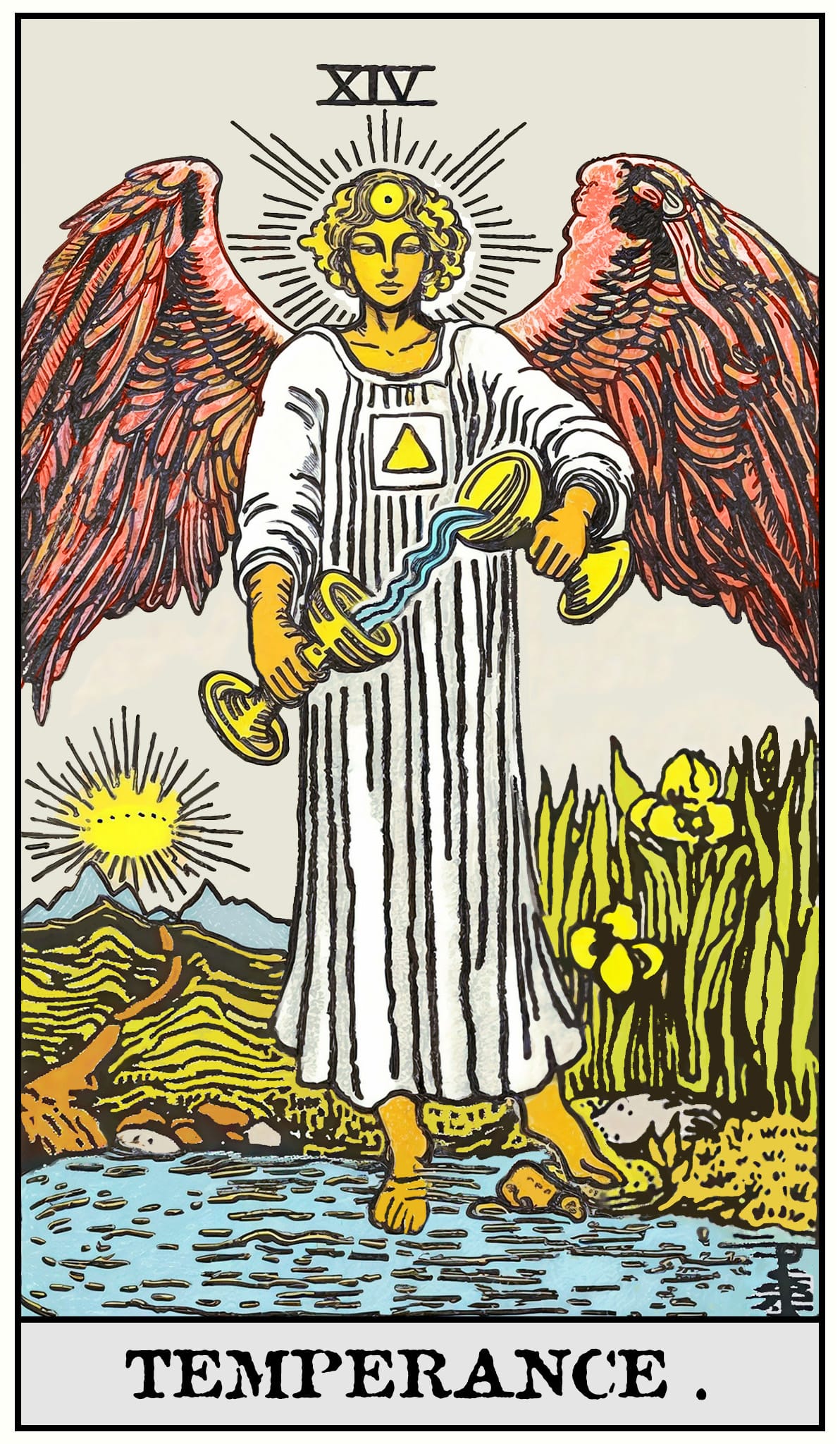
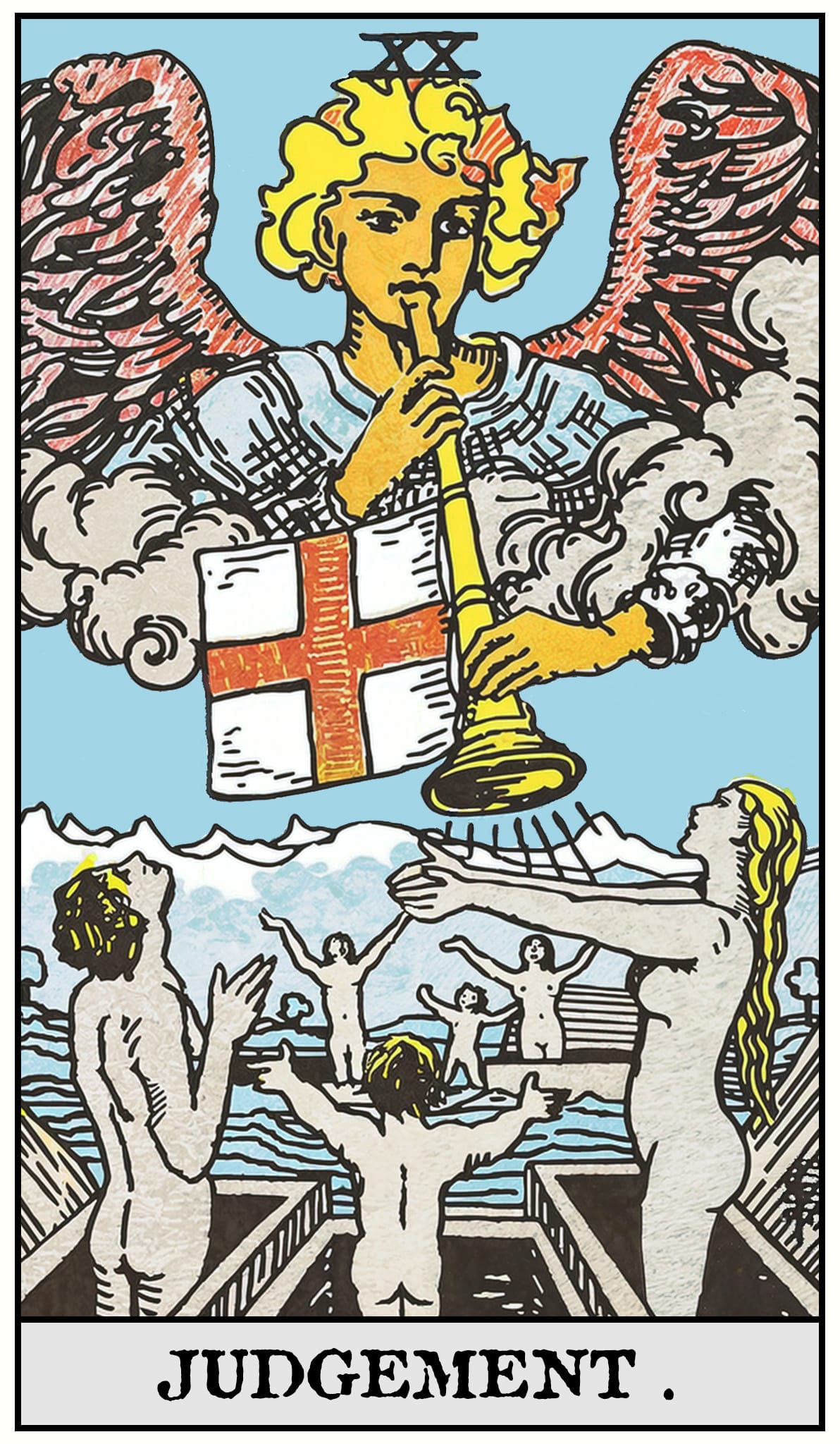
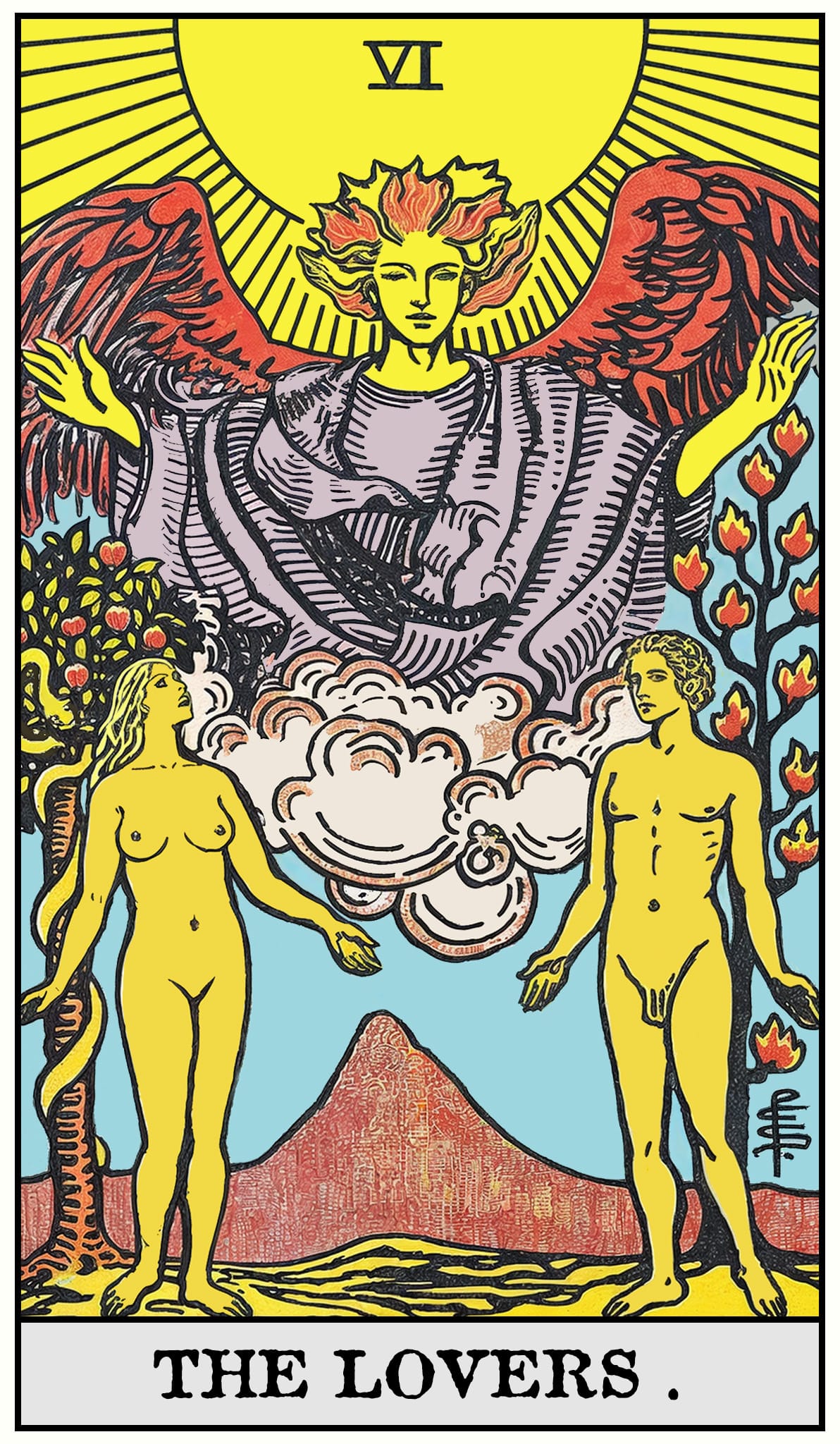
Angels in the Rider-Waite-Smith are not decorative — they are operational. The angel in the Lovers oversees the choice between genuine love and projection. The angel of Temperance performs the combining operation that neither suppression nor explosion achieves. The angel of Judgement sounds the call that requires an answer. Pollack reads angels as the force of the archetypal level making itself available: higher intelligence, not imposing but offering. Each angel marks the moment when the human figure is directly addressed by something larger than the ego's ordinary frame.

In Shadow

The angel as shadow trap is the waiting for the call before acting. Judgement's shadow: the trumpet has been sounding for years. The refusal to hear it is not humility — it is the avoidance of the commitment that hearing it would require. The people in Judgement's coffins have been waiting to rise. The angel has been sounding.

Integrated

The integrated angel quality is the willingness to respond when the call comes — not with the demand for certainty, preparation, or permission, but with the simple capacity to rise. Judgement is not about afterlife. Pollack reads it as the people who answer.

The Child

Original Openness
Appears In

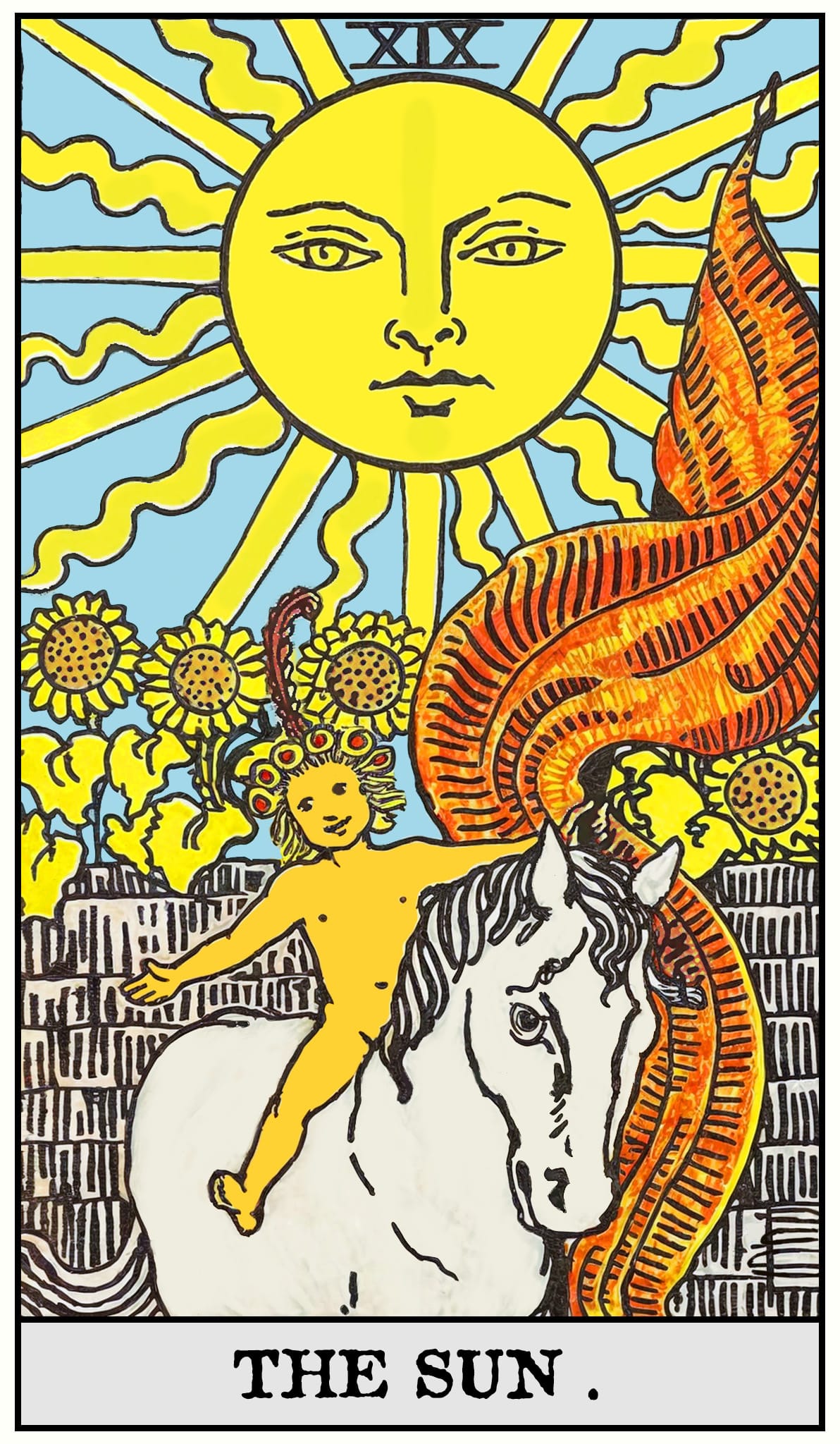
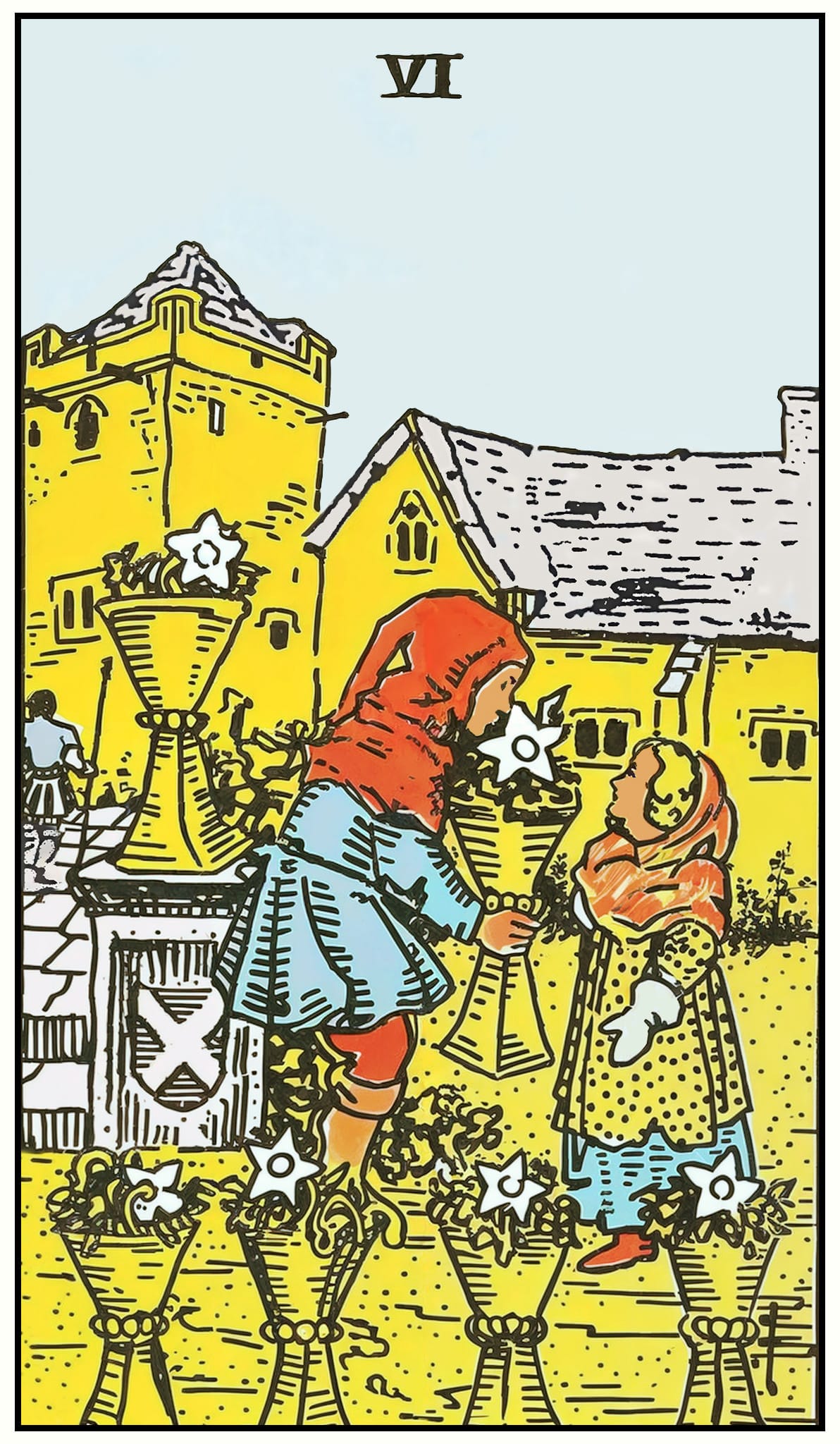
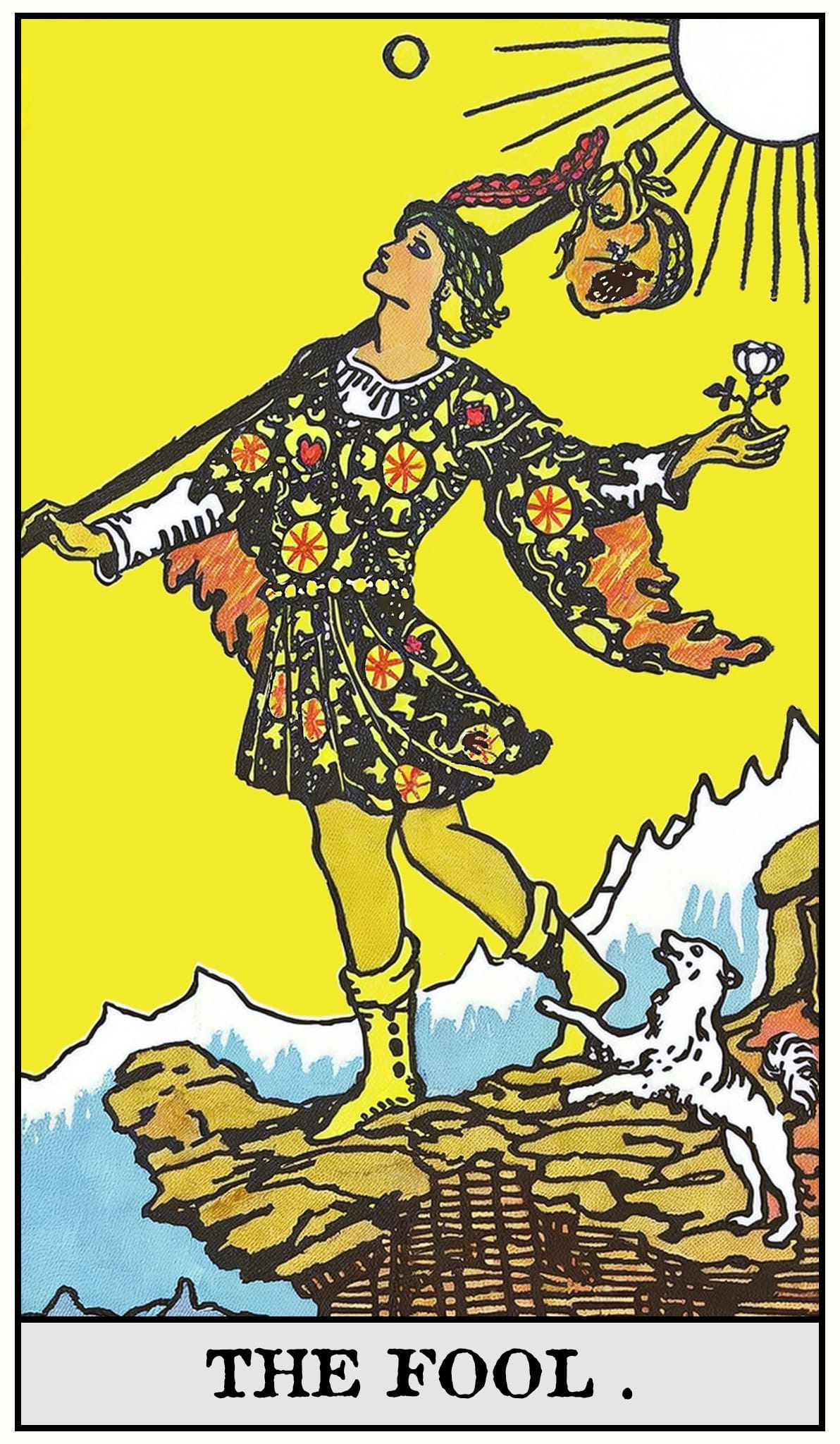
The child in the Sun rides forward unarmored — no shield, no weapon, no plan. The figure is in direct contact with the solar energy without any mediation. The Six of Cups shows the child in the past: the memory of innocence, the place before the shadow was formed. Pollack notes that the Fool's energy is essentially childlike — the quality of openness that must be carried through the entire journey and recovered, not discarded, at the end. The World dancer's freedom contains the Sun child's aliveness, now informed by everything the journey between them revealed.

In Shadow

The child as shadow trap is the refusal of its loss — the person who cannot accept that they are no longer in the Six of Cups, who lives in relation to an original wound without recognising that the child who received it has grown. The child carried as a fixed grief rather than a living resource.

Integrated

The integrated child quality is the openness that does not require protection: the willingness to be affected, to be surprised, to begin without knowing the outcome. The Sun's child rides into the open field not in ignorance but in recovered aliveness — the quality recovered after the journey, not the innocence before it.

The Crowned Figure

Ordered Authority
Appears In

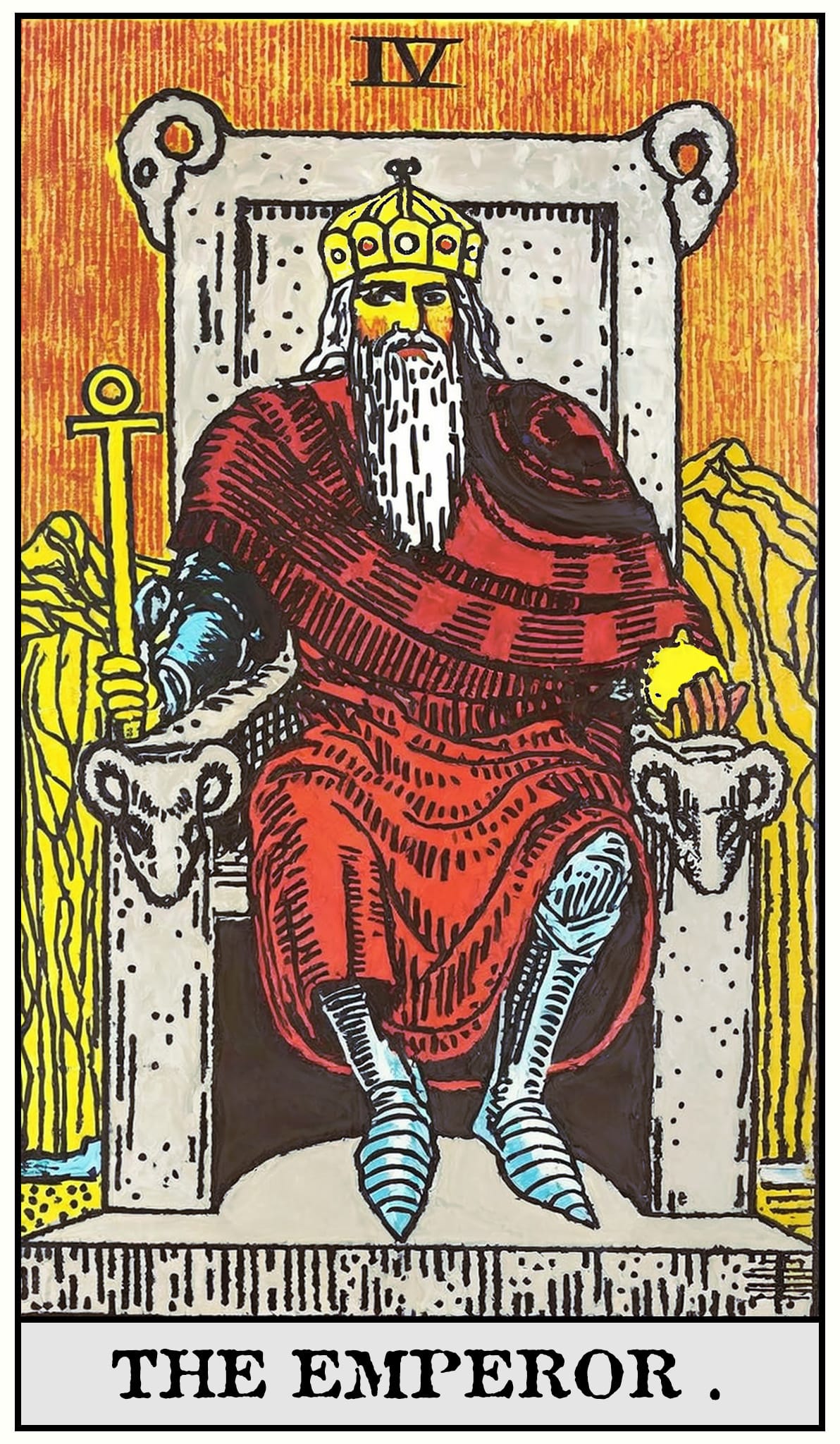
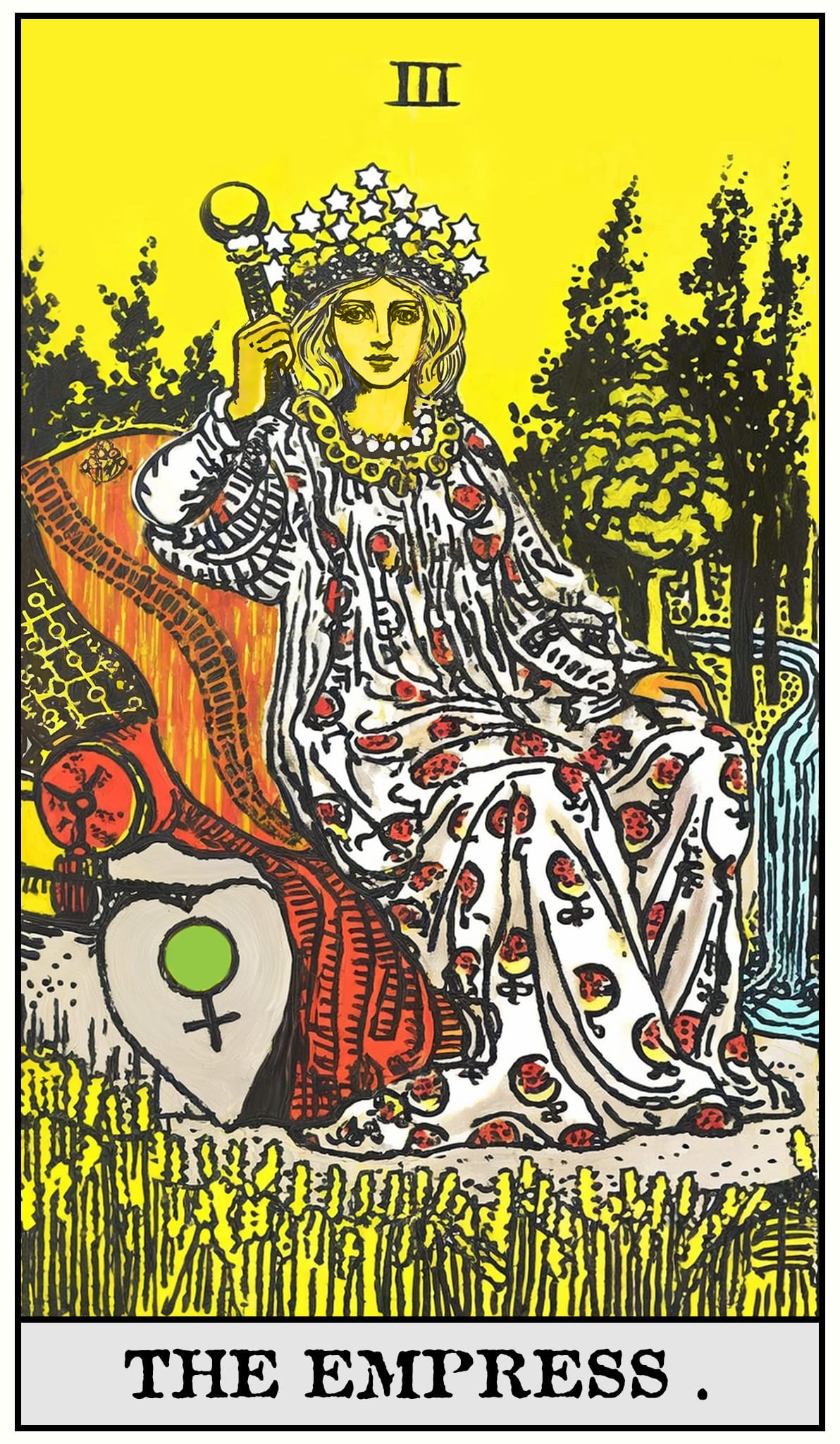
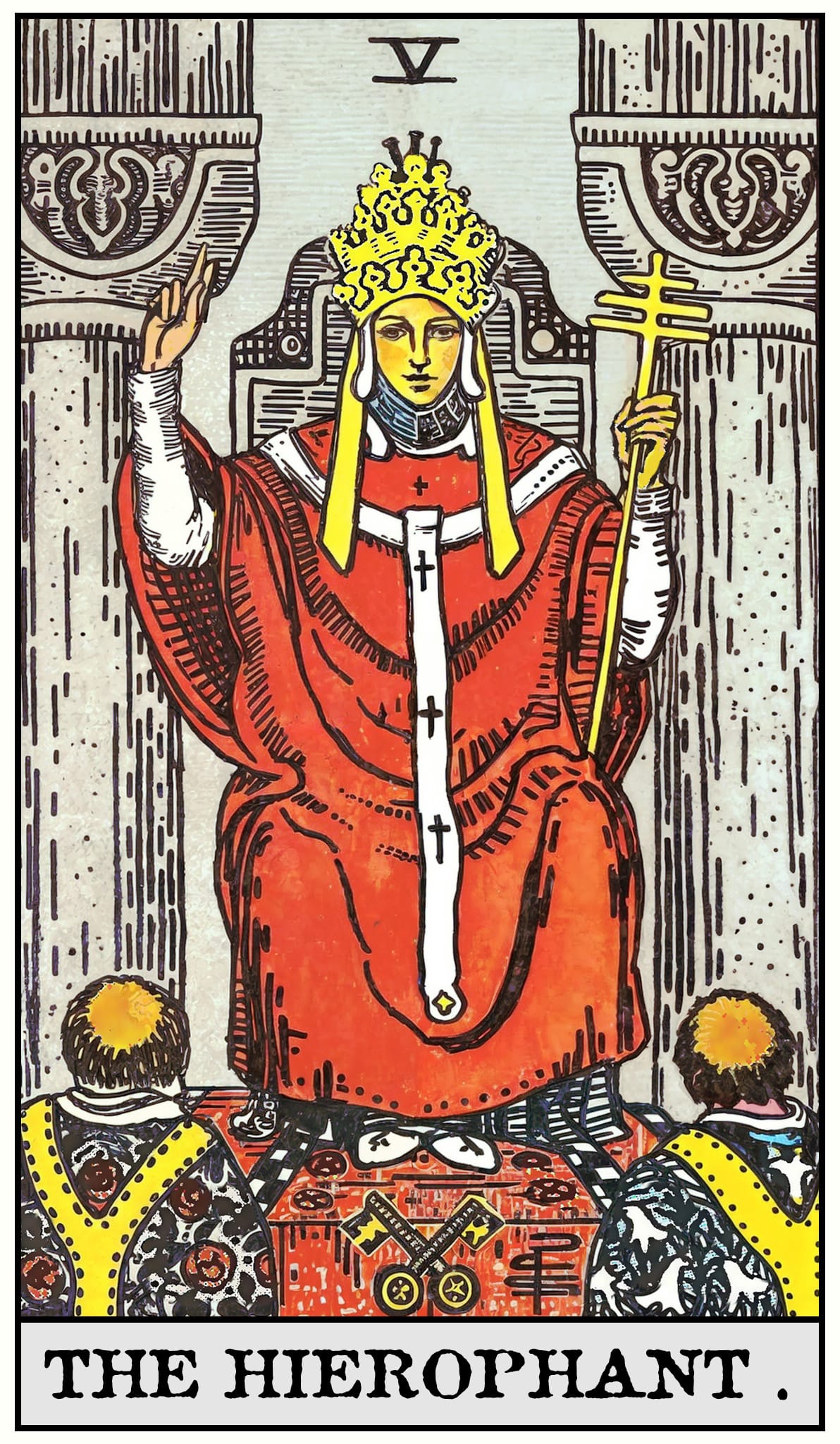
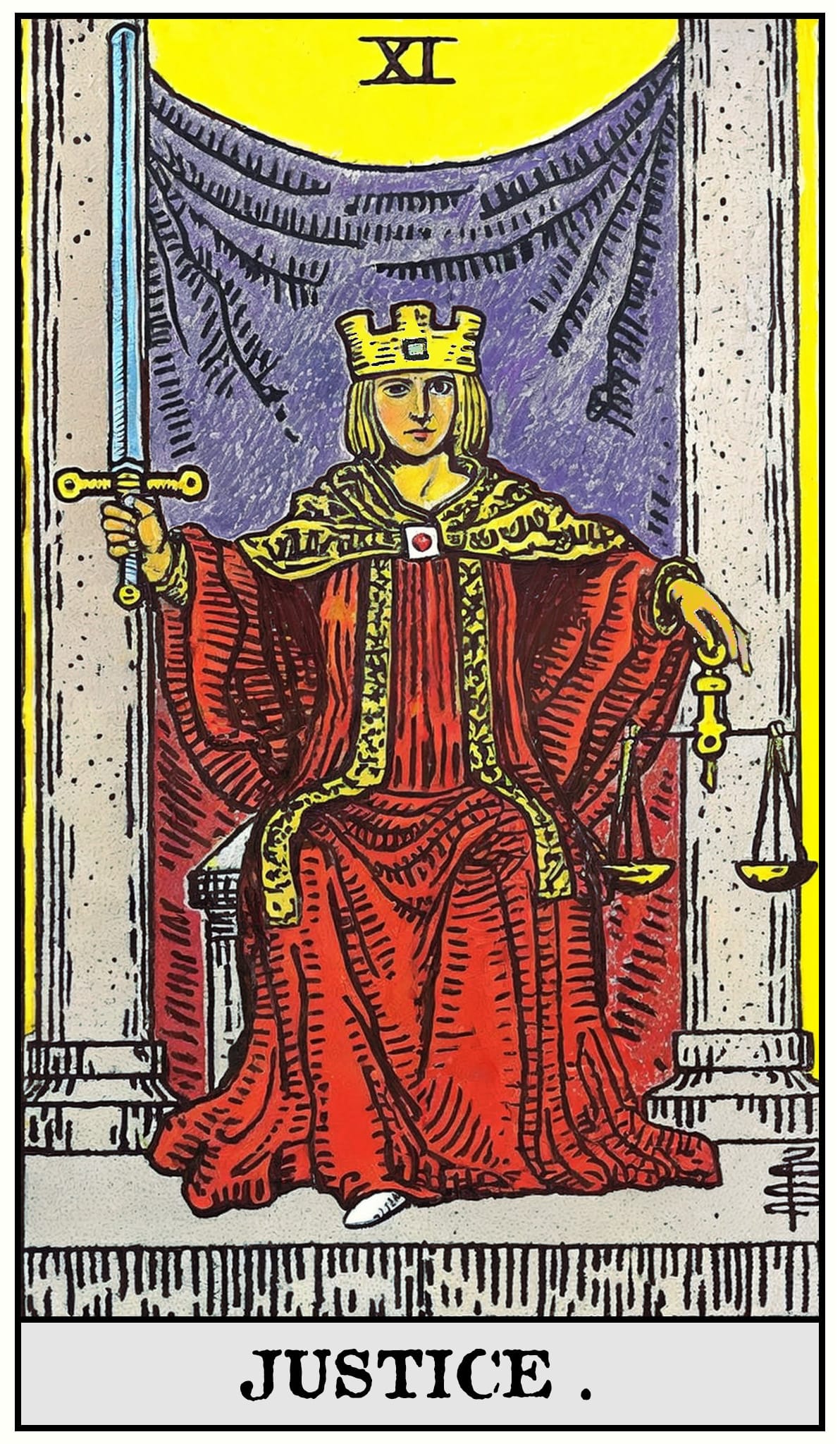
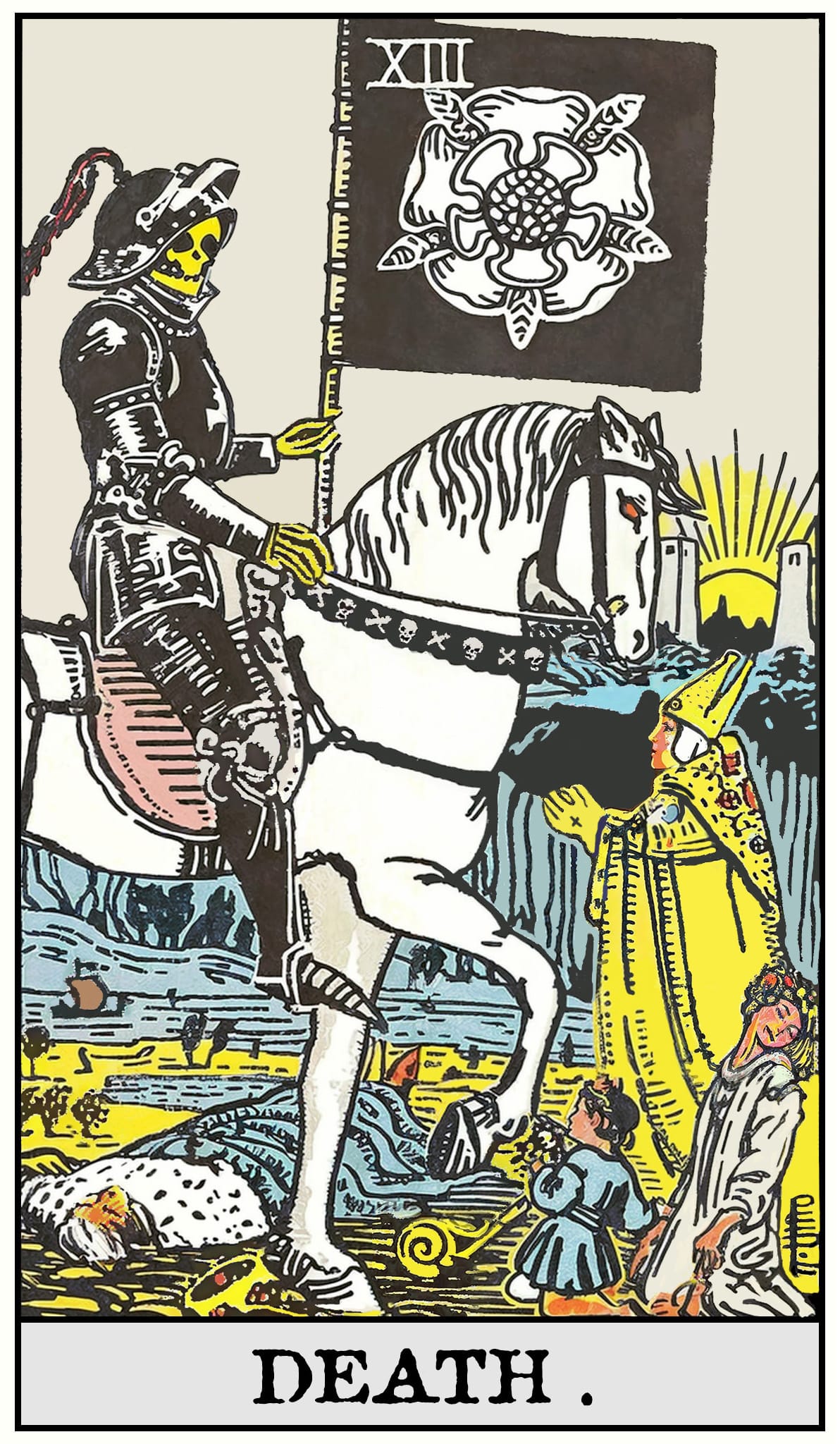
The crown appears across the Major Arcana's most powerful figures — marking not virtue but function. The Emperor's crown is structural authority. The Empress's is living abundance. The Hierophant's is inherited spiritual power. Justice's crown is the precision of clear sight. Death's crowned figure — the fallen king — demonstrates that the authority of transformation recognises no rank. The crown in the tarot is the principle of ordering — whatever that ordering serves in each particular card. It is not the person who wears it.

In Shadow

Crown as shadow trap is the conflation of authority with truth. The Emperor's shadow, as Pollack reads it, is rigidity: structure that has forgotten what it was built to protect. The person who must always be seen wearing the crown — who has made authority their identity — cannot put it down, and therefore cannot be genuinely met.

Integrated

The integrated crown is authority worn lightly — the capacity to organise and lead without requiring the structure to outlast its purpose. Crowns are inherited and surrendered; they are not the person. The Emperor who can step off the throne is more powerful than the one who cannot.

The Couple

Projection & The Pair
Appears In

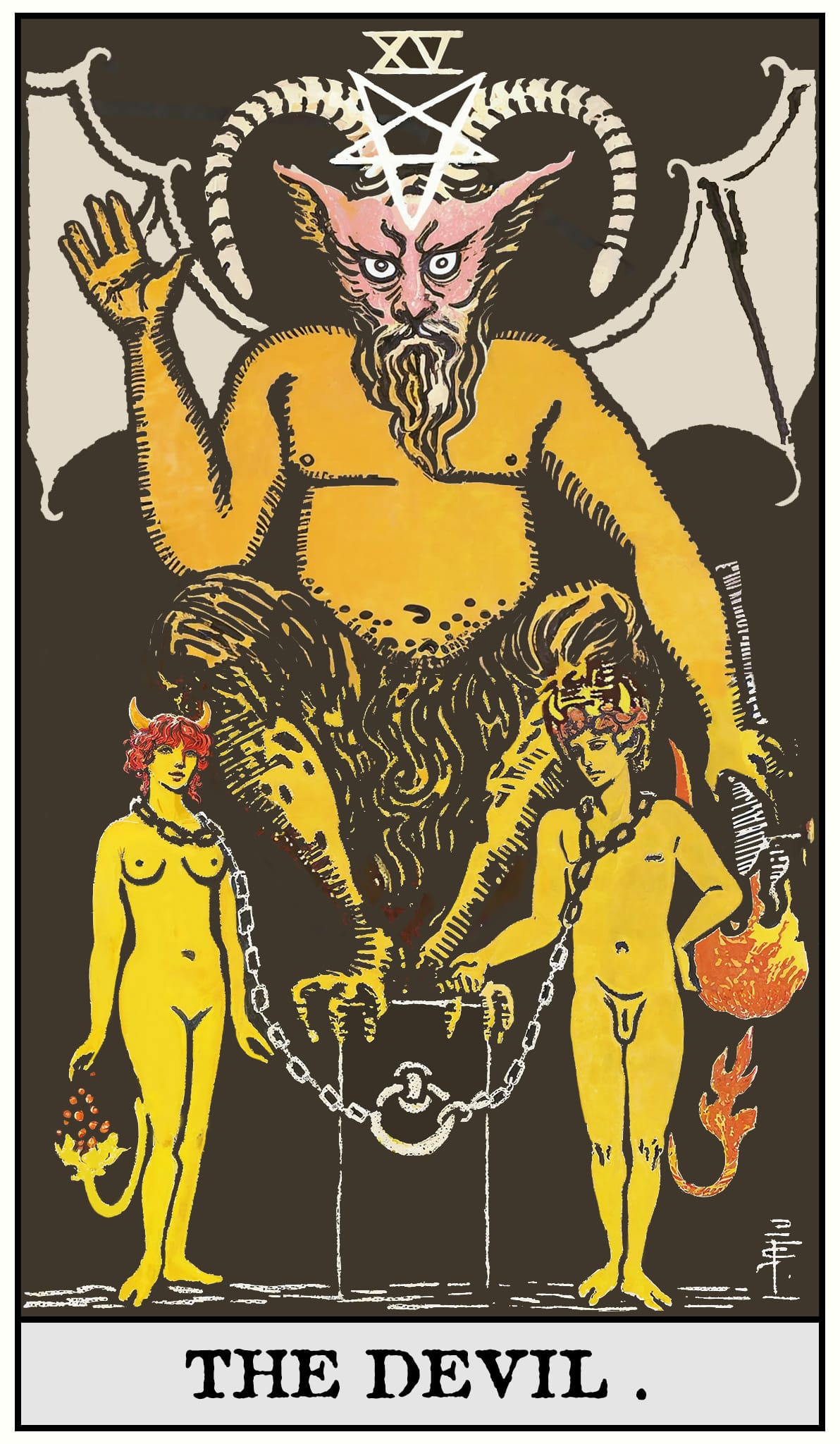
The pair of human figures appears at its most revealing when you place the Lovers and the Devil side by side: the same man and woman, in radically different relationship. Under the Lovers' angel they stand with open awareness. Before the Devil they are chained — and Pollack's essential observation is that the chains are loose. They could remove them. The bondage is maintained by the belief in bondage. This single visual repetition tells more about projection and shadow than any other pattern in the Major Arcana.

In Shadow

The couple as shadow trap is the other person used as a screen — the partner loved or hated for qualities that belong to the lover's own interior. Pollack reads the Lovers as the choice between genuine meeting and projection; the Devil shows what the pair becomes when the projection hardens into a shared cage. Two people can hold each other's chains for years and call the arrangement closeness.

Integrated

The couple integrated is two people who have each withdrawn enough projection to see who is actually there. The Lovers' angel does not join them; it oversees a meeting that only two whole figures can make. Relationship becomes possible at exactly the point where it stops being necessary as a hiding place.

The Hanged Figure

Voluntary Inversion
Appears In

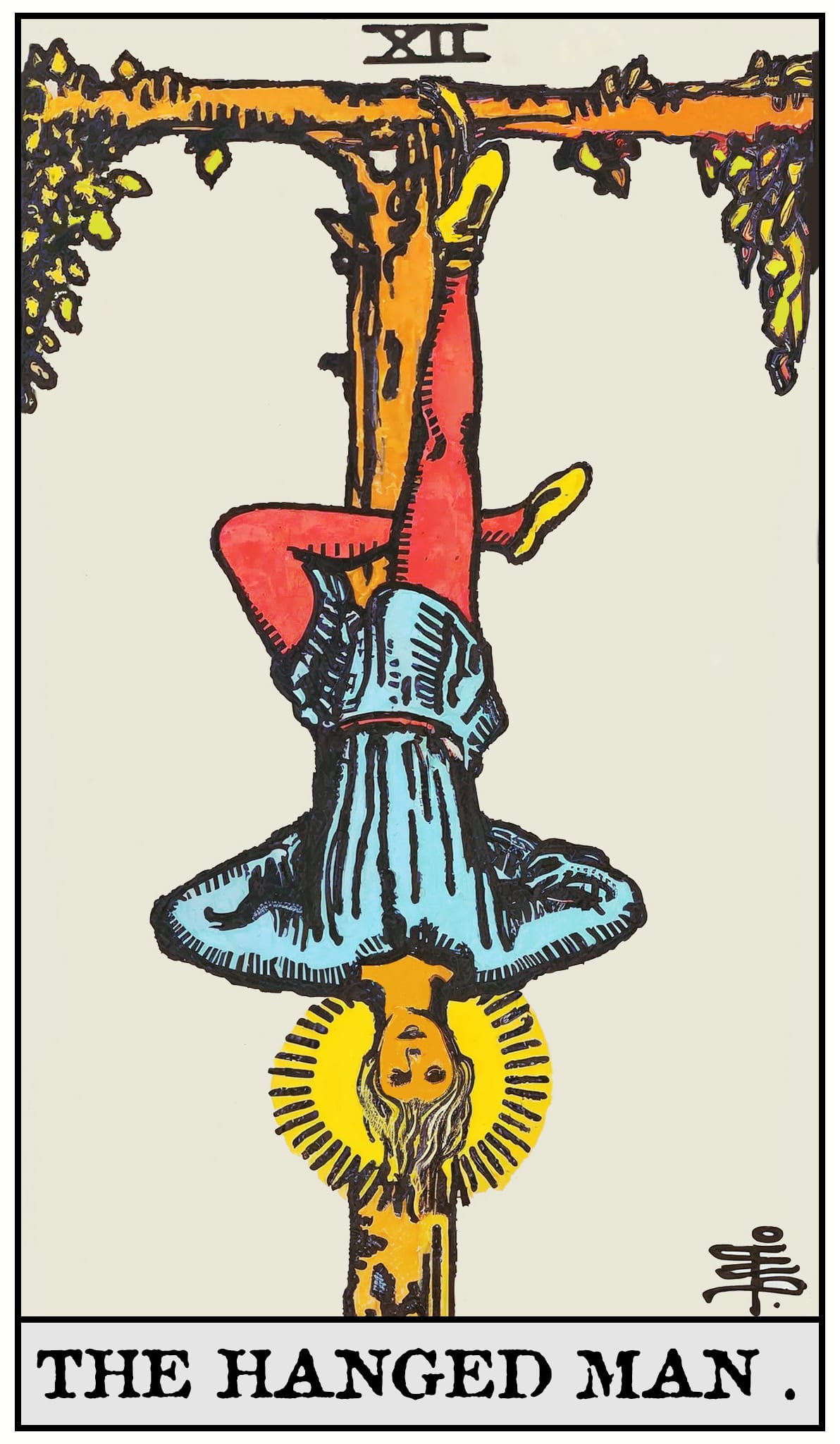
The upside-down posture reverses the relationship between above and below. What we have placed as the destination — achievement, status, completion — appears at the feet. What we have placed beneath — the unconscious, the irrational, the surrendered — rises to the head. Pollack notes this reversal is an act: surrender is not passive waiting. The Hanged Man chooses his position. The halo around his head suggests not martyrdom but illumination. His number 12 mirrors 21; seen upright, the posture is nearly the World dancer's. Temporary inversion is preparation for final freedom.

In Shadow

The suspended figure as shadow trap is martyrdom mistaken for spiritual depth — the person who hangs in perpetual self-sacrifice, who has confused the state with the act. The Hanged Man hangs for a reason and will come down. The shadow Hanged Man never does.

Integrated

The integrated suspension is the capacity to see from the reversed position without requiring it to be permanent. The Hanged Man is not the World Dancer's opposite — he is her preparation. Inversion as a chosen stage; the descent that makes the ascent possible.

The Dancer

The Free Body · Integration Embodied
Appears In

The World dancer is the only figure in the Major Arcana whose body is in genuinely free movement — not walking, not sitting, not standing in ritual posture, but dancing. The wreath encircles without constraining. The four creatures at the corners observe. Pollack reads her as the culmination: the Magician and High Priestess united in one body, all the split qualities of the first two cards carried simultaneously. She holds two wands — one in each hand —as the Magician held one. The dance is not a performance of freedom. It is the living demonstration that integration is a bodily fact.

In Shadow

The dancer as shadow trap is wholeness performed rather than lived — freedom displayed for witnesses, the appearance of ease maintained over an interior that has not finished its work. A dance done for the four watchers is choreography. The figure who needs the audience has not yet left the stage of the ego.

Integrated

The dancer integrated is movement that no longer divides into mover and watcher. Both wands are carried at once — action and depth, will and receptivity — and neither hand grips. Pollack's culmination is exactly this: the journey's opposites, held so lightly that the body is free to move.