Judgement
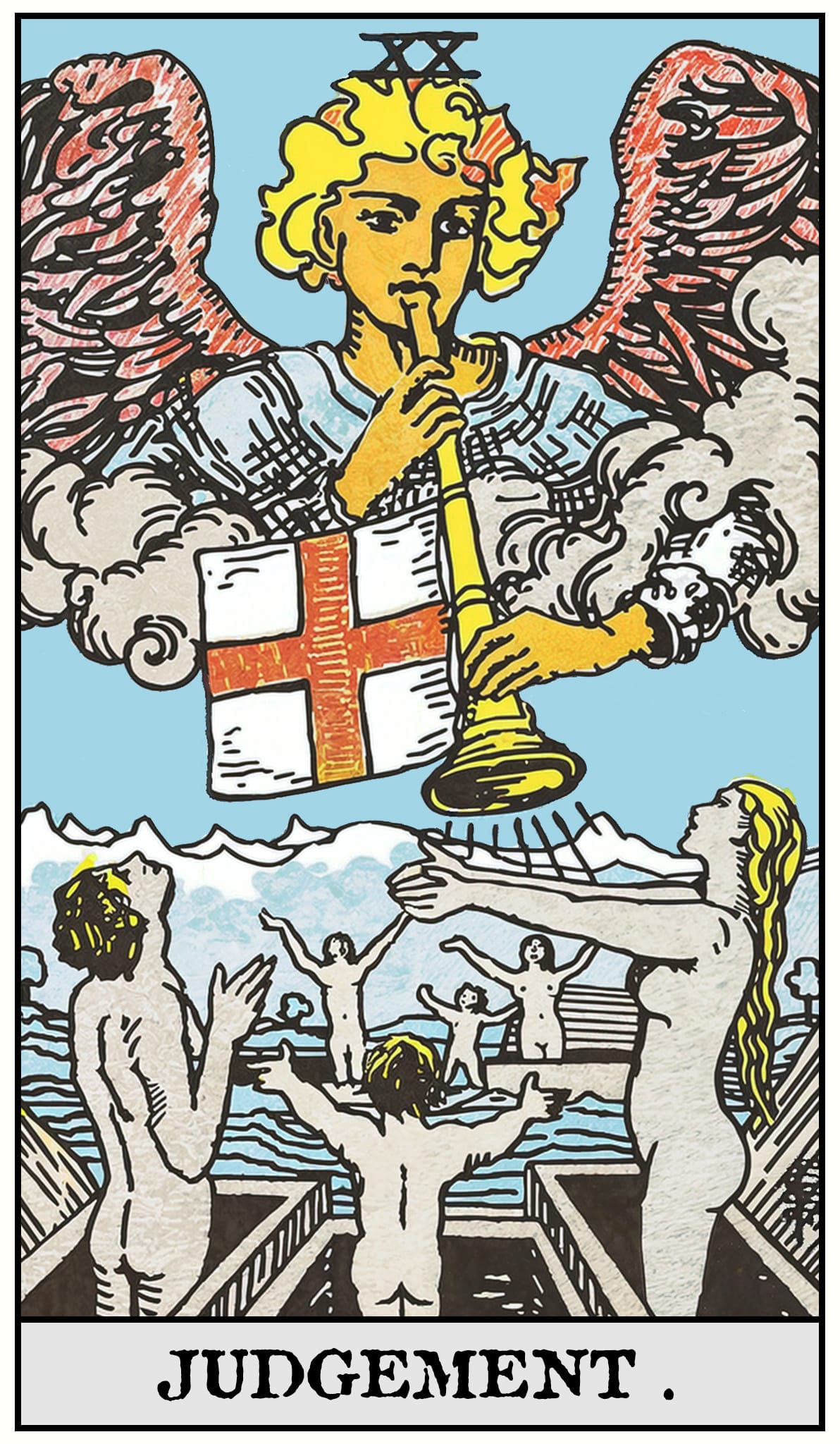
An angel leans from the clouds with a trumpet at its lips; below, three figures rise from open coffins on a grey sea with arms raised not in supplication but in answering — the moment when what has been quietly accumulating finally announces itself.
Judgement names the great calling-forth: not the tribunal, not the sentence, but the moment when the life the seeker has actually lived is finally called by its true name and the seeker stands up inside it. The trumpet does not condemn. The figures rise with arms open. What passes here is not a verdict. It is a recognition.
Something calls. Something in the seeker answers, sometimes against their will.
Judgement arrives as the threshold moment: the diagnosis that releases as much as it confines, the career change that arrives not as decision but as recognition — I have been doing this for years; I am only now naming it. The misreading is moral: the assumption that judgement means being judged, that the angel is summoning to a tribunal. There is no judge on this card. The figures rise with arms open. Its shadow has two forms: the messianic complex, in which the seeker mistakes their call for cosmic mission and begins to perform the called; and the refusal, in which the call is heard, recognised, and pretended away.
What you chose, what died because you chose it, and what can now rise because the choice has finished its work
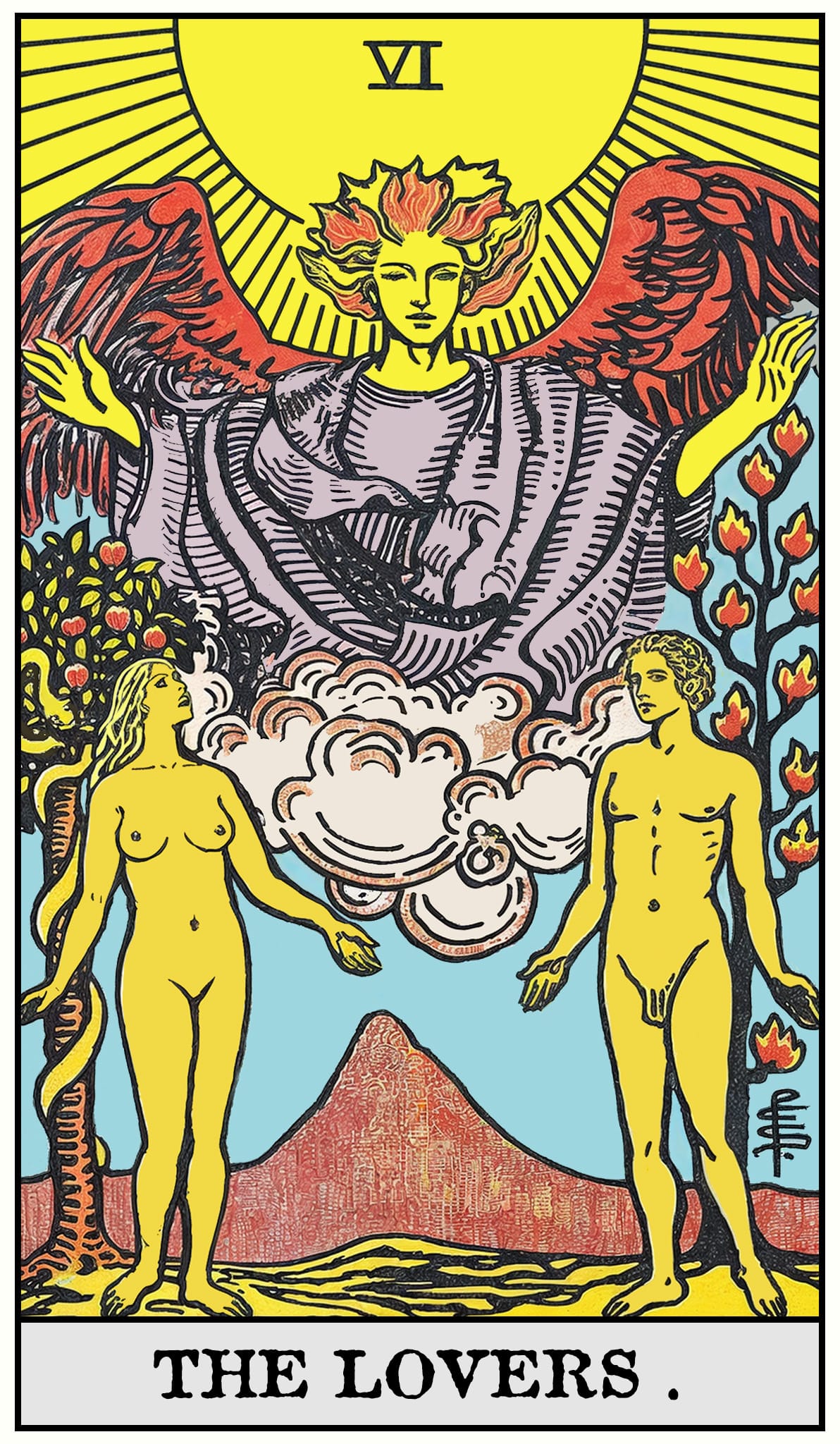
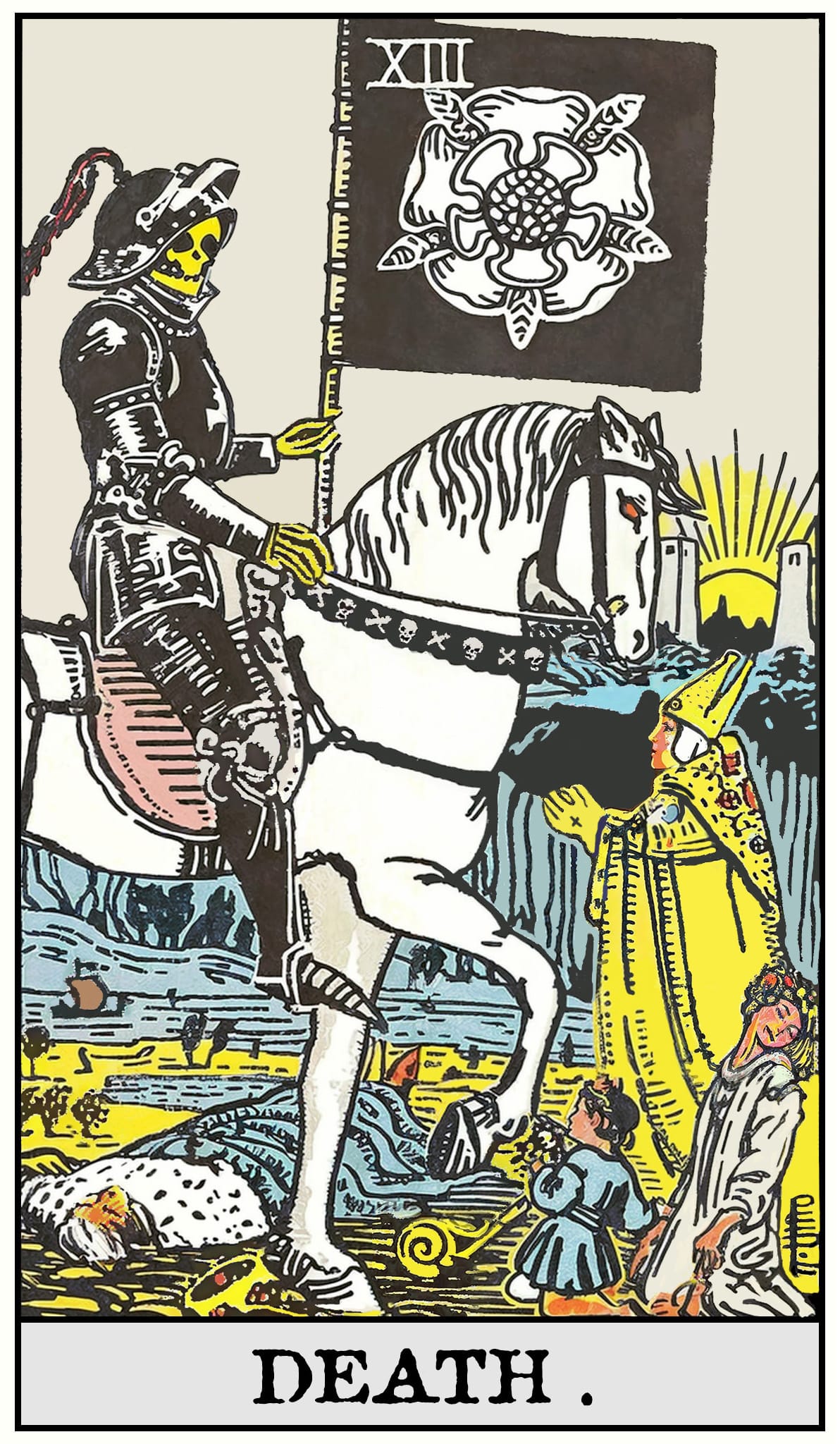
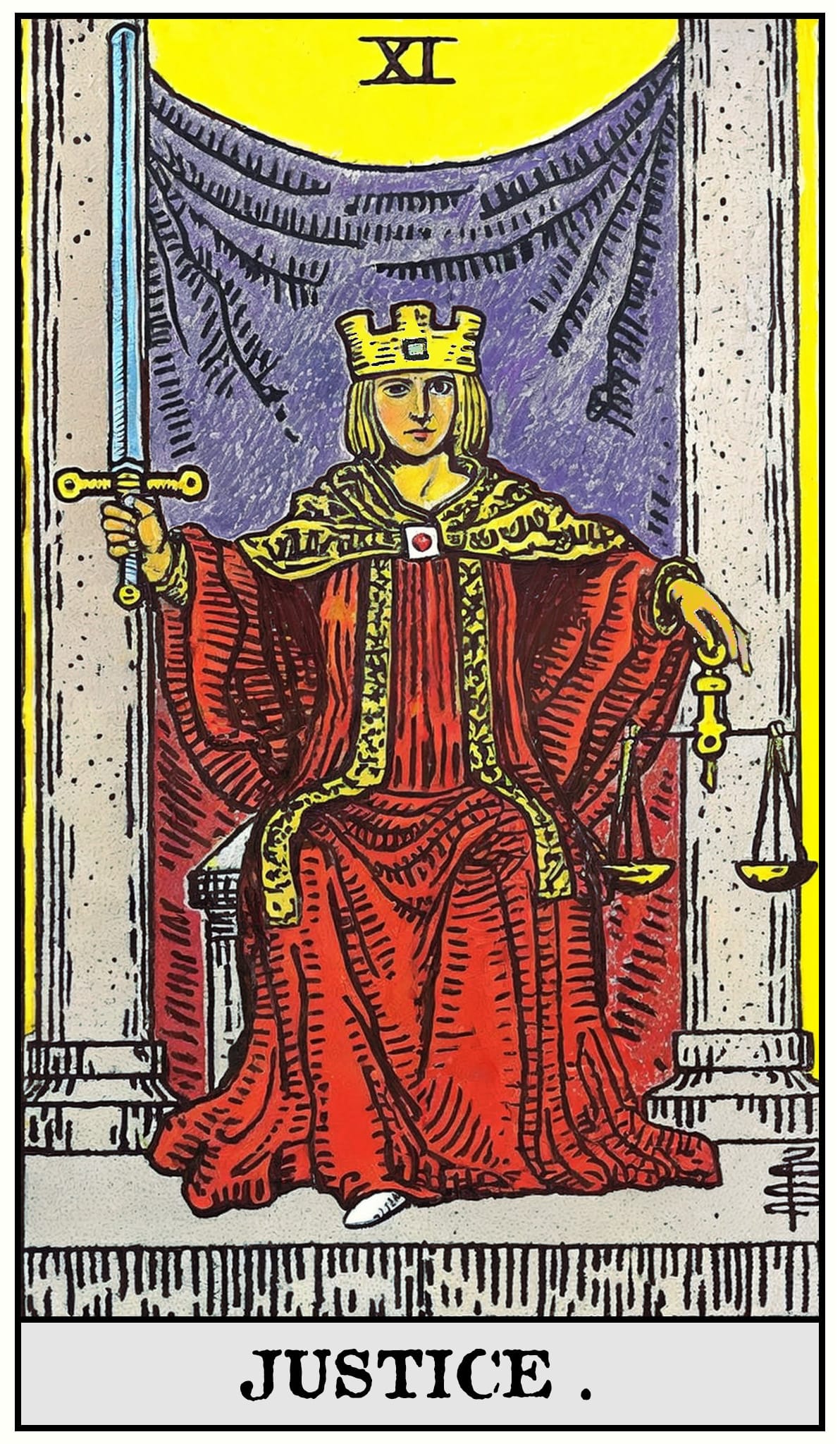
Judgement stands in the column of consequence — Lovers at VI, Death at XIII above it. The Lovers is the first irreversible act; Death is the consequence lived in the body; Judgement is the moment when the pattern shaped by those choices is finally called by its actual name. Pollack's most radical reading is followed here: resurrection as recognition, not supernatural reward. The figures rise because they have been called by their true names — not the names assigned or performed, but the names that fit the lives actually lived.
The complete three-layer reading for all 78 cards — including the full psychological and archetypal layers — is in The Pocket Guide →
The call is real. The inflation of the call is the shadow the card is watching for.
Shadow TrapThe seeker who hears the trumpet and begins to perform the called — mistaking a genuine vocation for a mandate, a recognition for a commission to instruct others.
Shadow GiftThe capacity to stand up inside one's true name without needing it to be larger than it is — to answer the call precisely, without addition.
The complete shadow reading — trap, gift, and the practice of integration — for all 22 Major Arcana is in The Shadow Archetype Reference →
We do not read a reversal as an opposite; following Pollack, a turned card is the same energy blocked, withheld, or redirected — not inverted into its negation. A reversed Judgement often marks the second shadow form: the call heard and not answered — the seeker who recognises what is being named and chooses the coffin over the rising, for reasons that feel, from inside, like caution.
Why Apocrypha Does Not Read Reversals as Opposites →Sixty-three symbols across the full deck — cross-referenced by card and meaning — are mapped in The Symbol Dictionary →
If your true name were spoken aloud right now, would you stand up? And which of the names you have been answering to would you have to leave in the coffin — not as punishment, but because the coffin is simply where that name belongs?
Judgement is most commonly either moralized into a reckoning for wrongs or sentimentalized into pure affirmation. The more precise reading holds neither. The card asks whether the seeker is living the life that corresponds to who they actually are, and whether they are willing to be called by the name that fits that life rather than the names that were assigned. The question is not whether the call is deserved. The question is whether, when it sounds, the seeker stands up.