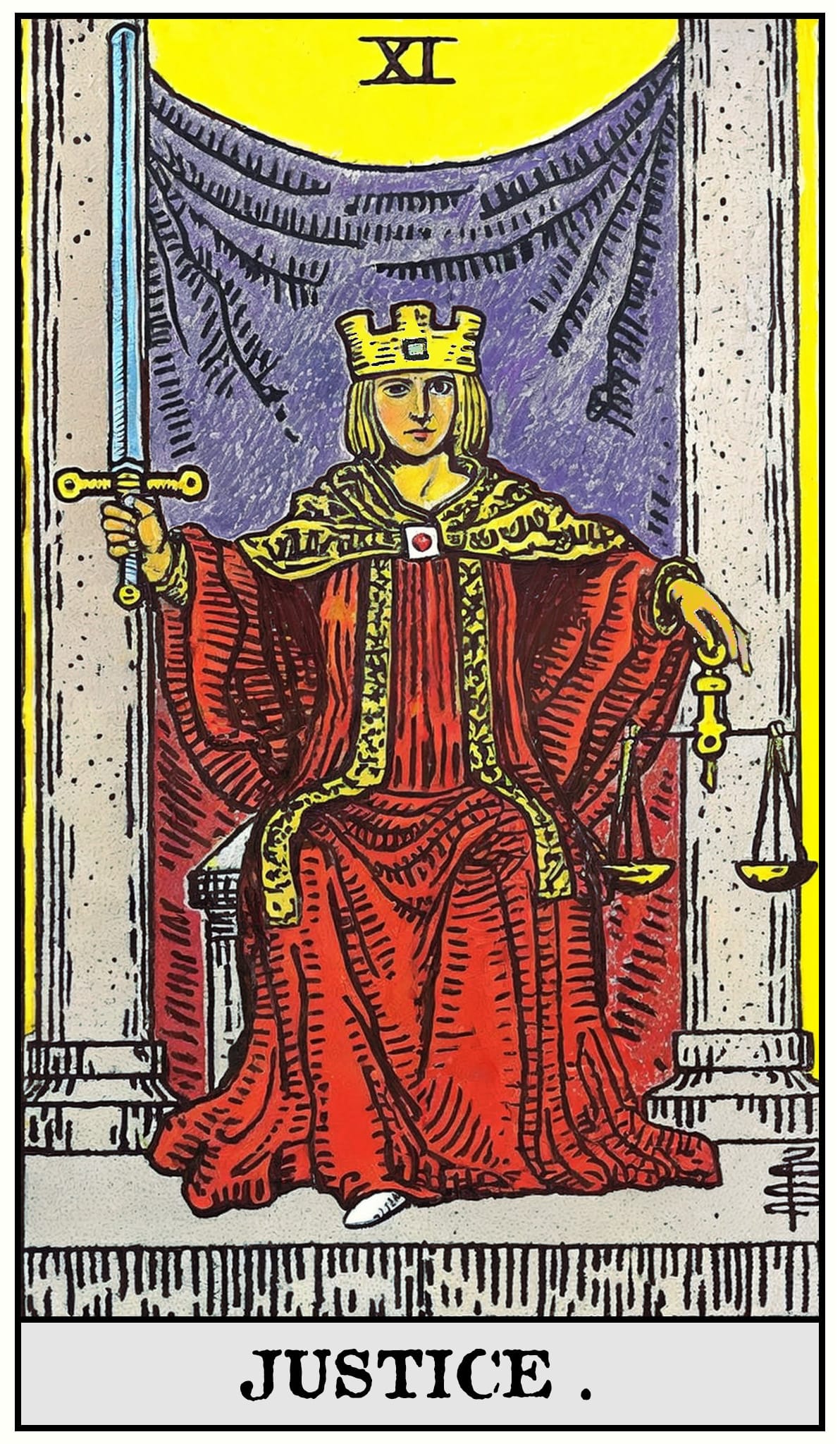
Justice
A robed figure sits between two pillars with a scale still in motion and a sword held at the exact vertical — not the moment of sentence, but the moment before it, when the weighing is still happening.
Justice names the honest measurement — the ongoing, unglamorous process of weighing the self against what it actually knows to be true. This card is not about legal outcomes or punishment of others. It is the reckoning no one else will perform on your behalf, the internal accounting that must remain open for the whole of the second row.
The ongoing weighing — daily, sober, without ceremony
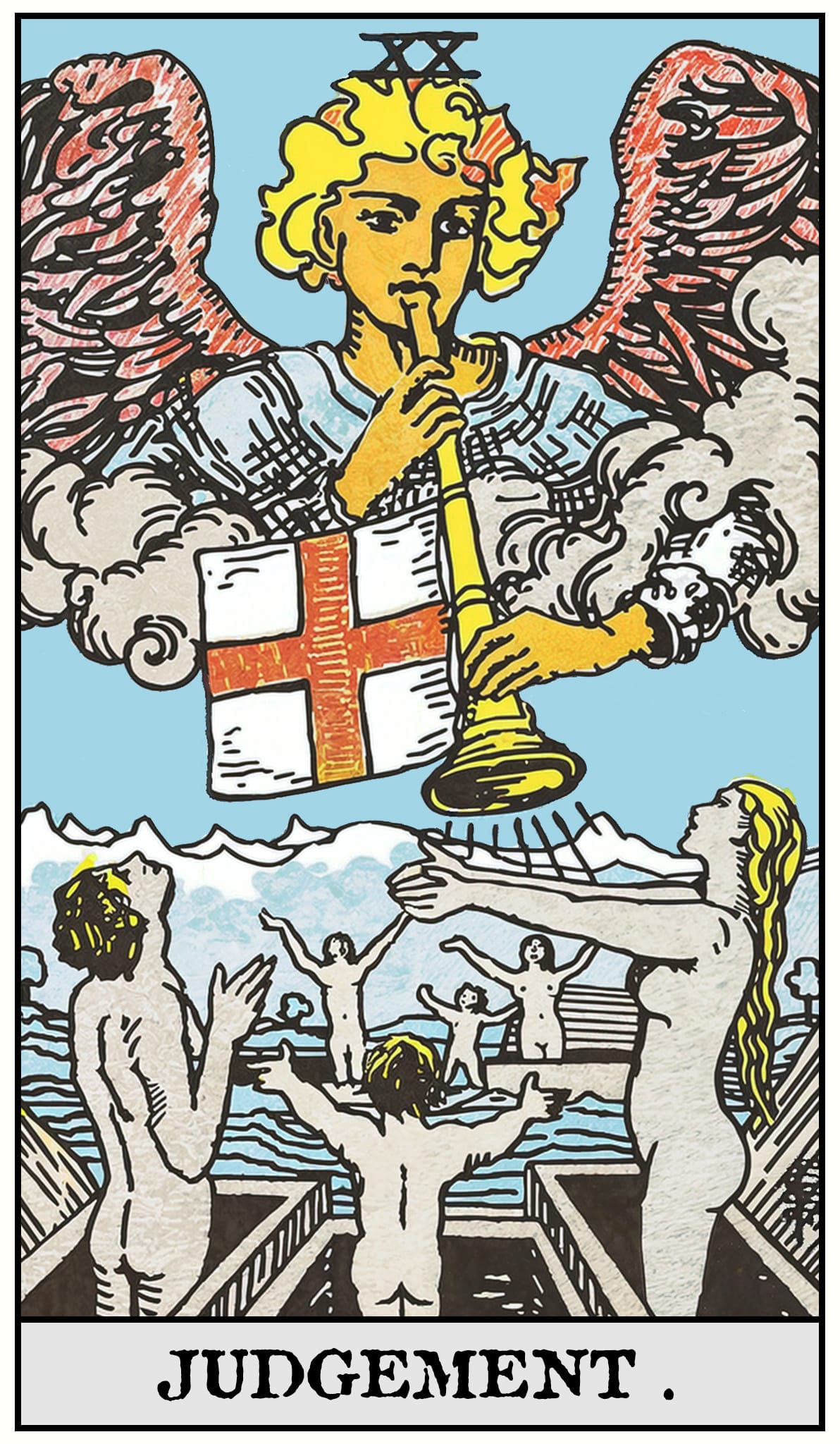
Justice arrives when consequences do: a contract is signed or broken, a relationship is named for what it is rather than what it was hoped to be, a bill comes due. The deeper meaning is not legal but structural — an honest measurement is being taken and the seeker is present for it. This is what separates Justice from Judgement: Justice is the continuous, daily process; Judgement, much later in the sequence, is the great calling-forth. The person who has weighed all along has nothing to fear from the trumpet. In its shadow, Justice becomes the reverse of its purpose — fairness as weapon, self-righteousness dressed in the language of accuracy, scapegoating that has learned to cite principles.
The inward law that refuses to become an inward tyrant
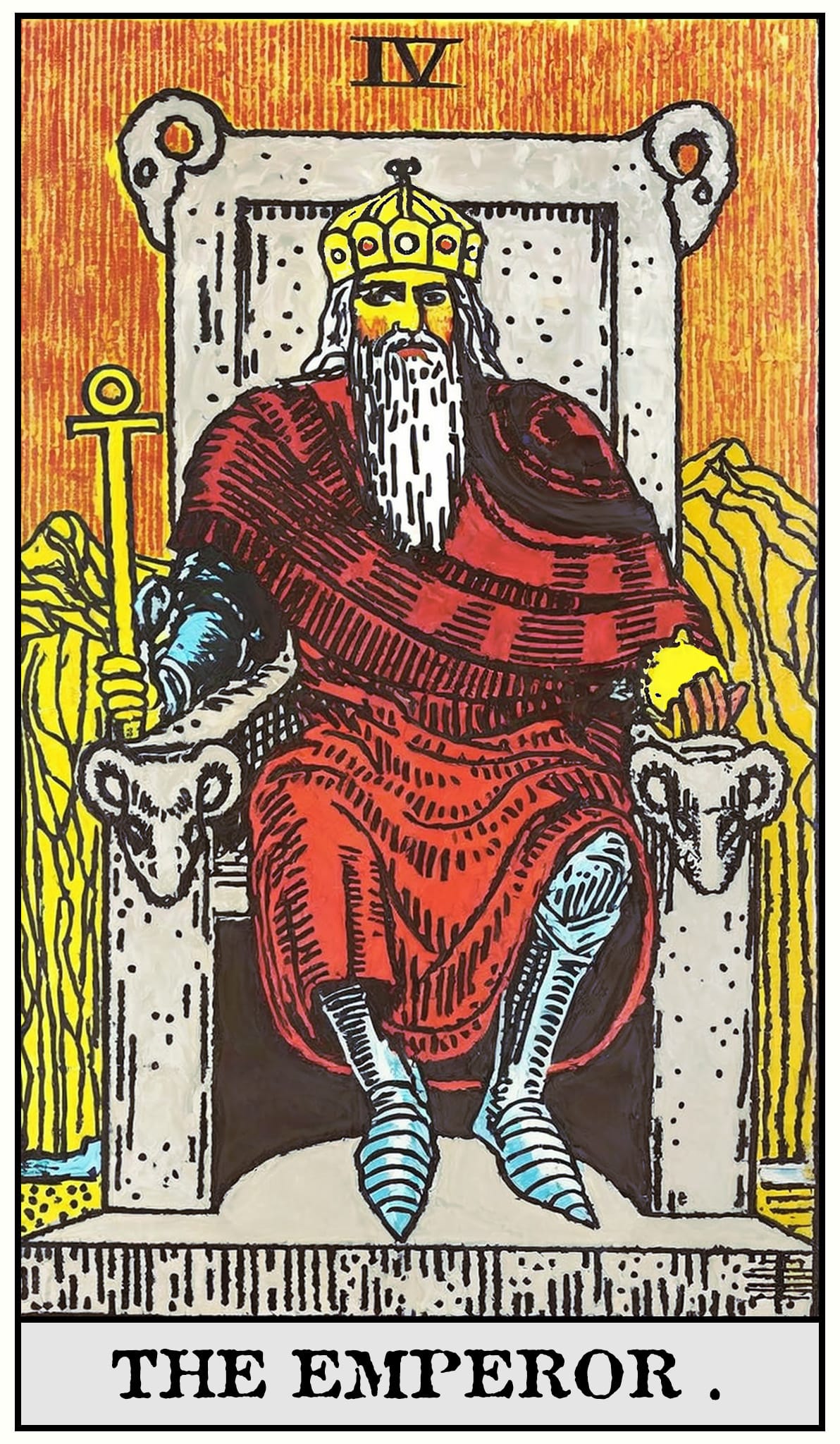
Justice occupies the column of order: above it the Emperor, who imposed structure on the outer world; below it the Moon, where law meets the territory it cannot govern. Justice is what happens when that capacity for order is turned inward and applied to the only territory where the self can actually legislate: itself. The card's central distinction, which most readers miss on first encounter, is that Justice is not stern. Justice is exact. Sternness is a posture; exactness is a measurement. The exact inner judge pays what is owed in both directions — including the credit the self has been refusing to grant itself alongside the debts it knows it owes.
The complete three-layer reading for all 78 cards — including the full psychological and archetypal layers — is in The Pocket Guide →
The capacity for honest measurement can be redirected outward and called righteous.
Shadow TrapThe exactness that has turned itself on others — calibrated fault-finding that has stopped looking in the direction it was originally designed to look.
Shadow GiftThe willingness to open the ledger and pay what is owed in both directions, including the credit side the self has been refusing to acknowledge.
The complete shadow reading — trap, gift, and the practice of integration — for all 22 Major Arcana is in The Shadow Archetype Reference →
We do not read a reversal as an opposite; following Pollack, a turned card is the same energy blocked, withheld, or redirected — not inverted into its negation. A reversed Justice often marks the refusal to weigh — the deliberate avoidance of an honest accounting that the self already knows would return a finding it is not prepared to act on.
Why Apocrypha Does Not Read Reversals as Opposites →Sixty-three symbols across the full deck — cross-referenced by card and meaning — are mapped in The Symbol Dictionary →
What have you been refusing to weigh — not because you don't know what the scale would say, but precisely because you do? And the reverse question: what verdict against yourself have you been carrying that an honest measurement would actually reduce?

Justice is most often either reduced to legal matters or softened into a vague promise of fairness incoming. The more demanding reading is personal and bidirectional: the card asks what the reader themselves owes and is refusing to pay, and equally, what they are owed and are refusing to claim. The second direction is the one most readers skip. The inner judge that is only prosecutorial is not Justice. It is the shadow of Justice wearing Justice's robes.