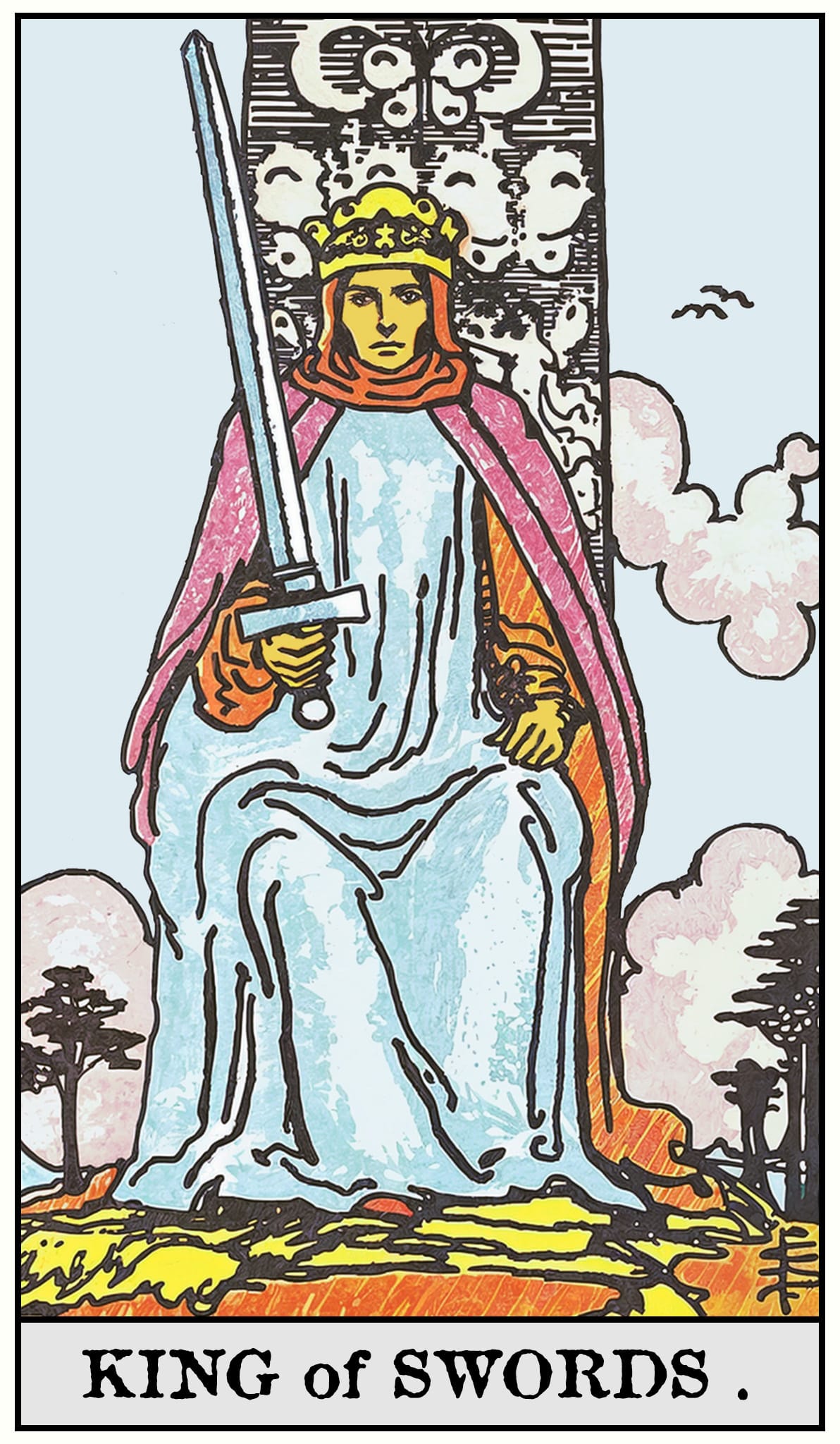
King of Swords
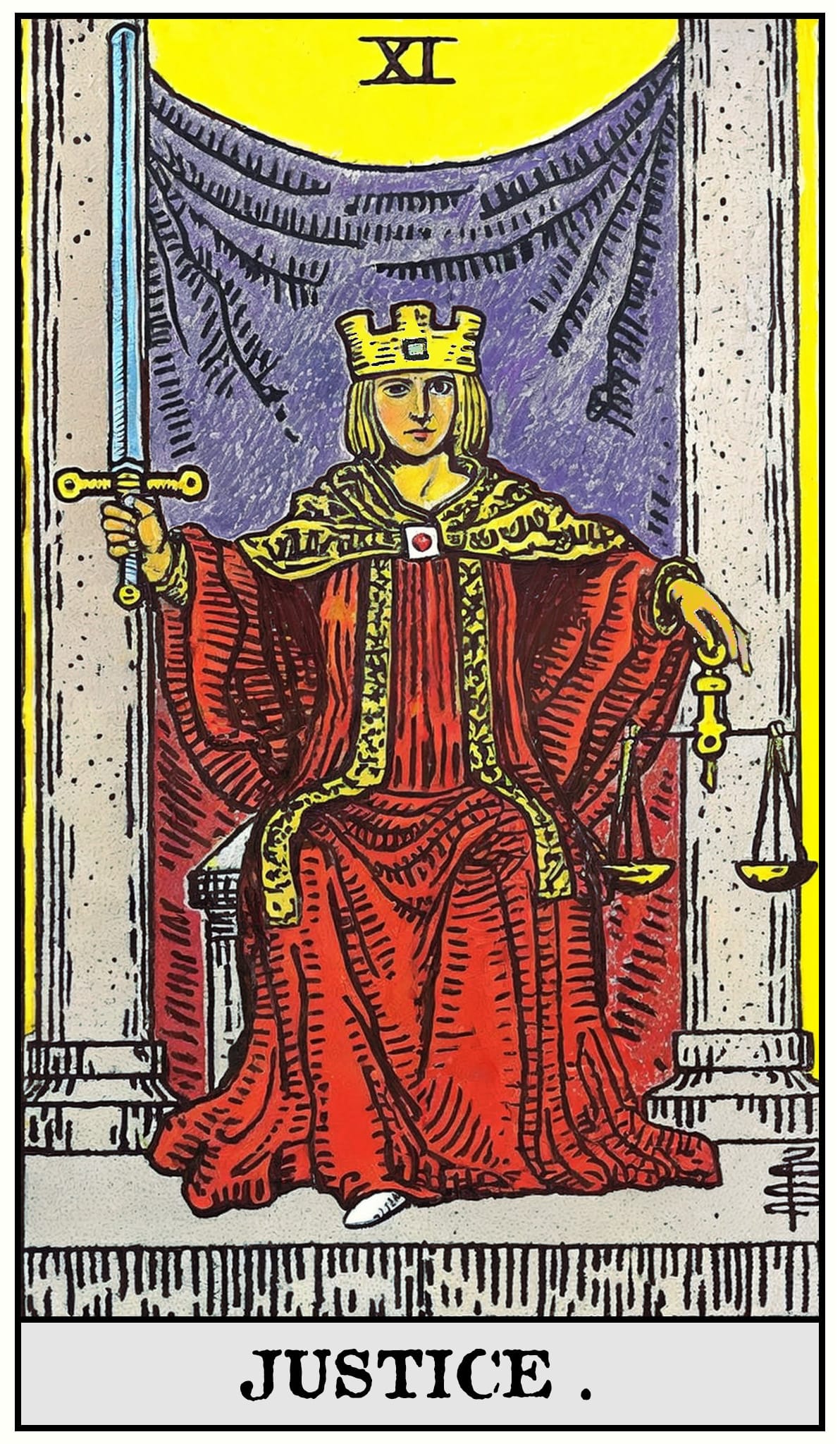
A king sits upright on a stone throne, sword raised vertically toward the sky, gaze direct and looking just past us — at the place where the actual situation is. Plain crown. Blue robe. No decoration that is not functional.
The King of Swords names the mind that has earned its own authority: not the Knight's conviction-at-full-speed, not the Queen's earned-by-grief, but the discernment that has been through the full arc of the suit and emerged with the capacity to distinguish what is actually true from what is merely defensible. He will tell you the truth and make it feel like an act of respect.
He will tell you the truth, and the truth is an act of respect — not a demonstration of his accuracy
The King of Swords is not the Two's person who can see both sides and chooses neither, not the Knight who charges with the truth as a lance. He has learned the suit's hardest discipline: that precision is a form of care, that the hardest statement delivered at the right moment with the right attention is more useful than three conversations' worth of comfort that does not address what is actually happening. In shadow, the King is the mind that has made a principle of its own conclusions — the clarity no longer available to revision because revision would require admitting the clarity was incomplete, the finger eventually pointed at everyone else's inadequacy.
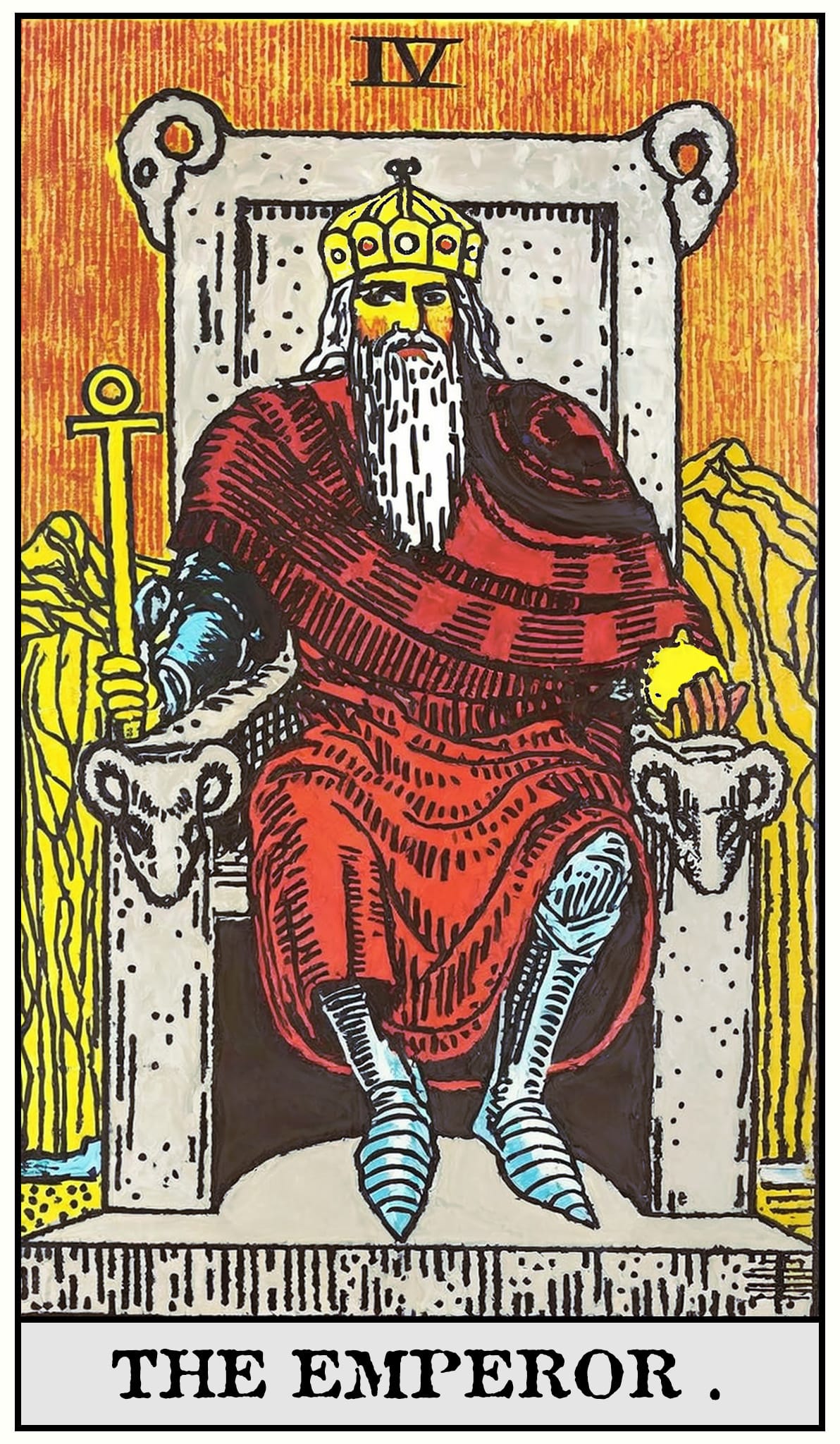
Where the Emperor asks what is the rule, the King of Swords asks what is actually true in this particular situation
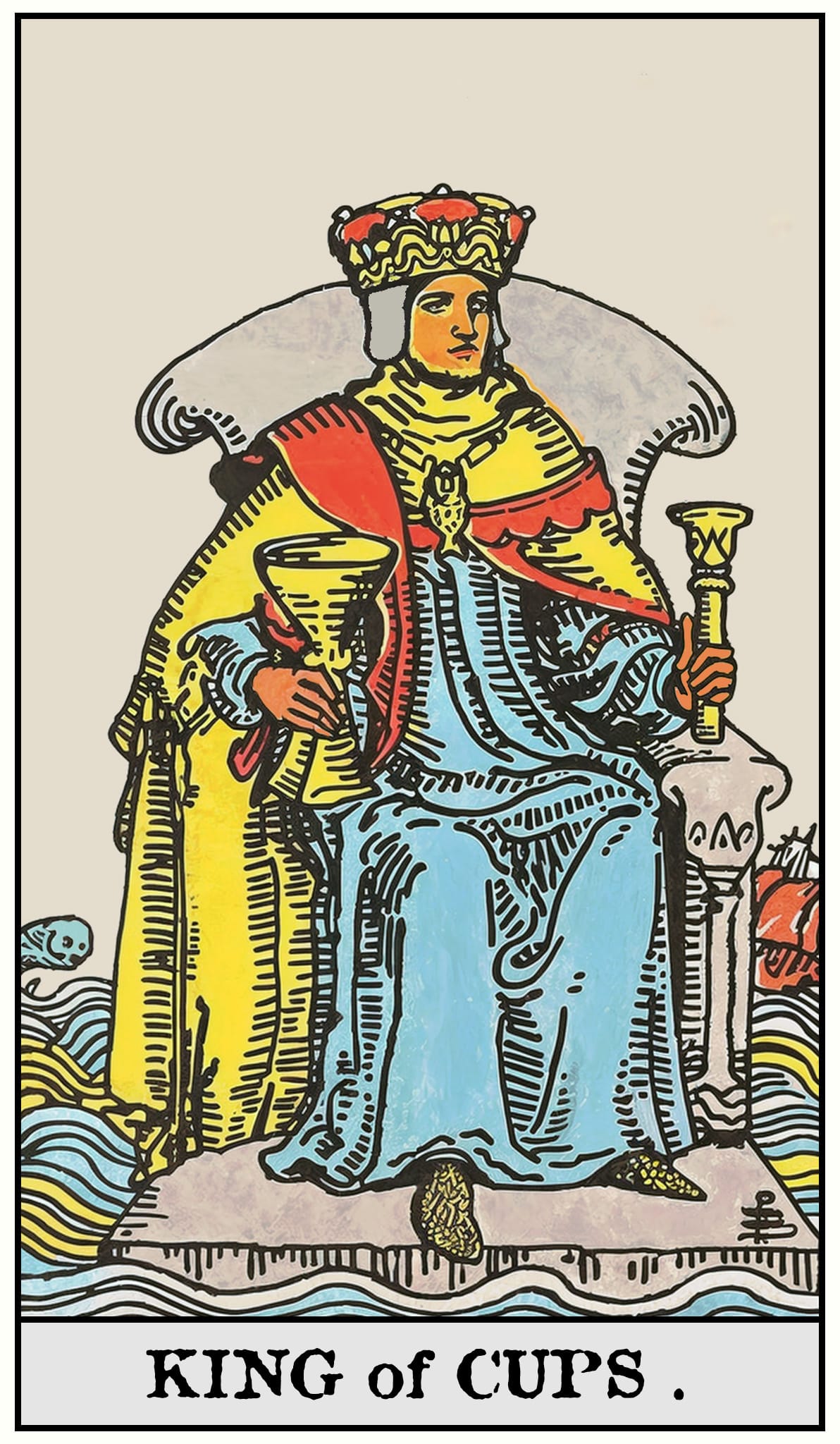
The Emperor builds structures of permanent order — the frame that governs. The King of Swords does not maintain frames; he sees through them. When the truth and the rule diverge, truth wins. This makes him harder to predict than the Emperor and more useful and more uncomfortable. The King of Cups holds emotion with stability — the throne on the water, the centre that does not drift. The King of Swords cuts through what obscures clarity. One holds; the other divides. The fullest authority knows both moves — and knowing when to hold and when to cut is the conversation the two Kings conduct across the Minor Arcana's final positions.
The complete three-layer reading for all 78 cards — including the full psychological and archetypal layers — is in The Pocket Guide →
The clarity that has stopped being available to correction is no longer clarity. It is a position.
Shadow TrapThe mind that has been right so often, and has been recognized for being right so consistently, that it has lost the structural capacity to receive correction — the King whose court has been emptied of anyone positioned to say otherwise.
Shadow GiftThe capacity to hold the sword raised without the raising becoming a permanent assertion — to remain available to the evidence that would change the verdict, which is what separates genuine discernment from its shadow and is the only thing that keeps the raised blade honest.
Shadow readings for each card, by suit, are gathered in The Pocket Guide →
We do not read a reversal as an opposite; following Pollack, a turned card is the same energy blocked, withheld, or redirected — not inverted into its negation. A reversed King of Swords often marks the authority of mind applied in service of a particular outcome rather than in service of what is true — the capacity for discernment recruited into advocacy, the King's sharpness used not to see clearly but to make a case.
Why Apocrypha Does Not Read Reversals as Opposites →Sixty-three symbols across the full deck — cross-referenced by card and meaning — are mapped in The Symbol Dictionary →
Where has my clarity hardened into a verdict I no longer revisit — and who does that certainty serve? What judgment would I have to hold as provisional to keep it honest?
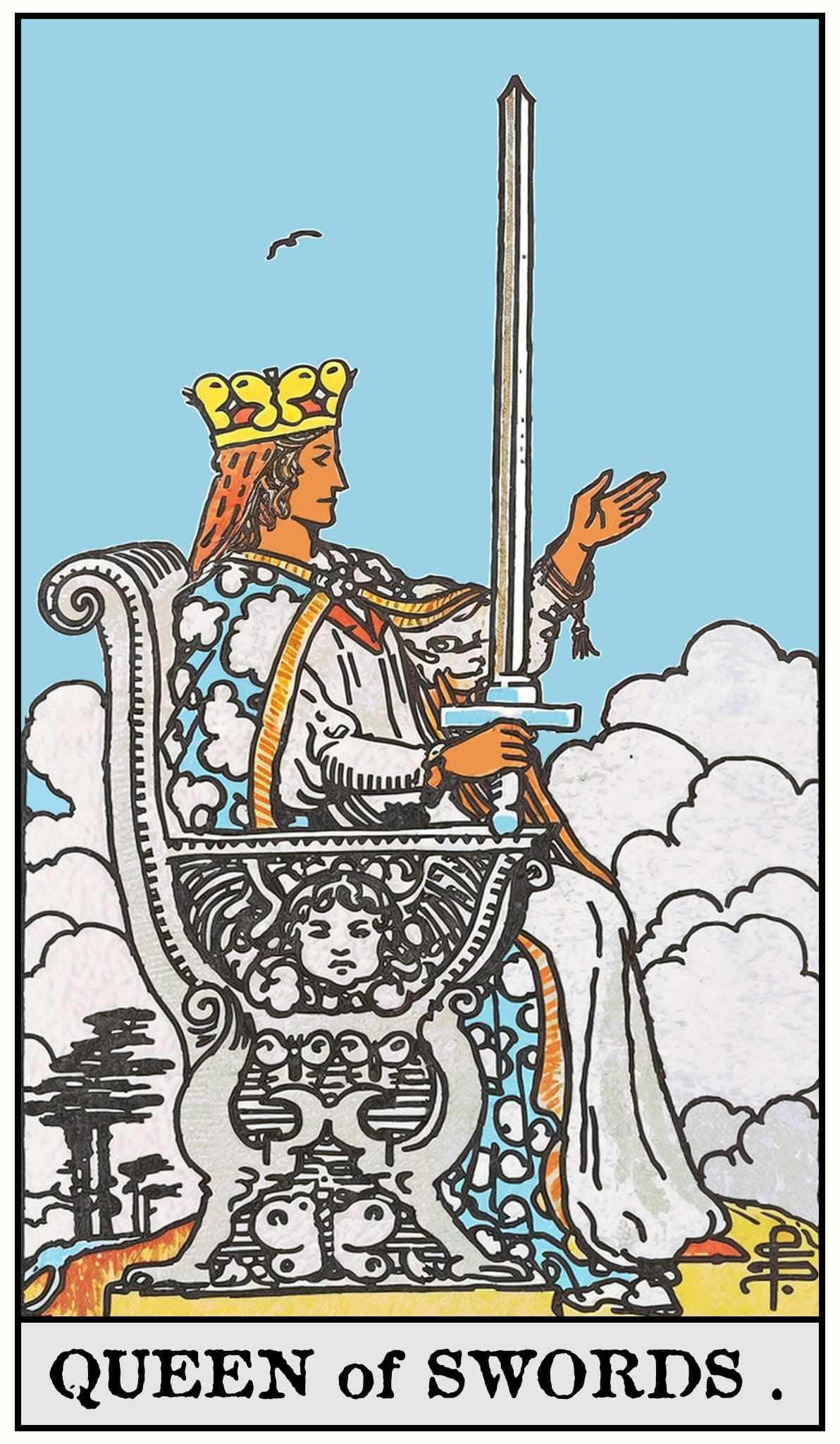
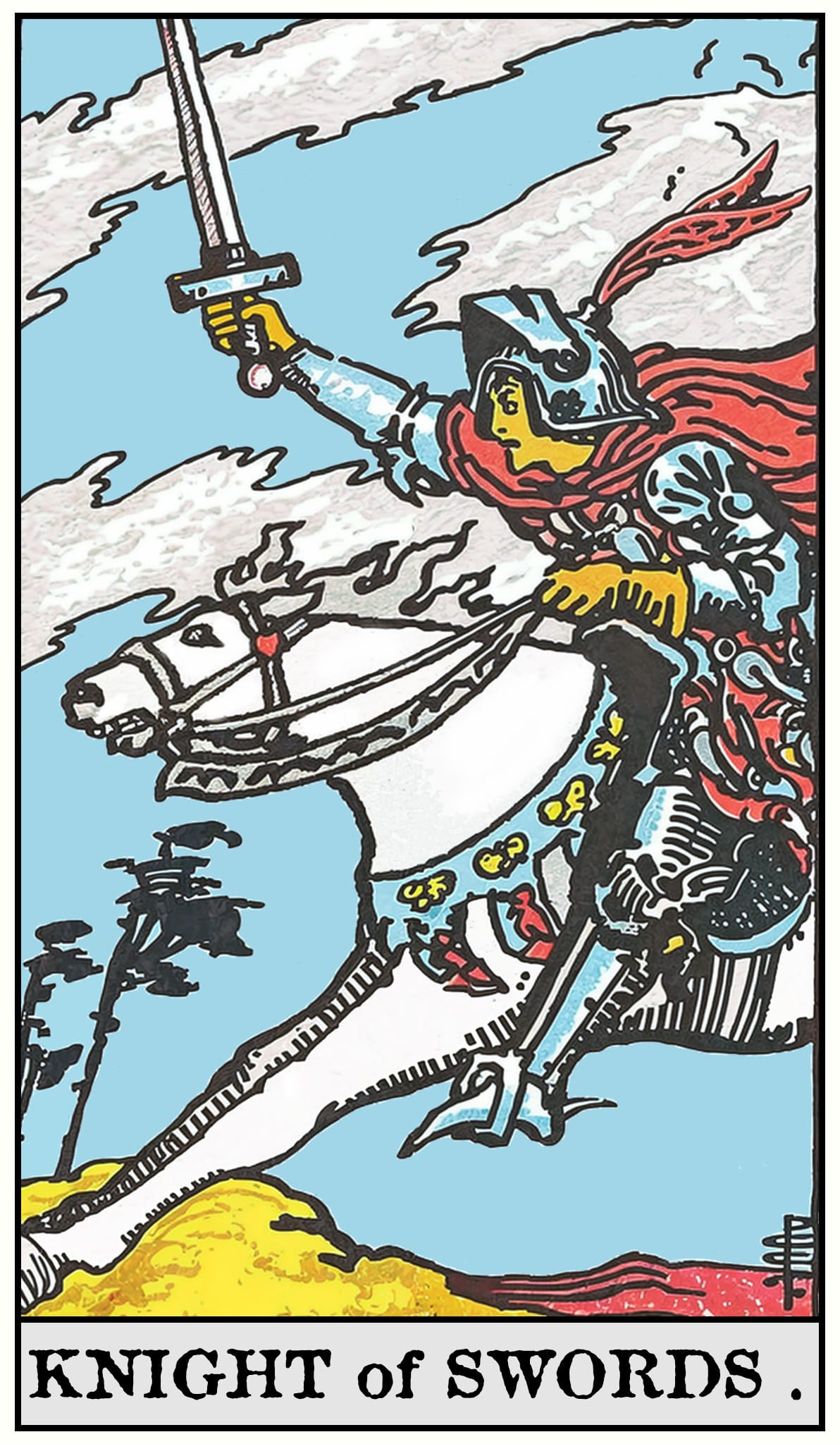
The King of Swords is most often read as the archetype of the precise, intelligent authority. The shadow the card contains — and it is precise — is the same capacity applied in the service of being right rather than in the service of what is true. The distinction between these is the whole content of the King's shadow: a mind this sharp can construct an impeccable case for whatever position it has already taken, and the case will be indistinguishable from genuine discernment unless someone in the room is willing and positioned to push back. The question the card asks is whether anyone is.