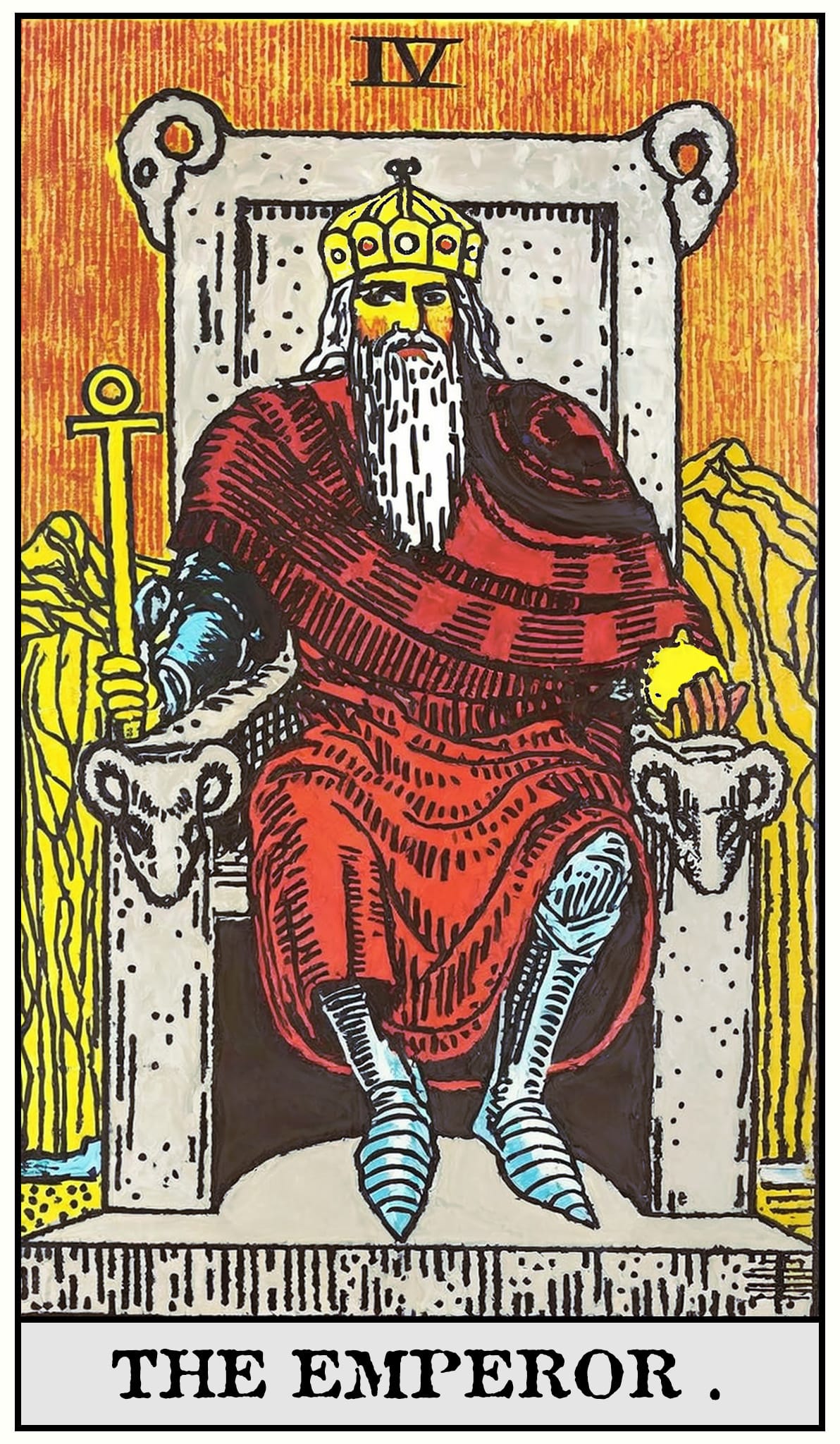
The Emperor
He sits on a stone throne in a bare landscape, wearing armour beneath his robes — the man who built the structure has not stopped being the man who once had to defend it.
The Emperor names the principle of structure: the framework that makes complex activity possible, the authority that holds what would otherwise disperse, the willingness to establish form and accept the consequences of it. This card's question is not whether order is needed. The question is whether the order in place has remembered what it was built to serve.
The framework that makes accomplishment possible, and what it costs
The Emperor appears when the situation requires firmness — the establishment of a boundary, the imposition of a structure, the willingness to say what will and will not be permitted. Decisions made under his sign are durable; commitments entered are not easily exited. The card rewards those who are willing to commit, and is notably unsympathetic to the wish to keep all options indefinitely open. In his shadow, he is the rule applied without judgment, the form that has outlived its function, the authority that has become entirely about its own preservation.
The father-imago and the question of inherited authority
The Emperor is the internalized authority figure — the source of the "should" in the inner voice, the structure of the conscience as it was first installed by the people who raised us. The question his appearance raises is whether the convictions being carried were ever actually examined, or absorbed wholesale from figures who no longer need to be obeyed. His vertical line — Emperor at IV, Justice at XI, Moon at XVIII — traces order, then the weighing of what order has produced, then the revelation of everything order cannot contain.
The complete three-layer reading for all 78 cards — including the full psychological and archetypal layers — is in The Pocket Guide →
The form that was once protective can become the cage it was meant to prevent.
Shadow TrapThe authority that has confused its own continuation with the purpose for which it was originally built — rigidity presenting itself as principle.
Shadow GiftThe capacity to maintain structure that genuinely serves, while remaining capable of recognizing when the form must be revised rather than defended.
The complete shadow reading — trap, gift, and the practice of integration — for all 22 Major Arcana is in The Shadow Archetype Reference →
We do not read a reversal as an opposite; following Pollack, a turned card is the same energy blocked, withheld, or redirected — not inverted into its negation. A reversed Emperor often marks authority that has curdled — the petty bureaucracy, the controlling figure whose competence has hardened into cruelty, the self-imposed rule that punishes the person it was meant to protect.
Why Apocrypha Does Not Read Reversals as Opposites →Sixty-three symbols across the full deck — cross-referenced by card and meaning — are mapped in The Symbol Dictionary →
Whose authority are you still carrying? And is the structure it built still yours — or have you been following a rule for so long that you have forgotten there was once a reason for it, and a person who made it, who is no longer in the room?
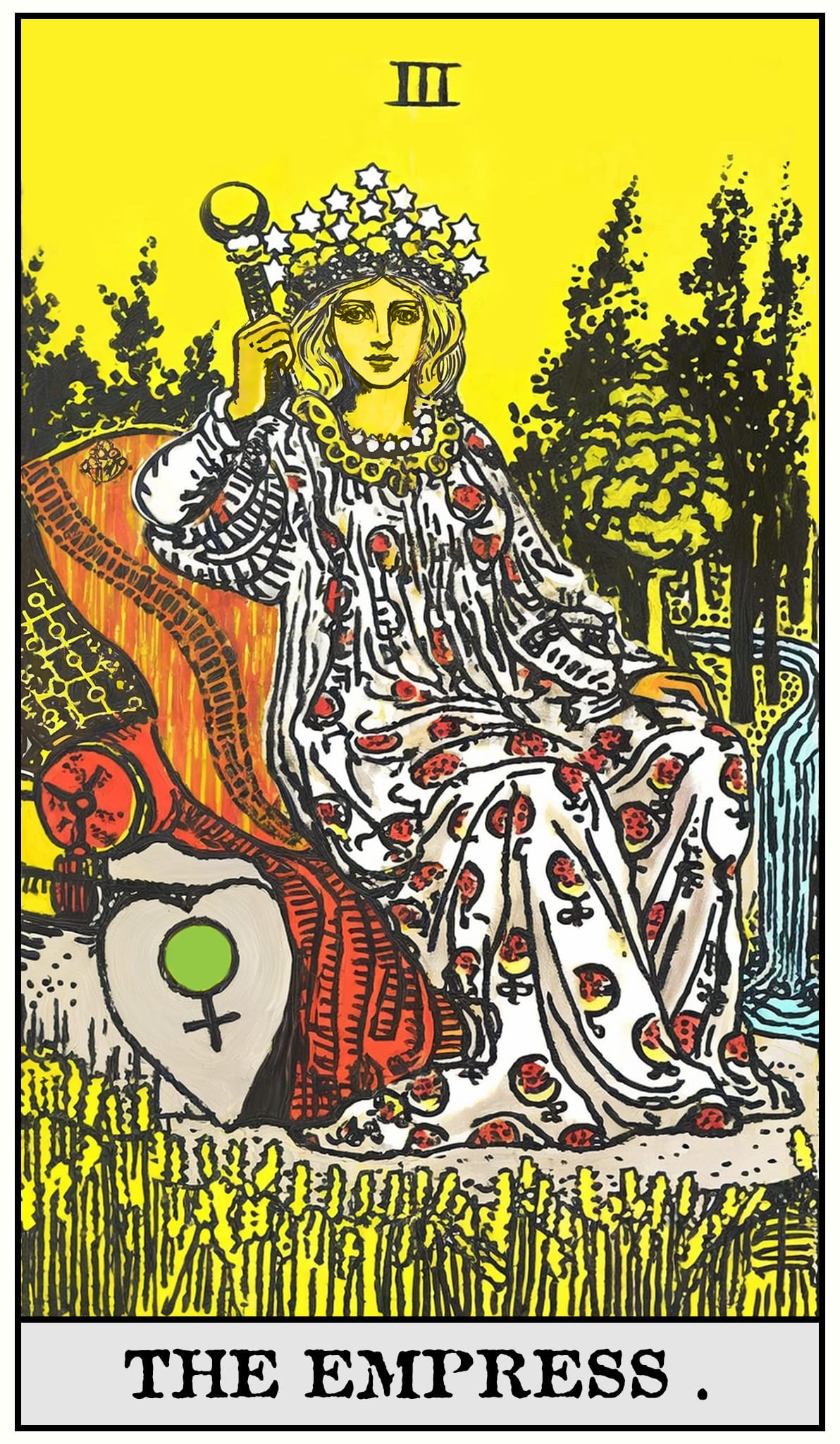
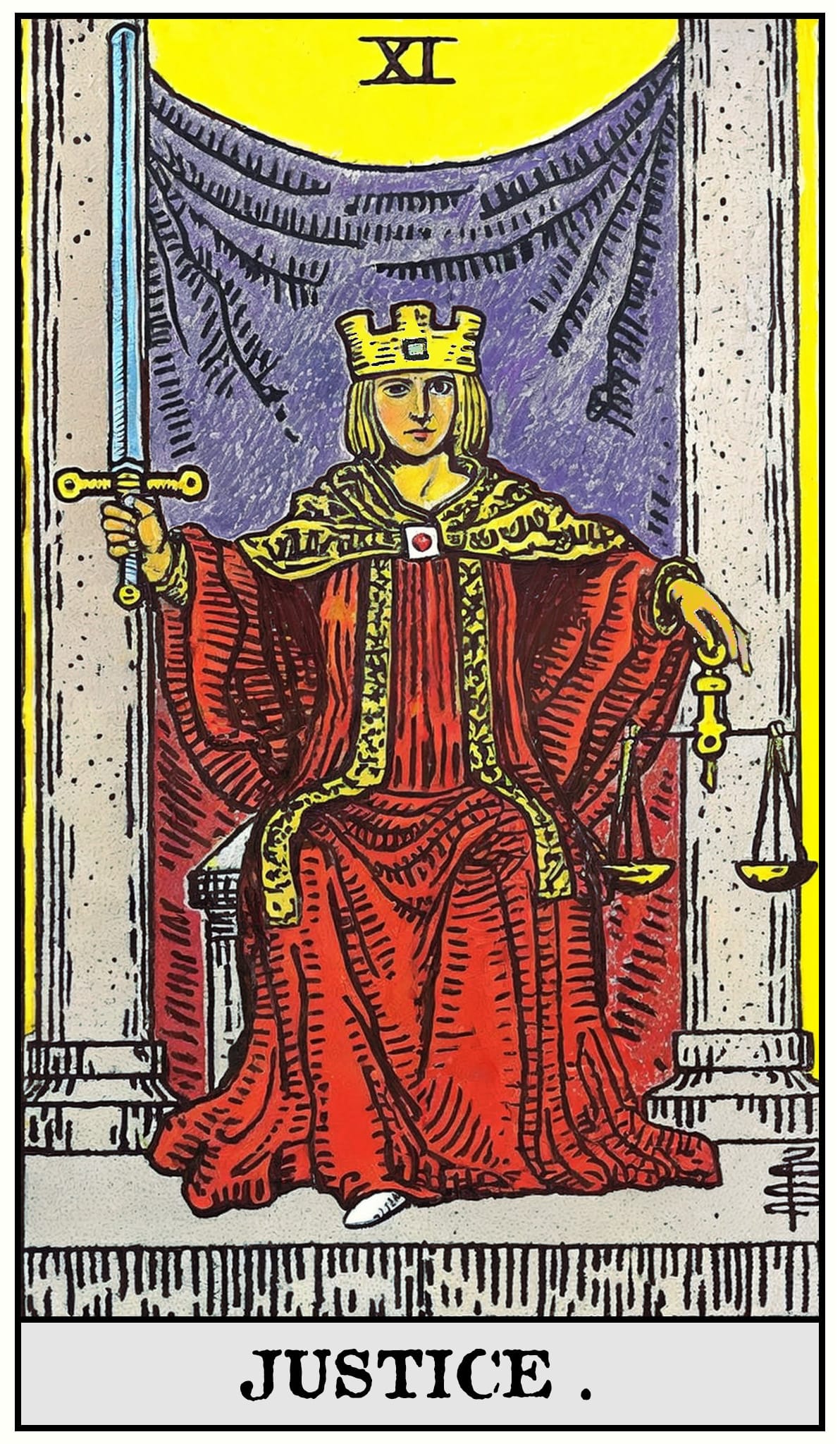
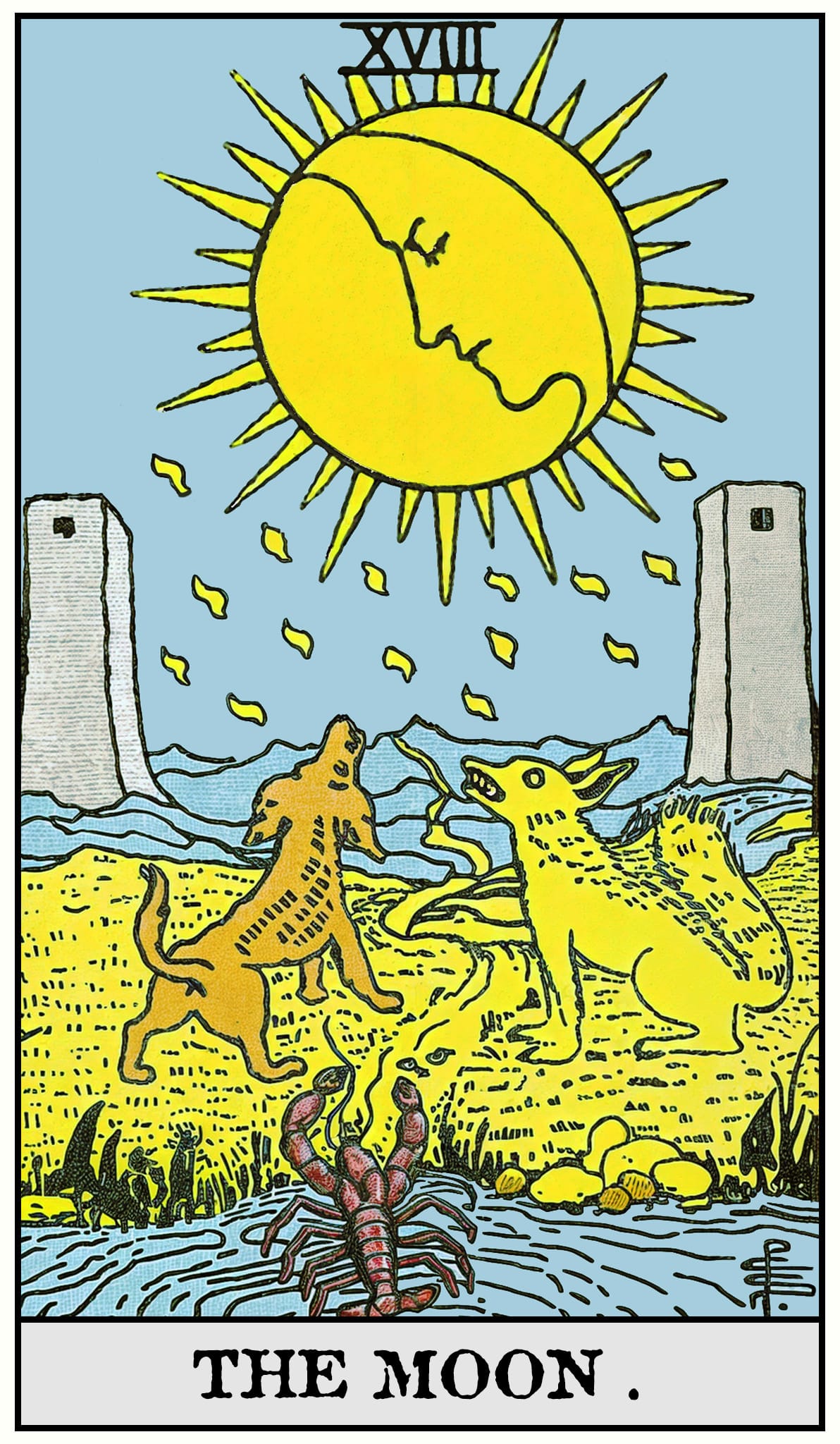
The Emperor is most often read either as pure endorsement of order or as a symbol of oppression, depending on the reader's existing relationship to authority. Neither reading finishes with the card. The more precise question is always: what is this structure for, is it still serving that purpose, and who is paying the cost of maintaining it? The card does not answer these. It makes them unavoidable.