King of Cups
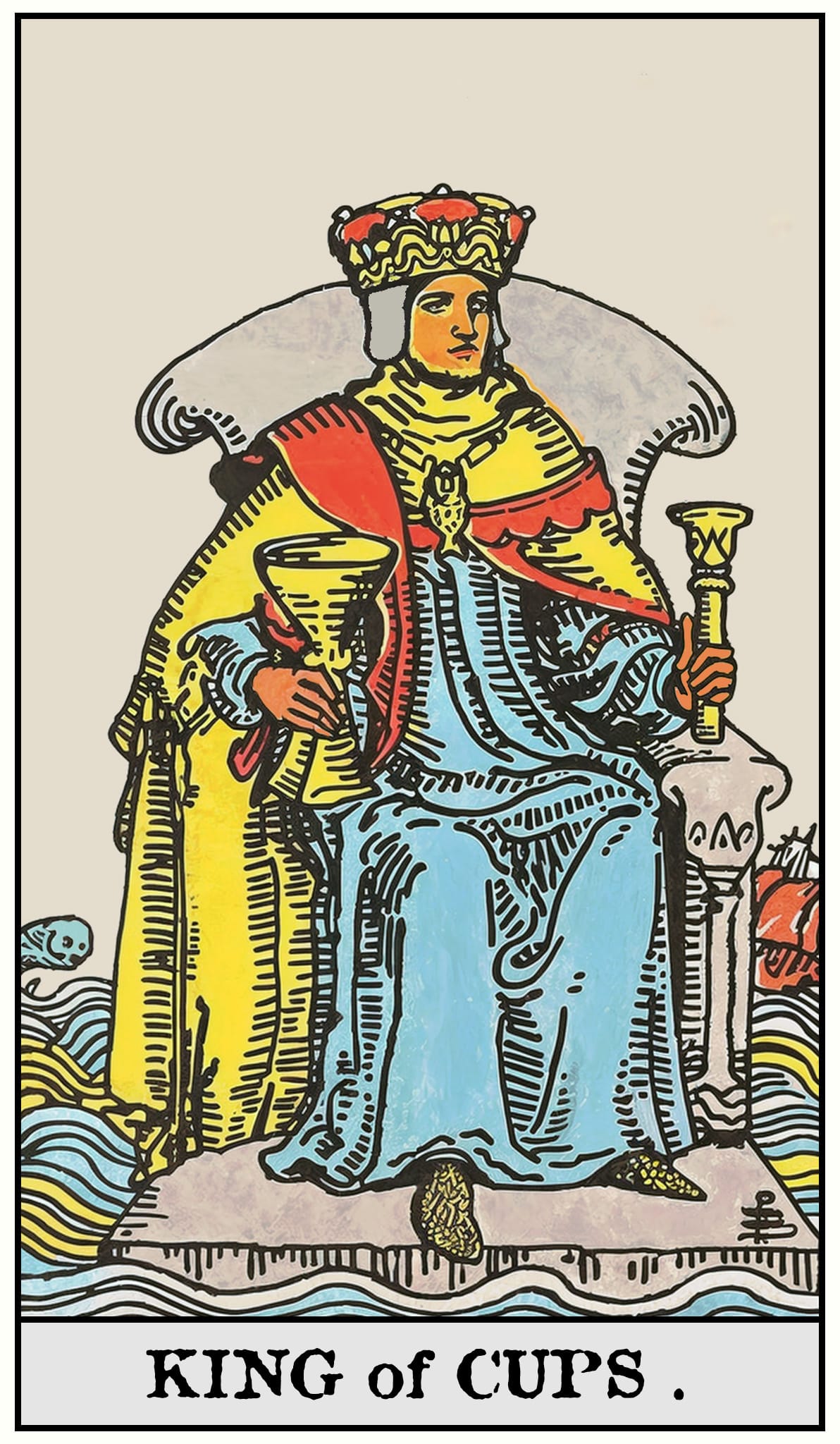
A king sits on a stone throne set directly in open water — waves moving around him, a fish amulet on his chest, a cup in one hand and a sceptre in the other, a leaping fish to his right and a ship in the distance to his left.
The King of Cups names the centre that does not need the water to be still: the person who can be fully affected by something without being determined by it, who can sit with another's pain without restructuring the room around his own discomfort. The water moves. The throne holds. The equanimity is real — and its shadow is the performance of equanimity so well developed it has become armour designed to look like its opposite.
The water moves in every direction. He is steady. These are not separate facts.
The King of Cups is the person who can hear the worst news without reorganizing the room around his own response to it. Who can cry, and then continue. Who can carry the full weight of the emotional world without needing it to stop moving in order to function inside it. The fish amulet on his chest keeps the unconscious close to the surface — he is not above the water he governs. In shadow, the King's equanimity becomes performance: the hard-won calm that has been exercised long enough to become habitual presentation, the cup held without being drunk, the emotional stability that has quietly become a kind of armour.
The suit's final teaching — authority within the element, not above it
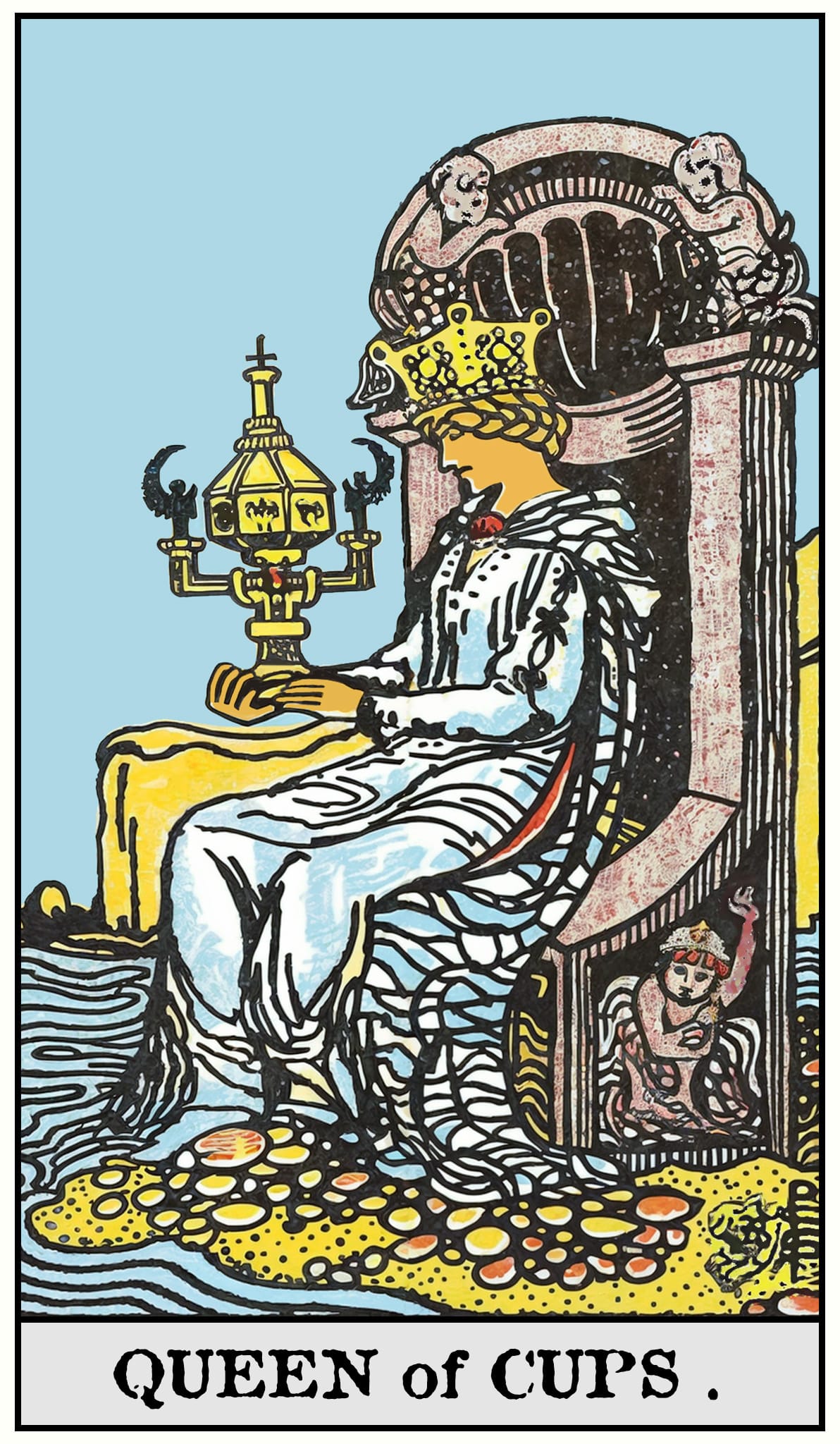
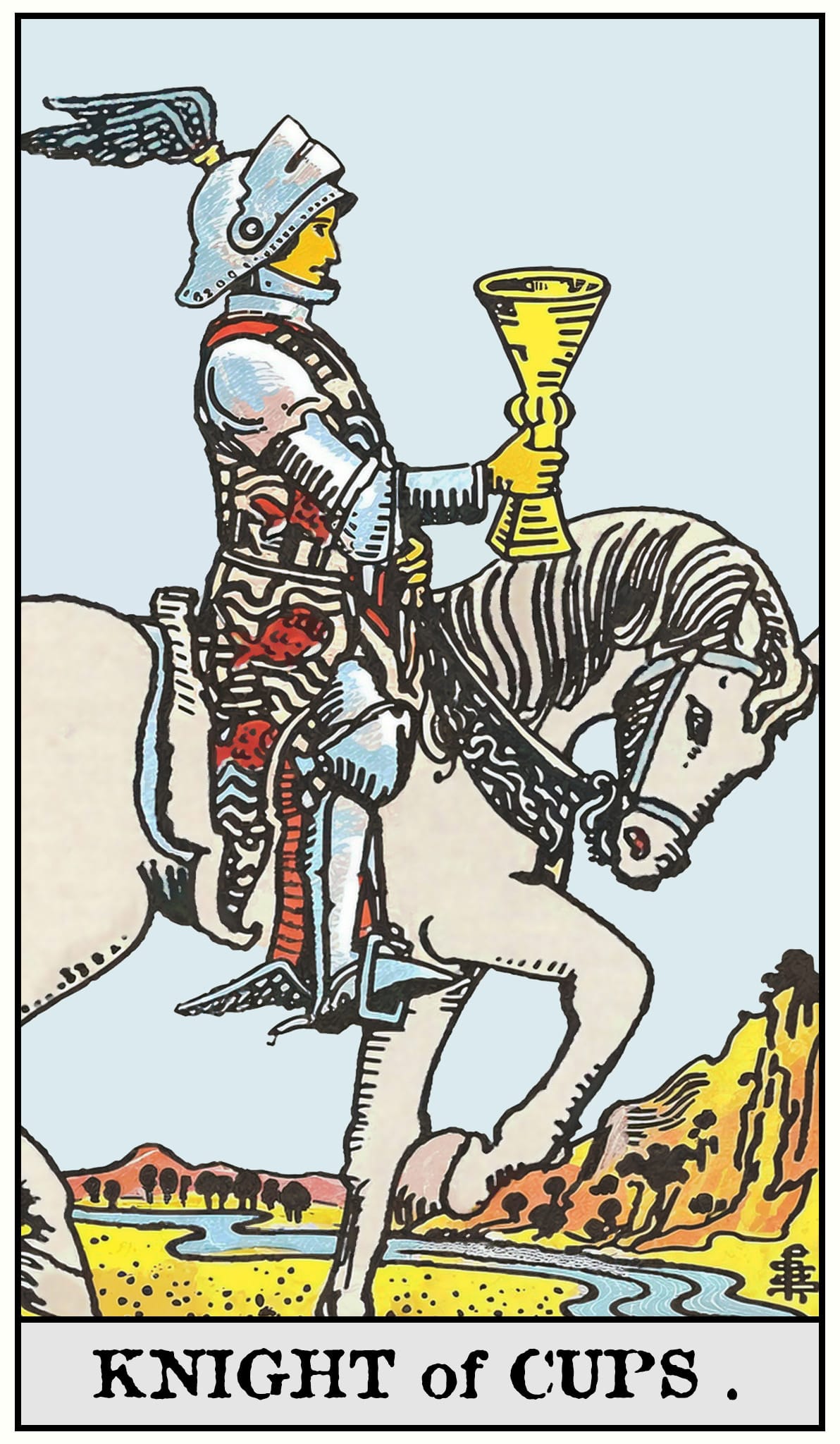
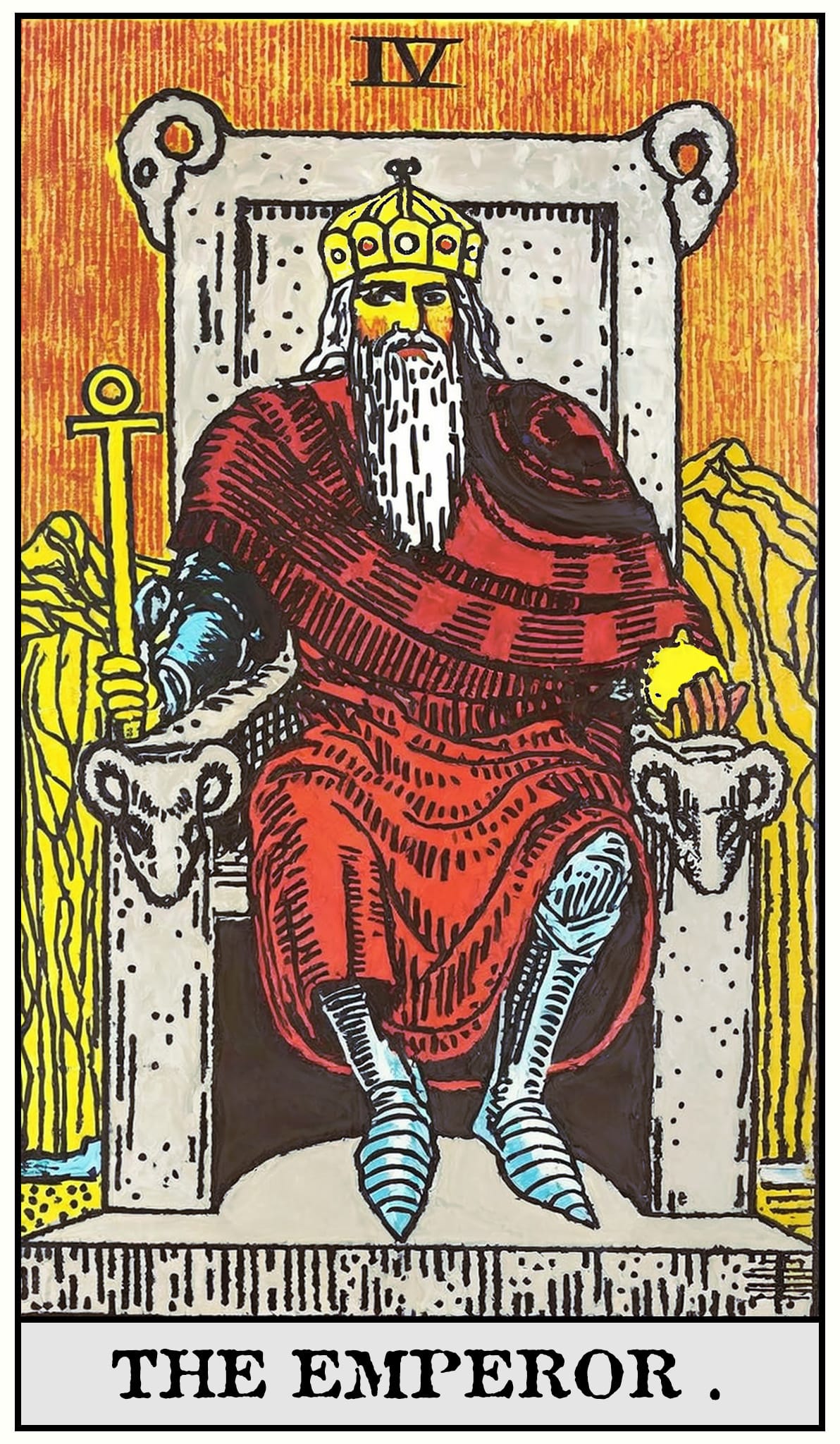
Where the Emperor governs fixed order from dry stone, the King of Cups governs motion from a floating throne. These are different theories of power. The Emperor's authority is over the territory. The King of Cups' authority is within the element. The Page received the unconscious signal and held the cup. The Knight idealized the feeling. The Queen received and held the depth of others inward. The King does something different from all three: he takes the suit's complete emotional arc — all ten numbered cards — and remains present inside it without being dissolved. That is the hardest thing water teaches. This is the figure who has learned it.
The complete three-layer reading for all 78 cards — including the full psychological and archetypal layers — is in The Pocket Guide →
The equanimity that was hard-won can become, over time, the equanimity that is merely performed.
Shadow TrapThe stable surface that has been maintained so consistently and for so long that the maintenance has replaced the interior it was supposed to protect — the King whose calm is no longer evidence of depth but a substitute for it.
Shadow GiftThe capacity to remain accessible beneath the stability — to be affected, to let the water move the throne without tipping it, and to let the people who need to see that the King can be moved actually see it, rather than only the equanimity that follows.
Shadow readings for each card, by suit, are gathered in The Pocket Guide →
We do not read a reversal as an opposite; following Pollack, a turned card is the same energy blocked, withheld, or redirected — not inverted into its negation. A reversed King of Cups often marks the emotional containment that has become suppression — the stability maintained by reducing what is allowed to be felt rather than by developing the capacity to feel it fully and remain present anyway.
Why Apocrypha Does Not Read Reversals as Opposites →Sixty-three symbols across the full deck — cross-referenced by card and meaning — are mapped in The Symbol Dictionary →
What would it mean to let yourself be fully affected by something — to let the water move — without letting the movement determine what you do next? And is the steadiness you currently carry the King's — earned through exposure — or something else?
The King of Cups is most often read as the emotionally mature masculine — the man who feels and holds and does not destabilize. The less comfortable reading asks how the stability was achieved and what it is currently costing. The card's shadow is precise: the cup is held, not drunk. The equanimity can be genuine depth or it can be the appearance of depth maintained by not opening the cup. The relevant question is not whether the King is stable. It is whether the stability is responsive or defended — whether the water is being felt or only managed.