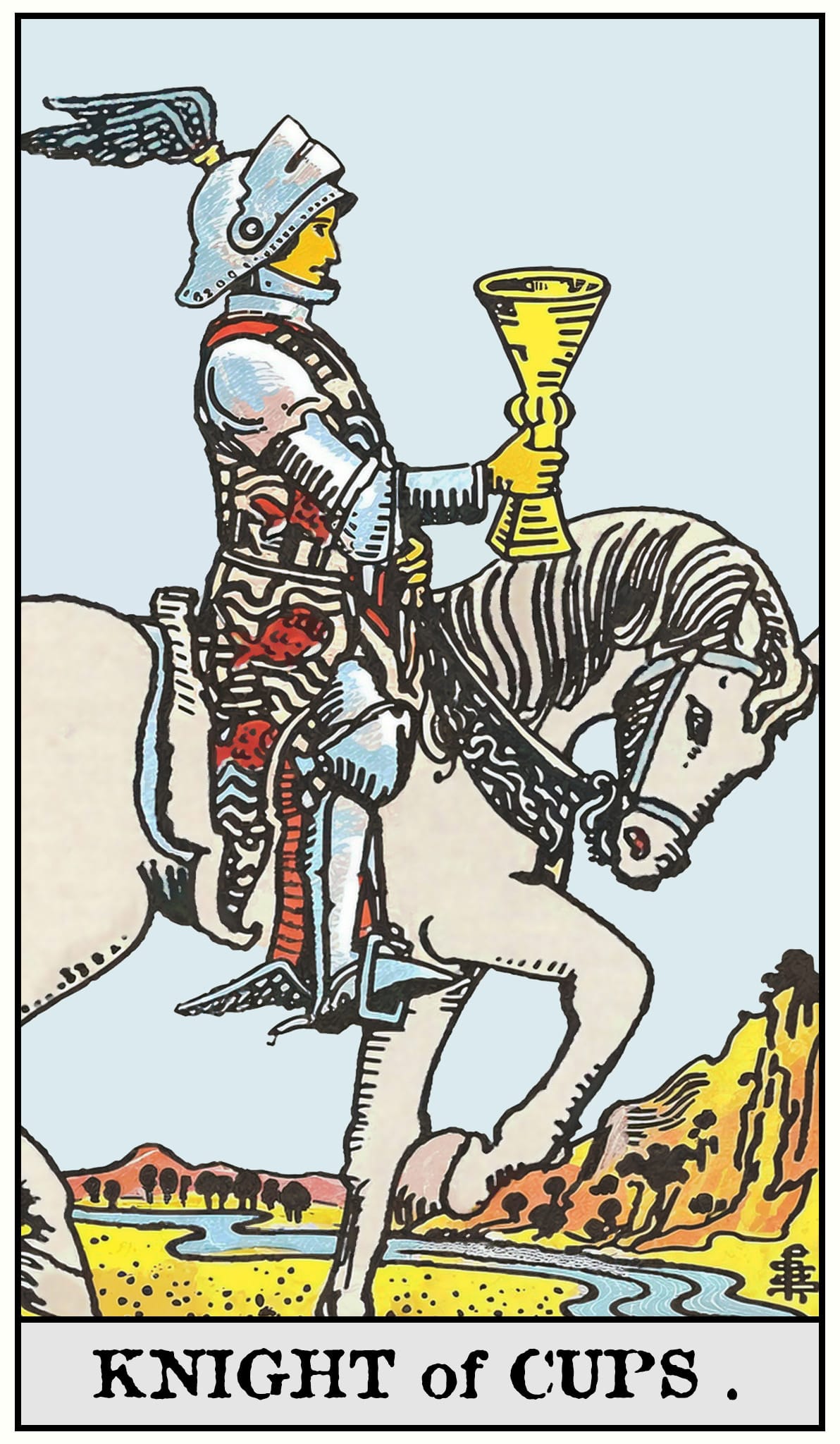
Knight of Cups
A knight on a white horse moving at a calm walk, wearing a winged helmet, his cloak decorated with fish — one cup extended forward in an offering gesture, a still river nearby.
The Knight of Cups arrives with real feeling and a genuine offer — and the difficulty is that neither the feeling nor the offer is quite what it appears to be. He is not deceiving. The cup extended is sincerely held. What he is offering is his own ideal — of love, of depth, of being-understood — held in a cup and sincerely mistaken for a gift to someone else.
The feeling is genuine. The offering may not be.
The Knight of Cups carries the quality of the grand romantic gesture — the letter at three in the morning, the declaration that reorganizes the room, the new path offered as evidence of transformation. Popular tarot made this card the arrival of the worthy suitor. Reject that reading. What the Knight is extending in his cup is a projection — his own ideal of love, of meaning, of recognition — held out with complete sincerity and mistaken for the other person. The people who receive Knights of Cups often sense something slightly off without being able to name it. What they sense is that they are being offered a mirror, not a window.
Jung's puer aeternus in water's register — depth aestheticized, transformation as performance
Where the Knight of Wands was addicted to onset, the Knight of Cups is addicted to the feeling of depth without the willingness to descend into actual depth. He has read everything about the soul. He speaks beautifully about vulnerability. He has not yet been broken by what he claims to love, and so his eloquence about it maintains a distance rather than closing one. Mercury — whose symbol the winged helmet invokes — is the messenger between worlds. This Knight has confused carrying the message with being its destination, and his delivery of the cup is, in both senses, an offering of what he wants to receive rather than what the recipient requires.
The complete three-layer reading for all 78 cards — including the full psychological and archetypal layers — is in The Pocket Guide →
The longing for transformation is not transformation. The feeling of depth is not depth.
Shadow TrapThe person who has turned romantic feeling into a vocation — who loves love more than any particular person, who experiences depth as a quality of his own interiority rather than as something that emerges only in genuine contact with another.
Shadow GiftThe recognition that the cup he is extending contains his own reflection — and that genuine offering requires setting the mirror down long enough to see who is actually there to receive it.
Shadow readings for each card, by suit, are gathered in The Pocket Guide →
We do not read a reversal as an opposite; following Pollack, a turned card is the same energy blocked, withheld, or redirected — not inverted into its negation. A reversed Knight of Cups often marks the romantic idealism curdled — the figure whose cup has been extended and refused enough times that the offering has become guarded, the feeling still present but held back, the winged helmet grounded.
Why Apocrypha Does Not Read Reversals as Opposites →Sixty-three symbols across the full deck — cross-referenced by card and meaning — are mapped in The Symbol Dictionary →
Whose ideal of you have you been performing — believing it was yourself? And what would you be offering if you set the cup down and looked at the person in front of you without the mirror?
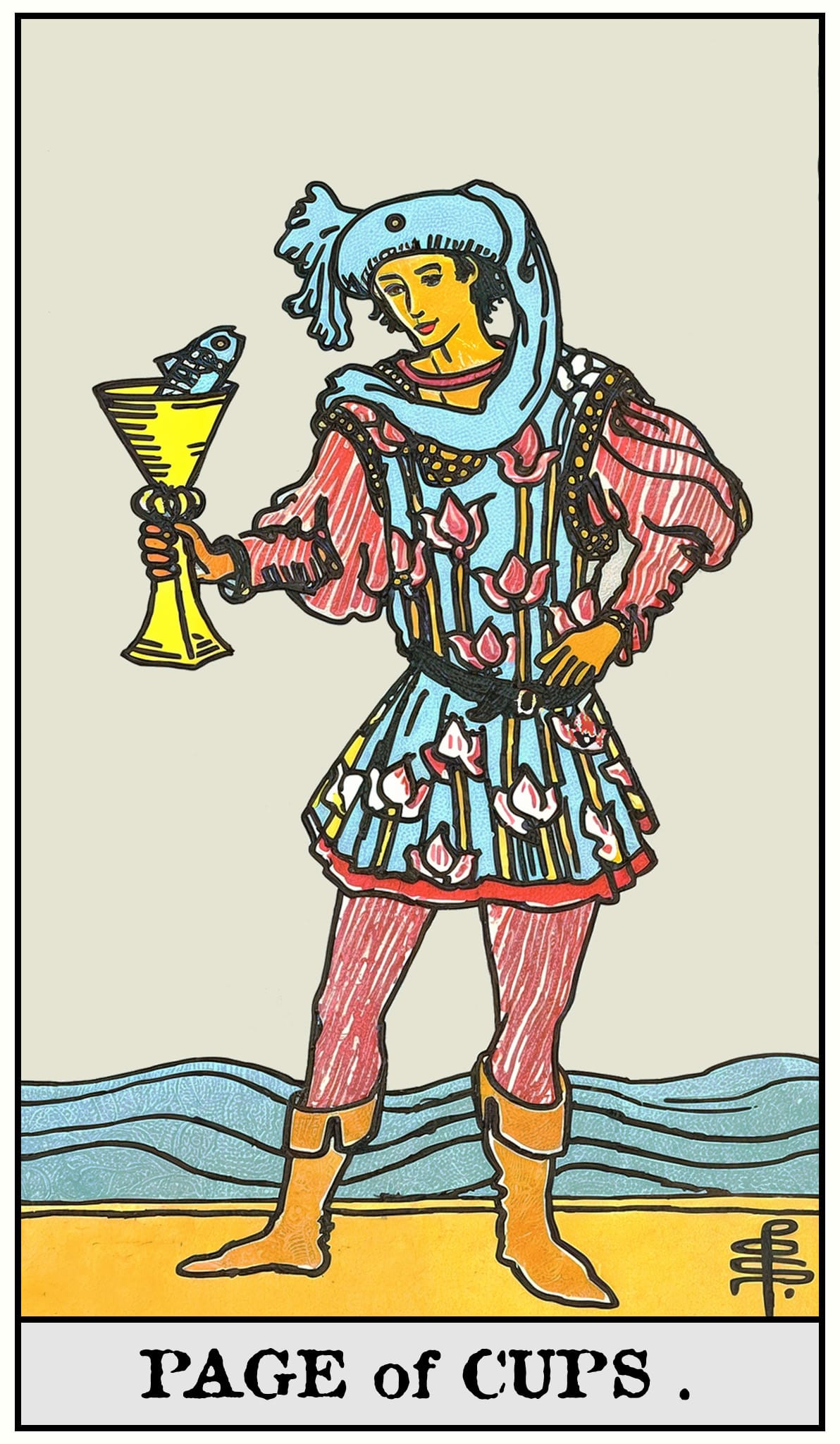
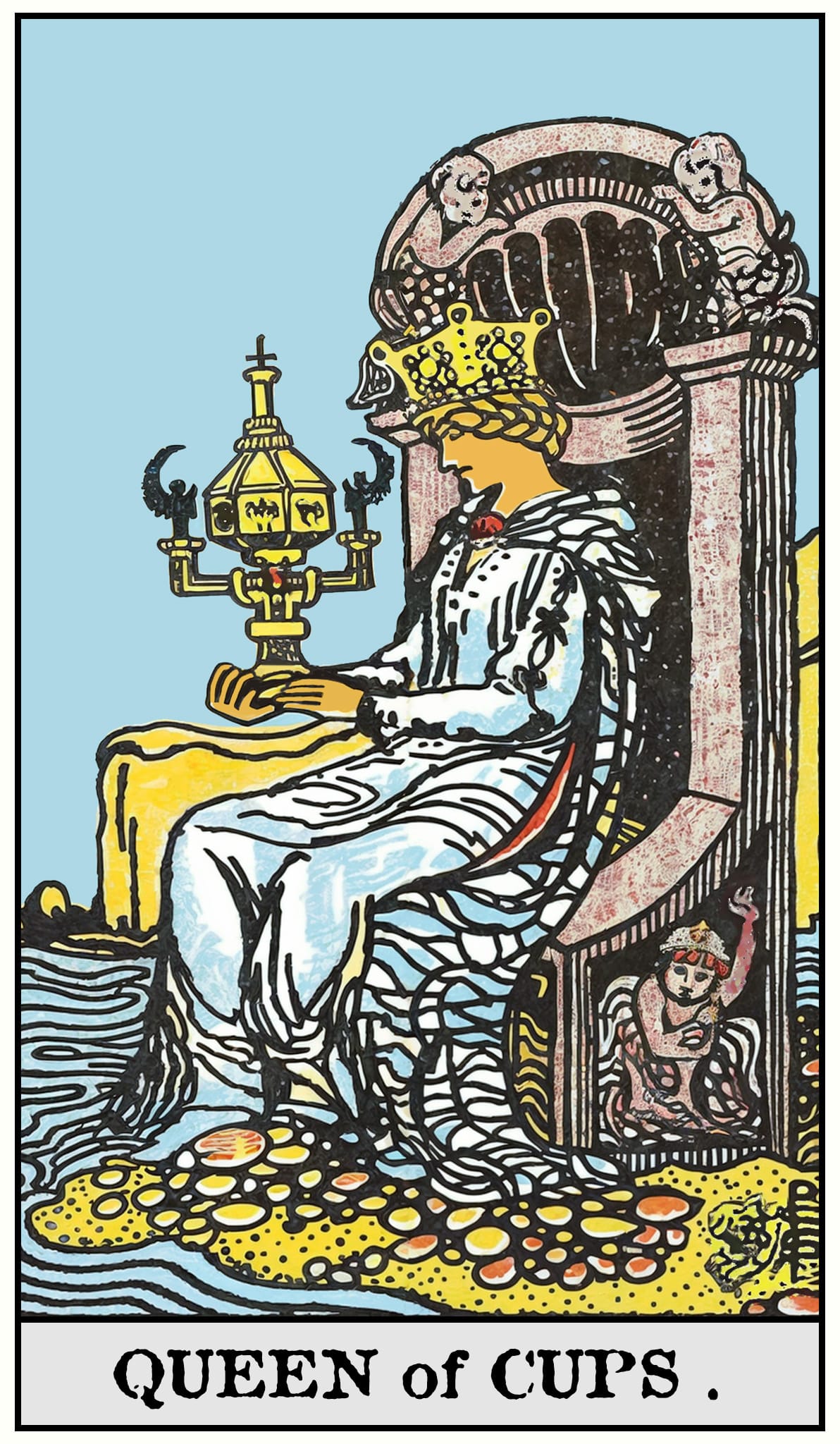
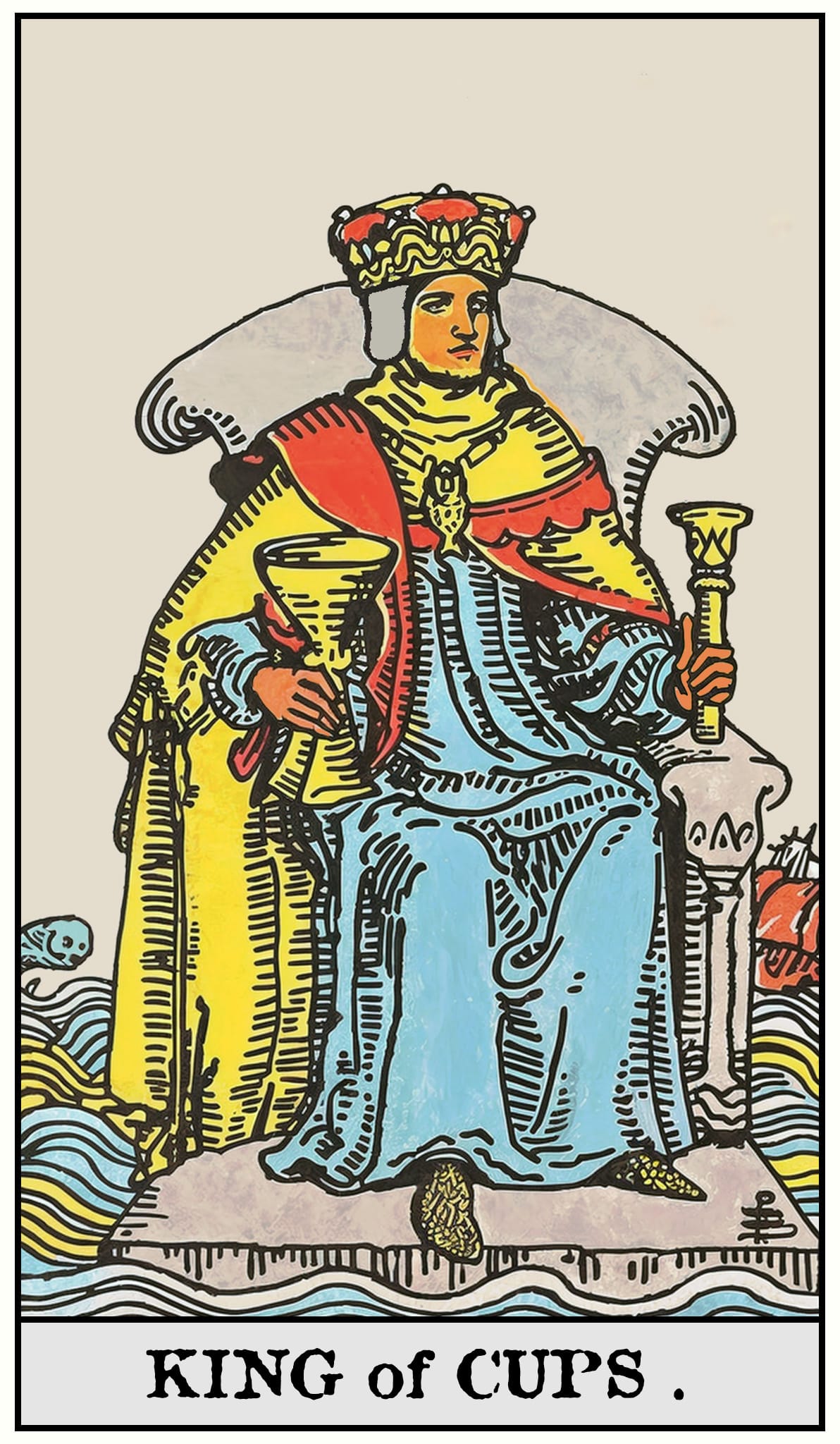
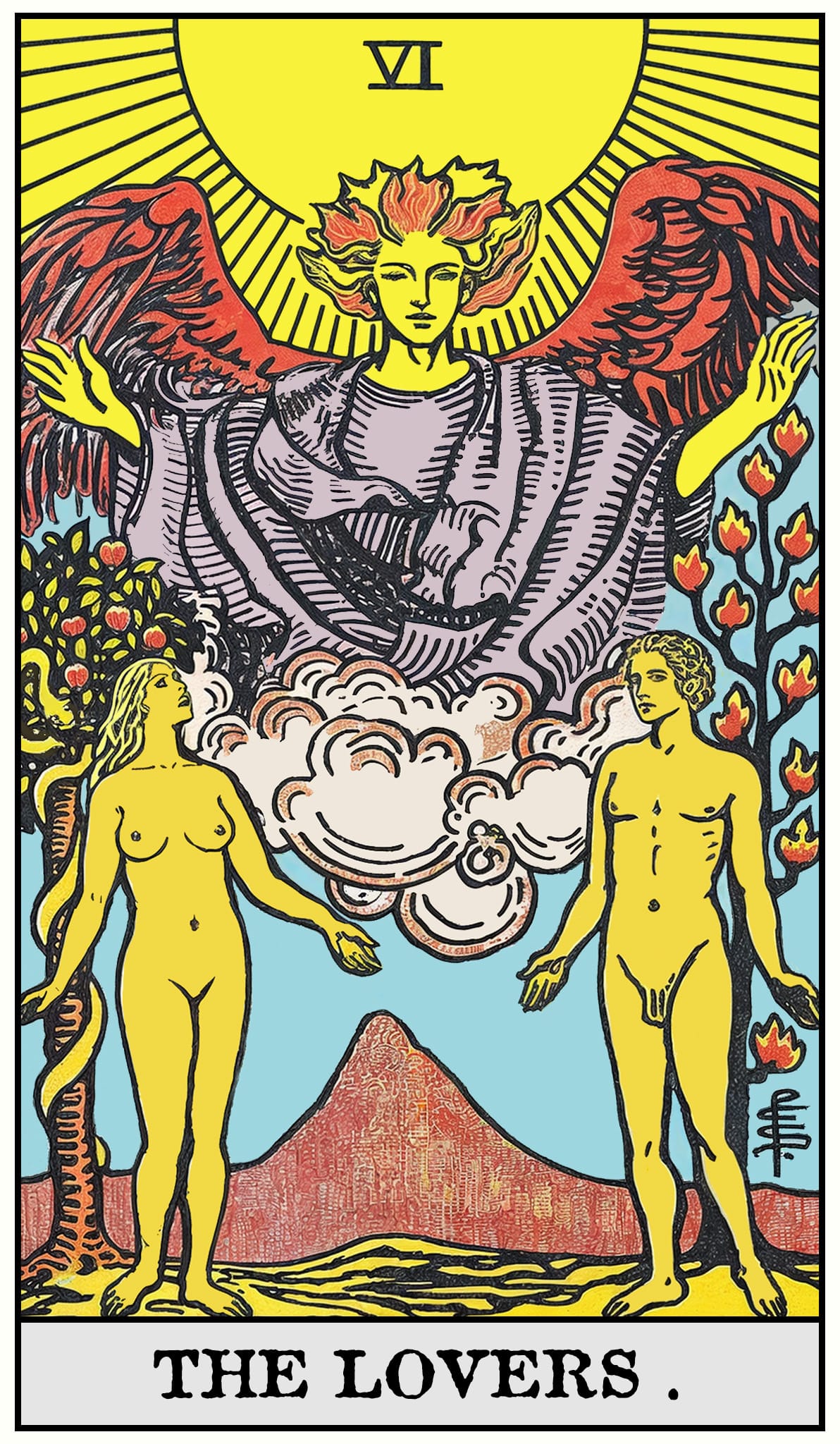
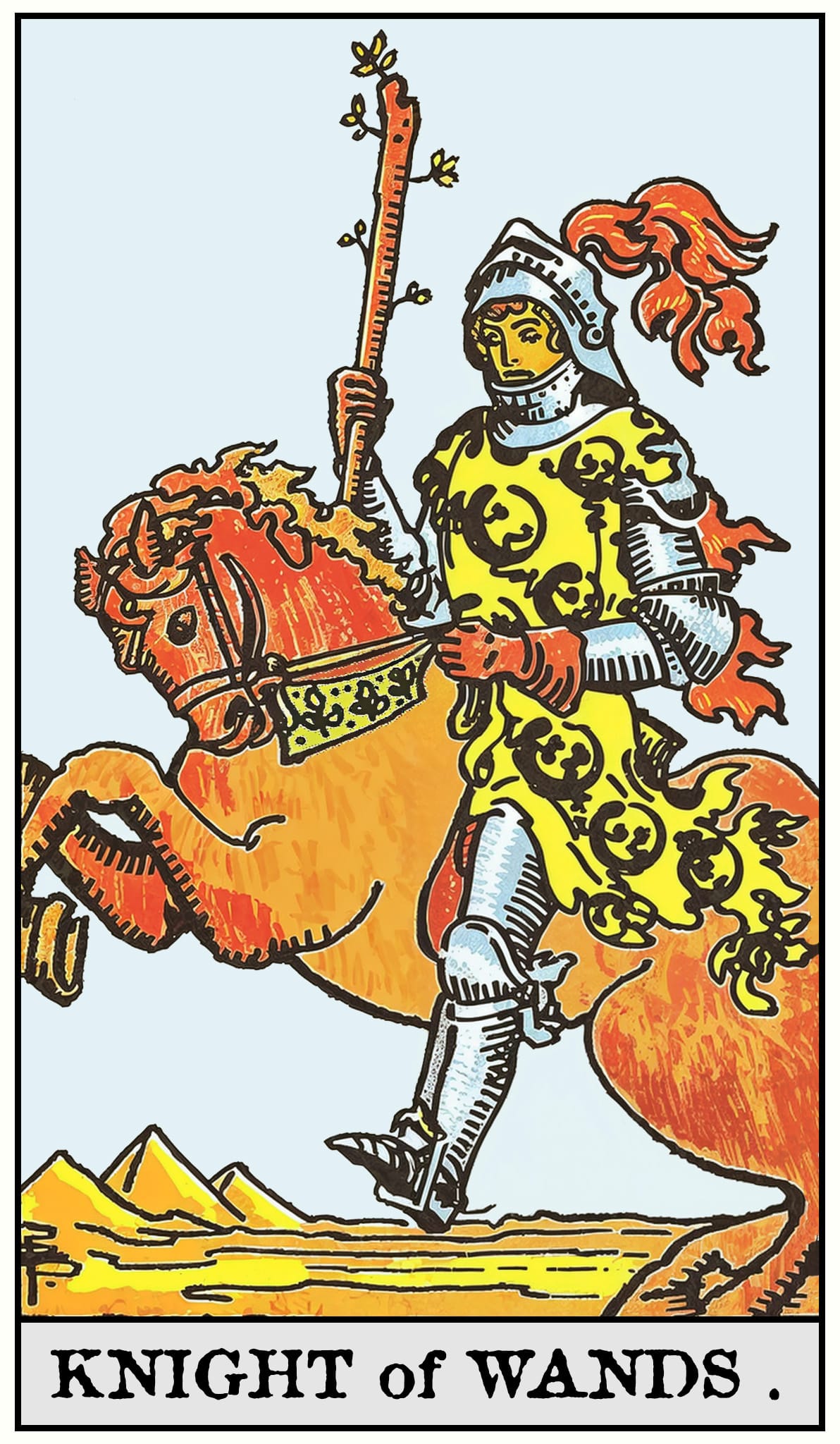
The Knight of Cups is most often received as the romantic arrival — the sensitive man, the feeling person, the one who finally understands. The card does not deny that the Knight understands. It questions what he understands and whether what he understands is you or a version of you that fits more comfortably into what he needs the encounter to be. The question the card requires is not "is this person feeling genuine things?" but "is what is being offered in the cup actually for me, or is it for the idea of me that the offering requires?"