Knight of Wands
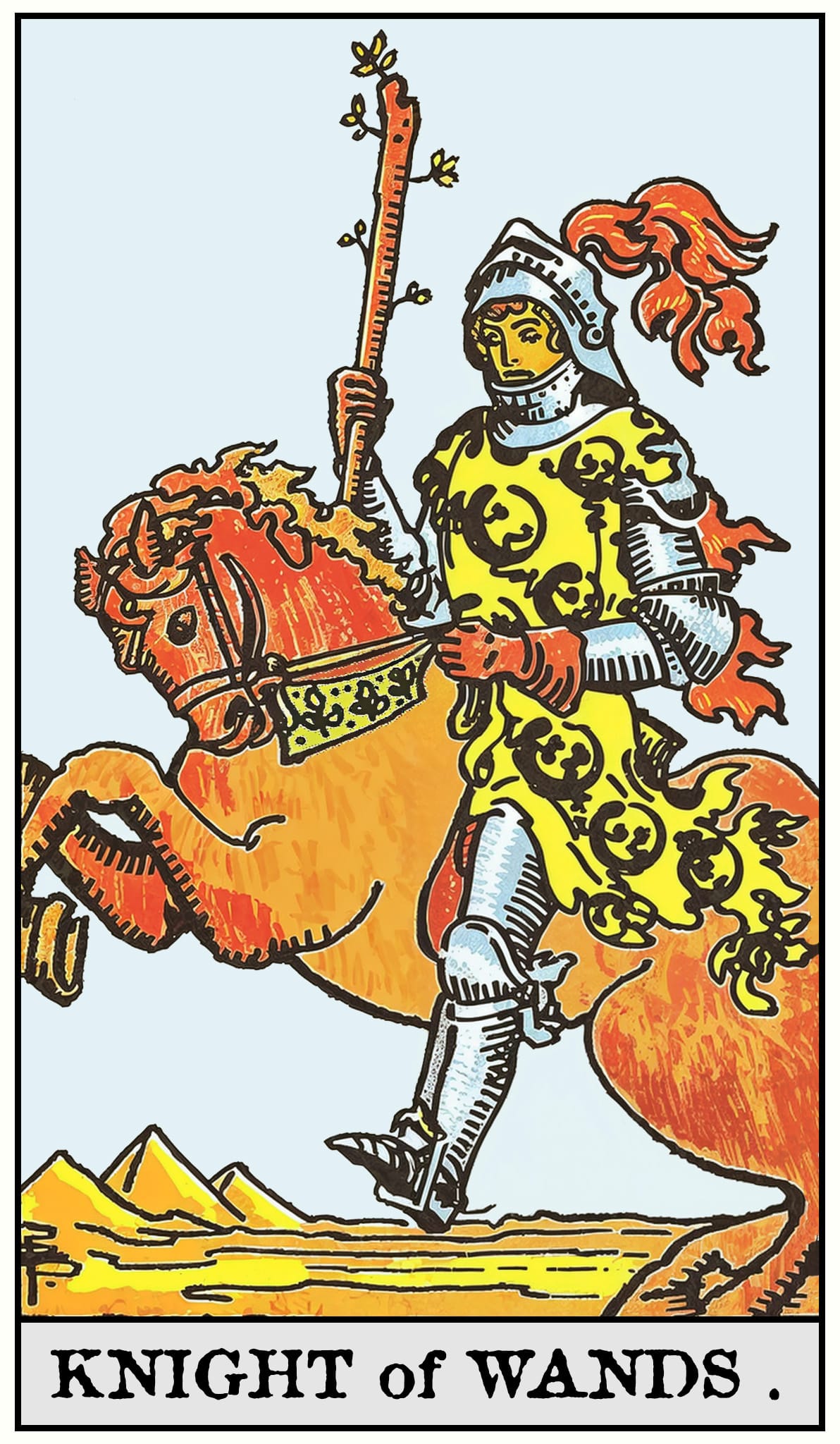
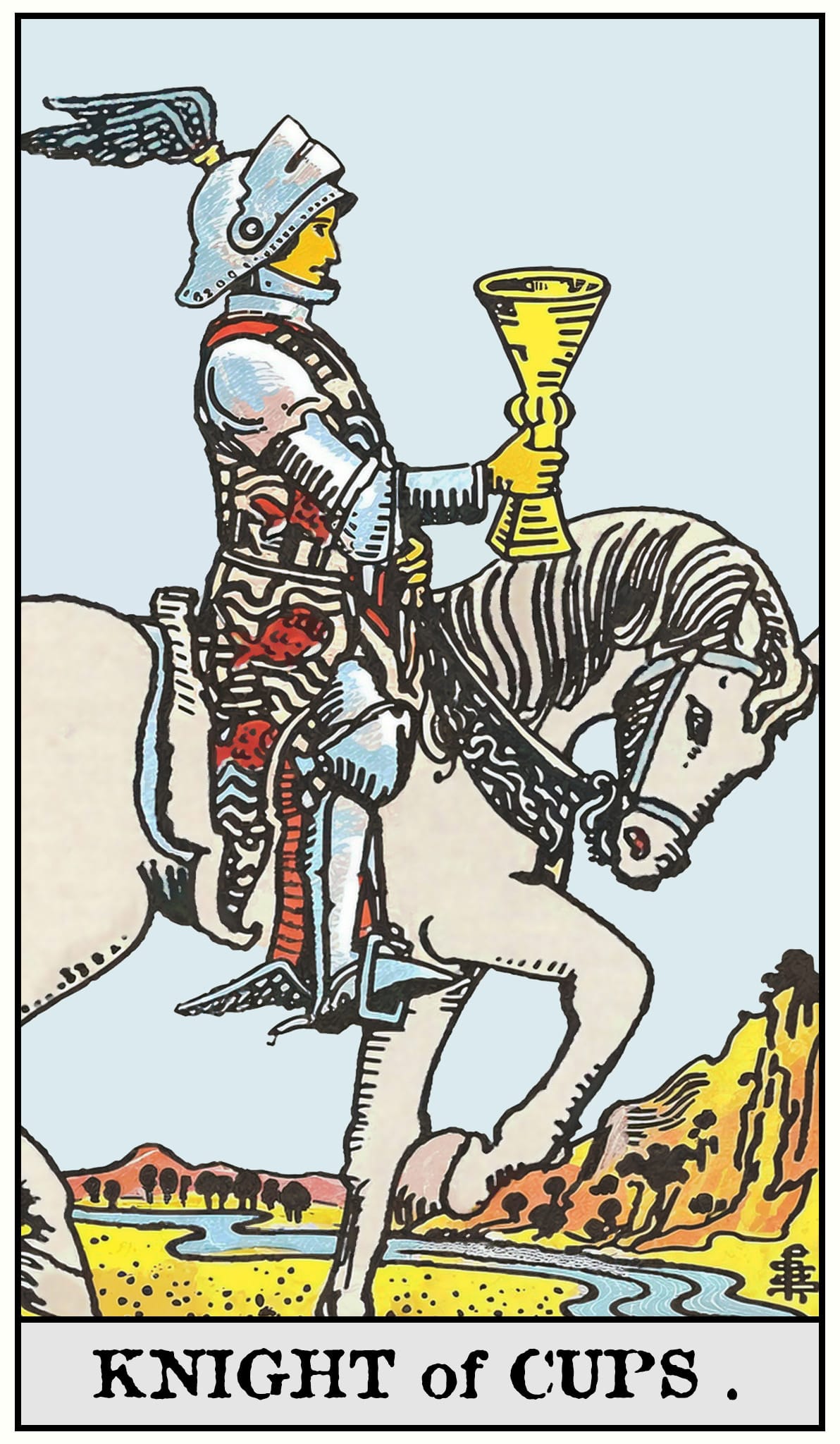
A knight in plumed armour rides a horse mid-leap through open desert, wand raised like a lance — everything in motion, all four hooves off the ground, the horizon already claimed before it is reached.
The Knight of Wands names fire's most magnetic and structurally dangerous form: the person who burns with complete sincerity and cannot tell the difference between believing in something and committing to it. The fire is genuine. The return — the willingness to stay past the first heat, to be present for the maintenance — has not been developed.
The beautiful entrance — and the gap between the promise and the return
The Knight of Wands arrives with real fire. The founder who pivots before the first model is tested, the lover who burns at full intensity for sixty days and then vanishes, the activist who lights the room and leaves before the meeting ends — all of these are Knights of Wands, and in each case the fire was not performed. That is what makes this card genuinely difficult: the Knight believes in the moment of his declaration. What is missing is not sincerity but the capacity to return. In shadow, the Knight leaves a landscape of unfinished things and people who blame themselves for having taken him at his word.
Jung's puer aeternus in fire's register — addicted to onset, not yet willing to become serious
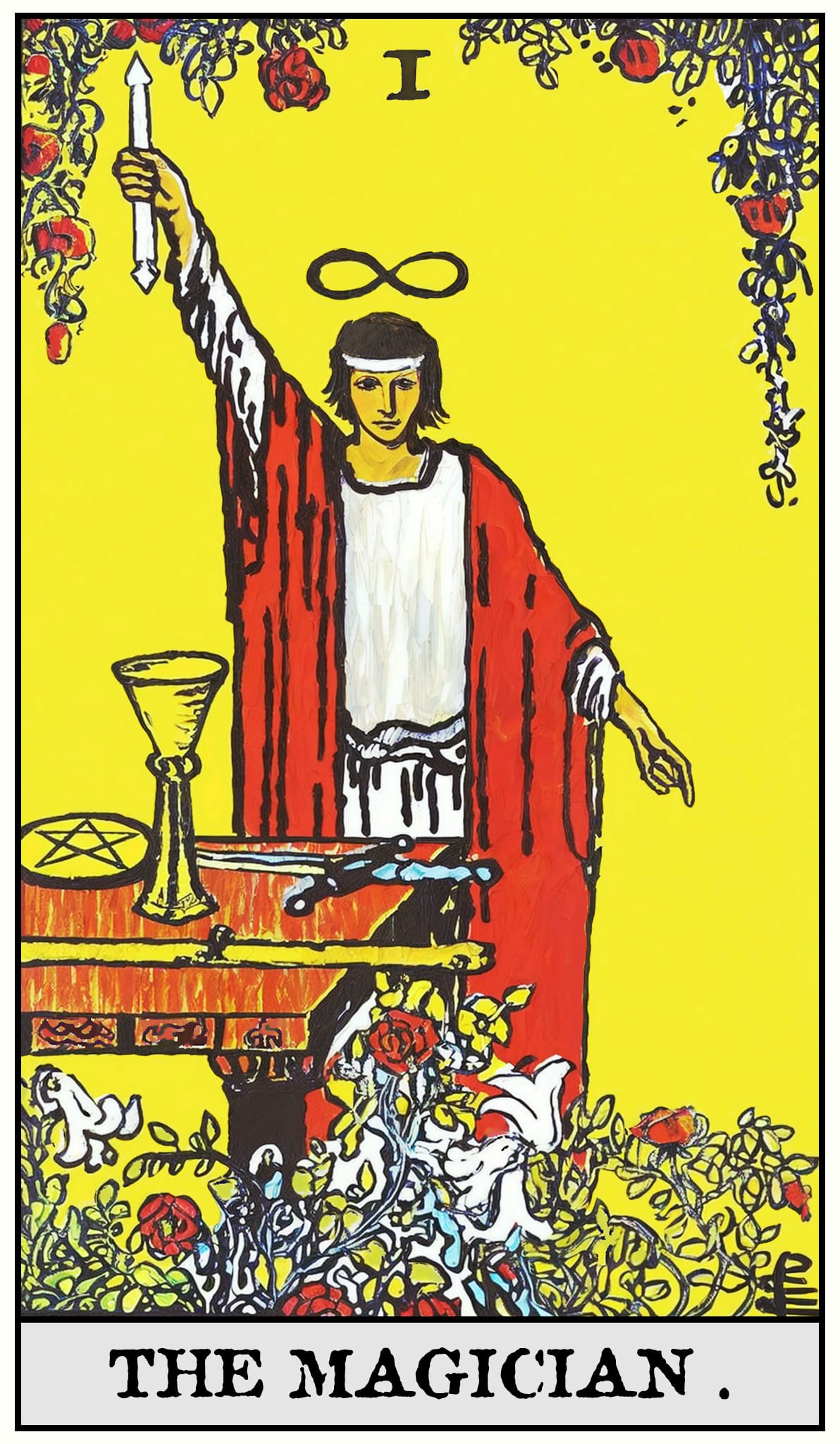
The Knight carries the Magician's will but has not learned what the Hierophant required — the patience of a tradition, the discipline of repetition. Without that tempering, will spends itself on novelty, mistaking the feeling of beginning for progress. This is Wands' deepest structural danger: fire that has not been taught by repetition becomes addicted to its own onset. The Knight sits at the hinge between the Magician's directed will and the Devil's chained compulsion — the crossing requires dismounting and learning something the horse does not want him to learn.
The complete three-layer reading for all 78 cards — including the full psychological and archetypal layers — is in The Pocket Guide →
The fire that cannot bear repetition cannot become craft.
Shadow TrapThe trail of inspired beginnings — the Knight who has moved through every room in the building but finished nothing, whose sincerity in each moment is real and whose presence in the next moment is absent.
Shadow GiftThe recognition that the choice between being interesting and becoming serious is an actual choice — and that what is renounced in choosing seriousness is only the addiction to onset, not the fire itself.
Shadow readings for each card, by suit, are gathered in The Pocket Guide →
We do not read a reversal as an opposite; following Pollack, a turned card is the same energy blocked, withheld, or redirected — not inverted into its negation. A reversed Knight of Wands often marks the fire that has stalled before the leap — the energy building without release, the inspiration turning to frustration because the forward motion the Knight requires has been blocked or, more often, has blocked itself.
Why Apocrypha Does Not Read Reversals as Opposites →Sixty-three symbols across the full deck — cross-referenced by card and meaning — are mapped in The Symbol Dictionary →
What part of your life are you treating as a rehearsal for the real commitment that has not yet begun — and how long has the rehearsal been running?
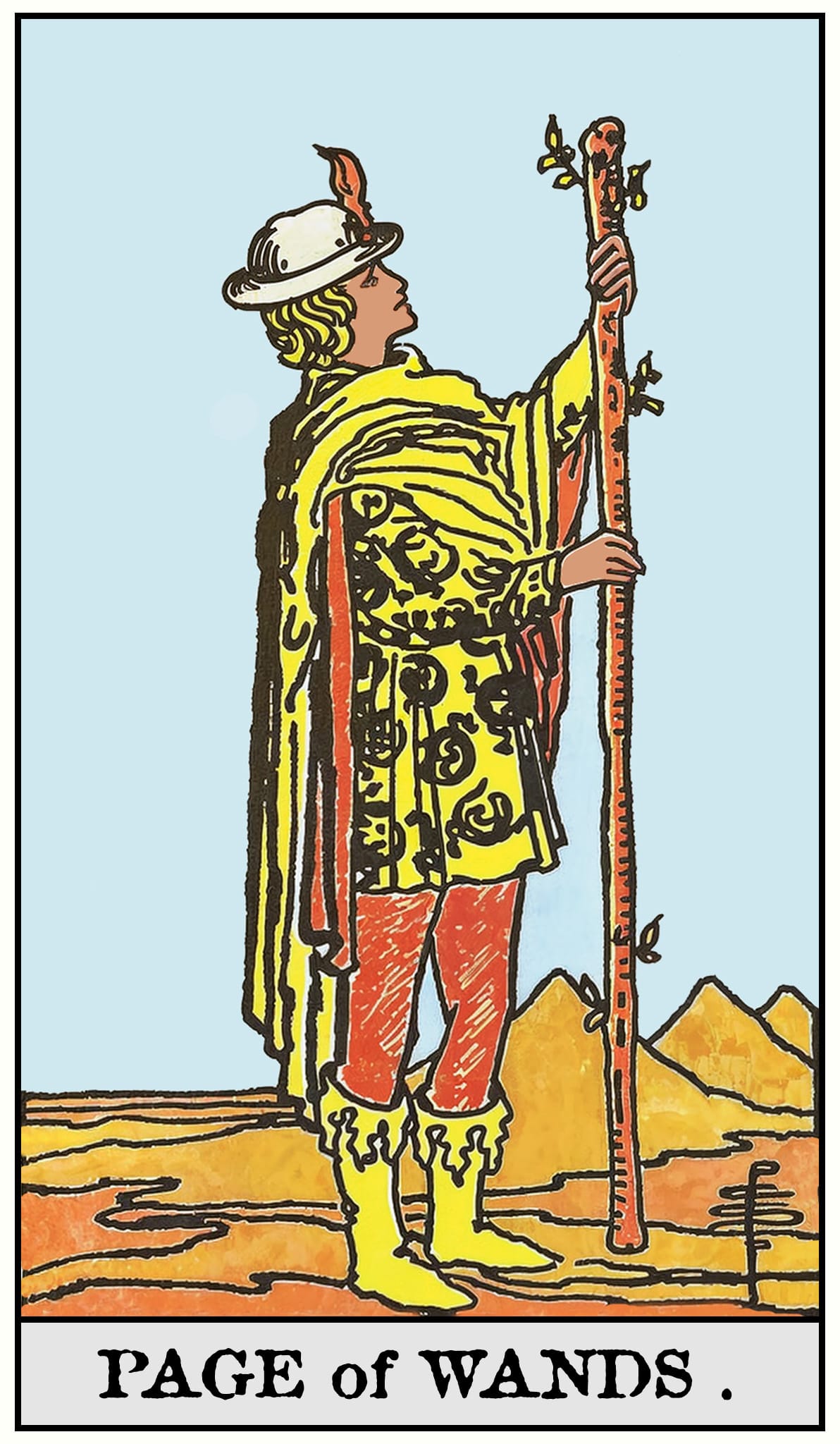
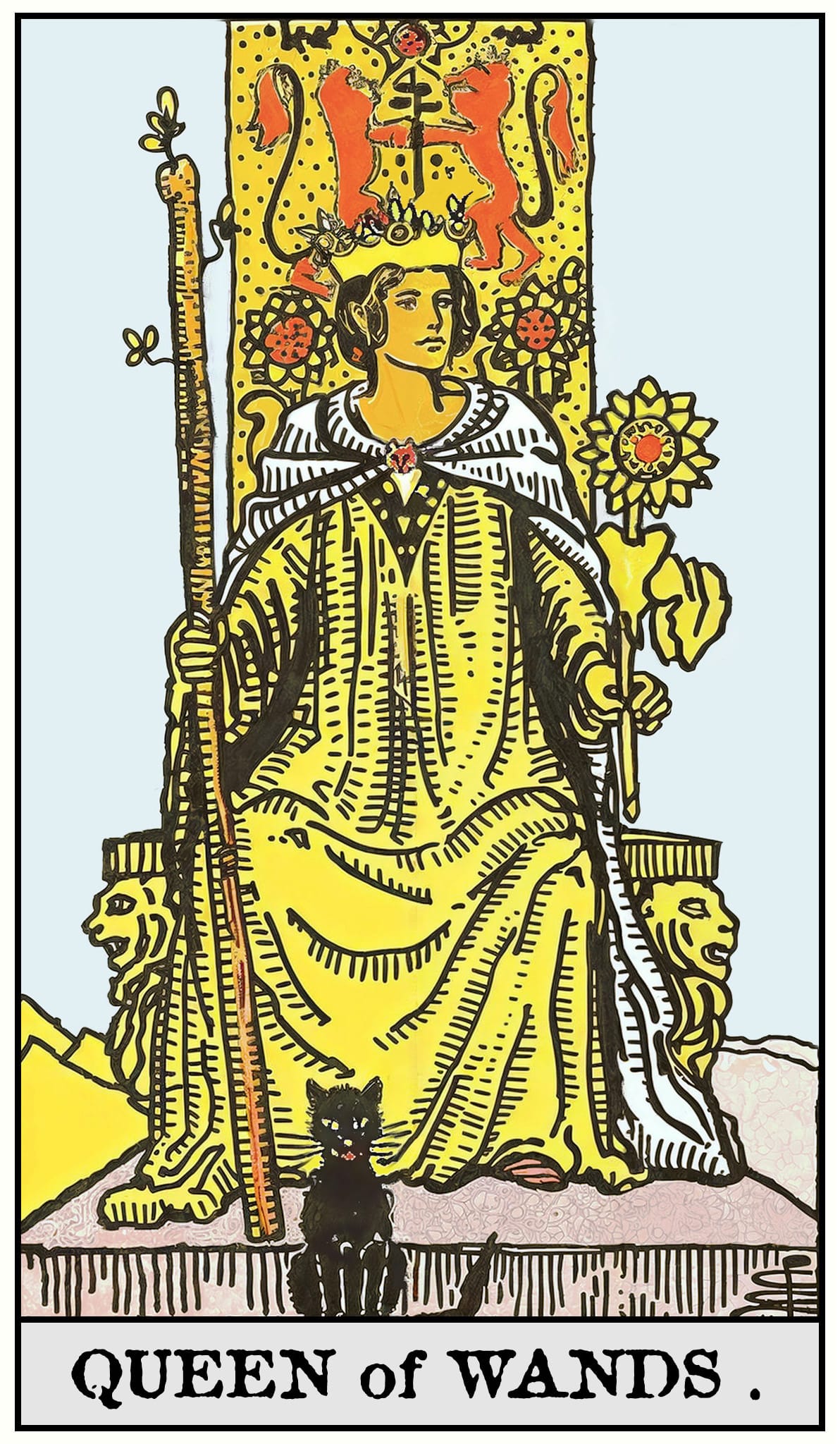
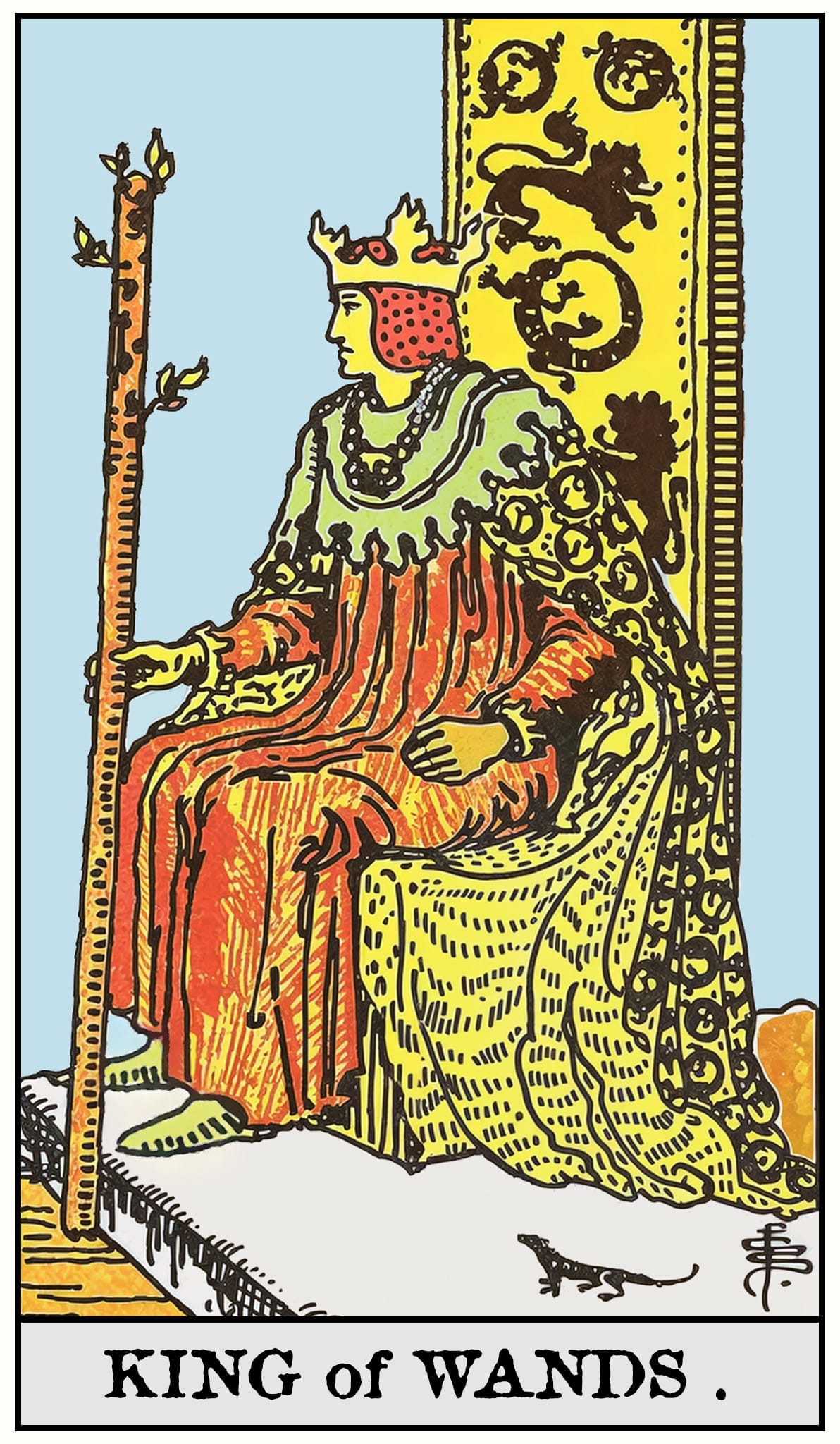
The Knight of Wands is most often received as exciting news — energy incoming, movement, passion arriving. The more honest reading asks what that arrival historically costs the people in its path. This is not a moralistic observation. It is a structural one: the Knight cannot be blamed for being a Knight, and no amount of wanting him to stay past his nature will produce a different result. The useful question for anyone who finds this card in their reading is not "is the fire real?" but "have I met a Knight or a King in this fire's clothing, and do I know how to tell?"