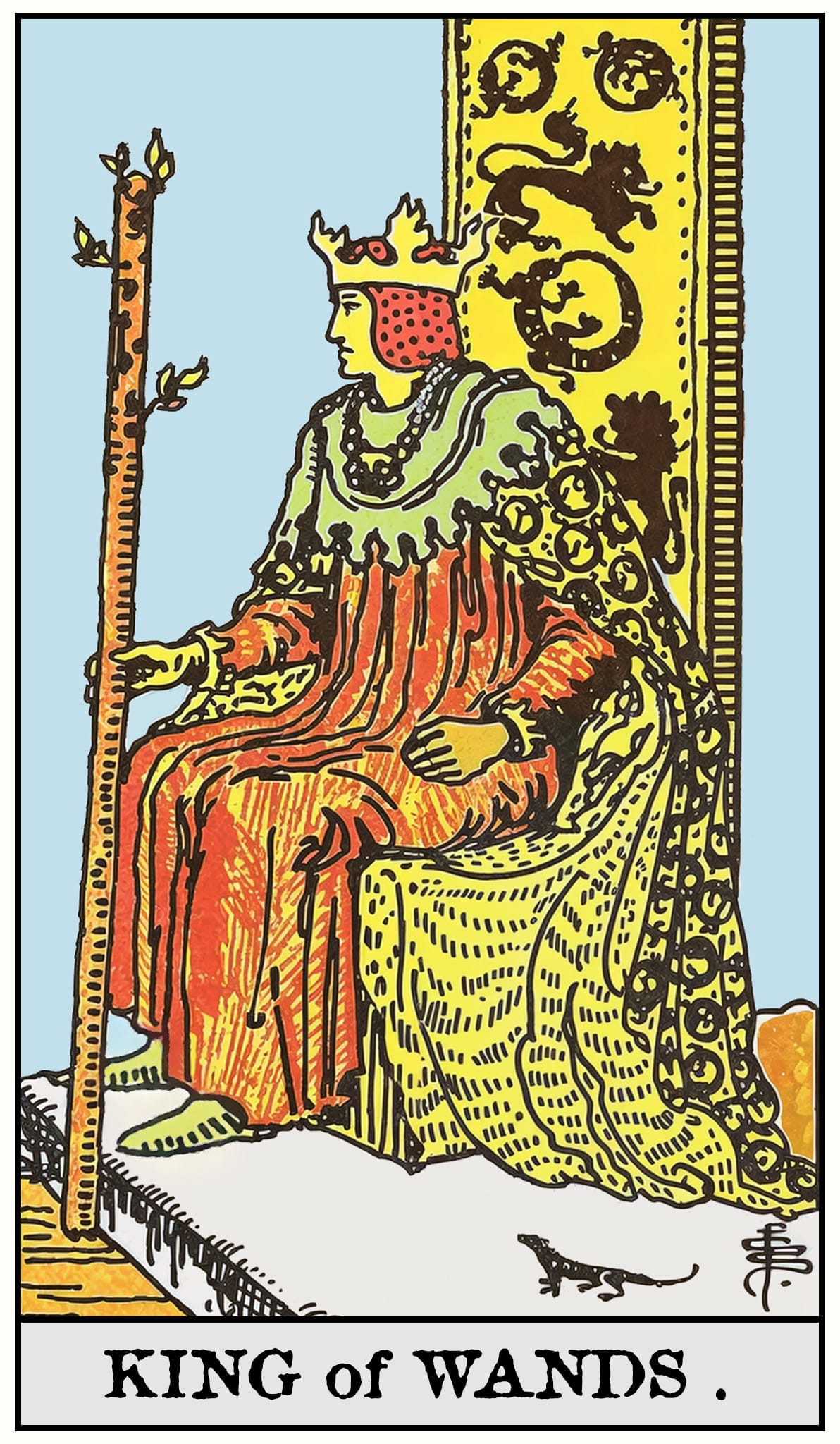
King of Wands
A king on an animate throne — salamanders and lions carved into the stone — holds a flowering wand like a tool rather than a weapon, looking to one side as if listening to something just begun.
The King of Wands names the final maturation of fire: the authority that does not require volume, the leader whose power operates most fully when it is amplifying the fire in others rather than displaying its own. The suit began asking what fire is for. The King is the answer: it was for tending other fires all along.
The founder in year fifteen — the one whose decisions move things because they have been earned by long contact with the material
The King of Wands listens before he speaks, and when he speaks, things move. The wand in his hand is held upright but not raised — a tool whose weight he knows, not a weapon requiring a target. He is the director of the workshop, the senior partner, the elder of a discipline who has been through enough of the suit's arc to know what fire costs and what it produces. In shadow, the King is the visionary who has stopped being corrected — surrounded by those who orbit him rather than peers who challenge him, until the fire that once organized a movement begins, slowly, to consume it.
Wands' final question answered: fire's purpose is to tend other fires, not to be the brightest one in the room
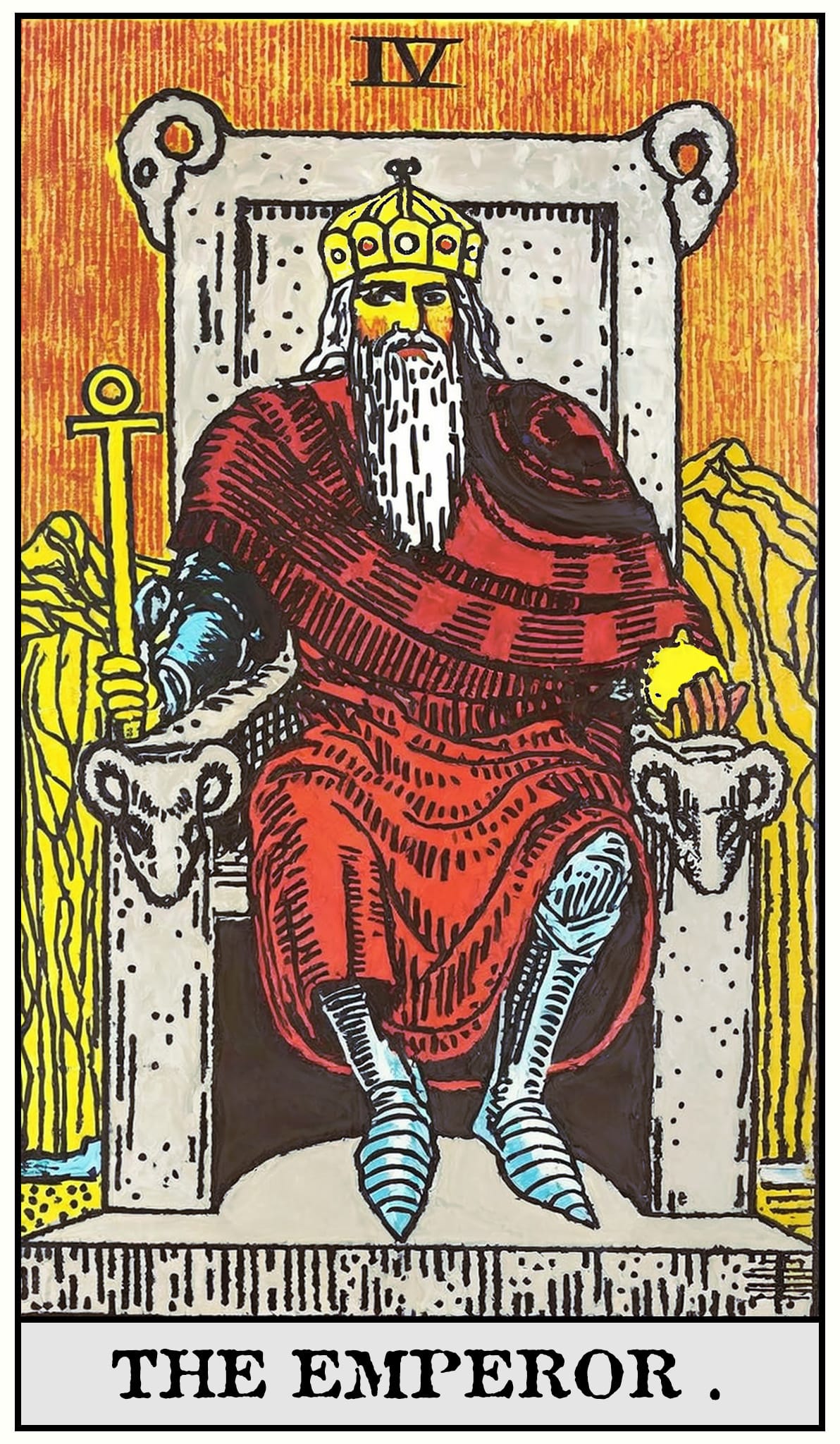
Where the Emperor (IV) governs static order, the King of Wands governs motion — his throne is animate with salamanders, not carved from cold stone. His power is not the law that has been laid down; it is the direction ignited. The Knight's wildness has been disciplined. The Queen's integration has been turned outward. What the King has learned — and it is the hardest lesson of the suit — is that leading other fires requires the willingness to let them outgrow him. The ouroboros at the base of his throne marks both the suit's completed arc and its warning: a closed loop is also a cage.
The complete three-layer reading for all 78 cards — including the full psychological and archetypal layers — is in The Pocket Guide →
The fire that no longer receives correction from peers begins, eventually, to mistake its preferences for principles.
Shadow TrapThe court emptied of equals — the King whose authority has surrounded itself with those who depend on him rather than those who could correct him, until the vision becomes doctrine.
Shadow GiftThe capacity to use the position not to perpetuate the fire but to create the conditions in which other fires can discover what they are for — the mentor who sends the apprentice past him.
Shadow readings for each card, by suit, are gathered in The Pocket Guide →
We do not read a reversal as an opposite; following Pollack, a turned card is the same energy blocked, withheld, or redirected — not inverted into its negation. A reversed King of Wands often marks the authority that has curdled into autocracy — not through malice but through the gradual absence of anyone positioned or willing to push back, the slow substitution of the fire's history for its current accuracy.
Why Apocrypha Does Not Read Reversals as Opposites →Sixty-three symbols across the full deck — cross-referenced by card and meaning — are mapped in The Symbol Dictionary →
Whose fire have you been competing with that you were meant to be tending — and what would change if you stopped tracking the comparison?
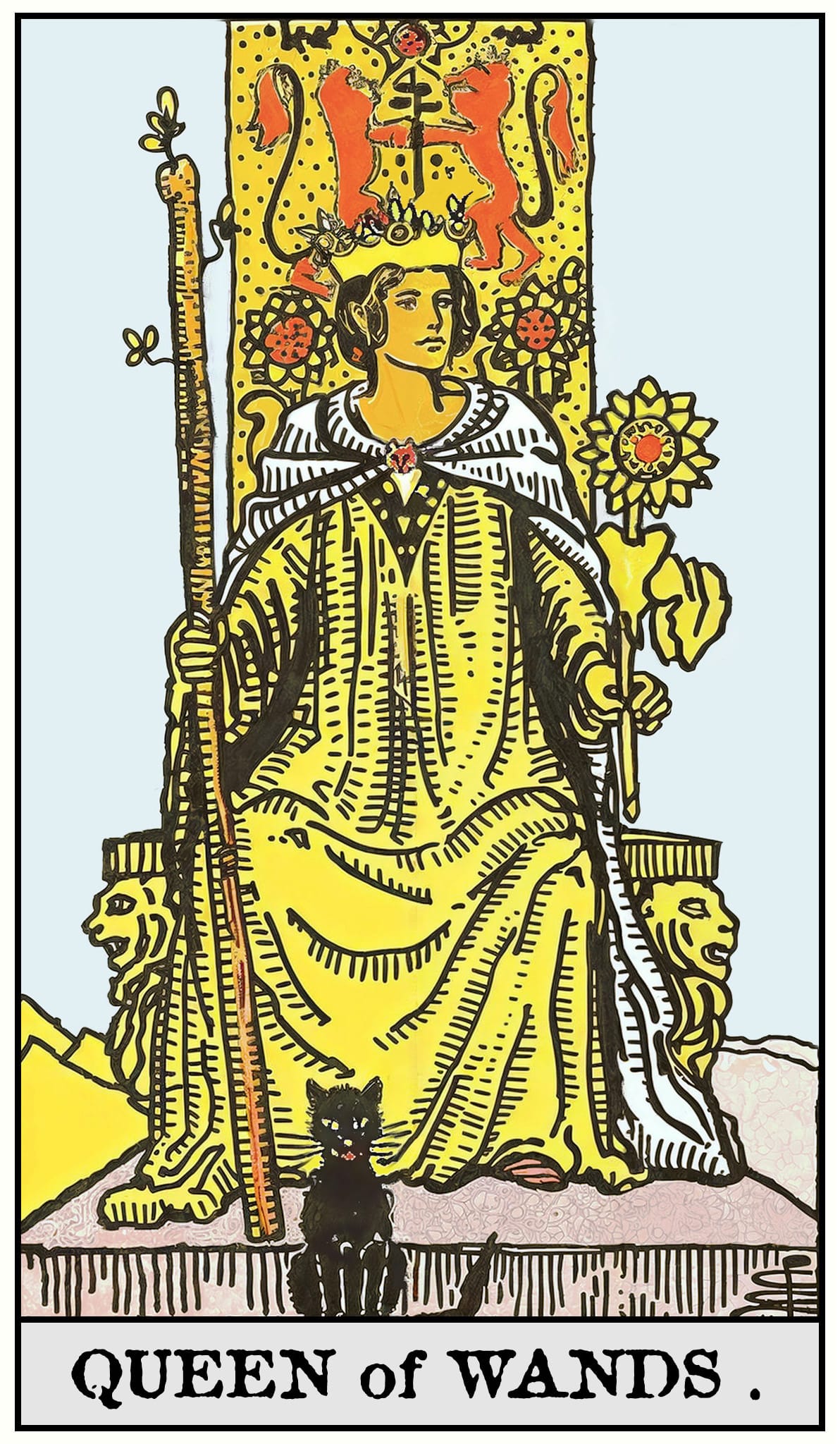
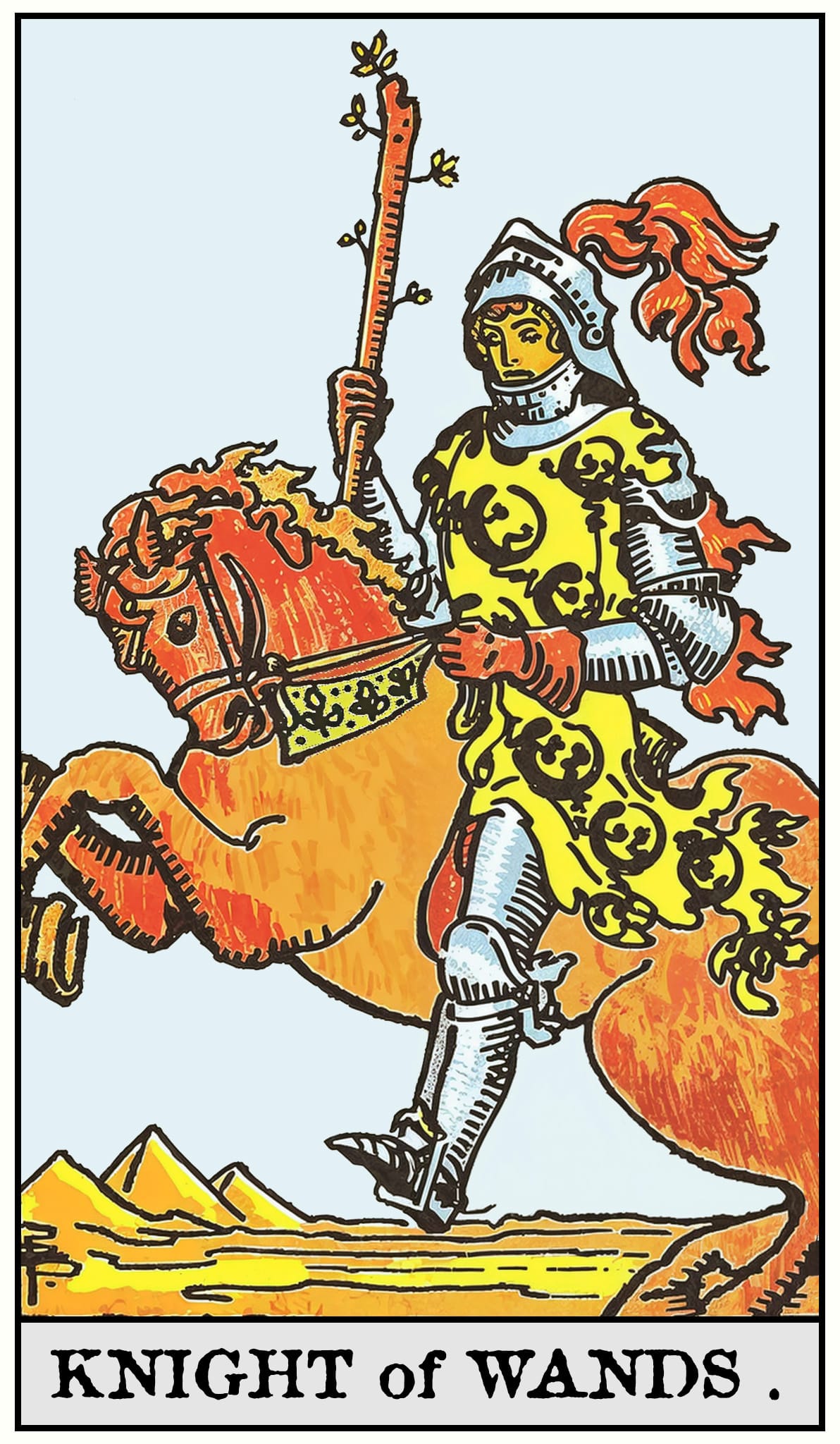
The King of Wands is most often read as confirmation of leadership capacity, and the capacity is real. The more demanding reading asks what kind of leadership: the King who needs to be the brightest fire in the room is not this card — he is the Knight grown older without having grown differently. The distinction the card requires is between the leader who amplifies and the leader who competes. Both can look like authority. Only one is the King.