Queen of Wands
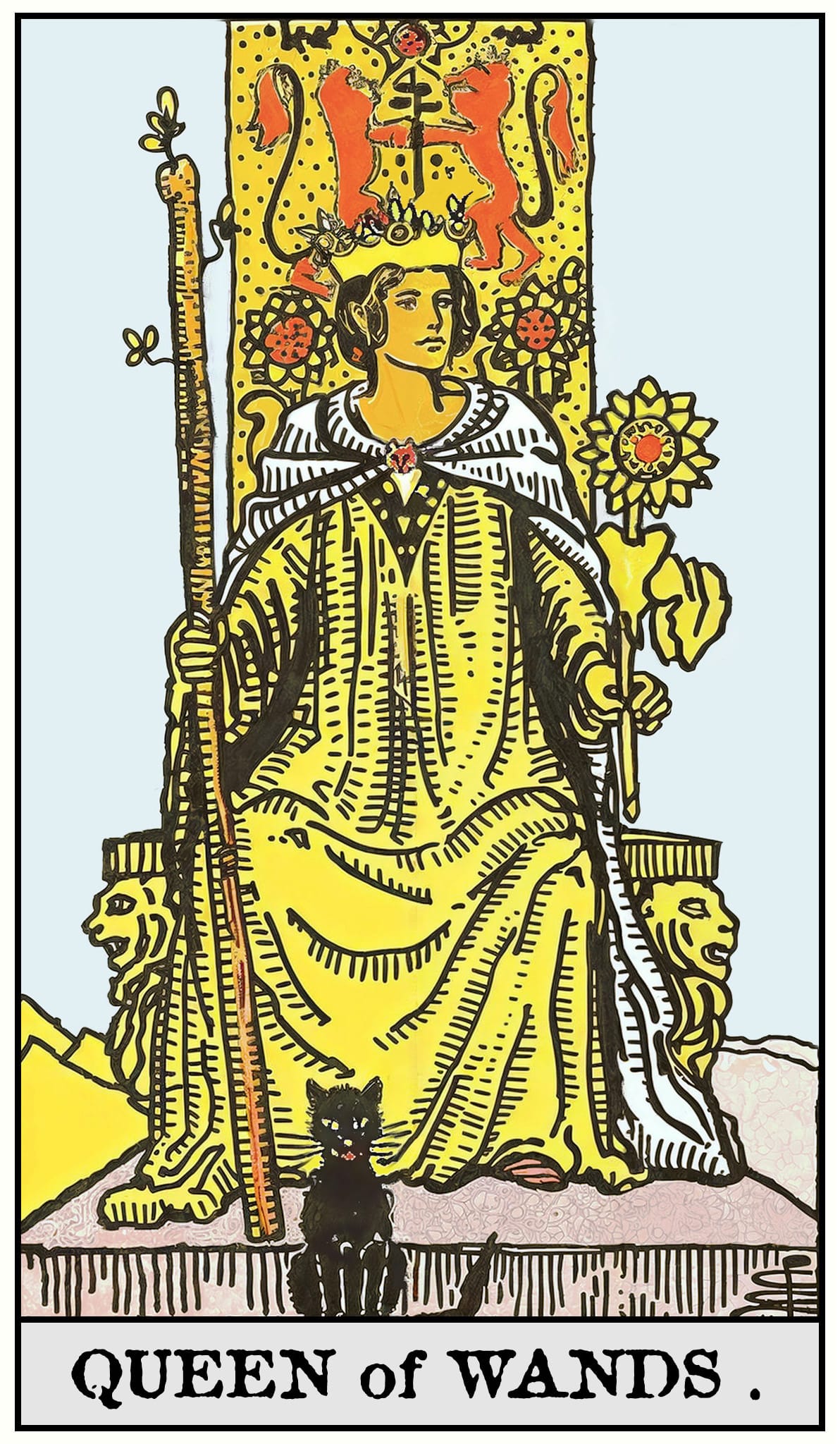
A woman on a stone throne carved with lions holds a sunflower in one hand and a flowering wand in the other — a black cat at her feet, yellow sky behind her, her gaze angled slightly away from us.
The Queen of Wands names fire that has been so fully integrated it no longer needs to announce itself. The room organizes around her without her directing the room. She is not performing warmth; she is its source. The shadow is precisely this gravity — warmth withheld becomes its own form of power, and the Queen does not always notice when she is using it that way.
Fire at its most integrated — no longer announced, simply present
The Queen of Wands runs the department, the studio, the household, the movement — but the running is not visible as effort. This is fire that does not need to be defended or displayed. It simply operates. In its outer form, she is the person whose attention others unconsciously angle toward, whose absence makes the room noticeably cooler. In shadow, the Queen turns this gravity punitive: the sudden withdrawal of warmth, the attention redirected as punishment, the room going cold in a way that everyone notices and no one names. People around such a Queen learn to orient toward her heat without being told this is what they are doing.
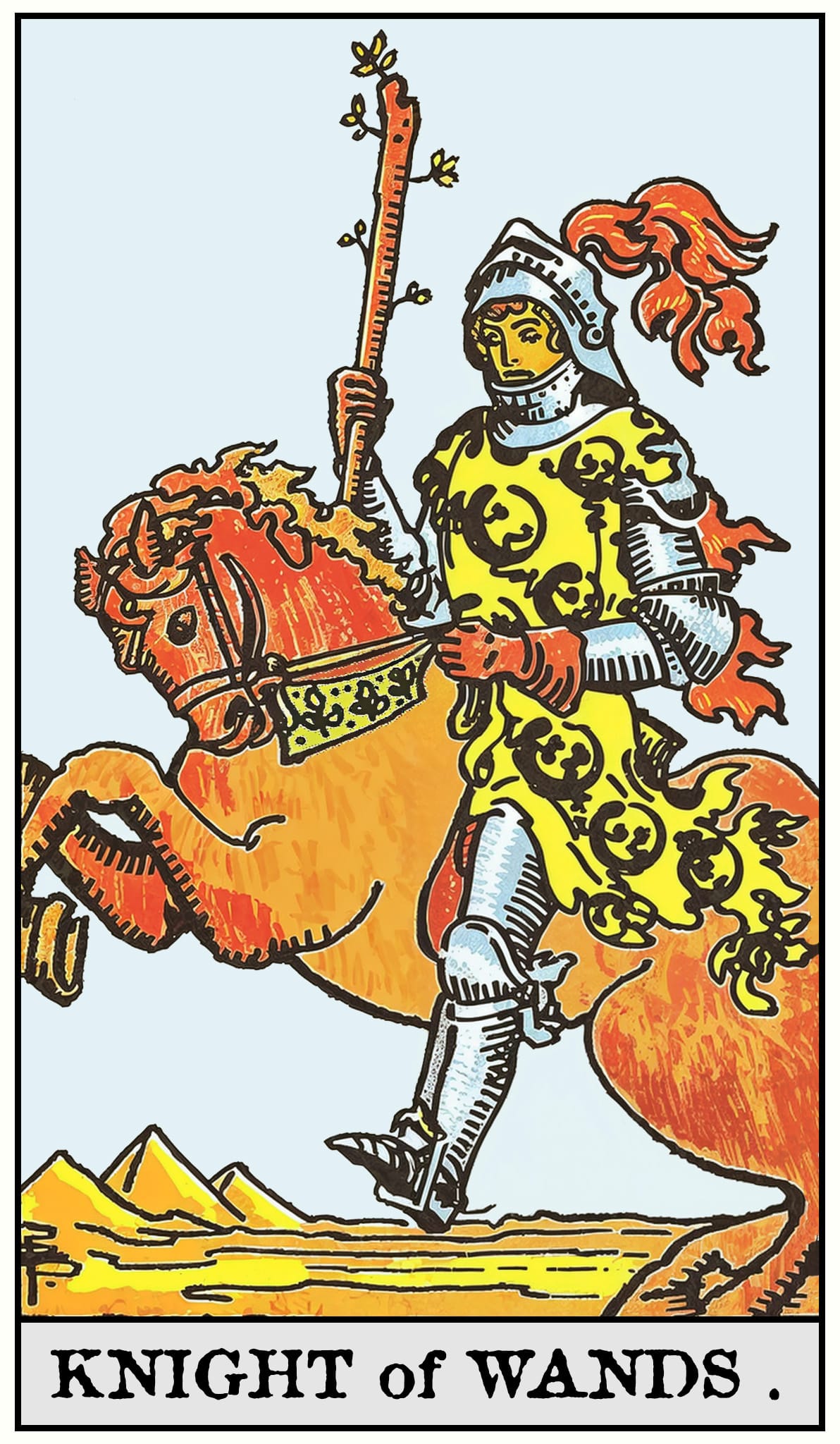
Between the Knight's compulsive motion and the King's outward command — fire that has learned to be still
The Queen sits in the exact middle position of the court: she has been Knight — she remembers the burning and the instability of it — but she has not yet become King, has not taken the public role of directing other fires outward. What she has done is integrate the instinctual life without suppressing it. The black cat at her feet is the emblem of this: instinct kept close, acknowledged, neither obeyed automatically nor held at distance. This is Wands' rarest internal configuration — fire comfortable enough in its own nature that it no longer requires an audience.
The complete three-layer reading for all 78 cards — including the full psychological and archetypal layers — is in The Pocket Guide →
The gravity of warmth, discovered and then deployed, can become its own form of captivity for those who orbit it.
Shadow TrapThe warmth withheld as punishment — the Queen who has learned the effect of her own gravity and uses its withdrawal as a tool, not always consciously, not always kindly.
Shadow GiftThe capacity to give warmth without requiring the orbit — to be the source without converting the people around it into satellites who cannot find their own heat.
Shadow readings for each card, by suit, are gathered in The Pocket Guide →
We do not read a reversal as an opposite; following Pollack, a turned card is the same energy blocked, withheld, or redirected — not inverted into its negation. A reversed Queen of Wands often marks the fire turned inward against itself — the warm presence that has become cold, not from absence of feeling but from the decision, conscious or otherwise, to stop being available to a world that has taken the warmth for granted.
Why Apocrypha Does Not Read Reversals as Opposites →Sixty-three symbols across the full deck — cross-referenced by card and meaning — are mapped in The Symbol Dictionary →
Whose warmth have you been working to earn — and what does it tell you that the earning has been so much work?
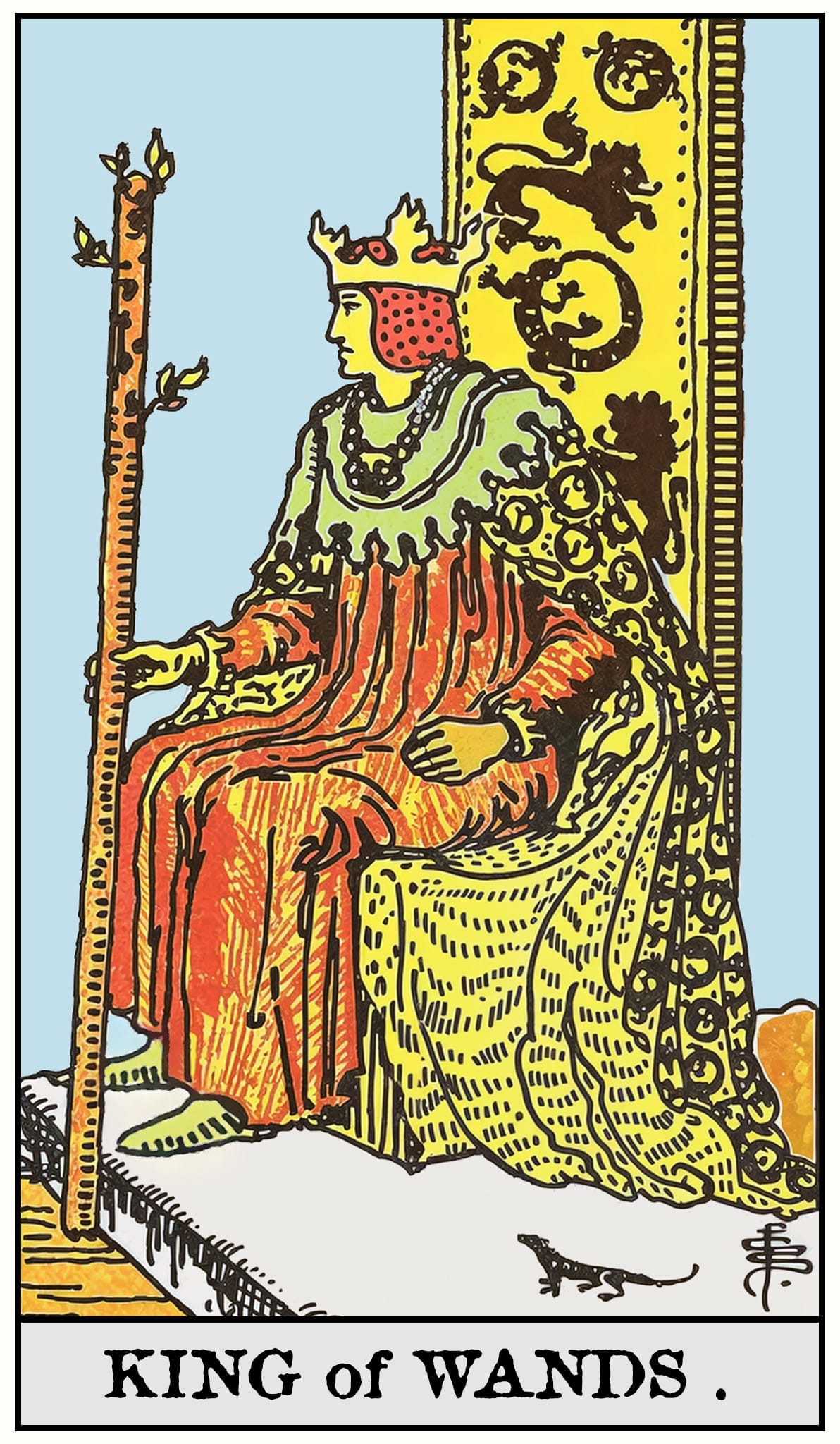
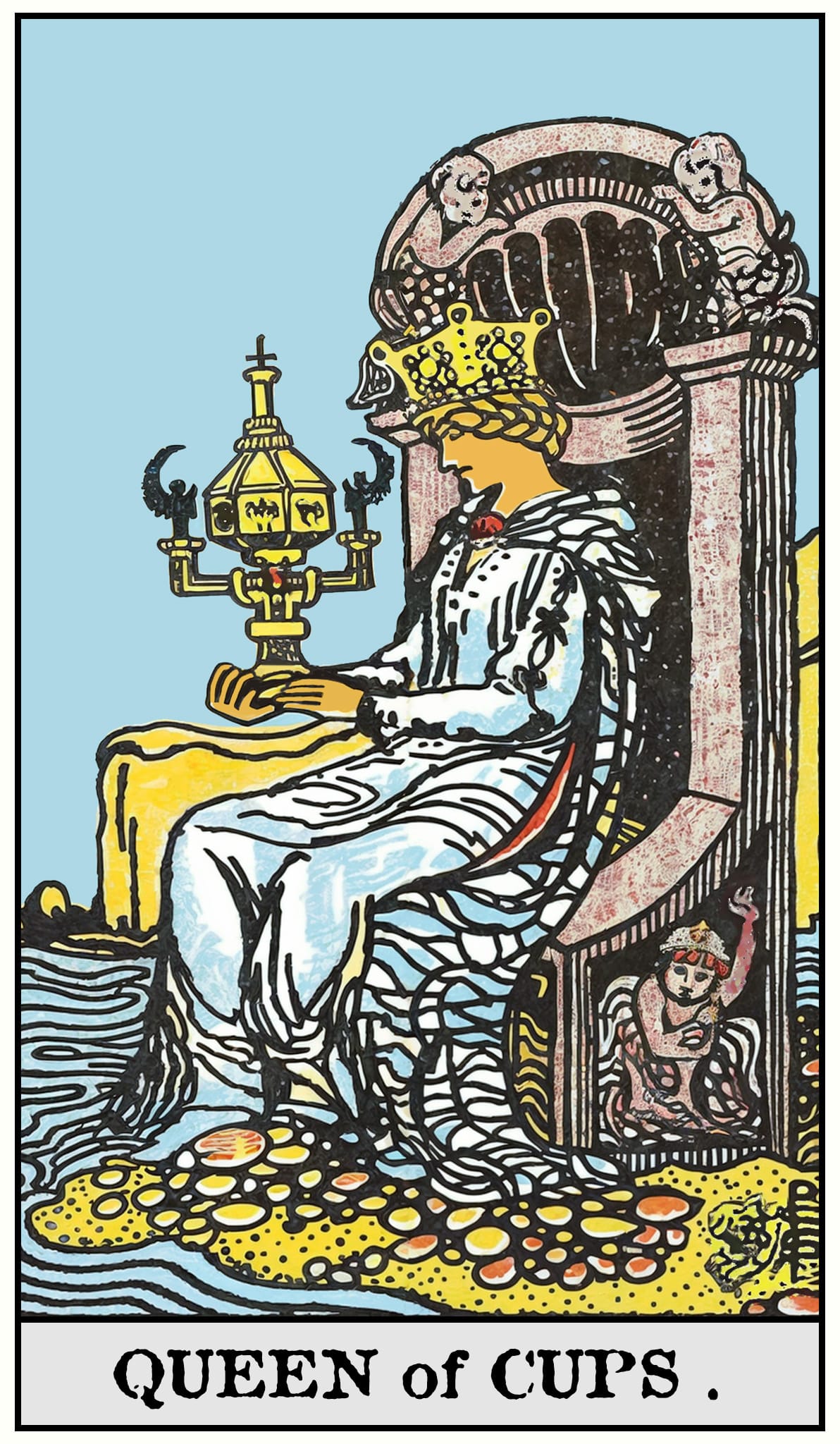
The Queen of Wands is most often read as an affirmation of the warm, confident, magnetic person — and the description is accurate. The less comfortable reading asks about the shadow of that magnetism. Warmth that can be withdrawn is a form of power. The Queen of Wands knows this, even when she prefers not to. The card is not complete until both the warmth and its gravitational shadow have been acknowledged — the source and what the source does to everyone who depends on it.