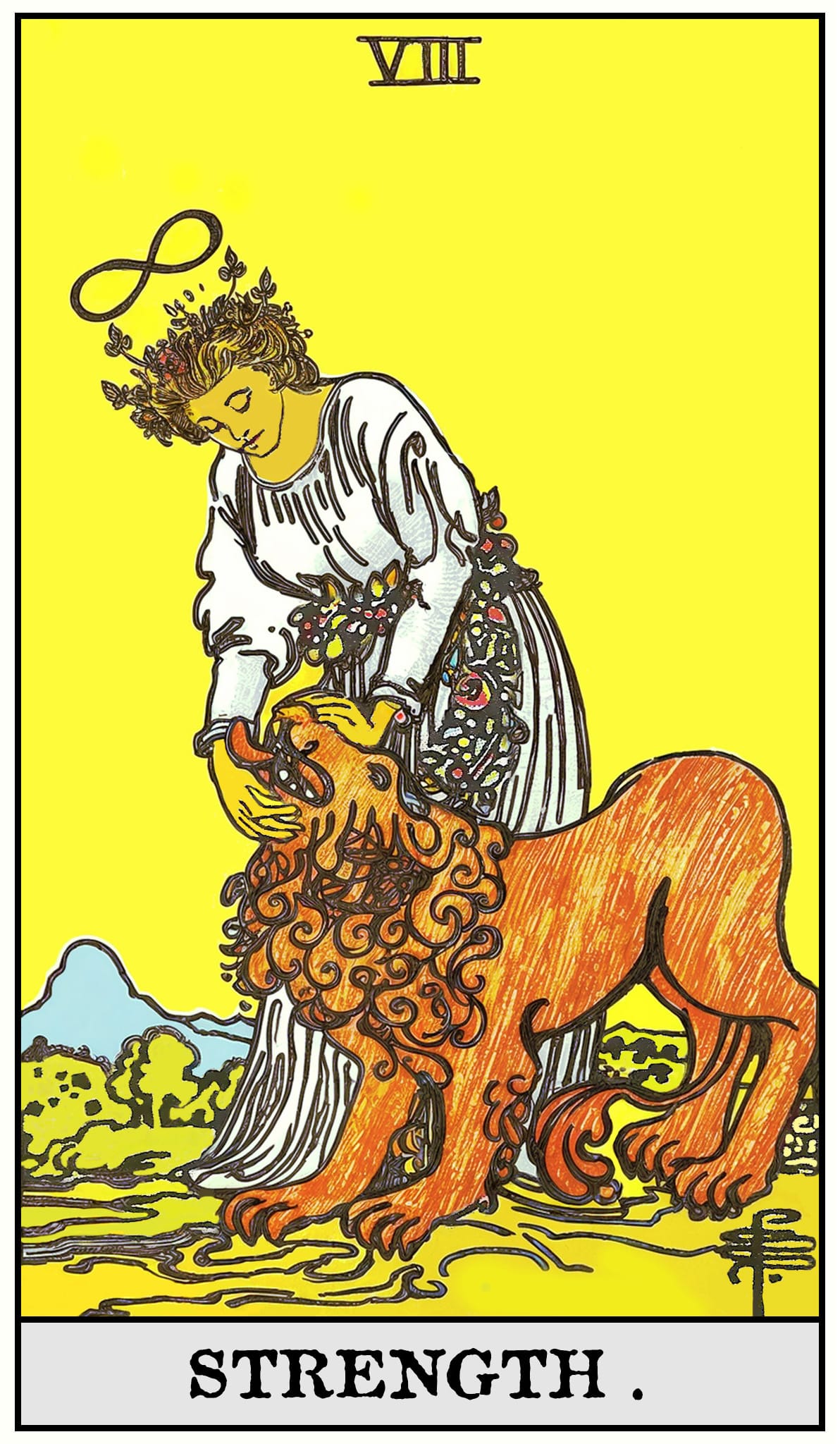
Strength
A woman in white bends toward a lion with her hands on his jaw — not forcing it shut, not forcing it open, simply present with what would frighten most people into distance.
Strength names the mode of power that does not overcome by force: the sustained, unarmoured presence that allows difficult material to be metabolized rather than fought. The card opens the second row of the Major Arcana and answers the question the Chariot left open — what the victorious self must eventually do with everything it suppressed to win.
The slower form of resolve — not heroic action but sustained presence
Strength appears when what is required is not decisive action but the willingness to remain in a difficult position long enough for the difficulty to be metabolized rather than fought. The lion in the image is not an external threat. It is a part of the self — an instinct, an appetite, a fear — that has been destabilizing the self's composure. The card does not advise suppression. The woman keeps the lion's mouth open; she is in contact with what is difficult, and she is not diminished by it. In its shadow, Strength becomes the performed calm — the spiritual bypass, the pretense that nothing is actually being felt.
Bringing the conscious self into patient contact with what the construction had to exclude
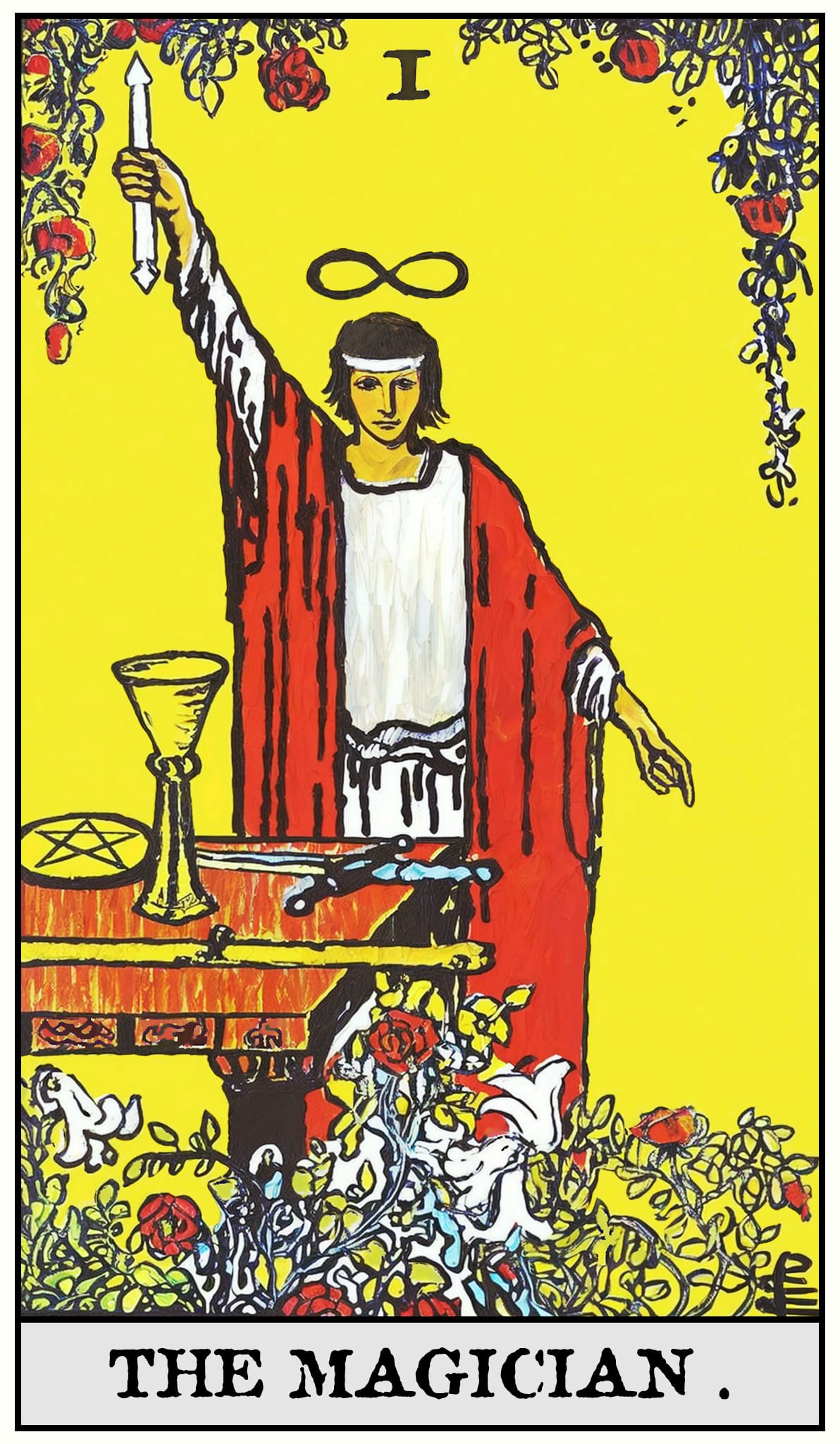
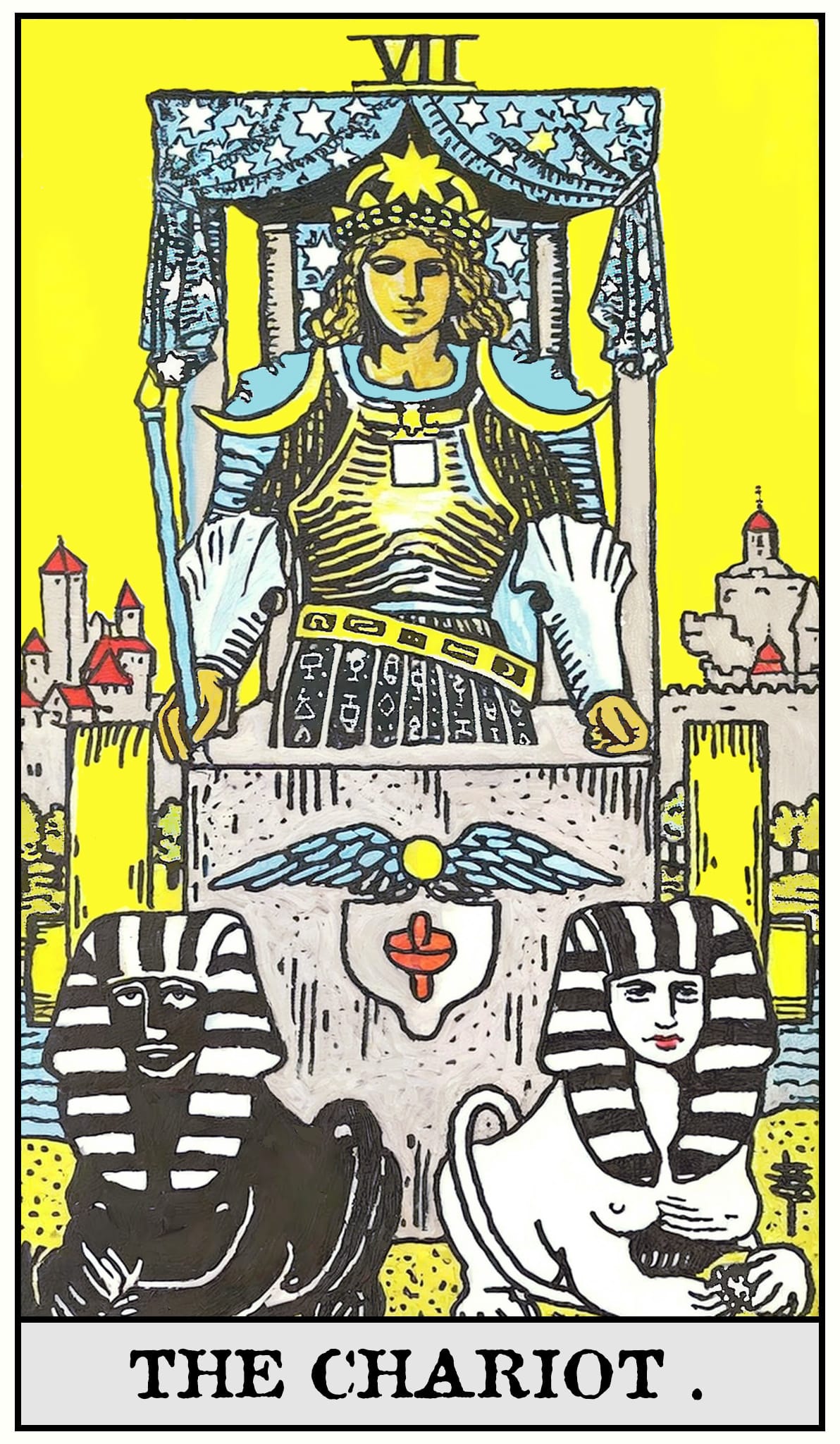
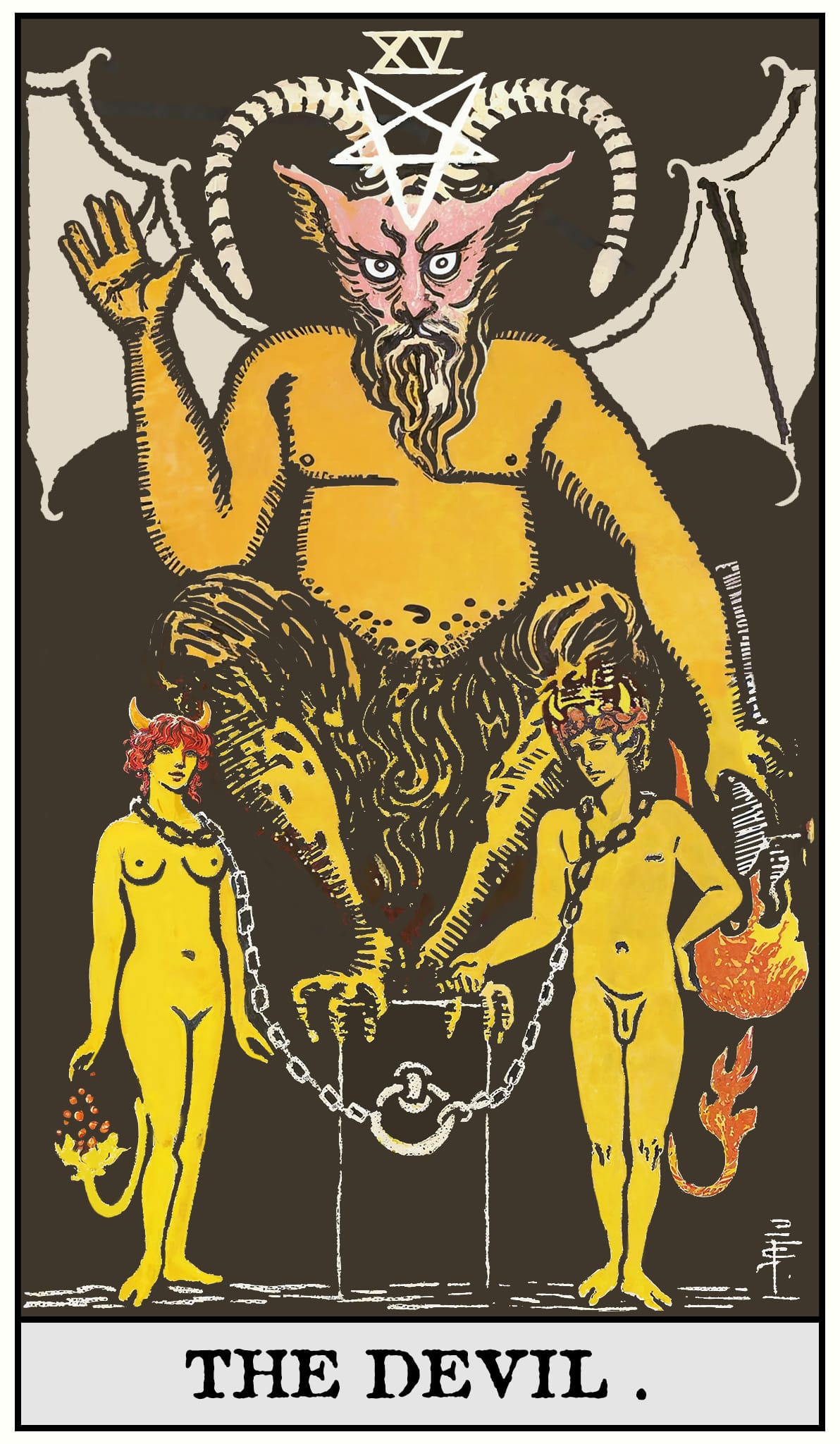
The first row built the self through will and gave it a Chariot victory. The second row opens by asking what was excluded in the building. The lion is that excluded material — the instinctual self, the rage, the eros, the animal — everything the Magician's table set aside in order to function. The Chariot's solution was domination: hold the forces in formation by will. Strength offers the second solution: unarmoured contact that does not conquer and is not conquered. Her vertical line — Magician at I, Strength at VIII, Devil at XV — traces what happens to will and instinct across the three rows: will commands without meeting instinct; Strength meets instinct and learns to remain; the Devil shows what instinct becomes when the meeting is refused.
The complete three-layer reading for all 78 cards — including the full psychological and archetypal layers — is in The Pocket Guide →
The card that teaches presence can be misused as a mask for absence.
Shadow TrapThe performed serenity — the "fine" that has been achieved by stopping the capacity to feel what is actually happening rather than by genuinely inhabiting it.
Shadow GiftThe slow-developed capacity to be in the same room as what one had previously needed to defend against, without being eaten and without pretending it is not there.
The complete shadow reading — trap, gift, and the practice of integration — for all 22 Major Arcana is in The Shadow Archetype Reference →
We do not read a reversal as an opposite; following Pollack, a turned card is the same energy blocked, withheld, or redirected — not inverted into its negation. A reversed Strength often marks the person who is reporting they are fine and who has achieved this report by no longer allowing themselves to register what is actually happening inside them.
Why Apocrypha Does Not Read Reversals as Opposites →Sixty-three symbols across the full deck — cross-referenced by card and meaning — are mapped in The Symbol Dictionary →
What part of yourself have you been holding at a distance because you were afraid of what contact would cost you? And what would it mean to bring it closer — not to defeat it, not to be consumed by it, but simply to stop requiring the distance?
Strength is most often received as gentle encouragement and almost always this softens it past the point of usefulness. The card is not comfort. It is a description of a specific and demanding practice: the practice of remaining in undefended contact with material the self has historically needed to keep at arm's length. The question is not whether you are capable of calmness. The question is whether the calmness is genuine or whether it has been produced by a reduction in what you are allowing yourself to feel.