The Chariot
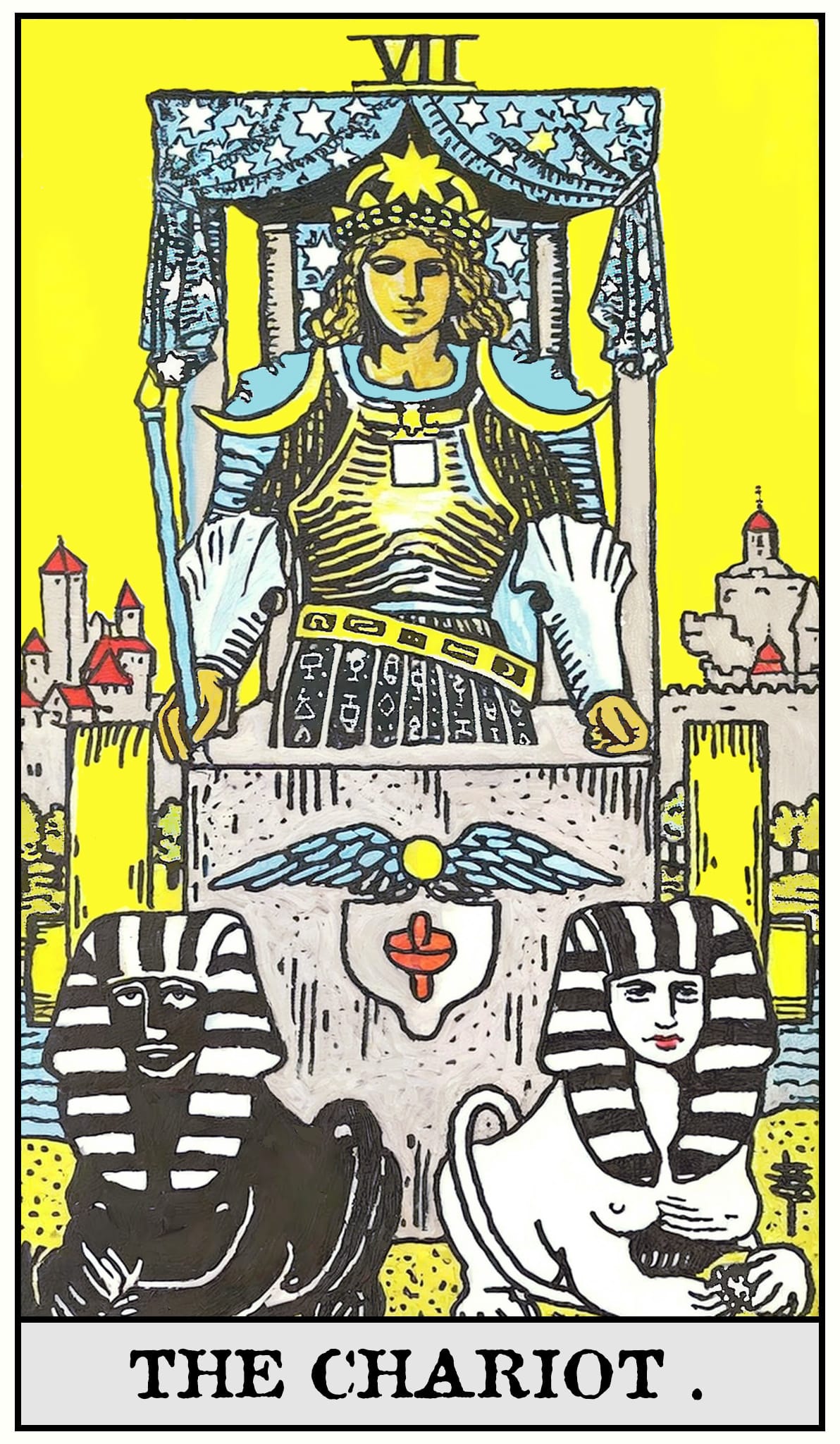
A young man stands in a stone chariot, sphinxes before him and a city behind him, moving forward by will alone — the completed self at its most powerful, which is also the moment its limits begin.
The Chariot names the moment of genuine triumph: the powers gathered across the first six cards have integrated into a self capable of acting in the world and producing results. This is the first row's completion. The card does not pretend that what follows will be easy. The sphinxes are not horses, and they have not been broken.
The first major arrival, and what it has held in formation to get here
The Chariot appears when struggle has produced results — the project is finished, the illness recovered from, the position won. The card genuinely celebrates the capacity of the focused self to direct its energies and produce outcomes in the world. But the victory is partial, and the card knows it. The sphinxes — beings that combine the human and the animal, the conscious and the instinctual — are held in formation only by the charioteer's force of will. In the shadow, the Chariot is the achievement that required the suppression of everything that could not be conscripted into its service: the driven personality whose accomplishments are real and whose interior is increasingly hollow.
The highest point of the first row is also the point at which the first row ends
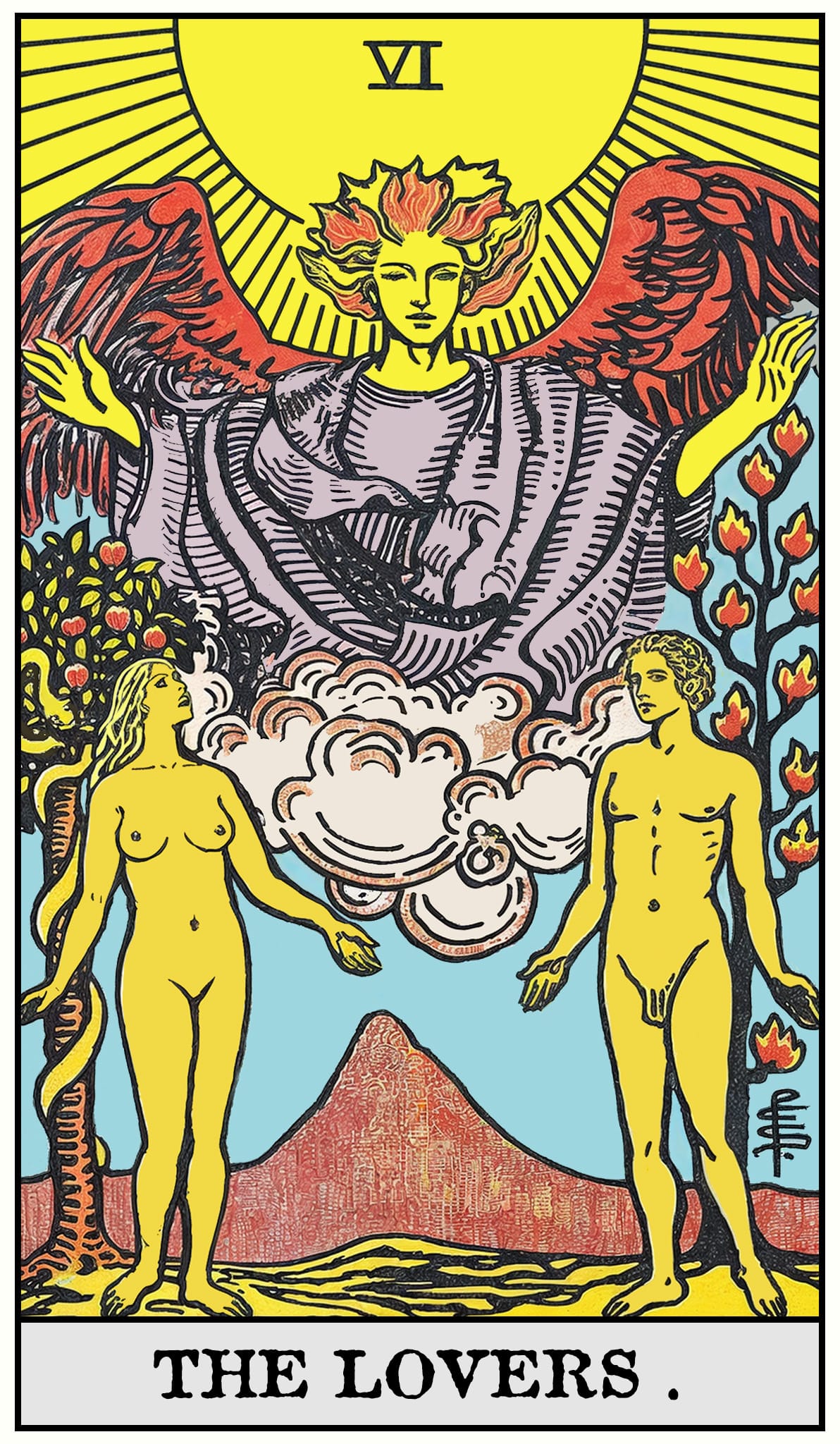
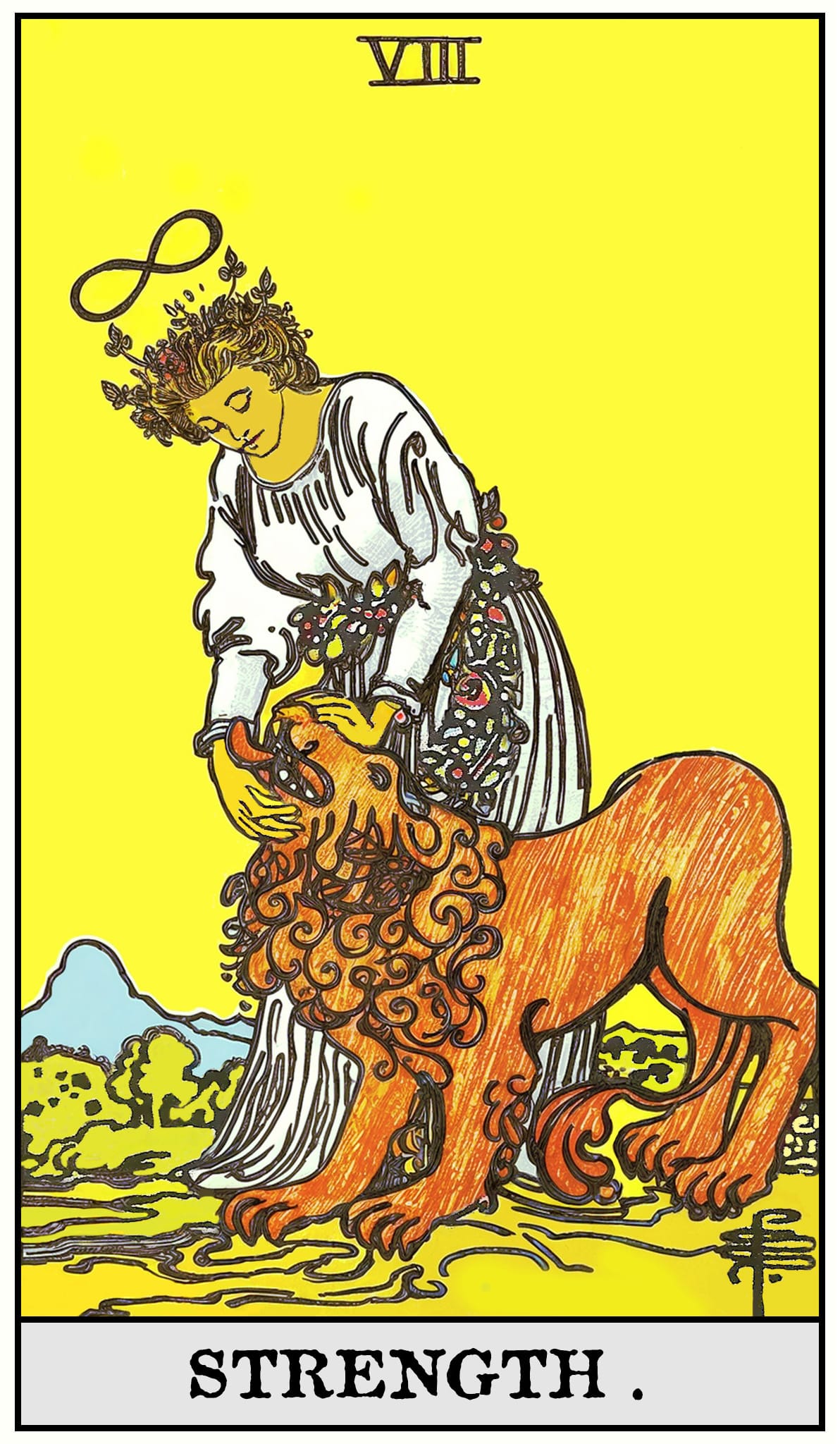
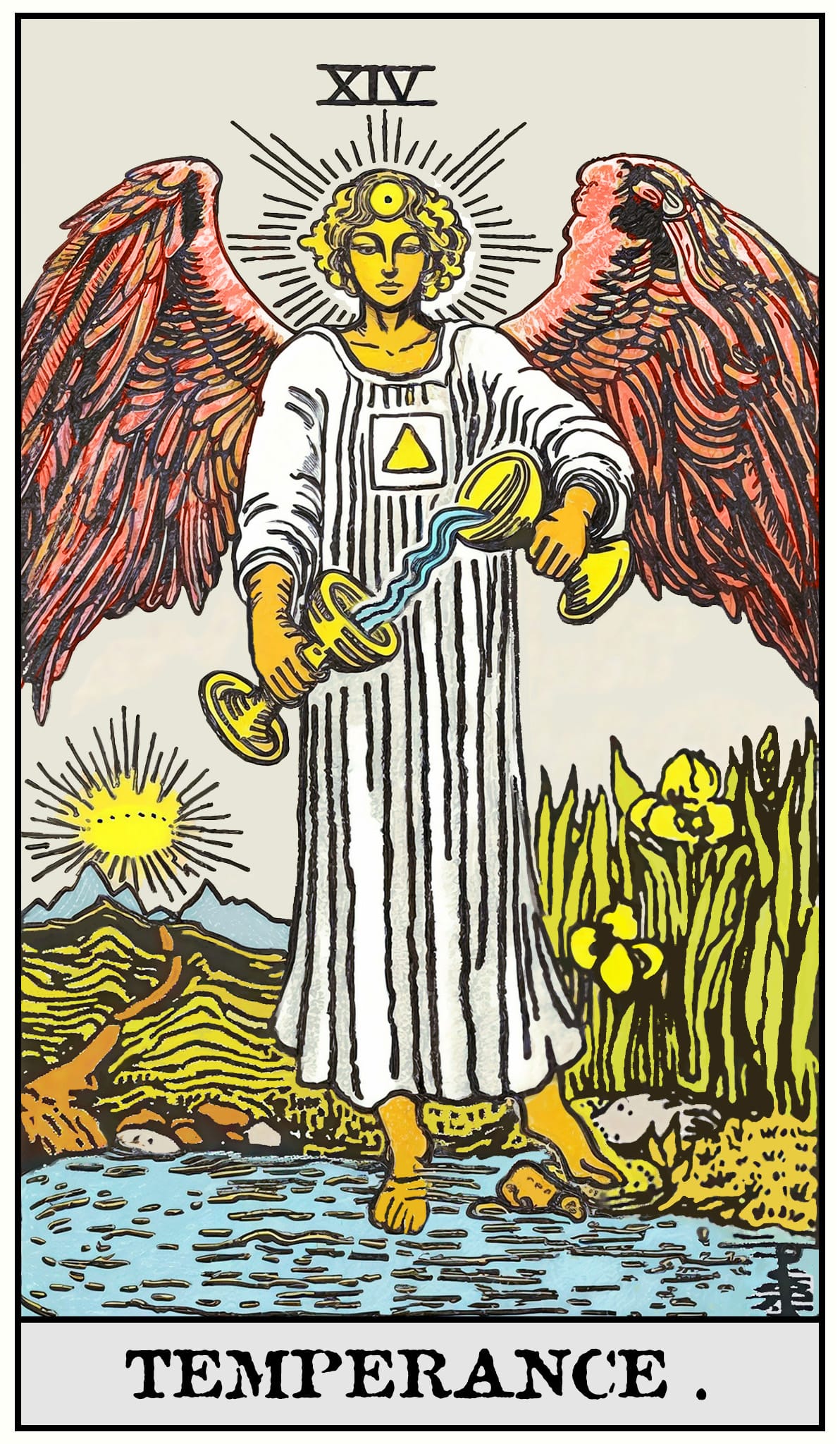
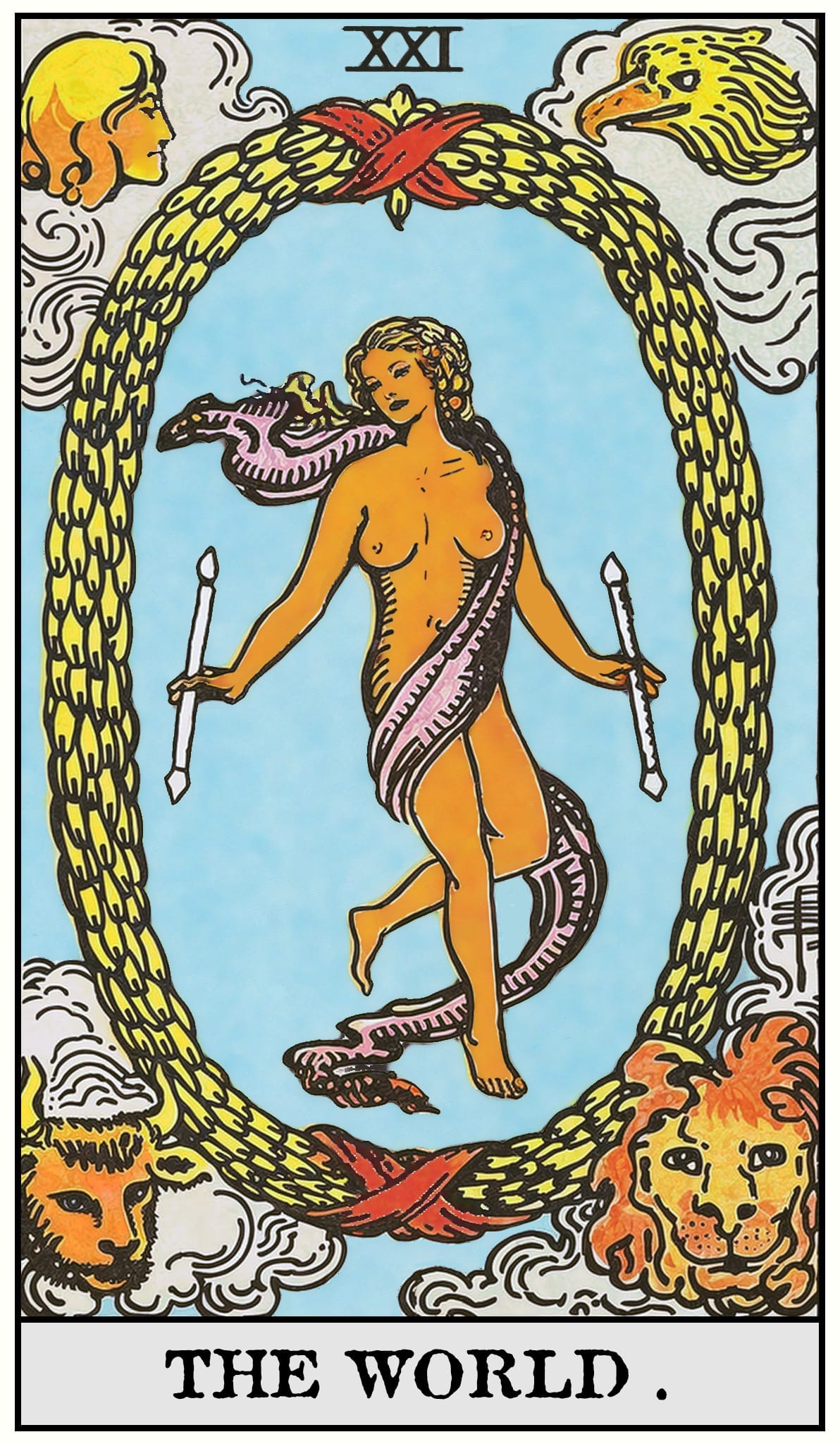
The Chariot is the constructed self at its apex. The will is in command; the conflicting drives are held in productive tension. Pollack is precise about what happens next: the will is finite, and sooner or later — through illness, through loss, through the failure of something the self had identified with — the formation breaks. The self discovers that the chariot was never entirely its own. His vertical line — Chariot at VII, Temperance at XIV, World at XXI — traces three versions of the same integration: integration achieved by force, then by patience, then by grace.
The complete three-layer reading for all 78 cards — including the full psychological and archetypal layers — is in The Pocket Guide →
The self that runs on concentrated attention will eventually run out of concentration.
Shadow TrapThe achievement that has been built at the cost of everything the self could not draft into service — accomplishment as a structure with no interior left.
Shadow GiftThe recognition that the will's limit is not failure but the threshold that makes the second row possible — the necessary precondition of the deeper work.
The complete shadow reading — trap, gift, and the practice of integration — for all 22 Major Arcana is in The Shadow Archetype Reference →
We do not read a reversal as an opposite; following Pollack, a turned card is the same energy blocked, withheld, or redirected — not inverted into its negation. A reversed Chariot often marks the high-functioning person whose engine is beginning to fail — still moving, still producing, but the sphinxes are no longer fully in formation and the will required to hold them there is no longer reliably available.
Why Apocrypha Does Not Read Reversals as Opposites →Sixty-three symbols across the full deck — cross-referenced by card and meaning — are mapped in The Symbol Dictionary →
What have you achieved through pure force of will — and what part of yourself is being held in formation only because you have not stopped concentrating? What would happen if you put the reins down, given that there are no reins?
The Chariot is most commonly read as a straightforward victory card, and the victory is real. But the reading is incomplete if it stops there. The sphinxes are the key detail most readers skip over. The card carries within it the precise mechanism of its own undoing: victory sustained by will, will as a finite resource, the question of what happens when the resource runs down. A reading that registers only the triumph has missed what the card is actually preparing you for.