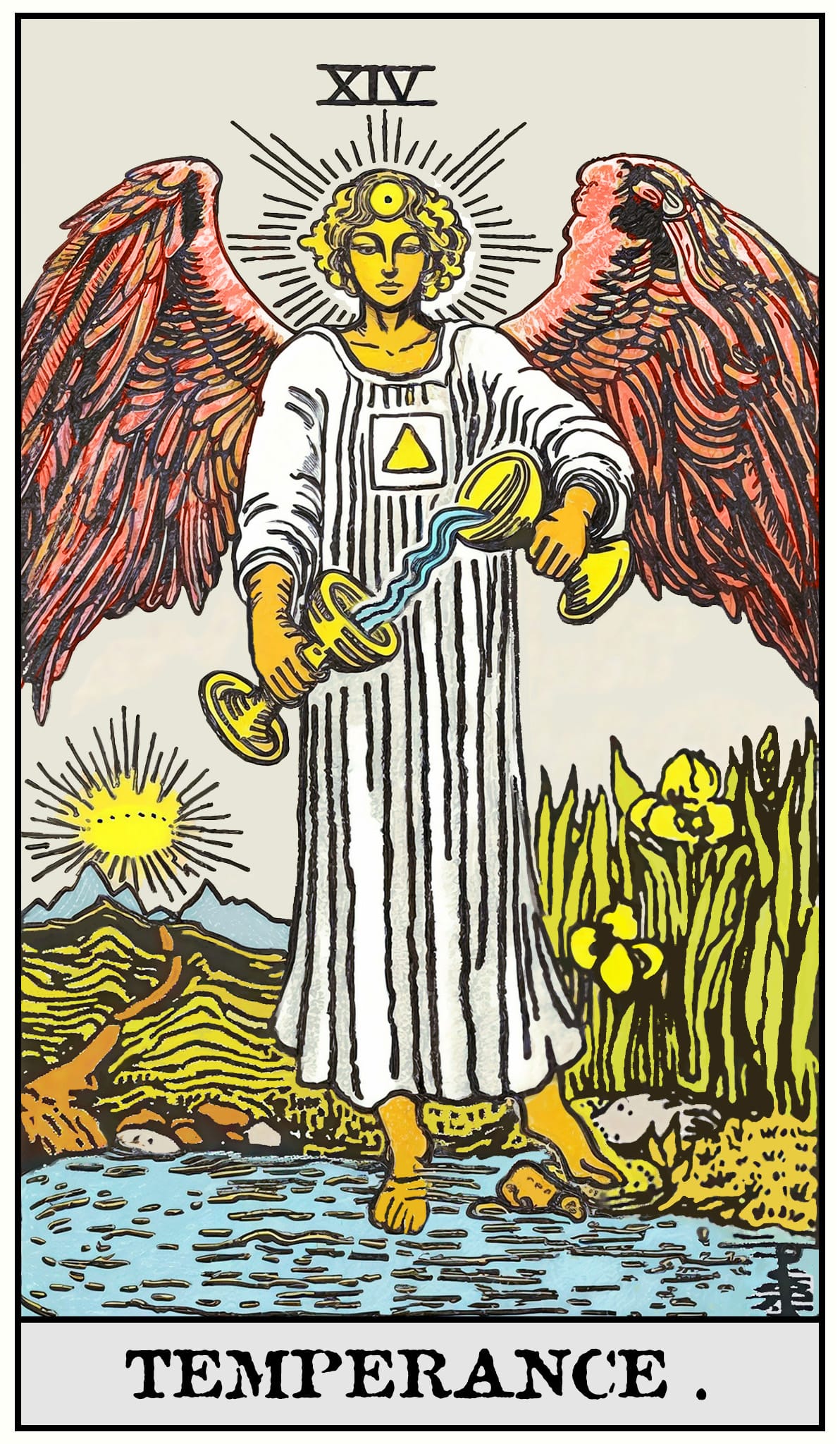
Temperance
An angel stands at the water's edge with one foot on the bank and one in the stream, pouring between two cups in a flow that moves against gravity — patient, attentive, not hurrying what the chemistry requires.
Temperance names the slow mixing of opposites that cannot be reconciled by force. It is not moderation in the diluted sense. The card depicts the containment of intensity — two strong opposing forces held in proportion long enough for something new to form between them. Temperance is the discipline of not leaving the threshold before the exchange has occurred.
The period after collapse, when something new is forming too slowly to be trusted
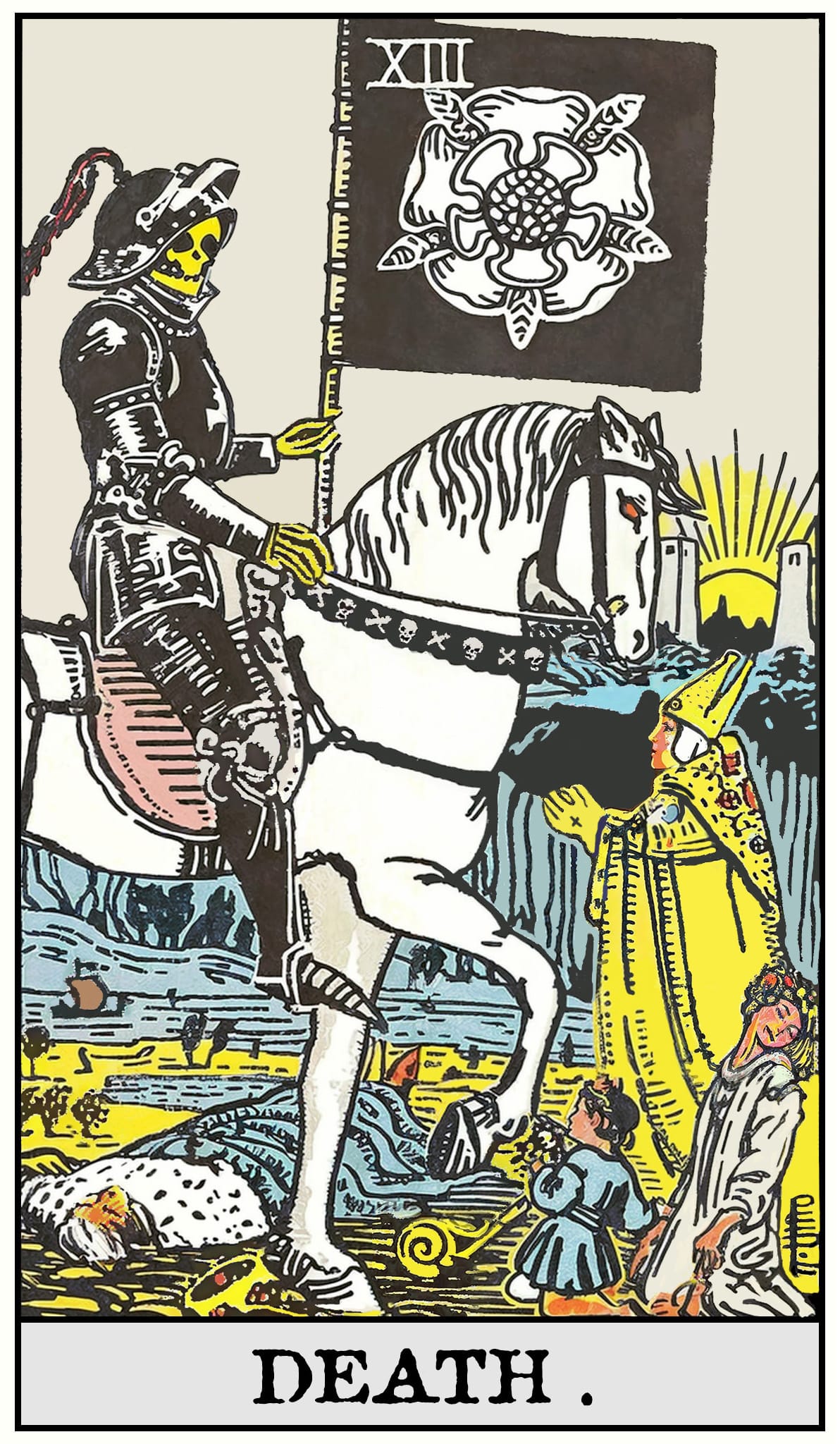
Temperance follows Death in the sequence for a reason. The structural collapse has happened; the old form has fallen. Something is forming in its place, but it is forming at its own pace, and the error is to rush it. The card does not describe moderation in the sense of avoiding intensity. It describes the containment of two opposing intensities long enough for an exchange to occur between them. The shadow of Temperance is precisely the confusion between genuine balance and the avoidance of all strong feeling — the cup pouring nothing into nothing, which looks like Temperance from outside and is its emptying.
Integration by patience — the longest of the three versions of the same task
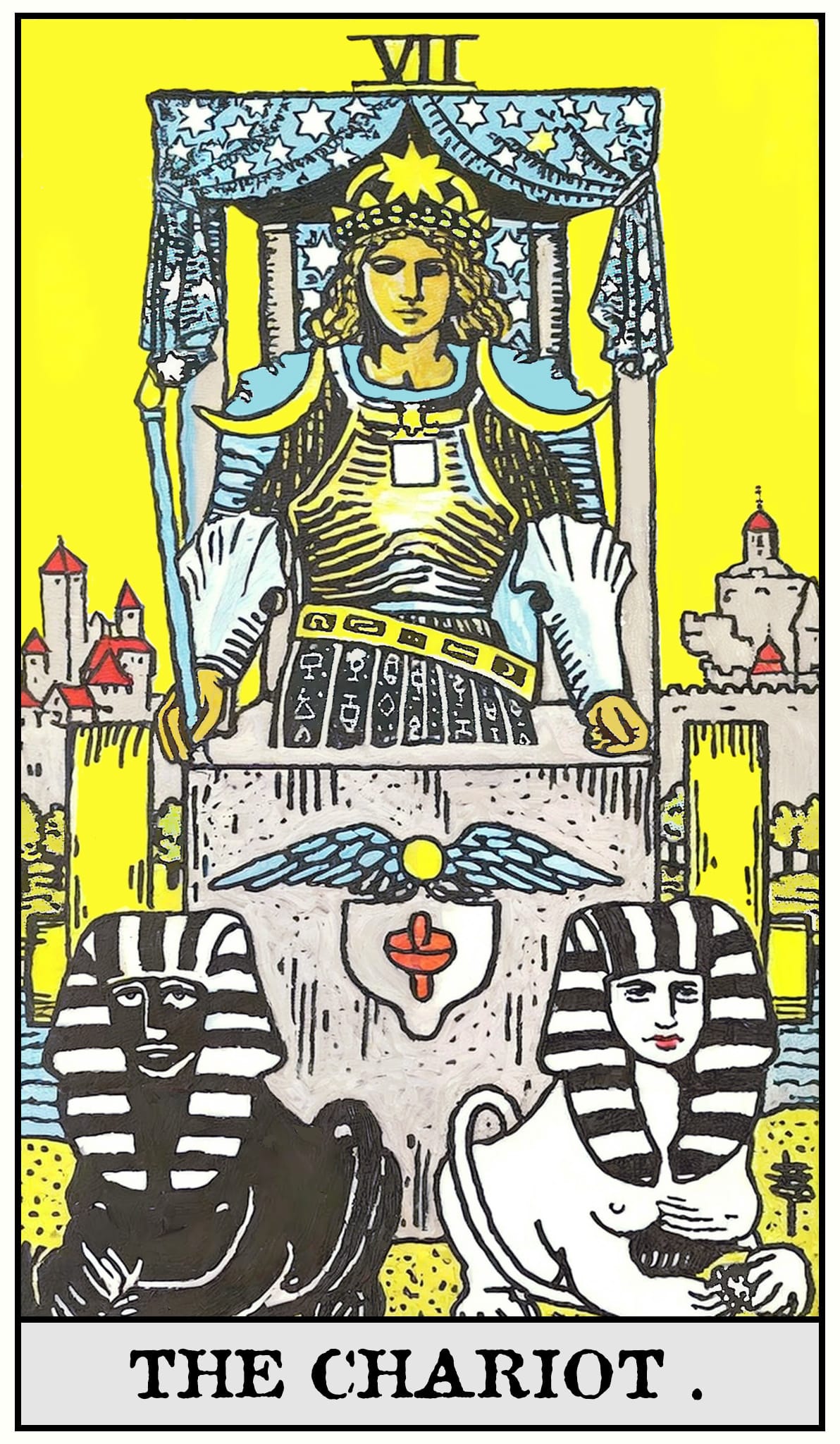
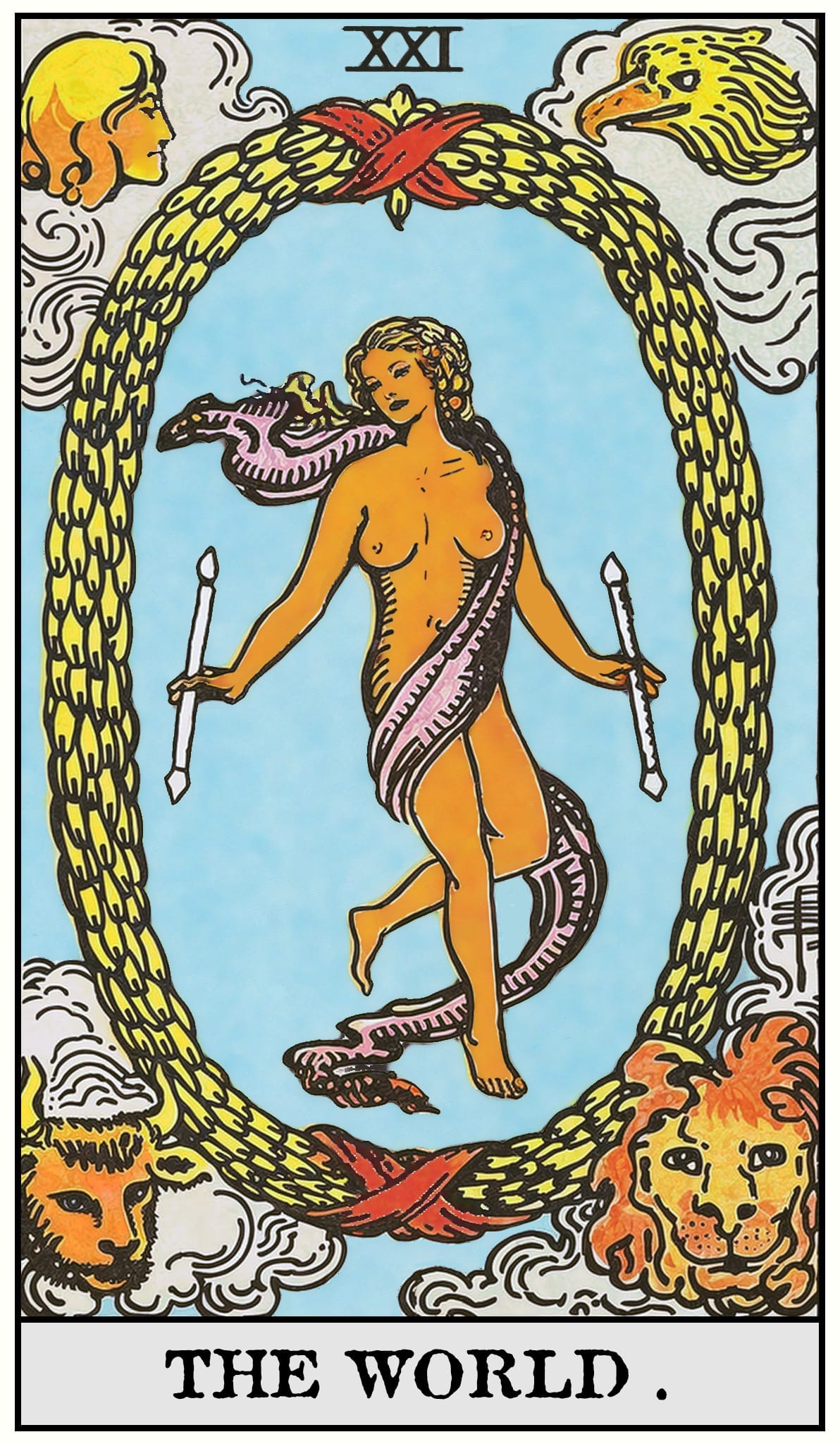
Temperance stands in the column of integration: above it the Chariot — integration by force of will; below it the World — integration by grace. Temperance is the middle term, and Pollack is precise that it is the longest. The Chariot's solution produced coexistence under management, not fusion. What cannot be willed into being must instead be attended to — kept warm, held at the threshold, permitted to do what it does in its own time. The angel's posture is the teaching: not pouring but permitting. One foot on the bank, one in the water — the conscious and the unconscious both present, neither abandoned. The failures of inner work most often happen when the seeker, impatient with the slowness, leaves the edge.
The complete three-layer reading for all 78 cards — including the full psychological and archetypal layers — is in The Pocket Guide →
The virtue of the long middle work can be performed as its negation.
Shadow TrapThe appearance of balance maintained by keeping both intensities low rather than by holding them both high and in proportion — the tepid mistaken for the temperate.
Shadow GiftThe capacity to sustain attention at the threshold between opposing forces without collapsing into either, long enough for the chemistry to do what force of will cannot produce.
The complete shadow reading — trap, gift, and the practice of integration — for all 22 Major Arcana is in The Shadow Archetype Reference →
We do not read a reversal as an opposite; following Pollack, a turned card is the same energy blocked, withheld, or redirected — not inverted into its negation. A reversed Temperance often marks the abandonment of the threshold — the retreat back to dry land, back to full ego control, because the slow work at the edge became too demanding to sustain.
Why Apocrypha Does Not Read Reversals as Opposites →Sixty-three symbols across the full deck — cross-referenced by card and meaning — are mapped in The Symbol Dictionary →
Where in your life are you forcing a mixture that is asking only to be left in the vessel longer — and what would it cost you to stop pouring, to simply remain at the threshold, and to let the exchange happen at the pace it requires?
Temperance is most often read as reassurance after hardship — things are balancing out, a healing period is underway. This is not wrong but it is insufficient. The card is describing a specific practice, not a passive recovery. The angel is actively maintaining the threshold position; the work is ongoing. What the card names is difficult: the discipline of sustained attention at a place most people leave because it is slow and unglamorous and produces no visible results until, suddenly, it does.