Death
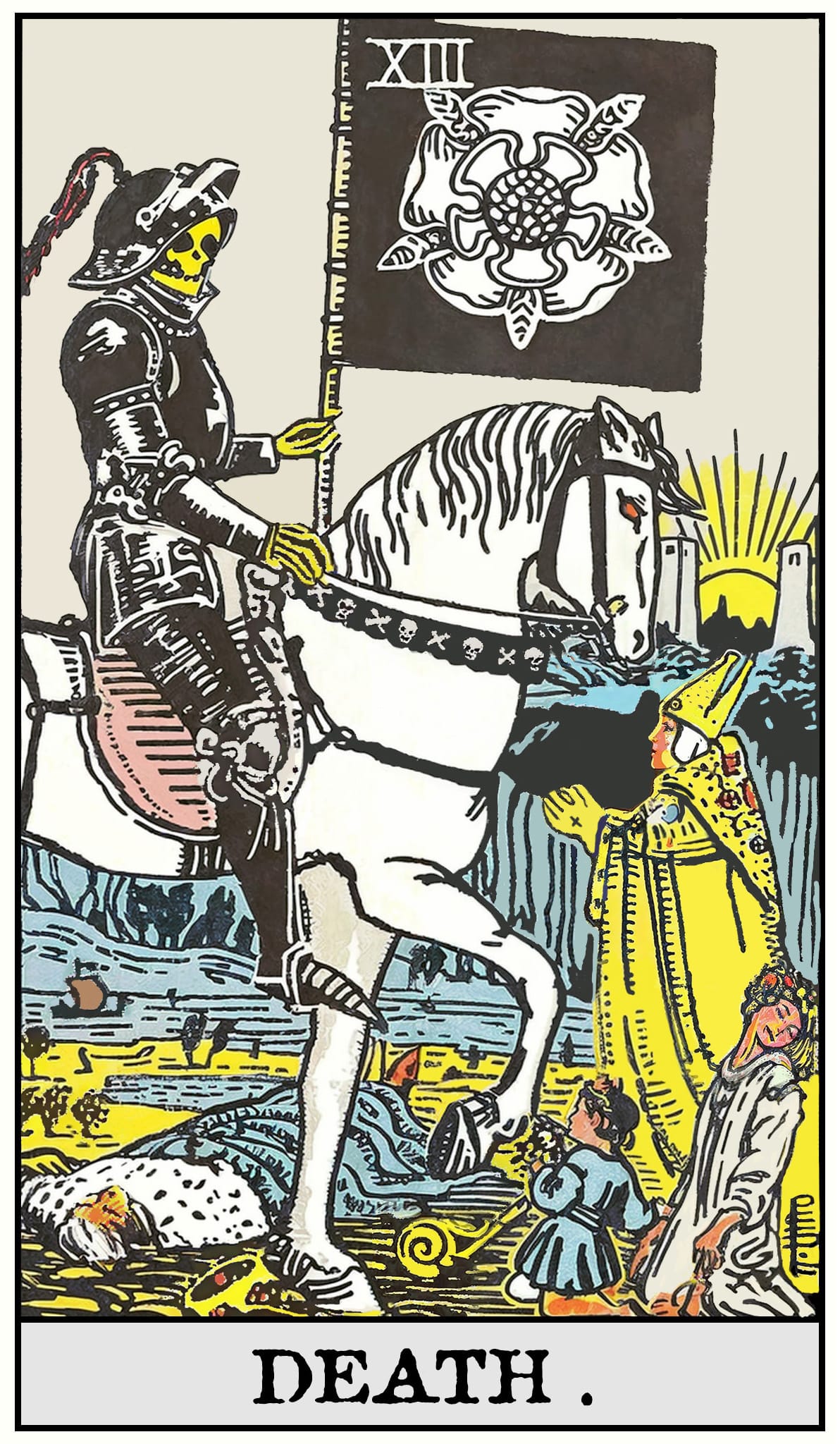
A skeletal rider crosses a low field on a pale horse, carrying a black banner with a white rose — the sun neither rising nor setting behind the two towers, the river running in both directions, the card refusing to specify an end.
Death names the necessary passage: the ending of a form that has completed its term, the shedding that makes the next form of life possible. The card is almost never literal. It is the loss of a role, a self-conception, a structure so habitual it had begun to be mistaken for a personality. The suffering this card describes is rarely the suffering of the loss itself. It is the suffering of the refusal to lose.
Something is in fact ending — and trying to keep it alive is what creates the suffering
Death arrives as the closing of a chapter that had been calling itself the whole book: a job that had become an identity, a relationship that has run its full course, a way of being a self that no longer fits the self it is supposed to house. Contemporary readings often soften this into transformation or change, as if the word were too strong. It is not too strong. The card has two shadow forms. The first is the romantic bypass — using the language of cycles and seasons to skip the place where loss is felt as loss. The second is the cynical shadow — the person who, having lost something real, begins to call everything death and turns necessary shedding into generalized nihilism. Neither faces the card directly.
The interior consequence: the self who chose is no longer the self who arrives
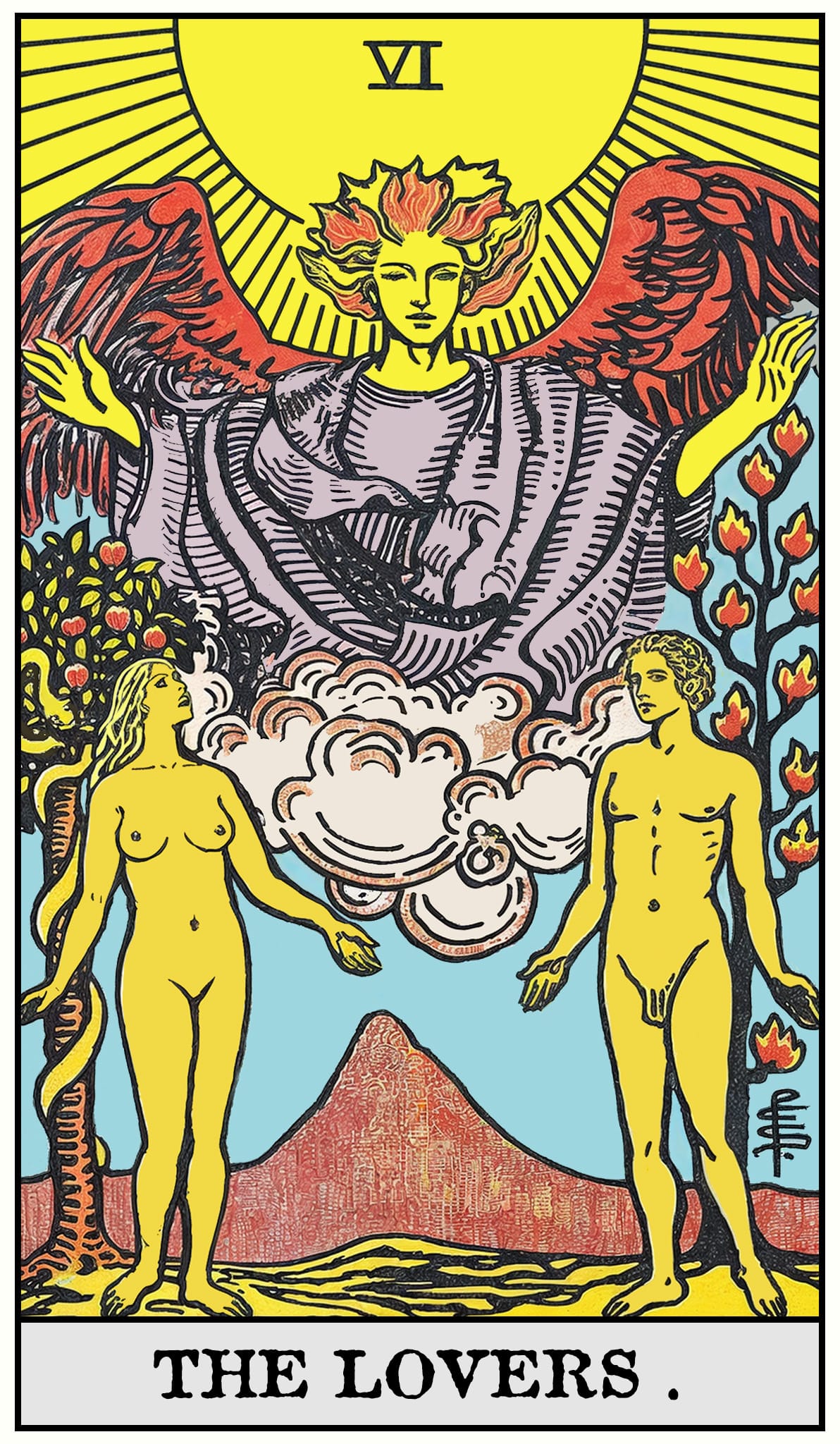
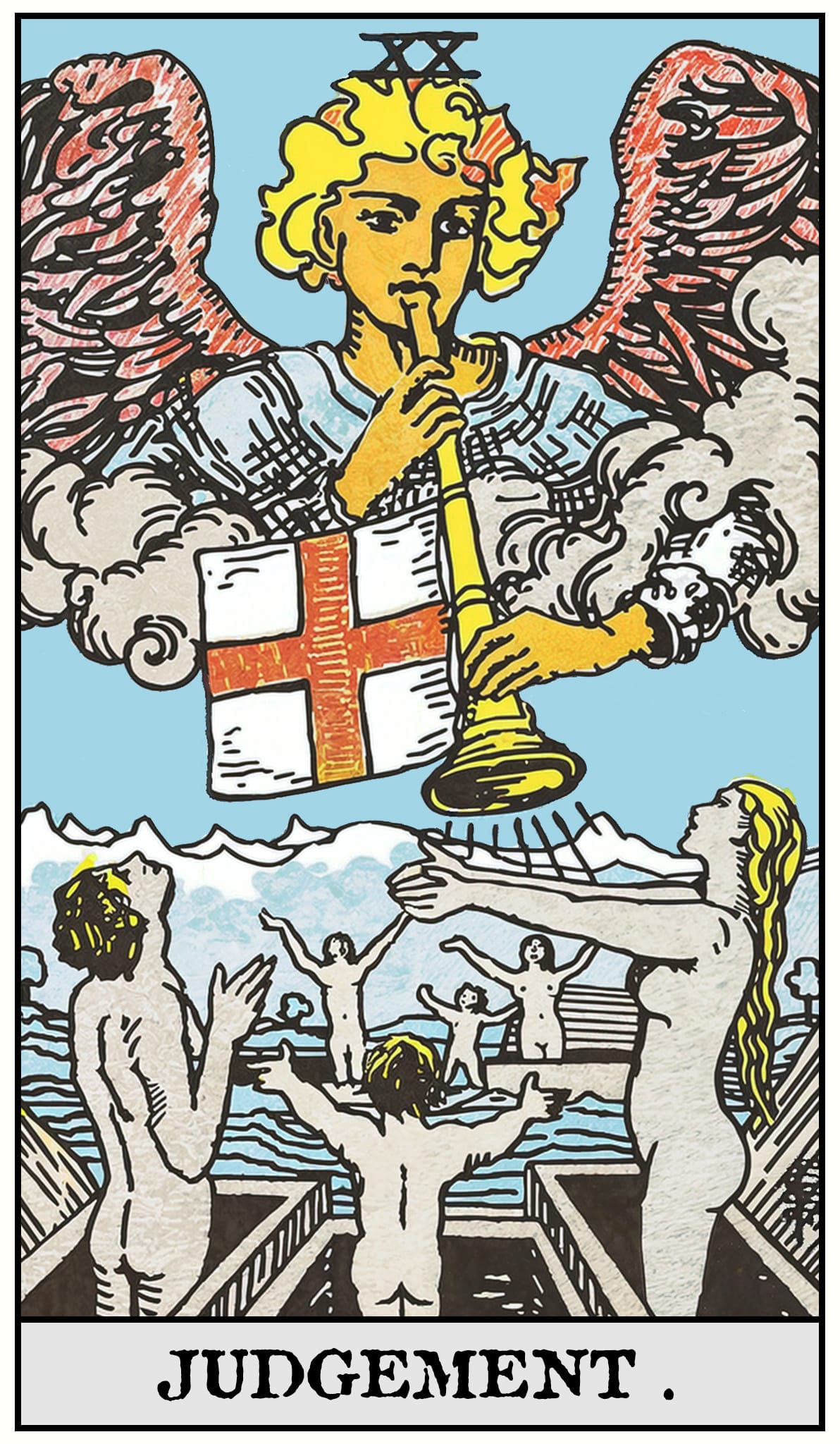
Death stands in the column of consequence: above it the Lovers at VI — the card of irreversible choice; below it Judgement at XX — the final gathering of all that has been lived. Death is the middle term, the place where choices made earlier arrive in the body and demand structural change. Most people accept visible consequences — the new city, the new role. What they resist is the interior consequence: the self who made the choice is not the self who emerges on the other side, and the gap between those two selves is the death the card is naming. Campbell named this moment the belly of the whale. The psyche does not skip it, even when the narrative does.
The complete three-layer reading for all 78 cards — including the full psychological and archetypal layers — is in The Pocket Guide →
There are two ways to refuse this card: sentimentality and cynicism. Both are refusals.
Shadow TrapThe spiritual language that describes the ending without entering the grief — the person who has learned to say "letting go" without having yet let go of anything.
Shadow GiftThe capacity to let the ending alter the structure rather than merely the surface — to allow the consequence of having chosen to change not just the circumstances but the self that inhabits them.
The complete shadow reading — trap, gift, and the practice of integration — for all 22 Major Arcana is in The Shadow Archetype Reference →
We do not read a reversal as an opposite; following Pollack, a turned card is the same energy blocked, withheld, or redirected — not inverted into its negation. A reversed Death often marks the ending that has happened but not been recognized — the old form still being maintained in structure or in conversation though its actual life has already concluded, the corpse that is being kept warm.
Why Apocrypha Does Not Read Reversals as Opposites →Sixty-three symbols across the full deck — cross-referenced by card and meaning — are mapped in The Symbol Dictionary →
What in you has already died — and which version of yourself is still walking around, making decisions, occupying space, as if it hadn't? And what would it cost you to acknowledge the death that has already occurred?
Death is the card most often misread in both directions simultaneously: softened into vague transformation by readers who fear it and dramatized into literal menace by those who want to provoke. The precise reading sits between: something specific is ending, the ending is structural and interior rather than circumstantial, and the work of the card is not to predict what ends but to identify what the self is refusing to release and at what cost the refusal is being maintained.