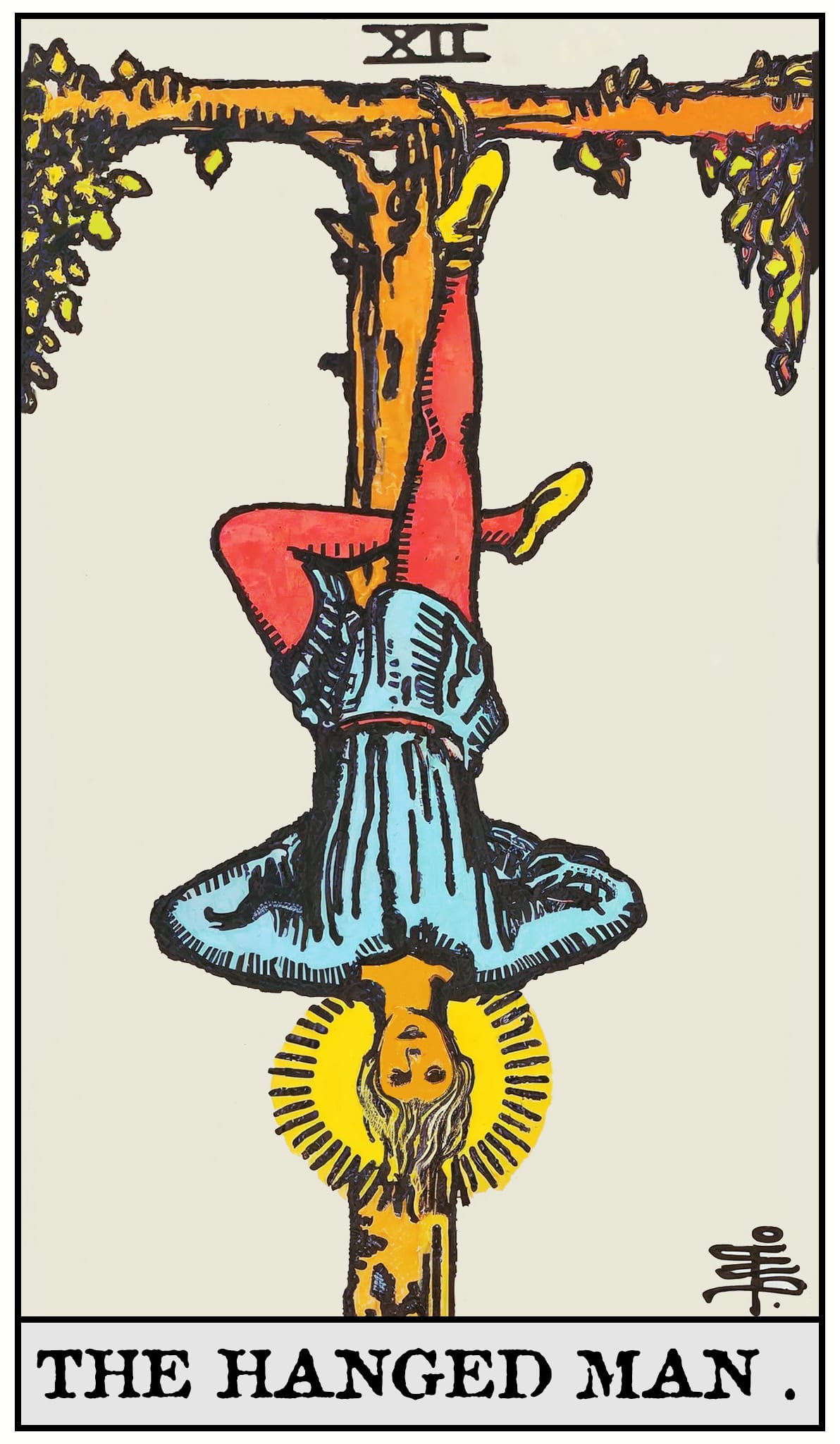
The Hanged Man
A young man hangs from a tree by one ankle, face peaceful, hands behind his back — he chose this, and he could come down, and he has not finished.
The Hanged Man names the voluntary inversion: the deliberate relinquishing of the upright position in order to see what can only be seen from beneath. The suspension is chosen, not forced. The hands are behind the back but not bound. The card names a state that looks like stagnation from the outside and is, from the inside, the specific position from which a particular and necessary thing becomes visible.
The stillness that the surrounding culture has no word for
The Hanged Man appears when nothing visibly moves: a project is paused, a decision deferred, a relationship suspended between over and not yet. The contemporary culture reads this as failure or depression. Often it is neither. There is a stillness that is dead, and a stillness that is gestational, and from the outside the two are indistinguishable. Only the one suspended can tell. The shadow is the martyrdom complex: the suffering that has become a stable identity, the person who has hung too long and forgotten that the rope can be untied, who has begun to confuse the suspension with the self.
Every truth acquired upright must be inverted before it can be used at depth
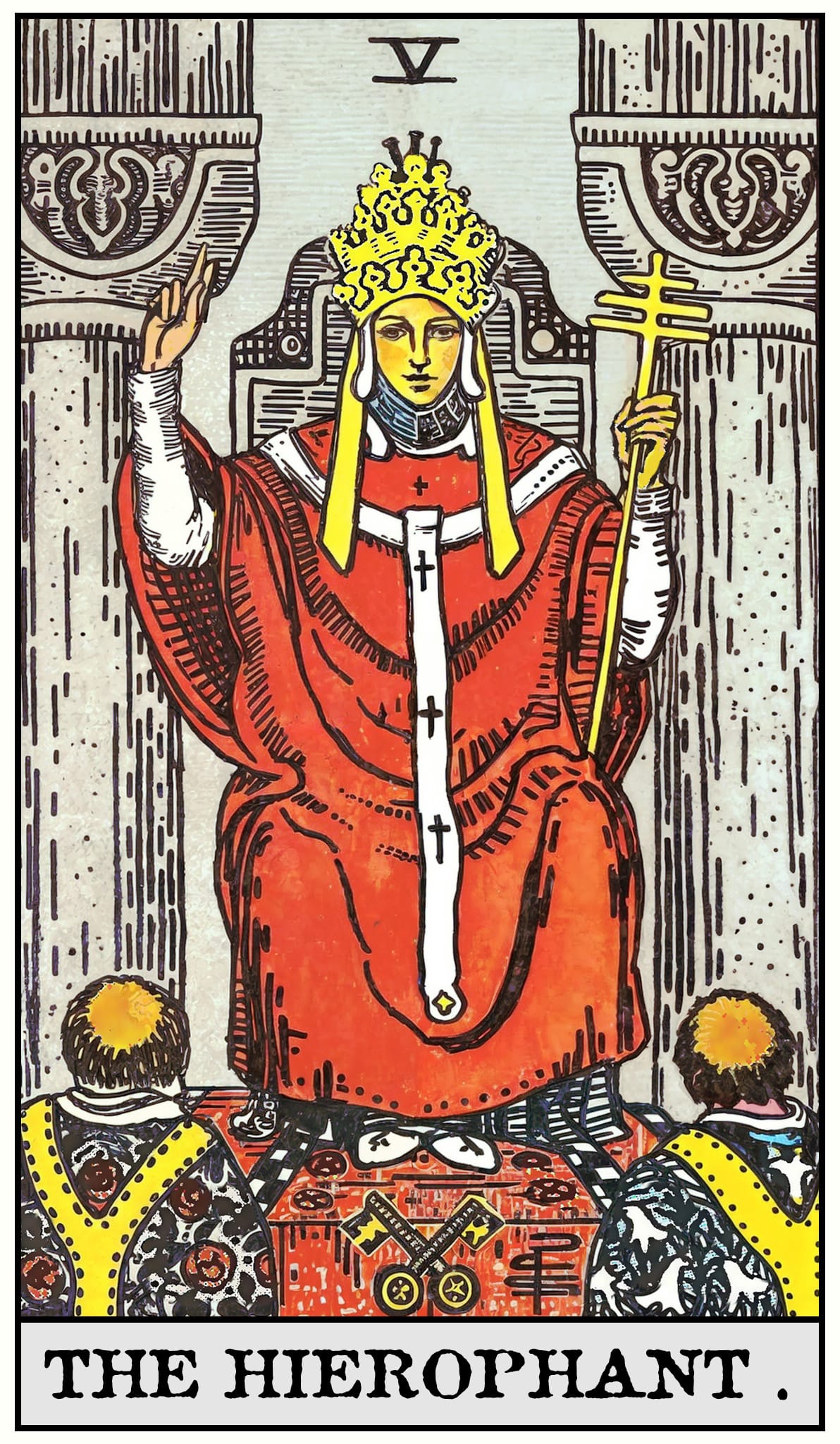
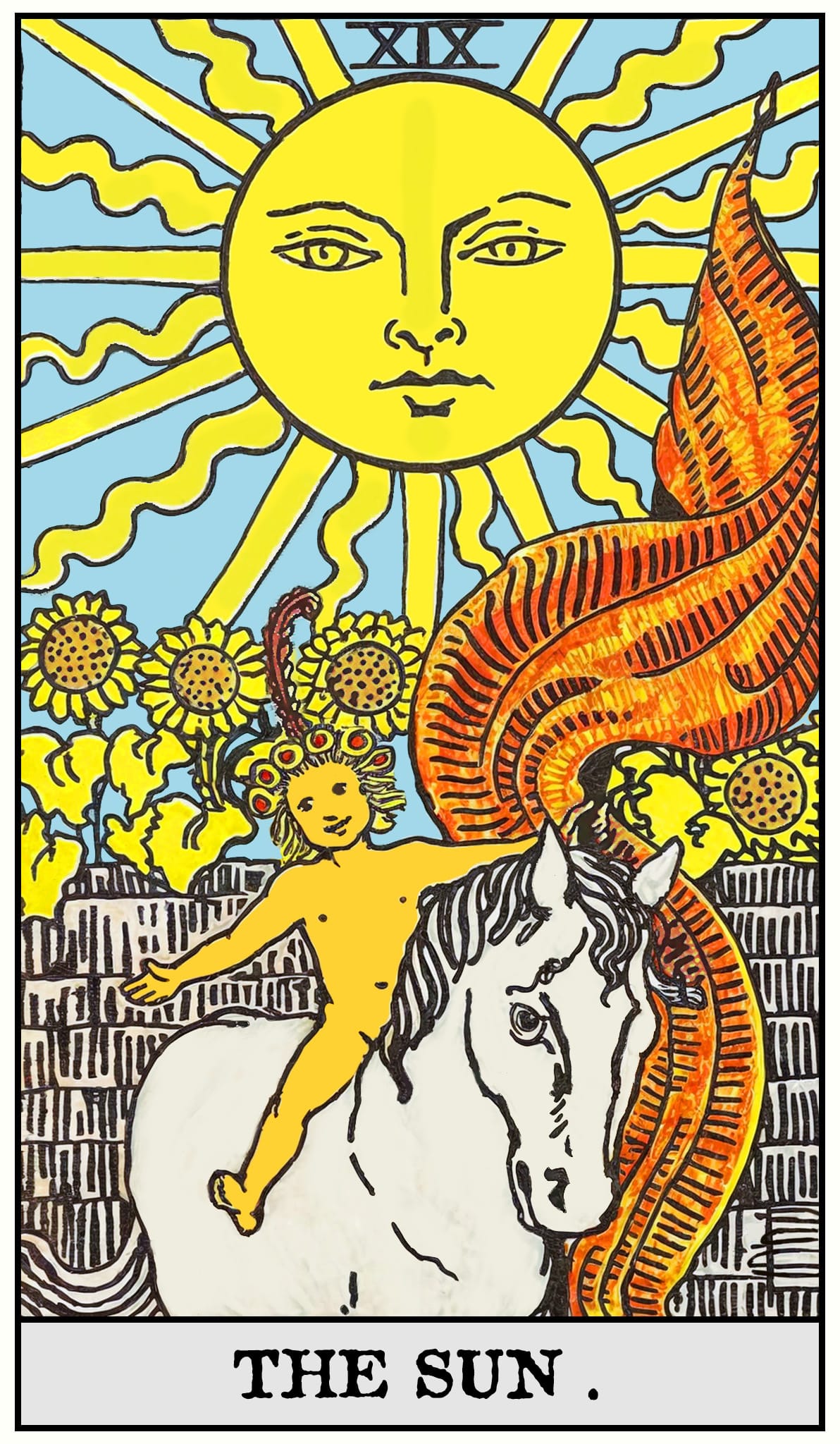
The Hanged Man stands in the column of teaching: above him the Hierophant, who transmitted tradition in its upright, transmissible form; below him the Sun, where what has been understood becomes radiant and embodied. Pollack treats this card as the great teacher of the inner sequence because of what the inversion reveals: the values, the priorities, the structures built in the first row — when seen from beneath — mean something different than they appeared to mean when held upright. What the seeker called priorities were often defences. What the seeker called defences were sometimes the only honest parts. The upright view was partial all along. Crucially, the Hanged Man is not thrown to the ground by external force — that is the Tower's work. He climbs the tree himself. That voluntary choosing is what distinguishes spiritual inquiry from spiritual injury.
The complete three-layer reading for all 78 cards — including the full psychological and archetypal layers — is in The Pocket Guide →
Surrender taken as identity becomes its own form of captivity.
Shadow TrapThe suspension that has stopped being voluntary — the position maintained past its purpose, the inversion that has become a permanent address rather than a temporary vantage point.
Shadow GiftThe capacity to remain in the inverted position long enough to actually see what it reveals, without either rushing back to upright or deciding to live there forever.
The complete shadow reading — trap, gift, and the practice of integration — for all 22 Major Arcana is in The Shadow Archetype Reference →
We do not read a reversal as an opposite; following Pollack, a turned card is the same energy blocked, withheld, or redirected — not inverted into its negation. A reversed Hanged Man is visually upright — and that is the observation the reversal makes: the refusal to enter the suspension, the insistence on remaining in the orientation that can no longer see what needs to be seen, the busy movement that is the alternative to hanging still.
Why Apocrypha Does Not Read Reversals as Opposites →Sixty-three symbols across the full deck — cross-referenced by card and meaning — are mapped in The Symbol Dictionary →
What have you been calling stuckness that is actually a position you chose? And if you admitted you chose it: what were you hoping to see from there that you have not yet seen — and is the answer closer than you have been allowing yourself to recognize?
The Hanged Man is most often either pathologized as depression or romanticized as enlightened surrender. Both misread it. The card is precise: the suspension is voluntary, it is temporary, and it is purposive — it exists in order that something specific becomes visible. The question the card requires is not "am I stuck?" but "what position am I in, and what does this position allow me to see that the upright position prevented?" That is a different question entirely.