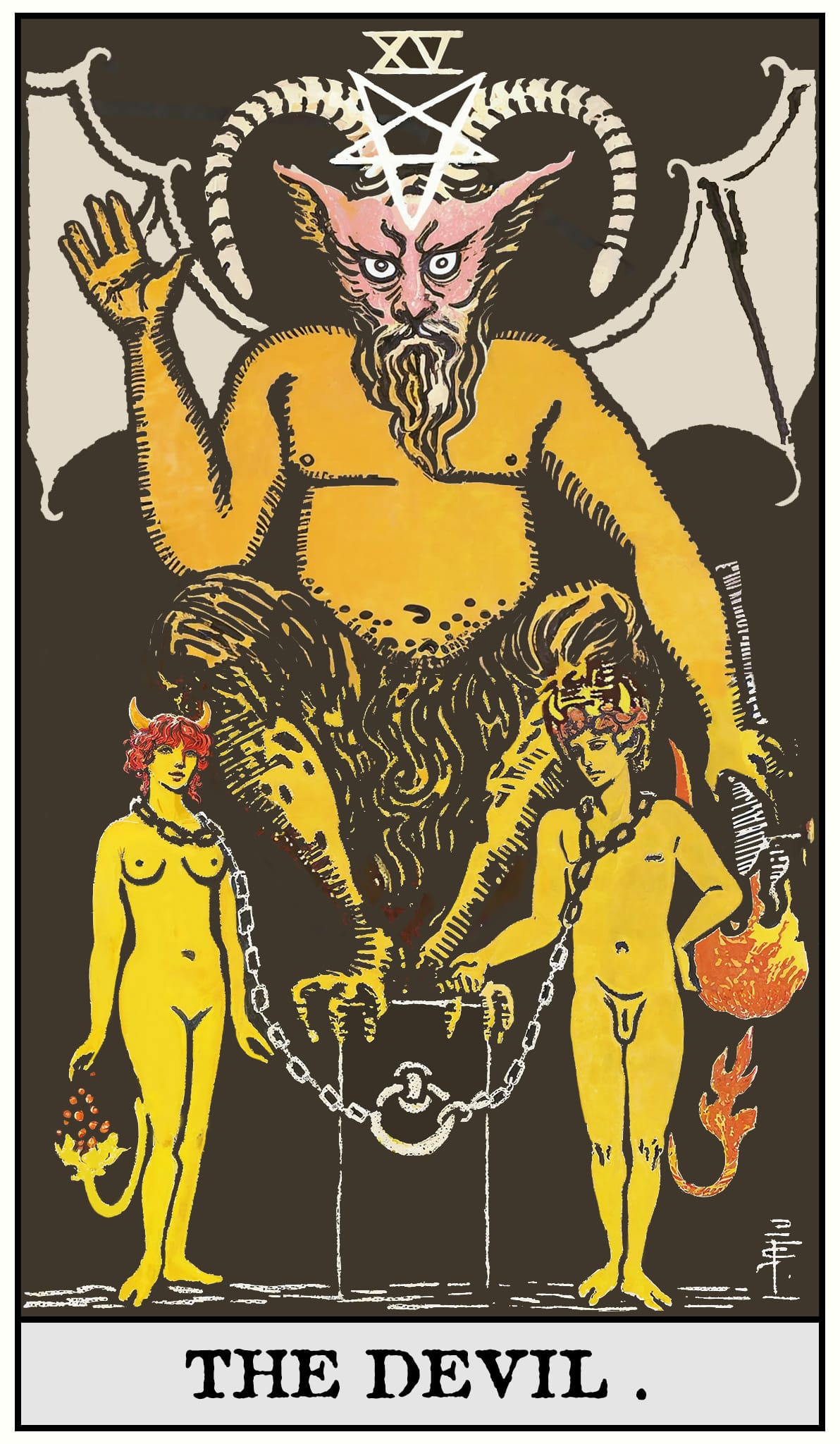
The Devil
Two figures stand loosely chained at the foot of a black pedestal, the chain at their necks slack enough to lift over their heads. They do not lift it. The horned figure above them holds a torch pointing at the ground.
The Devil names the self-chosen captivity: the structure one keeps returning to despite knowing better, the pattern that delivers something — relief, identity, the absence of having to choose — in exchange for the hours and the self it consumes. The bondage is real. The door has always been unlocked. The card's work is not moral instruction. It is the naming of the function the captivity is serving.
The pattern that keeps returning because it is delivering something the self has not yet examined
The Devil appears as the recurring structure: the relationship that reconstitutes itself after each ending, the habit that promises release and returns only repetition, the treadmill that buys things that do not satisfy with time that does not return. The shape of the captivity is different for each person; the mechanism is the same. The card is not standing over the figures with a whip. The inverted torch casts just enough light to keep them oriented toward the pedestal, not enough to show that the chain is loose. The shadow of this card is the moralizing reading — treating the captivity as a matter of weakness or vice. This misses the mechanism entirely and is, itself, one of the chains.
Will and instinct severed from each other become compulsion in their fusion
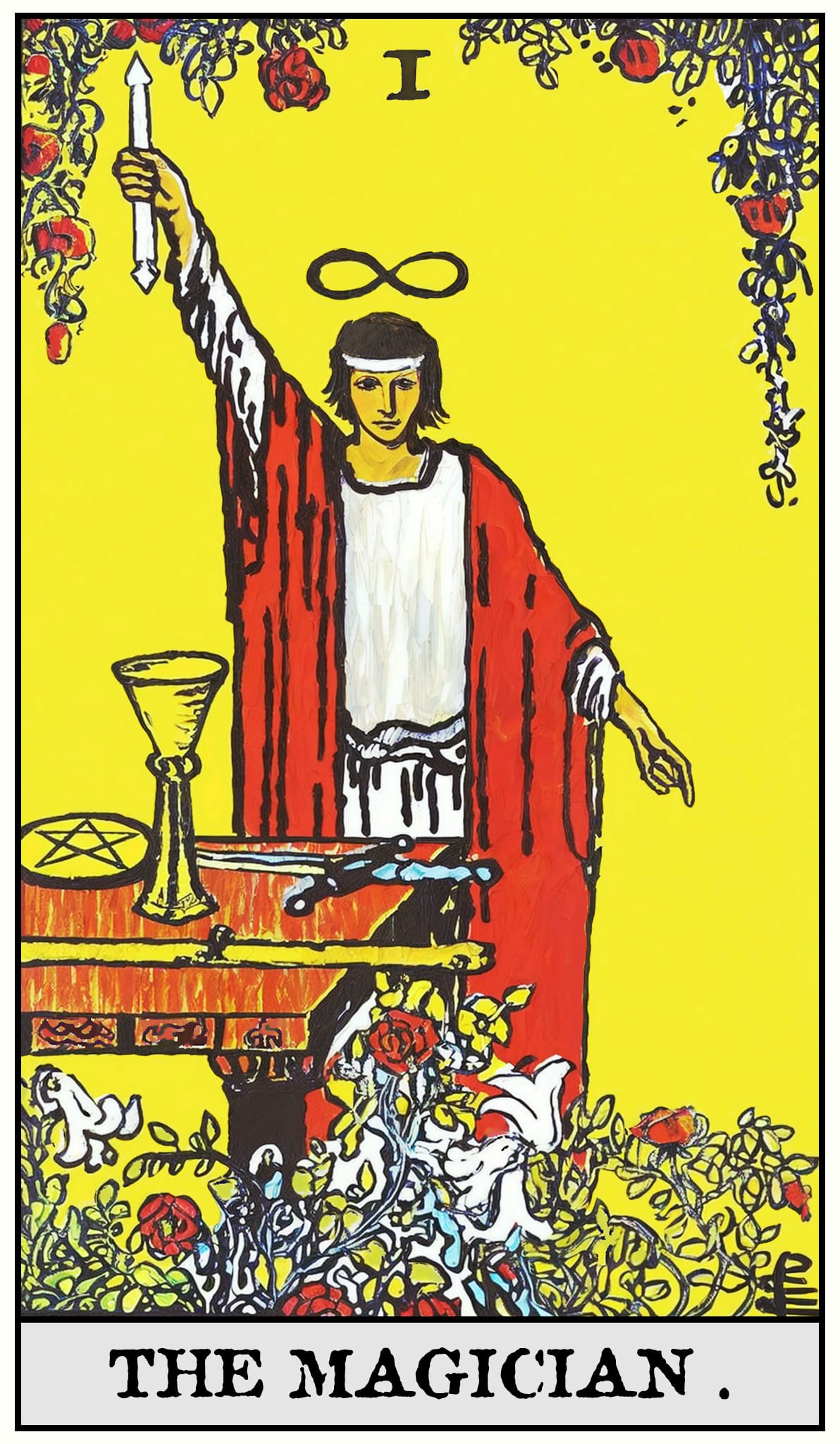
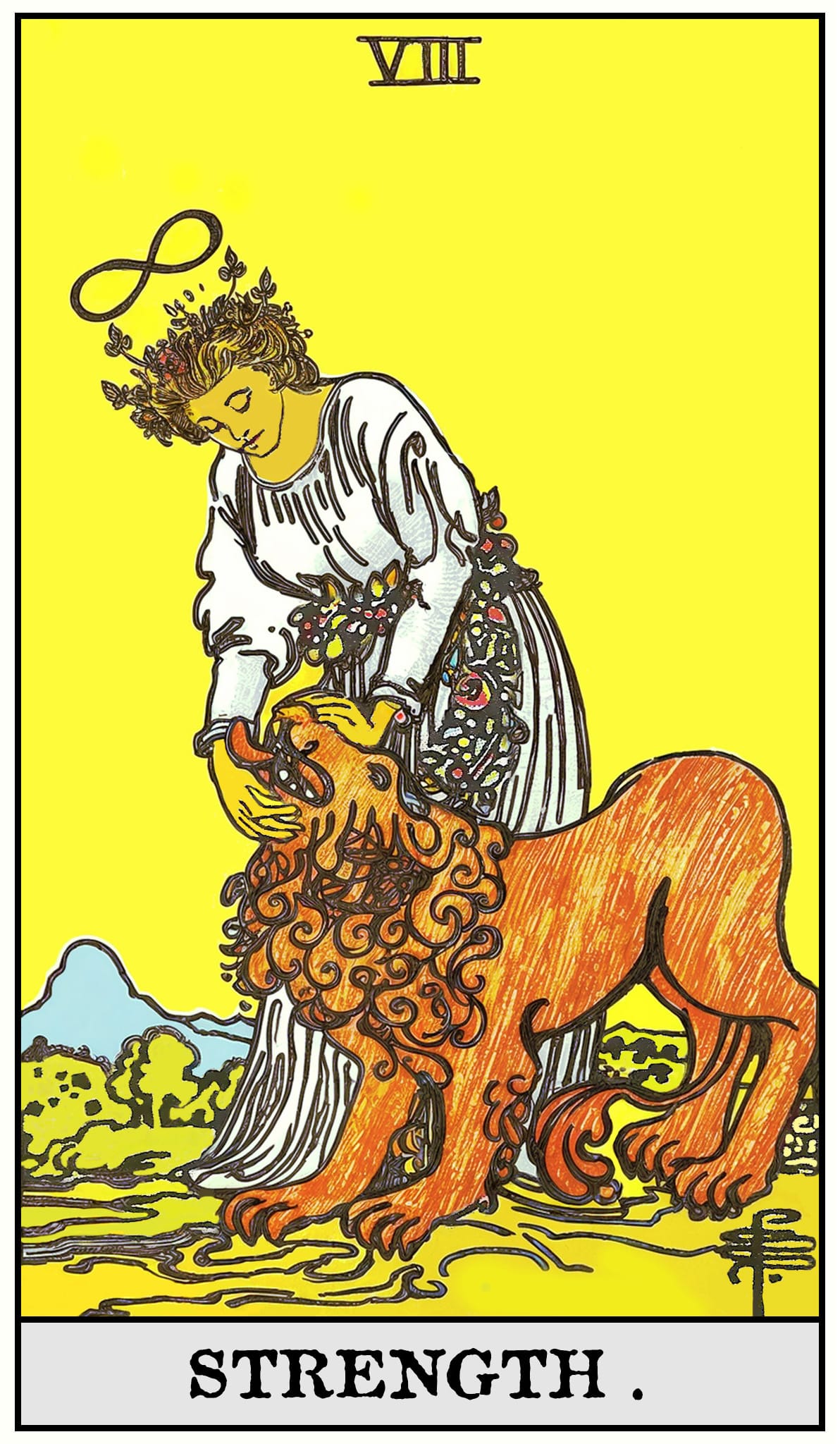
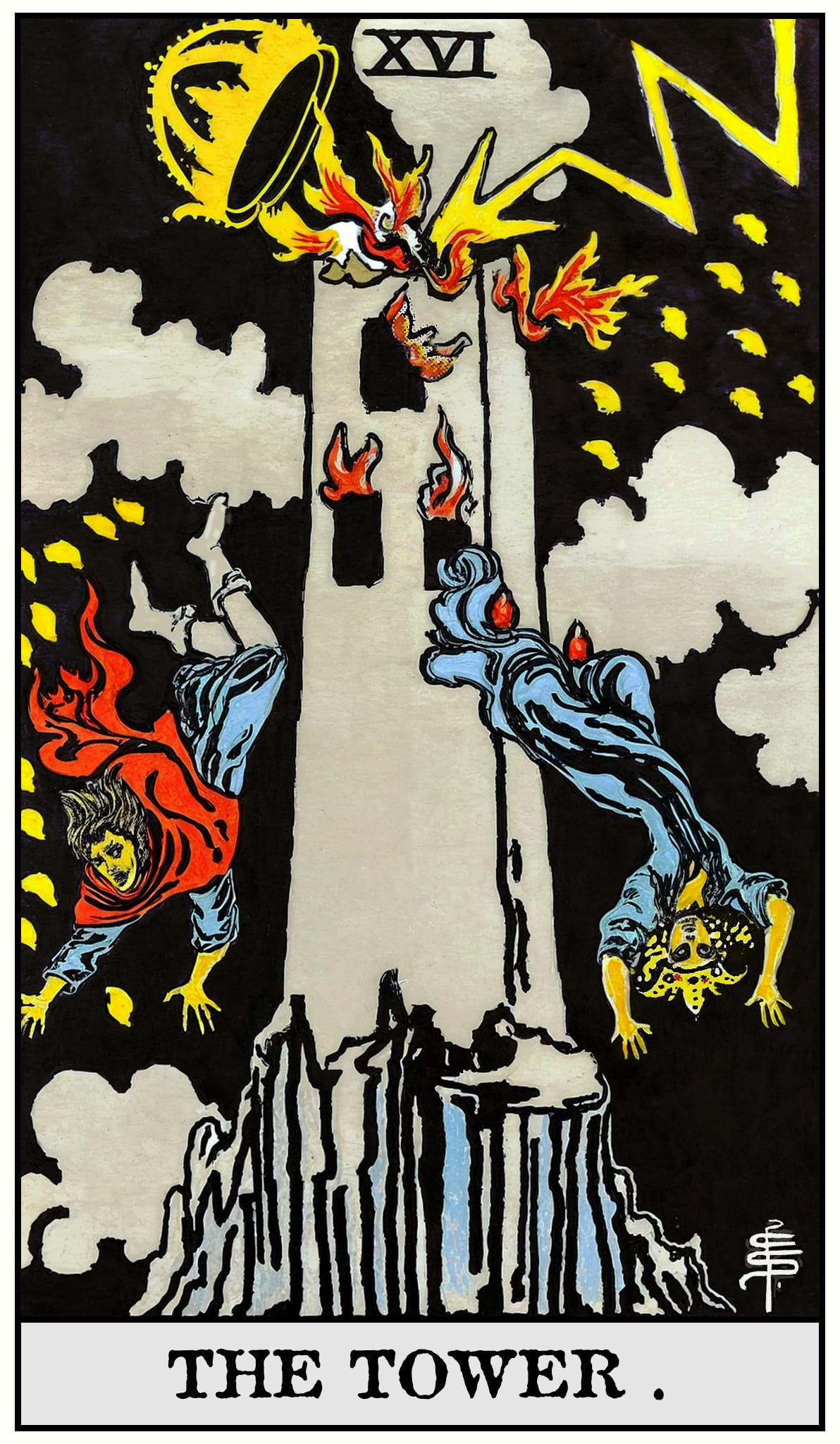
The Devil stands at the base of the column of will and instinct: above it Strength, where the conscious self met the instinctual self in patient, unarmoured contact; above Strength the Magician, where directed will first organized the elements. The Devil is what happens when both of those integrations are refused. The will, severed from instinct, becomes manipulative. The instincts, severed from conscious tending, become compulsive. Compulsion is not the absence of will — this is the most common misreading. Compulsion is will captured by instinct without conscious mediation; the person under it is willing very hard, but the willing serves a structure they have not yet seen clearly. Jung named this the shadow become autonomous: no longer a part of the self, but a ruler of it. The chain made of self-improvement is still a chain.
The complete three-layer reading for all 78 cards — including the full psychological and archetypal layers — is in The Pocket Guide →
The captivity persists because it is productive — until the naming of the function makes the production visible.
Shadow TrapThe insistence on addressing the behaviour without examining the function it serves — the moralizing, the willpower-based attempt to break the chain without first asking what the chain is providing.
Shadow GiftThe recognition of the looseness — the moment when the chain is seen as loose, which is the only moment from which lifting it becomes a matter of seconds rather than years.
The complete shadow reading — trap, gift, and the practice of integration — for all 22 Major Arcana is in The Shadow Archetype Reference →
We do not read a reversal as an opposite; following Pollack, a turned card is the same energy blocked, withheld, or redirected — not inverted into its negation. A reversed Devil often marks the moment just before or just after the recognition — the looseness of the chain becoming visible, the function of the captivity beginning to be named, the slight shift in the figure's posture that precedes lifting.
Why Apocrypha Does Not Read Reversals as Opposites →Sixty-three symbols across the full deck — cross-referenced by card and meaning — are mapped in The Symbol Dictionary →
What chain in your life have you been treating as fastened that you have not, in years, actually tried to lift? And before you answer that: what would you lose if the chain were gone — what does staying bound provide that leaving would remove?
The Devil is the card most consistently misread as moral warning, and the moralizing reading is precisely what the card is cautioning against. The question this card requires is not "what bad thing am I doing?" but "what function does this pattern serve, and what would I have to face if it stopped serving it?" Until that function is named clearly — not judged, named — the chain cannot be lifted because the person does not yet know what they are holding.