The Tower
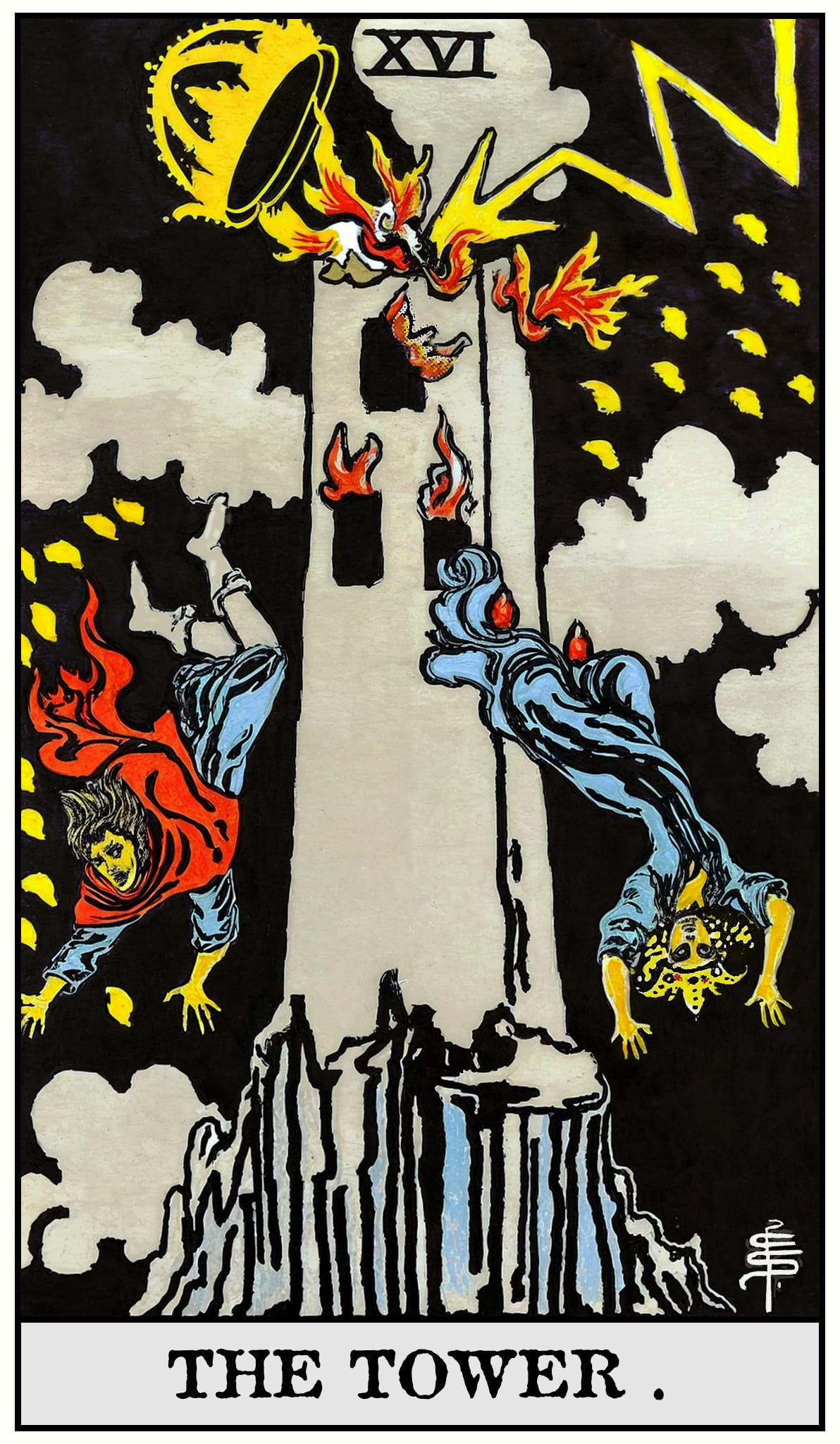
Lightning strikes a stone tower at its crown, two figures falling from the height into air that has not yet become ground — the moment when what was built to keep the truth out is breached from a direction no one was watching.
The Tower names the involuntary revelation: the sudden structural collapse of an arrangement that could not contain what it was built around. The card is often read as catastrophe, and this is not wrong — but it is incomplete. What burns was never load-bearing. The bones, if there were any, remain.
The strike is catastrophic because the Tower was false — not malicious, false
The Tower appears when something structural gives way: the diagnosis that reorganizes the calendar, the fact that surfaces and cannot be re-buried, the collapse of an arrangement everyone had agreed not to examine. The question is not how to repair the Tower. The question is what can be built where it stood. Its shadow is the rush to spiritualize the destruction — calling the collapse a blessing in disguise before the collapse has been allowed to be a collapse. The rubble must be permitted to be rubble. The lesson, if there is one, comes later.
The lightning does not arrive from outside — it has been building from within
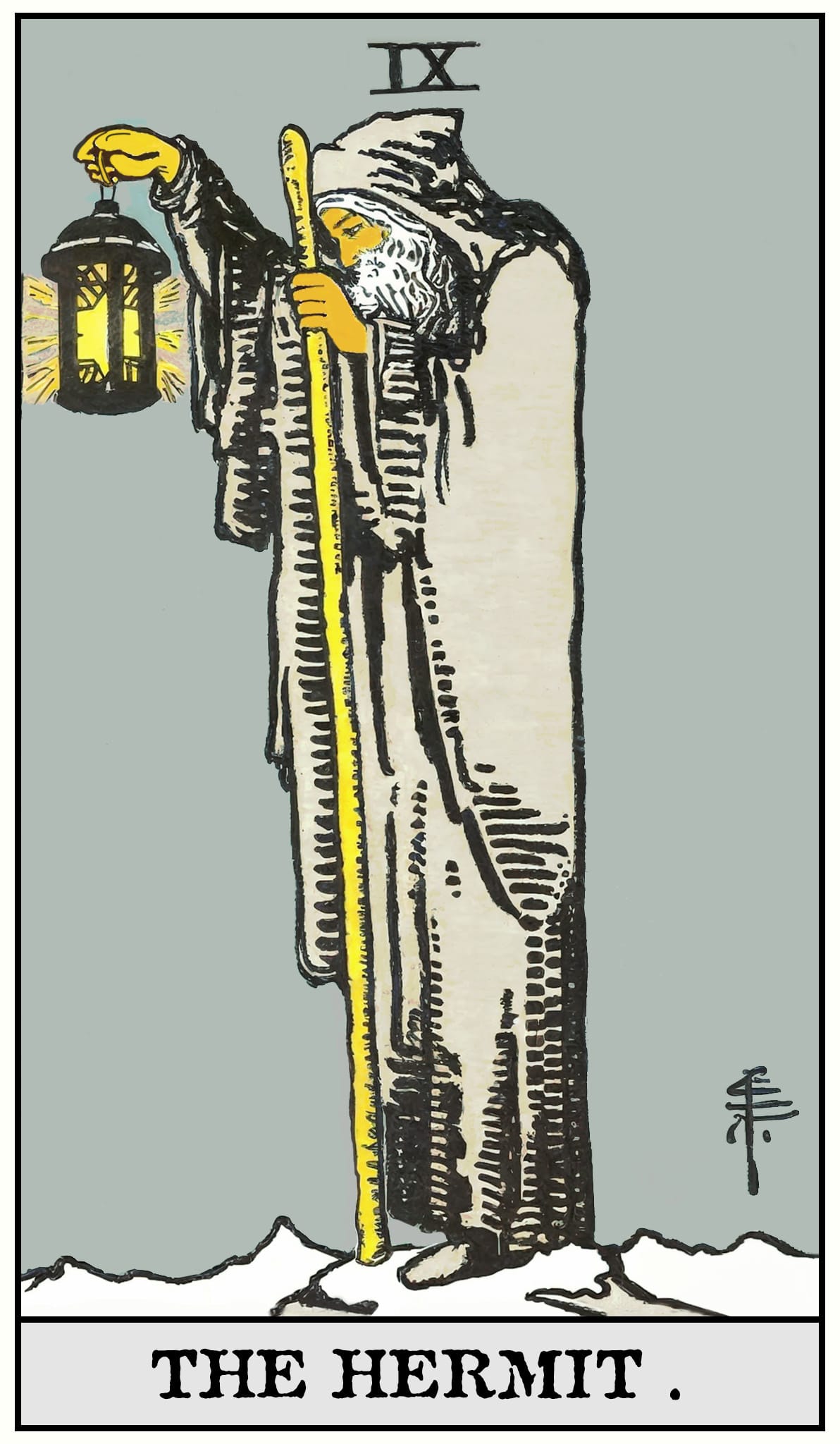
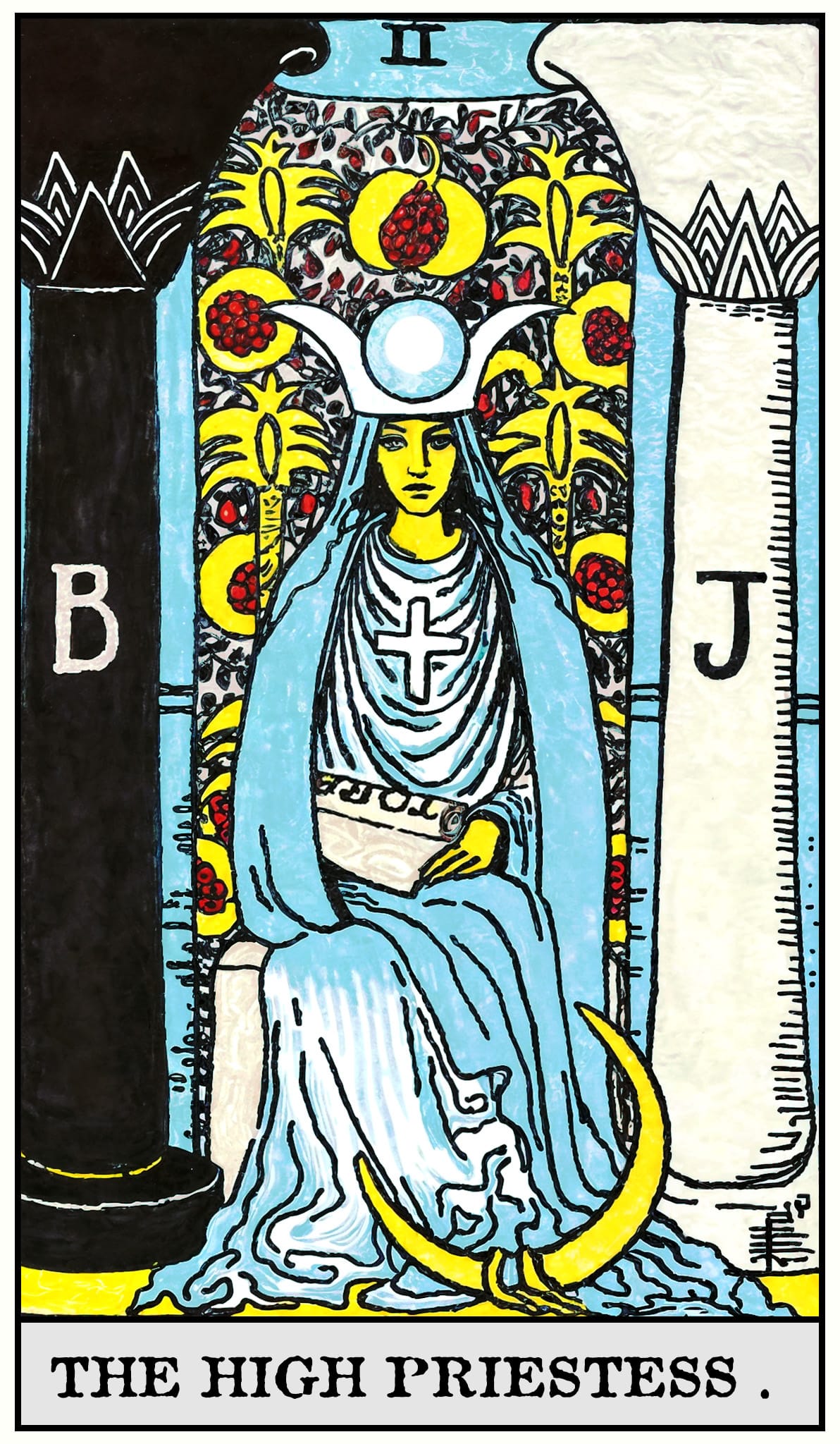
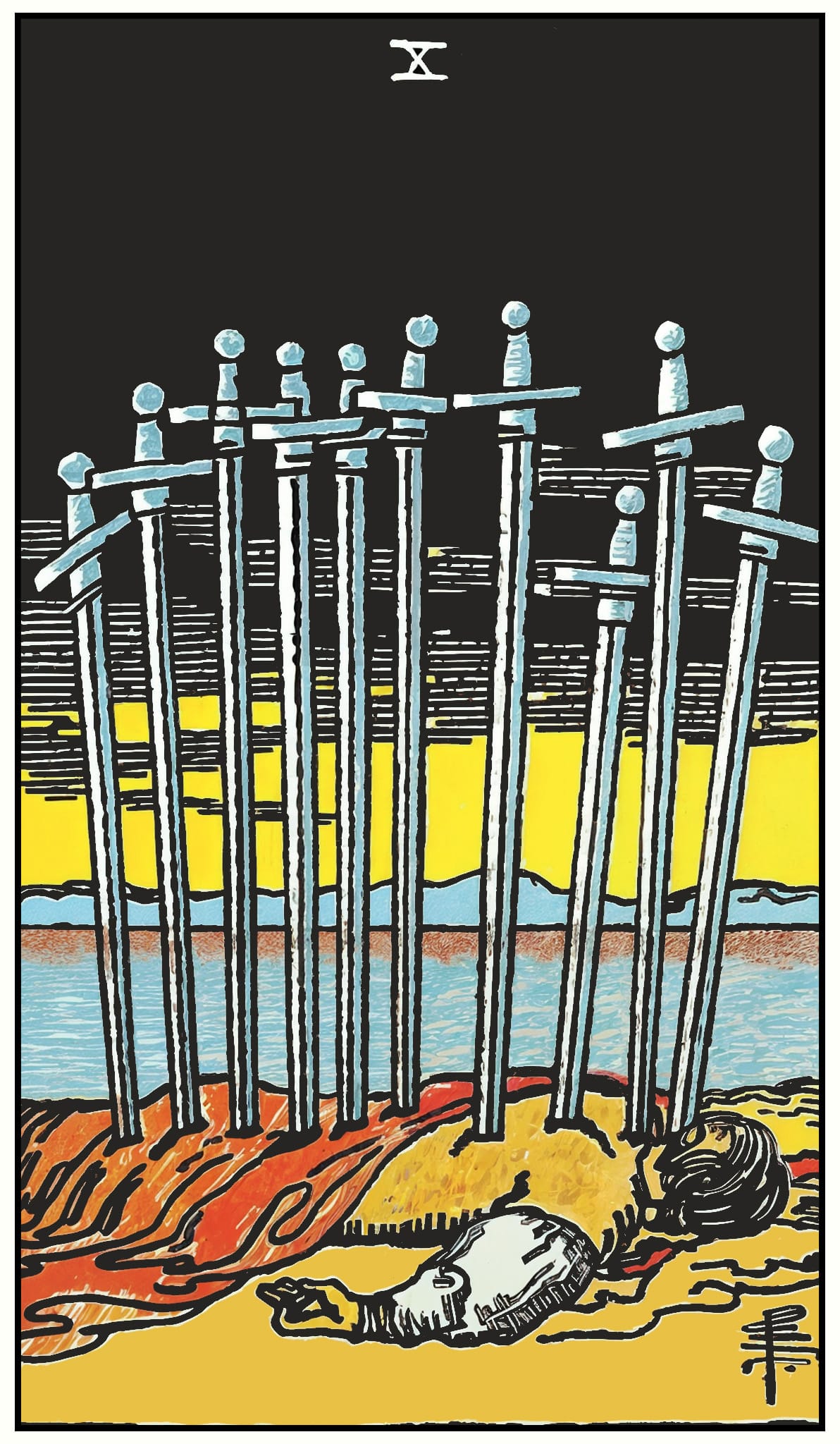
The Tower stands in the column of withdrawal and revelation — High Priestess at II, Hermit at IX above it — as the third term: the moment when the structure built around hidden material can no longer hold and breaks open. Jung called this the collapse of the persona; the strike issues from within the system, not from outside it, because the inner work of the second row produced something incompatible with the external construction. Something had to give; the structure was the weaker thing.
The complete three-layer reading for all 78 cards — including the full psychological and archetypal layers — is in The Pocket Guide →
The destruction is made worse by being converted into meaning before the destruction is finished.
Shadow TrapThe premature narrative — reaching for the lesson while the rubble is still falling, using spiritual language to skip the part where the collapse is simply a collapse.
Shadow GiftThe capacity to let the structure be fully down before asking what it concealed, and to discover that the ground was closer than the Tower had allowed anyone to believe.
The complete shadow reading — trap, gift, and the practice of integration — for all 22 Major Arcana is in The Shadow Archetype Reference →
We do not read a reversal as an opposite; following Pollack, a turned card is the same energy blocked, withheld, or redirected — not inverted into its negation. A reversed Tower often marks the structure that is visibly cracking but has not yet fallen — the prolonged moment of anticipation, the person maintaining something they already know cannot hold, expending enormous energy on a wall whose failure is no longer a question of whether but when.
Why Apocrypha Does Not Read Reversals as Opposites →Sixty-three symbols across the full deck — cross-referenced by card and meaning — are mapped in The Symbol Dictionary →
What structure in your life is still standing only because the lightning has not yet been aimed at it — and what are you spending to keep it upright that you will not get back when it falls anyway?
The Tower is most commonly either feared as the worst card in the deck or reclaimed as secret good news. Both responses are ways of not sitting with what the card actually describes: a structure was false, it has fallen, and the work now is to assess what remains without immediately converting the rubble into a redemption narrative. The card does not promise renewal. It promises that what was false is no longer standing. What comes next is a different question.