Eight of Swords
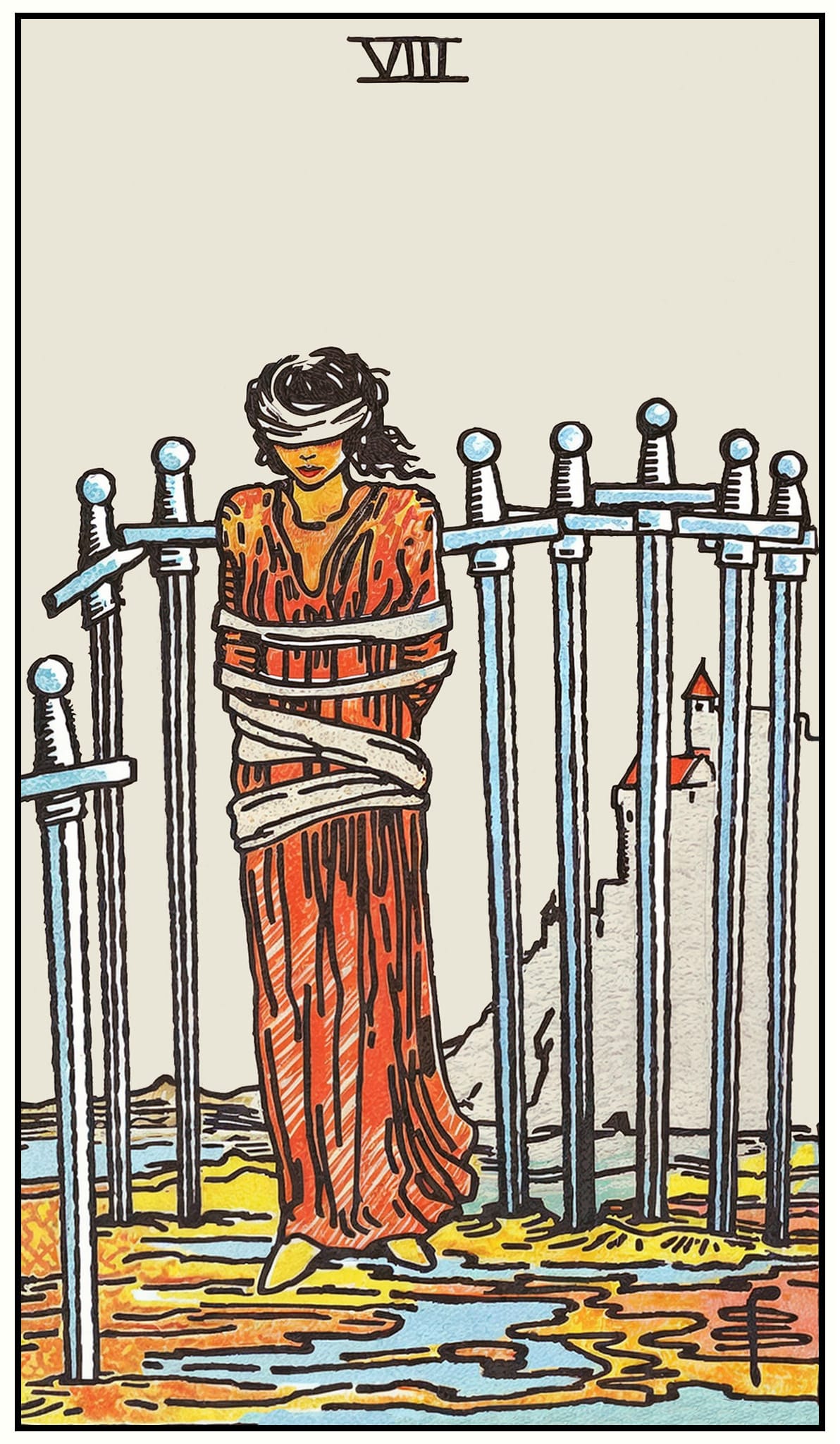
A woman stands bound and blindfolded, eight swords planted in the earth in a loose semicircle around her — the swords not touching her, the binding not tight, the exit present and unused.
The Eight of Swords names the constraint that is mostly self-constructed: the prison whose door is on the inside, whose walls are conclusions the mind placed and has since forgotten placing. The exit exists. The exit is not guarded. The card does not ask whether the constraint is real — some of it is. It asks what is being maintained by the story of its totality.
The swords are not touching her. The binding is not tight. She has not moved.
The Eight of Swords is the card of the constraint that feels total and is not quite. The exit exists — she could, if she turned slightly, walk between the blades. The blindfold prevents her from seeing this. The binding prevents her from reaching for the exit even if she sensed it. Both the blindfold and the binding are real, and both are things she can remove. The shadow is the enclosure narrated into permanence: the person who has described their constraint with such fluency, for so long — I have no options, this is the only way it can be — that the description has become the architecture. The castle behind her is the origin or the destination; either way, the direction is not the problem. The blindfold is.
The mind become its own jailer — the chain internalized until it becomes invisible
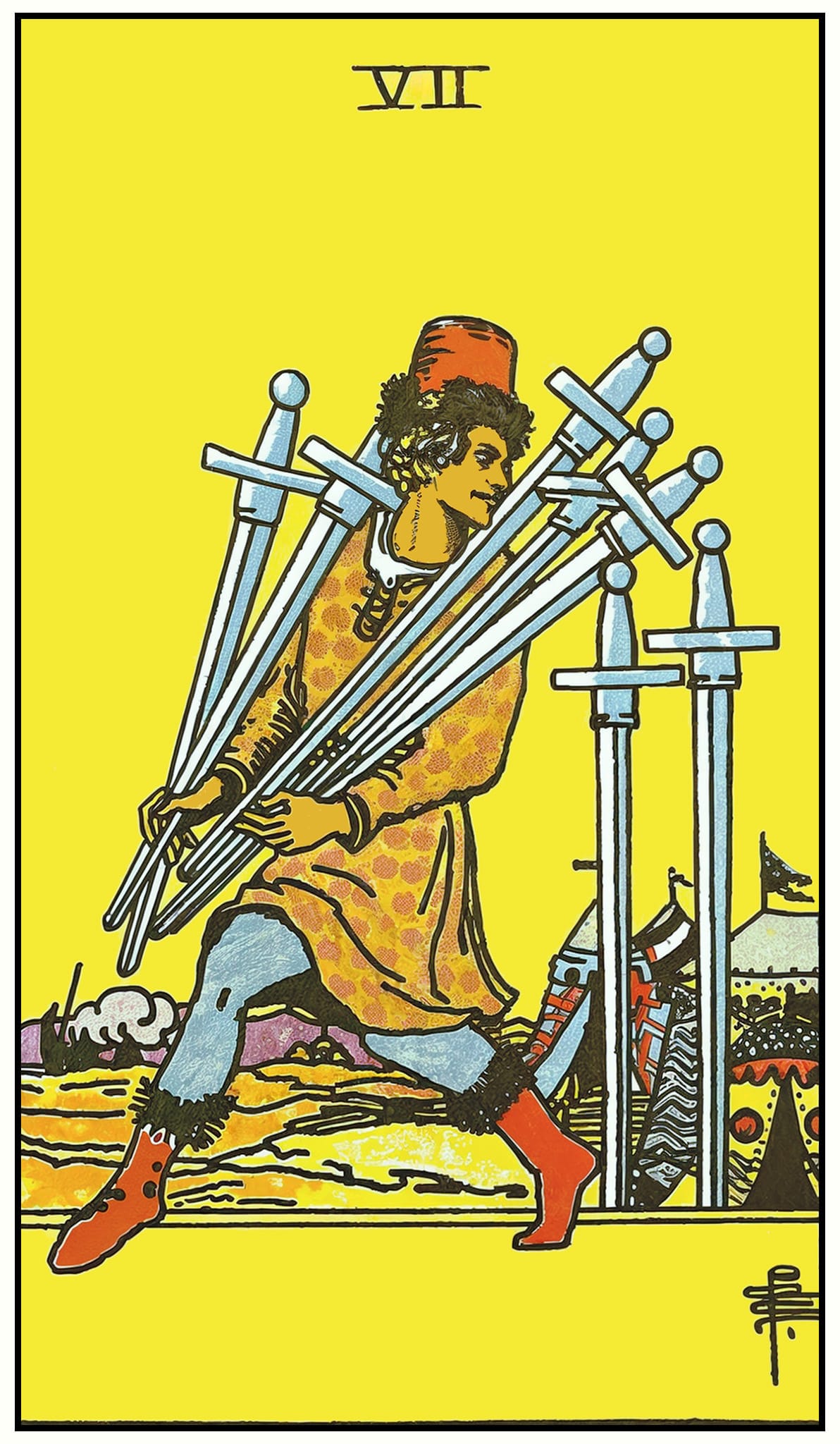
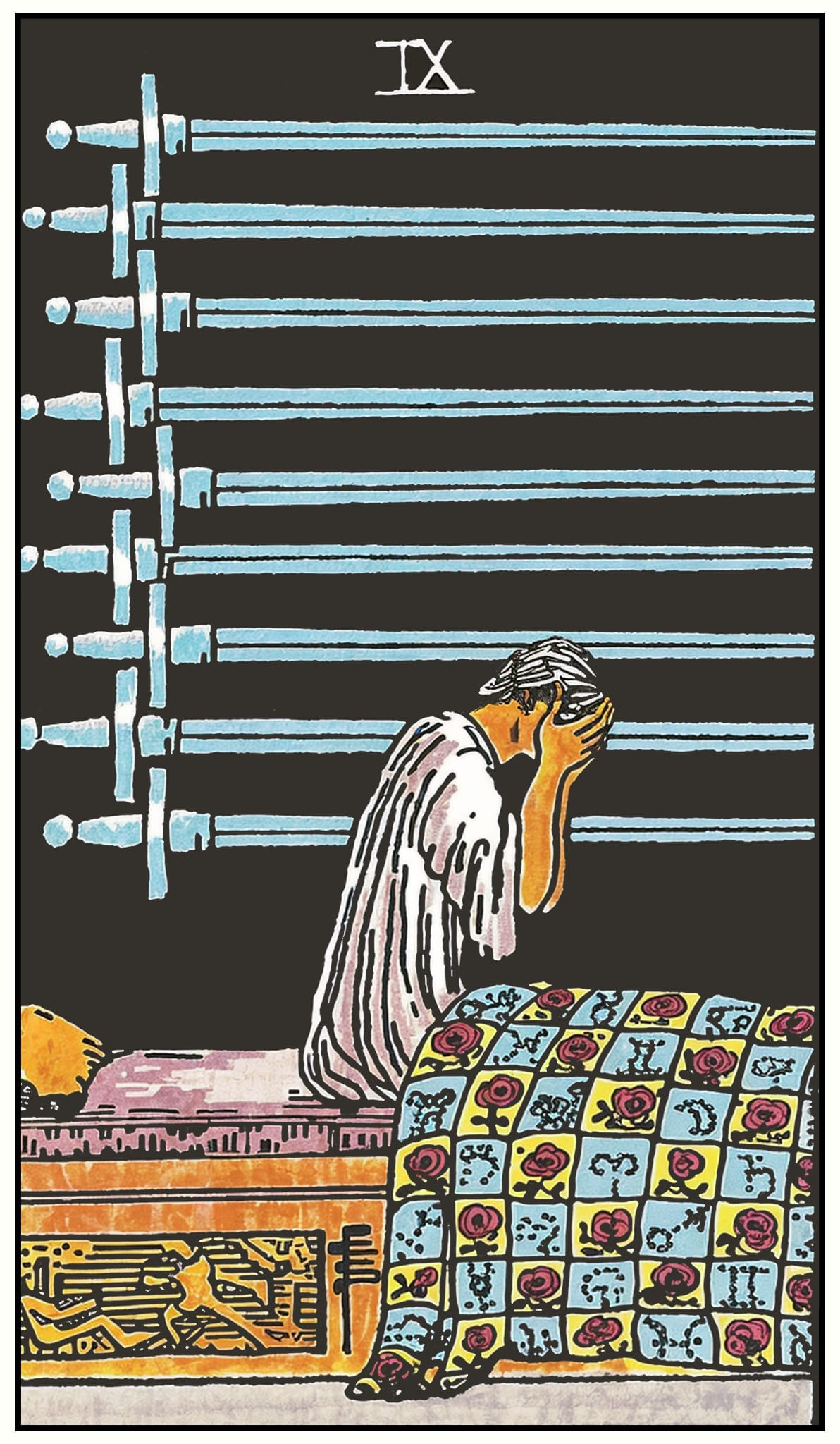
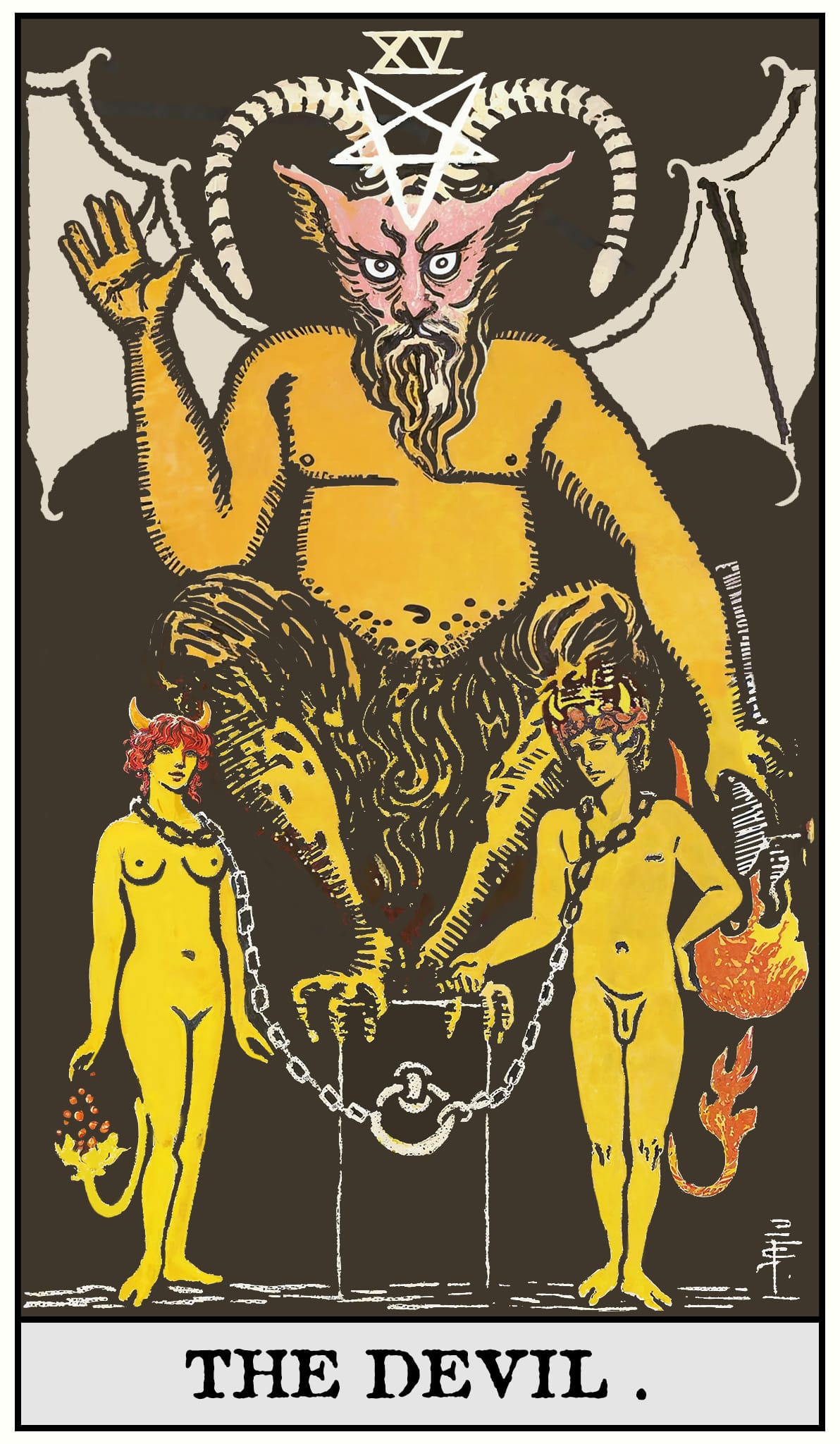
After the Three's external grief, the Five's self-inflicted wound, and the Seven's incomplete departure, the Eight is the logical accumulation: a consciousness arranged so thoroughly around its limitations that the exits are no longer perceptible. The swords are her own conclusions, planted so firmly that she has forgotten they were placed rather than discovered. The Devil (XV) is the parallel Major: the chain worn by choice, always removable. But the Devil's chain is visible. The Eight's binding is subtler — the story of constraint repeated until the story becomes the cell, the map mistaken for the territory it describes.
The complete three-layer reading for all 78 cards — including the full psychological and archetypal layers — is in The Pocket Guide →
The chrysalis is a prison. It is also not a permanent condition. The Eight is the card of when it has been.
Shadow TrapThe limitation so thoroughly absorbed in early life that adult freedom arrives and is not recognized as freedom — the constraint that was once real and has since become the organizing principle of a life that could, structurally, do otherwise.
Shadow GiftThe recognition that the swords were placed — that the enclosure has an author, and the author is the person inside it — which is not a comfortable recognition but is the only one from which the exit becomes visible.
Shadow readings for each card, by suit, are gathered in The Pocket Guide →
We do not read a reversal as an opposite; following Pollack, a turned card is the same energy blocked, withheld, or redirected — not inverted into its negation. A reversed Eight of Swords often marks the beginning of the removal — the blindfold loosening, the binding felt for the first time as a choice rather than a condition, the slight shift that precedes the recognition that the exit has been there all along.
Why Apocrypha Does Not Read Reversals as Opposites →Sixty-three symbols across the full deck — cross-referenced by card and meaning — are mapped in The Symbol Dictionary →
What story about what you cannot do have you been telling so consistently that you've stopped checking whether it's still true — and when did you last actually try the exit?
The Eight of Swords is most often read as a call to recognize that constraints are self-imposed. This is not wrong. The less comfortable reading adds the necessary precision: some of the constraints were once real, were placed in response to real conditions, and have simply not been updated since those conditions changed. The card does not say the woman is foolish. It says the swords were placed, and the placing was real, and the question is whether the situation that required them still obtains. That is a different and harder question than "you're doing this to yourself."