Eight of Cups
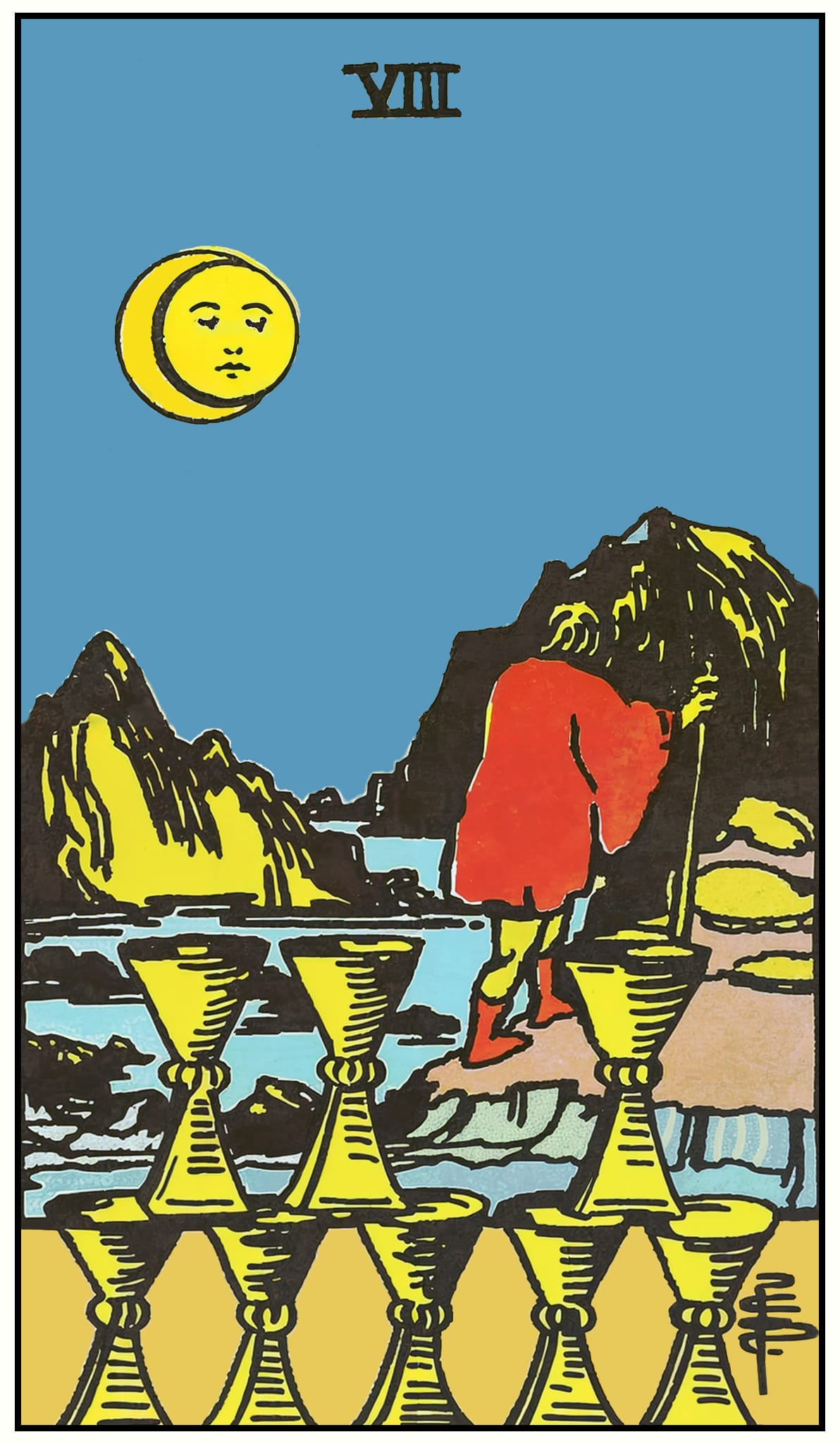
A cloaked figure walks away from eight neatly stacked cups in the foreground, moving toward rocky upland terrain — a waning moon above, a river beside him, the cups intact and arranged behind him.
The Eight of Cups names the exit that is not a failure: the departure from something that has been properly completed, not abandoned. The cups behind the figure are not knocked over. They have been tended, honoured, and left in order. The card describes the specific form of emotional intelligence that can recognize when a structure has given everything it contains — and leave before requiring it to give what it does not have.
The cups are intact. He has simply left. These are different statements.
The Eight of Cups is the career left not in crisis but in the recognition that staying would require becoming someone you no longer want to be. The relationship ended not because it became bad but because it became finished — the growth available inside it has been consumed. The cups are stacked. The departure is ordered. Popular tarot sometimes reads this as the person who could not commit. That reading inverts the card entirely: the figure is not running from the unfinished. He is leaving the finished, with the sorrow and the dignity that such a departure requires.
Feeling choosing against feeling — and the emotional intelligence that requires
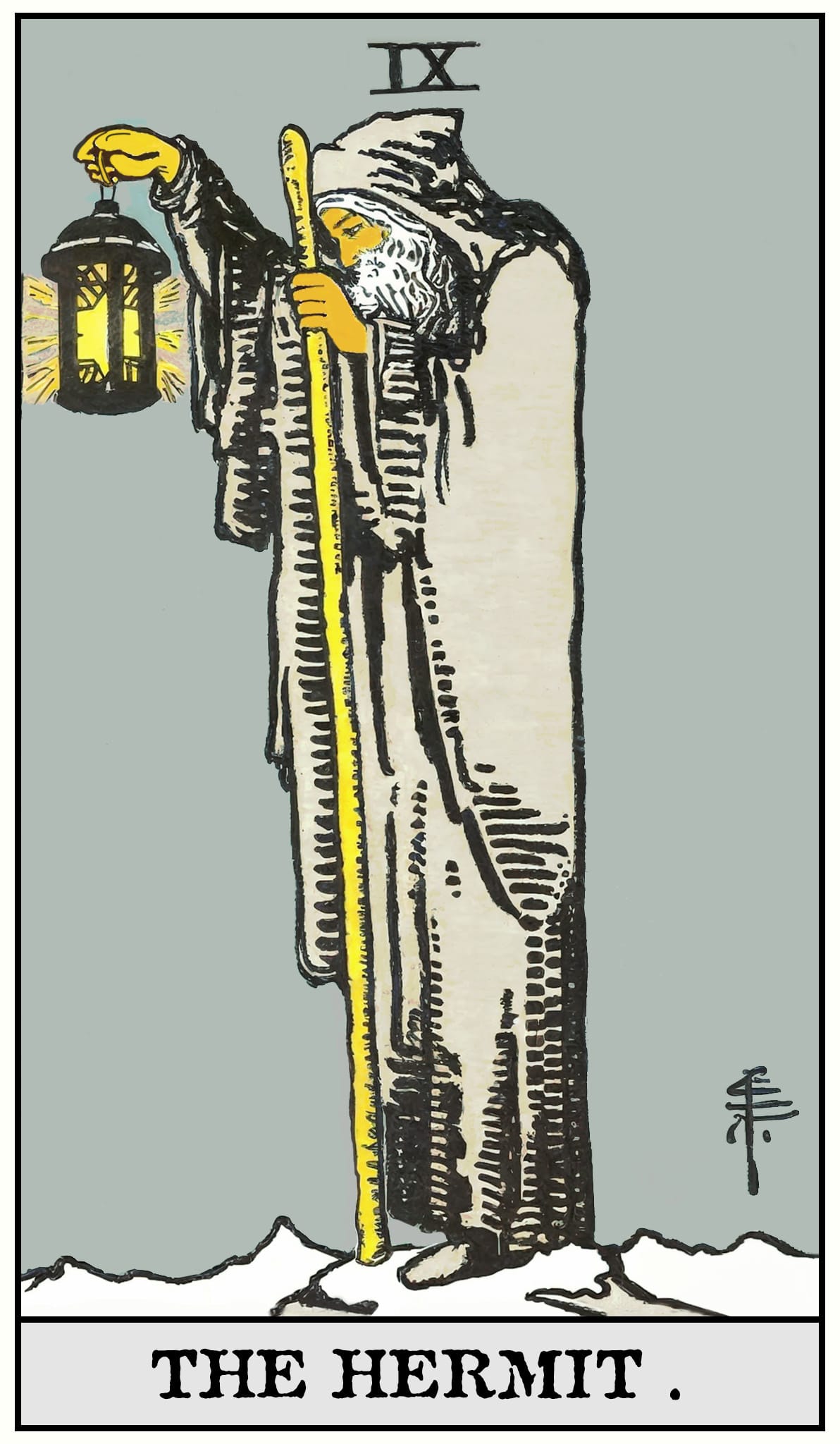
This is the suit's most demanding turn: the moment when water must choose to leave an arrangement it built. Not because the arrangement became toxic, but because emotional structures, like all structures, sometimes reach their completion before the people inside them do. The Hermit (IX) is the figure already at altitude in the landscape this man is now climbing toward. The Eight is the threshold — the moment between the arranged cups and the high dark path. Not everyone who leaves a completed emotional life becomes a Hermit. But the Eight is what the Hermit required before the mountain.
The complete three-layer reading for all 78 cards — including the full psychological and archetypal layers — is in The Pocket Guide →
The card of intelligent departure can be used to make any departure appear intelligent.
Shadow TrapThe departure that is called completion because completion sounds better than flight — the person who has learned the Eight's language and uses it to describe a leaving that is actually the avoidance of whatever the cups were starting to ask for.
Shadow GiftThe capacity to distinguish between the emotional structure that has given everything it contains and the one that still has something to give — and to be honest about which is which, without using the language of maturity to justify the movement that maturity would not actually make.
Shadow readings for each card, by suit, are gathered in The Pocket Guide →
We do not read a reversal as an opposite; following Pollack, a turned card is the same energy blocked, withheld, or redirected — not inverted into its negation. A reversed Eight of Cups often marks the person who cannot leave the arrangement even though they know it has completed — the figure who has stacked the cups in his mind a hundred times and cannot yet, in the actual life, walk away from what the cups have become.
Why Apocrypha Does Not Read Reversals as Opposites →Sixty-three symbols across the full deck — cross-referenced by card and meaning — are mapped in The Symbol Dictionary →
What arrangement in your life are you staying inside because you made it carefully — and is the care you put into it a reason to stay, or a reason you are allowed to leave honourably?
The Eight of Cups is most often read as either romantic departure or spiritual seeking. Both readings can be accurate; both can also be used to glamorize what the card is actually asking a harder question about. The relevant question is not whether leaving is brave. The question is whether what is being left has genuinely given everything it contains, or whether the leaving is what the card describes and what the card warns against, and whether the person receiving the card can tell the difference honestly.