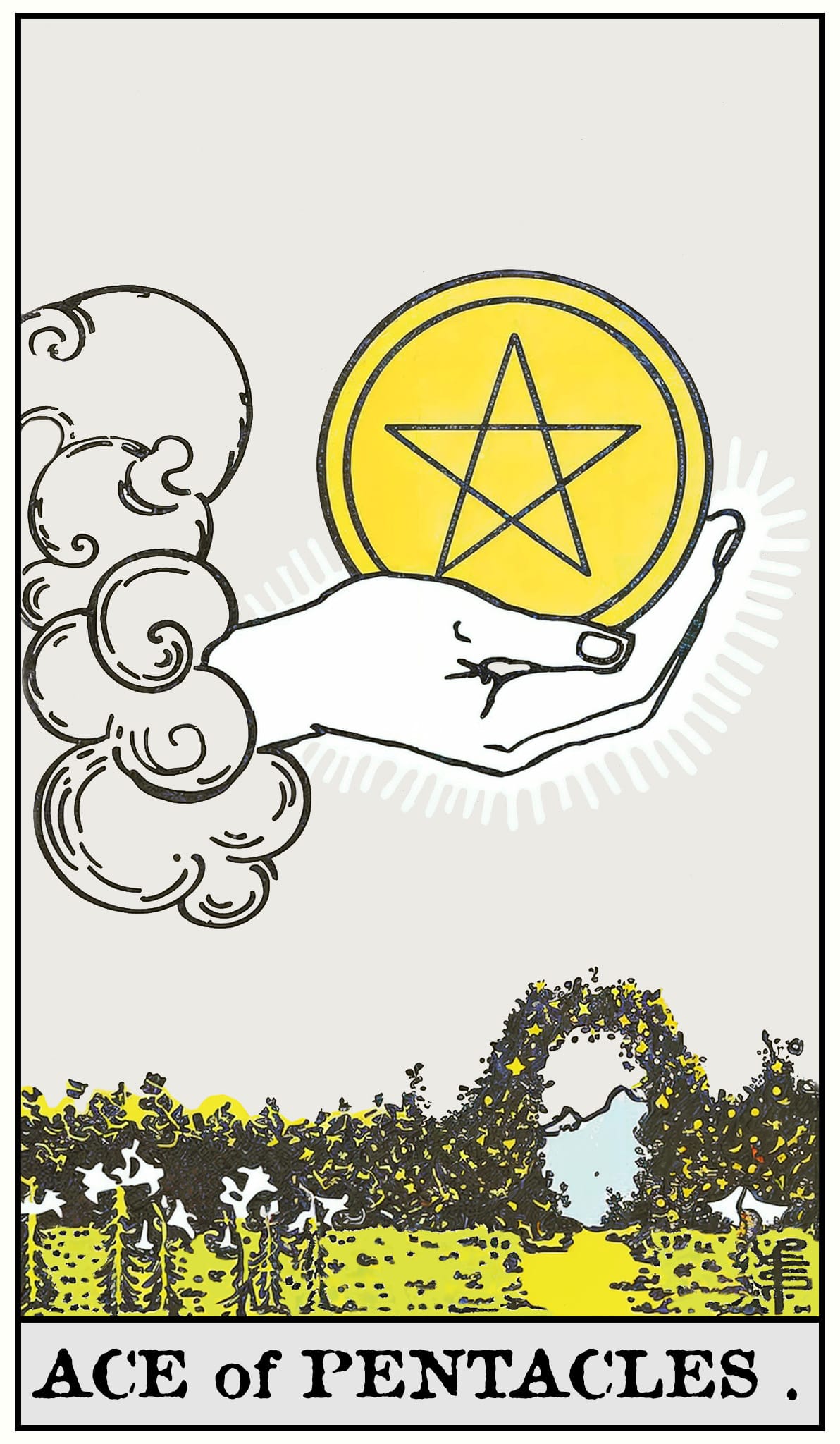
Ace of Pentacles
A hand emerges from a cloud holding a single golden pentacle — below, an archway of roses opening onto a garden path that winds toward distant mountains.
The Ace of Pentacles names the moment when possibility acquires substance: not the Wands Ace's appetite, not the Cups Ace's permeability, not the Swords Ace's clarity, but something more patient than all three. What has been potential is now available to be made. The hand holds the pentacle level, aware of its weight. The garden is through the archway. The archway has been open the entire time.
Something that was potential has become, quietly, available to be made
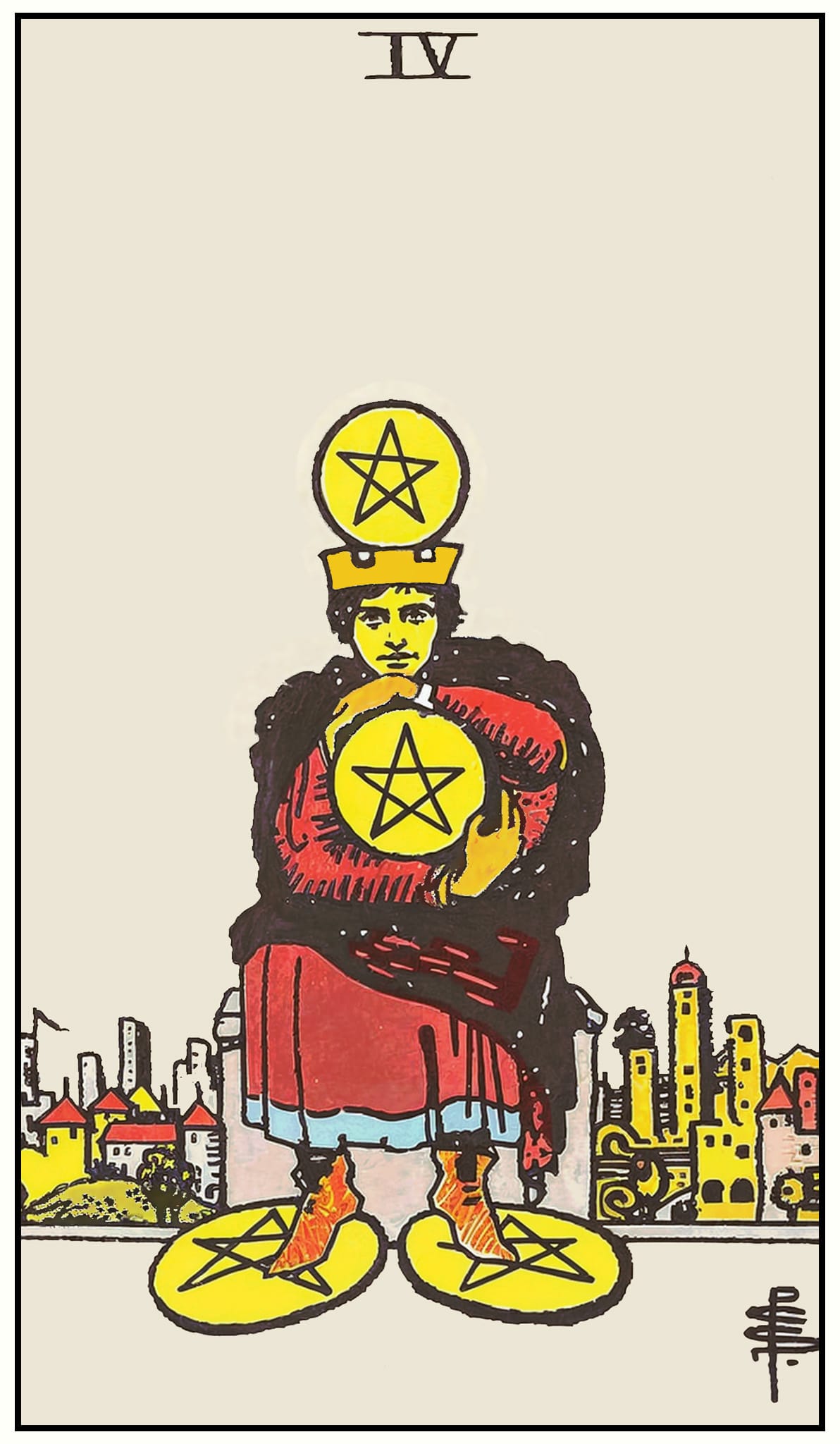
The Ace of Pentacles arrives as the new position, the recovered body, the unexpected resource, the inheritance of any kind — financial, biological, material, or relational — that places something tangible in the hands of a person who has not had it. The hand does not wave the pentacle; it holds it level, conscious of the weight. In shadow, the gift congeals: the Ace of Pentacles can solidify into Four of Pentacles territory without ever being used — protected, circled, denied the circulation that would allow it to become anything. The garden is through the archway. The question is whether the archway is being walked through.
Spirit meeting matter at its most generous — matter offered as gift before it becomes burden
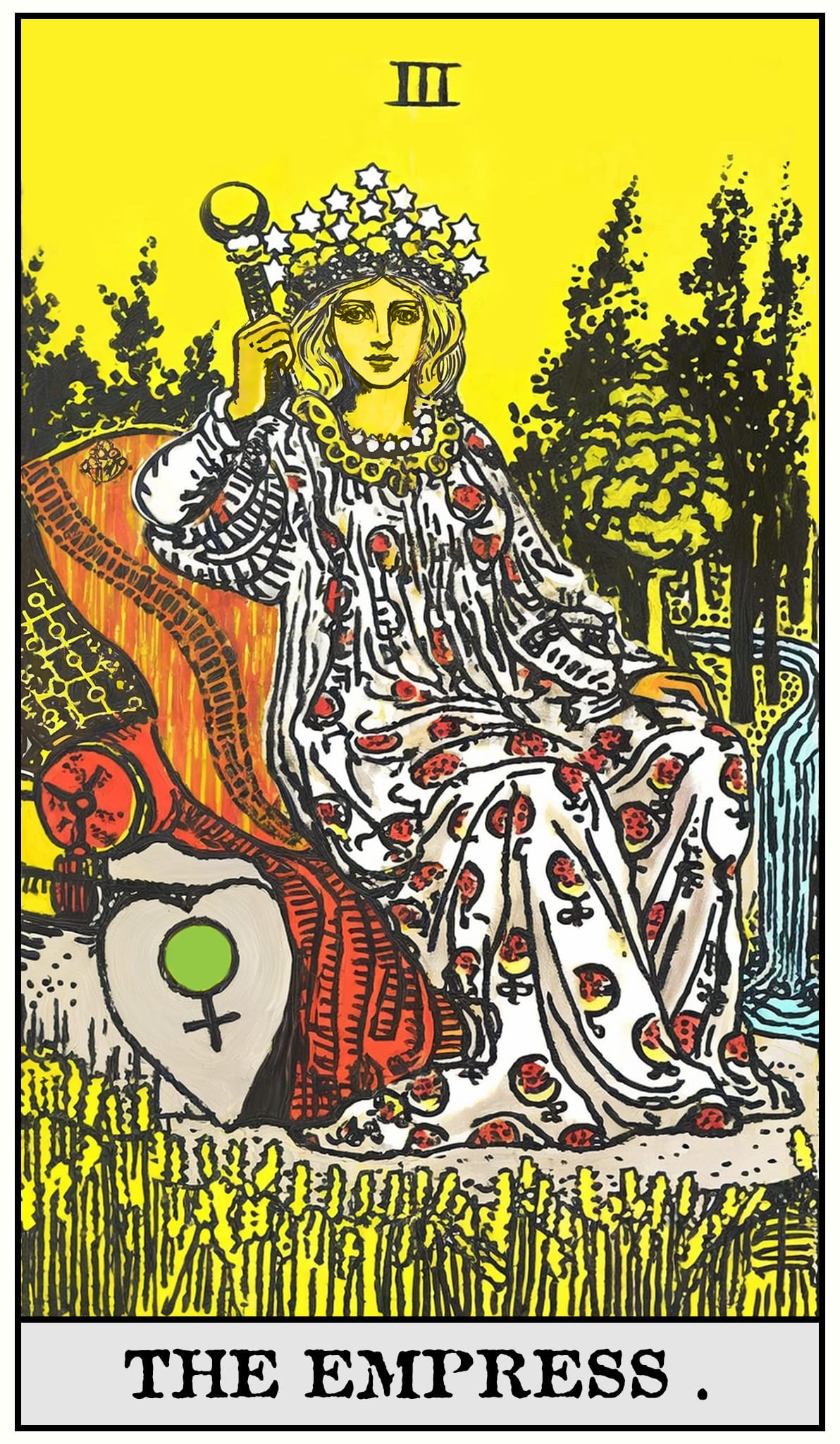
Pentacles is the suit of spirit learning to weigh something, and the Ace is the meeting at its most generous: matter offered rather than demanded. The Empress's generative force is present in this card's lineage — the same life-giving principle that fills her river is here compressed into a single disc, held at the threshold. The question the suit will spend ten cards refining is first asked here: can what is most alive in you be given a body, and can you bear to tend that body when tending is slow and unremarked?
The complete three-layer reading for all 78 cards — including the full psychological and archetypal layers — is in The Pocket Guide →
The gift received and not used is not a gift received — it is a gift held.
Shadow TrapThe resource so carefully protected from the risk of use that it never becomes what it was offered to become — the inheritance accumulated into a stockpile, the talent maintained in the state of potential, the body treated as something to be preserved rather than inhabited.
Shadow GiftThe recognition that the pentacle in the hand was not given to be held — that the archway is open and the garden is waiting, and that receiving the gift fully means beginning to work with it rather than simply possessing it.
Shadow readings for each card, by suit, are gathered in The Pocket Guide →
We do not read a reversal as an opposite; following Pollack, a turned card is the same energy blocked, withheld, or redirected — not inverted into its negation. A reversed Ace of Pentacles often marks the material opportunity missed or deferred — the resource present but not recognized as such, the door through the archway noticed but not walked through, the gift whose weight has been felt as burden before its potential has been assessed.
Why Apocrypha Does Not Read Reversals as Opposites →Sixty-three symbols across the full deck — cross-referenced by card and meaning — are mapped in The Symbol Dictionary →
What resource has been placed in your hands — materially, physically, financially, creatively — that you have not yet decided to use? And what is the undeciding protecting you from?
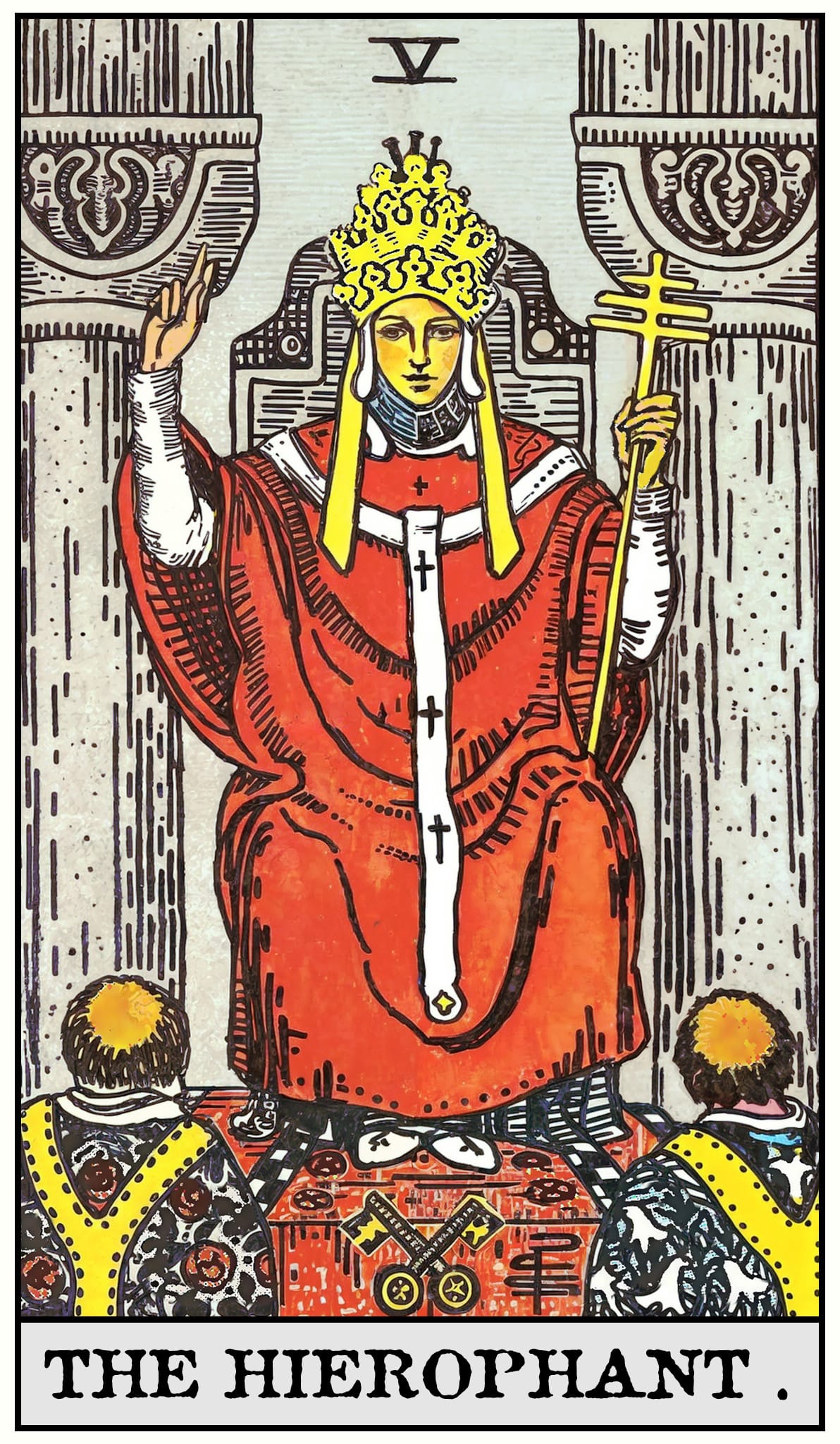
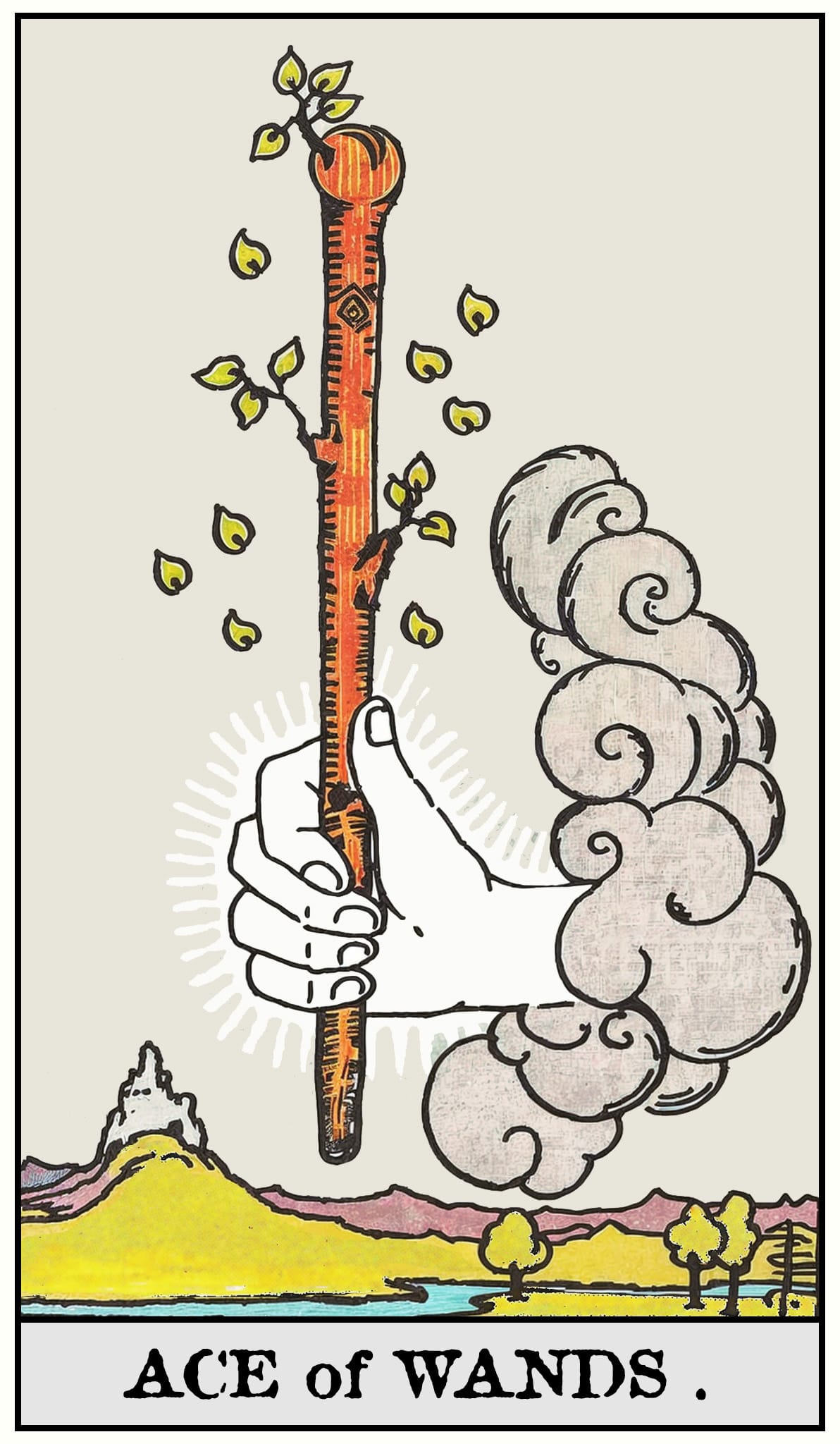
The Ace of Pentacles is most often read as good material news incoming — financial opportunity, the beginning of prosperity. The more interior reading asks not what the gift is but what the recipient will do with it. The archway in this card is not decorative — it is the threshold between having the resource and using the resource, and the whole suit of Pentacles is the investigation of what happens on the other side of that archway when a person actually walks through it.