Two of Pentacles
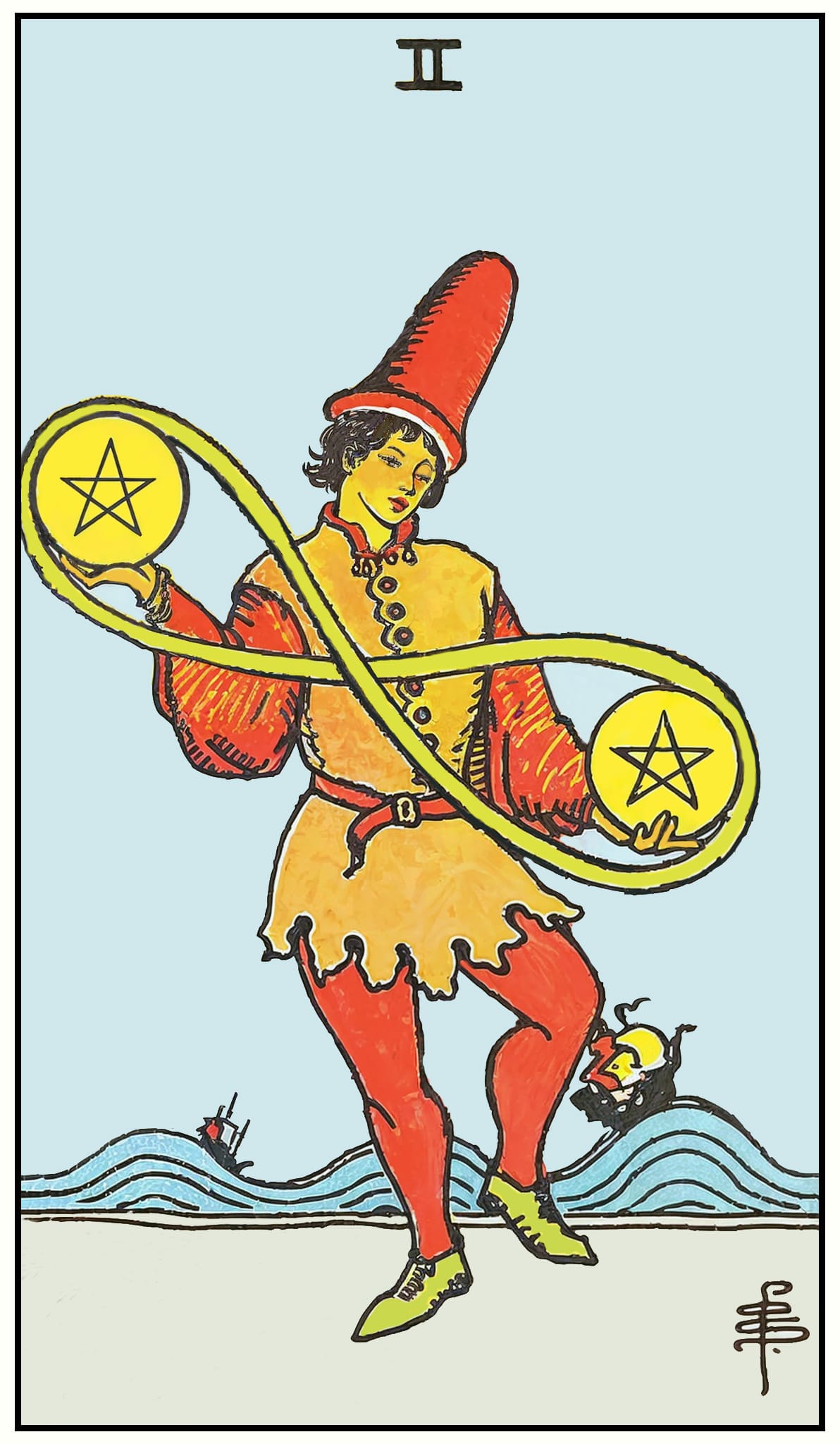
A young figure dances on a shoreline, juggling two pentacles connected by an infinity loop — two ships riding enormous waves on the sea behind him, and a smile on his face.
The Two of Pentacles names the life held together by constant adjustment: two obligations moving in counterpoint, the balance maintained not by stability but by motion. The smile is earned — the alternative is dropping one. Behind him, the ships on the churning sea show what is actually at stake. The infinity loop connecting the pentacles is generative, but it is not restful.
He is keeping everything moving. This is not the same as keeping everything stable.
The Two of Pentacles is the freelancer who is always between invoices, the parent who is also a student, the person whose financial life requires weekly recalibration just to remain in place. The infinity loop is the important detail: the two are connected and the connection is generative, but it is not restful, and it does not end. In shadow, the juggling becomes the substitute for the choice: some people arrange a life of perpetual two-ness because selecting one would mean relinquishing the other, and the discomfort of perpetual motion is preferable to the specificity of a particular loss.
The suit's first discipline — the capacity to hold competing material demands in motion without letting either drop
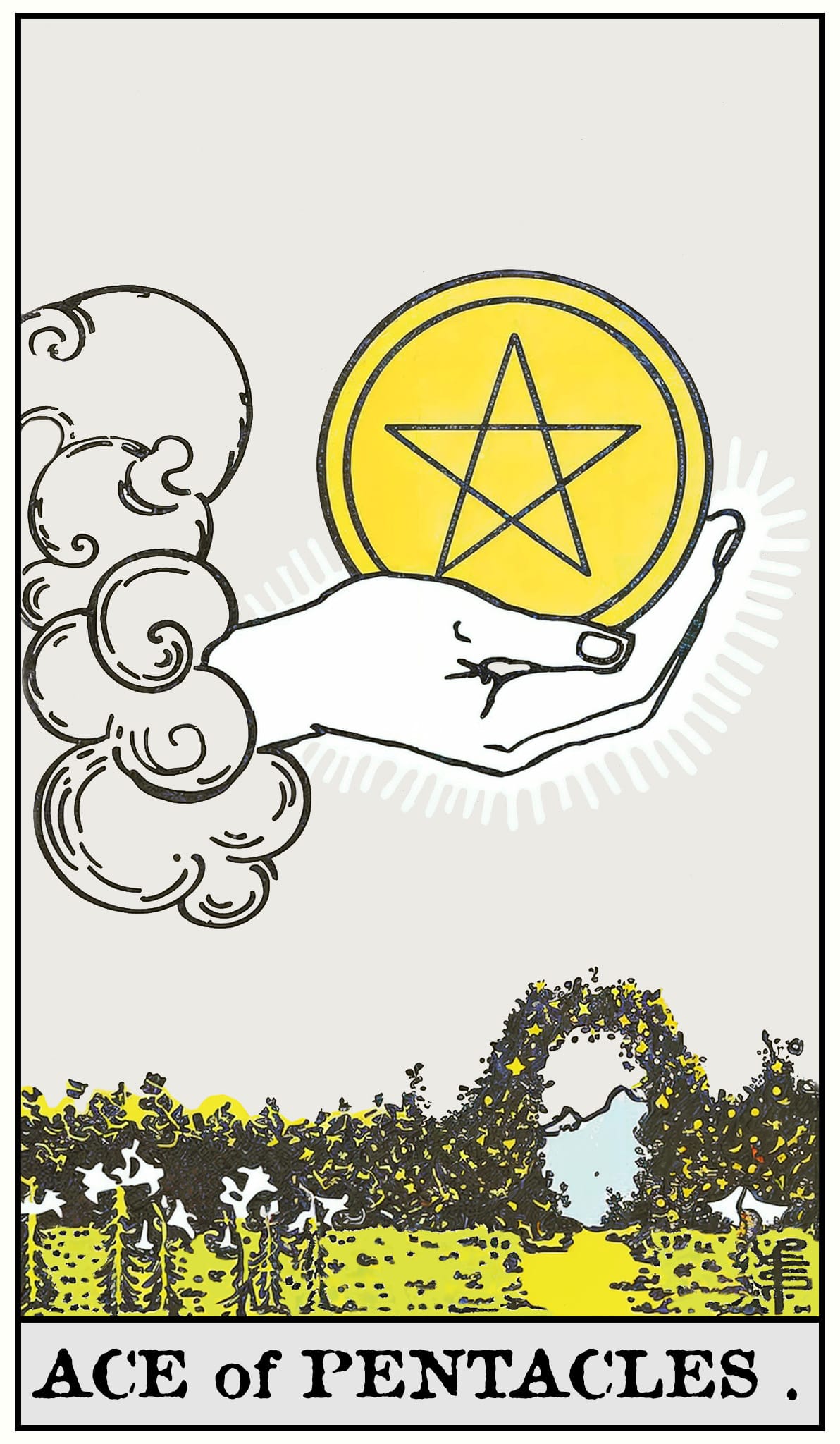
The Ace arrived in a single hand as a gift. The Two introduces the reality that material things are not static: to have something — money, a body, a skill set — is to enter a relationship that requires maintenance. This is the practical texture of most adult material life: the ongoing management of the finite, less glamorous than the Ace's gift and less dramatic than the Five's loss. Pollack reads the Two as the first demand the suit makes — not inspiration, not crisis, but the daily practice of keeping what has been received in circulation.
The complete three-layer reading for all 78 cards — including the full psychological and archetypal layers — is in The Pocket Guide →
The perpetual juggle and the deliberate choice to juggle look identical from outside.
Shadow TrapThe two-ness arranged to avoid the grief of choosing one — the life of permanent counterbalance that provides the sensation of fullness without requiring the commitment that would make either pentacle fully real.
Shadow GiftThe capacity to recognize whether the current management is temporary — the season of two-ness before the capacity to commit to one — or permanent, which is a different situation that requires a different kind of honesty.
Shadow readings for each card, by suit, are gathered in The Pocket Guide →
We do not read a reversal as an opposite; following Pollack, a turned card is the same energy blocked, withheld, or redirected — not inverted into its negation. A reversed Two of Pentacles often marks the juggling that has lost its rhythm — one pentacle beginning to drop, the management system breaking down, the balance that was being maintained by motion becoming visible as the specific and expensive act of will that it always was.
Why Apocrypha Does Not Read Reversals as Opposites →Sixty-three symbols across the full deck — cross-referenced by card and meaning — are mapped in The Symbol Dictionary →
What are you currently keeping in motion that you have not examined whether it deserves to keep moving — and is the motion serving the life, or has it become the substitute for a decision the life is waiting for?
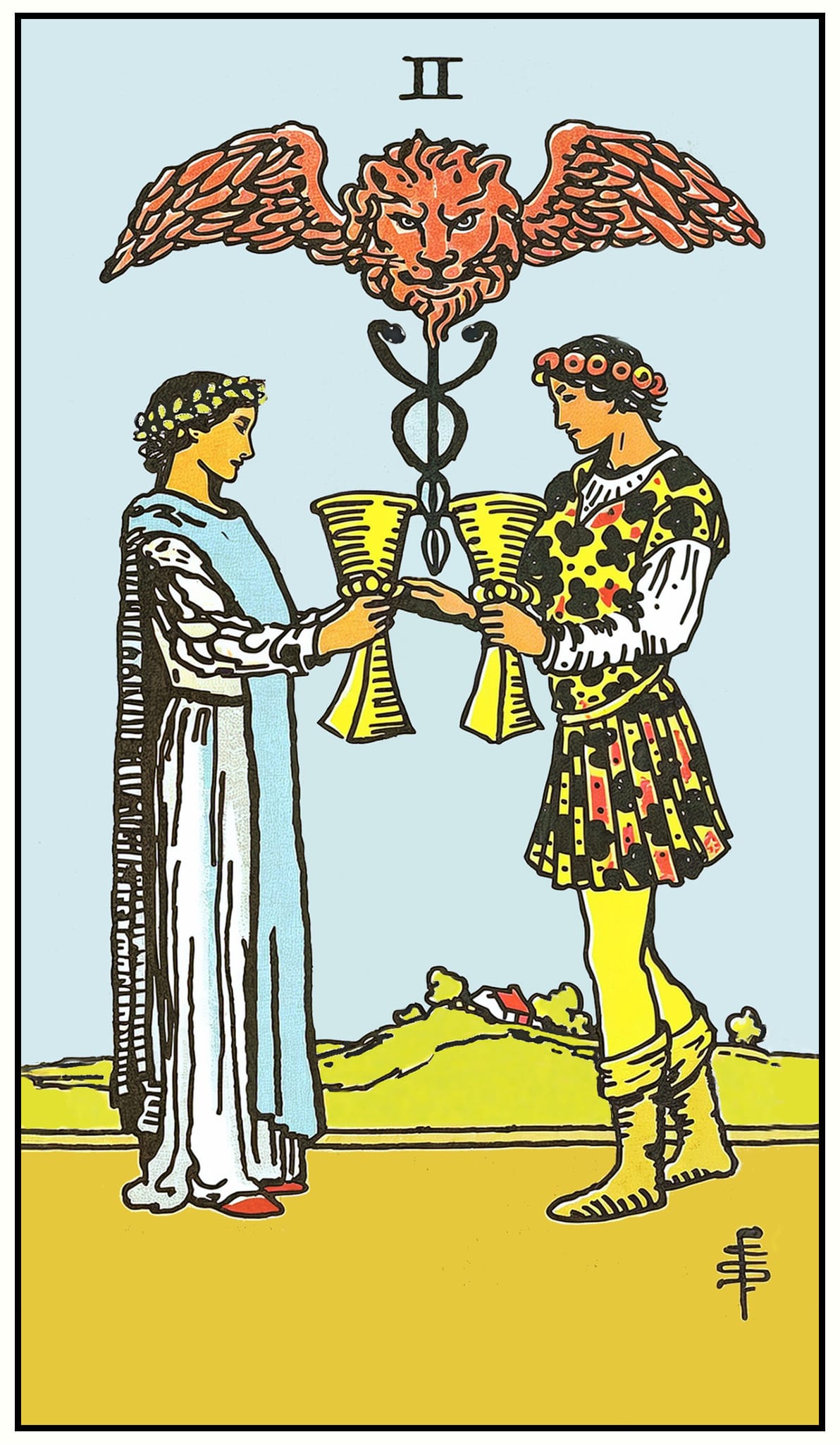
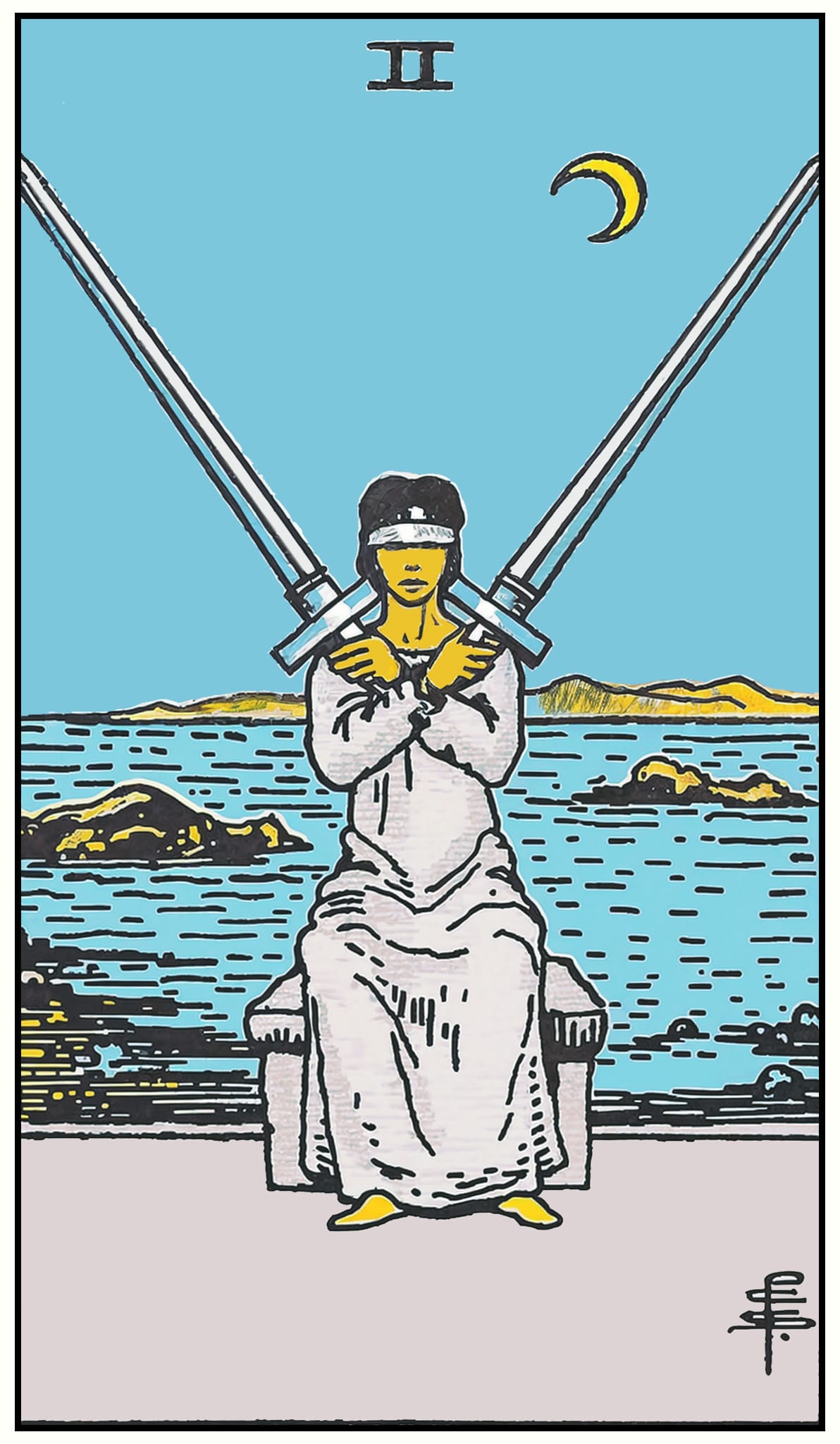
The Two of Pentacles is most often read as the busyness card — life is demanding, balance is required. The more specific reading asks about the nature of the balance: whether it is the healthy management of genuine competing obligations, or whether it is the arrangement that has replaced the choice. The card's most honest question is not "can you keep this up?" but "have you examined whether keeping it up is actually what you want to do — or whether one pentacle deserves, at this point, to be set down?"