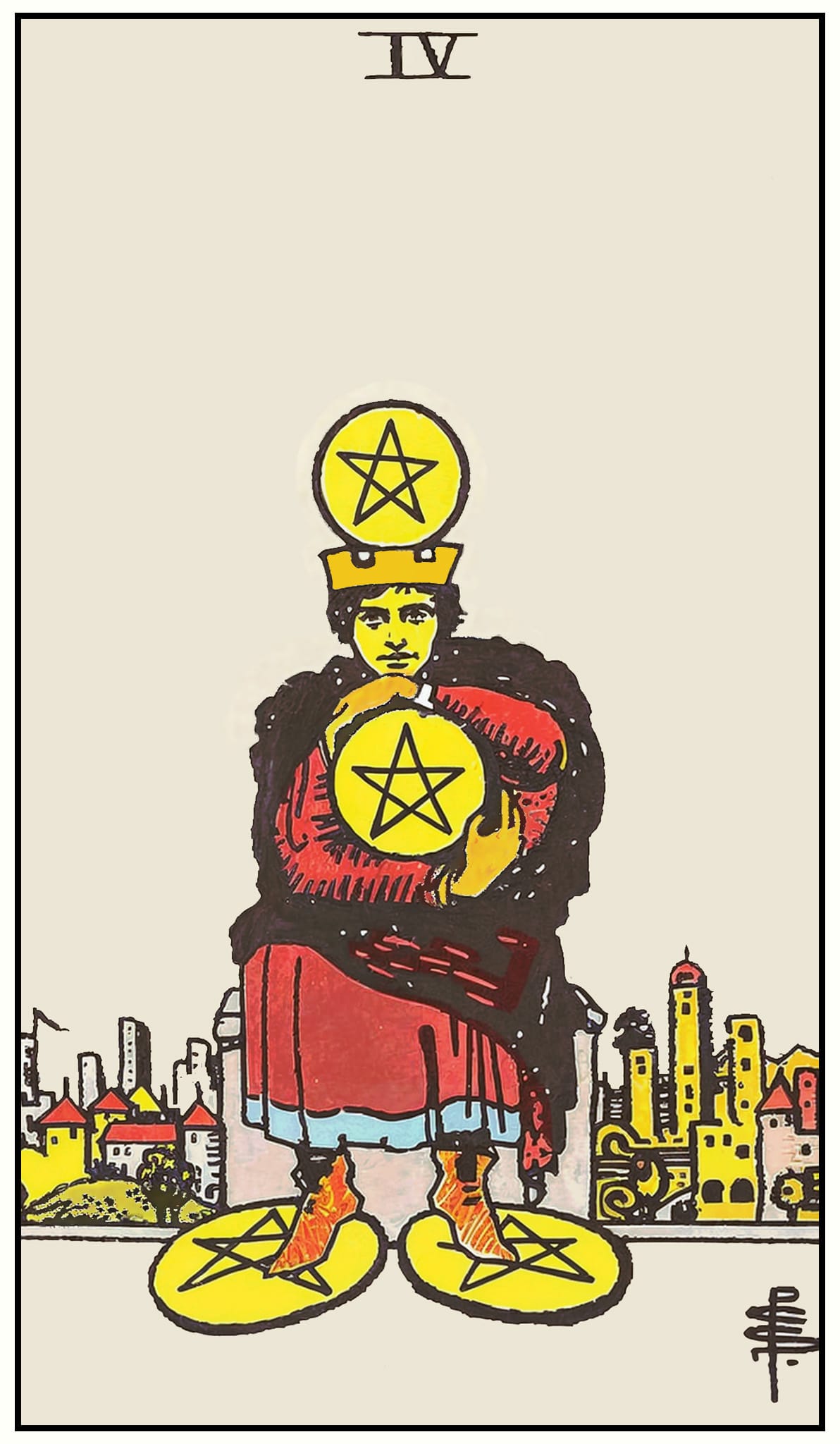
Four of Pentacles
A crowned figure sits rigidly at the city's edge, one pentacle pressed to his chest, one balanced on his crown, two beneath his feet. His posture is a fortress. The city behind him is unvisited.
The Four of Pentacles names the grip that has become its own confinement: the fortune so thoroughly protected it can no longer be used for anything, the territory defended past the point where defending it serves the life it was meant to support. The figure does not look afraid. He looks resolved. The resolution of a person who has decided that possession is preferable to risk and has organized his entire posture around that decision.
He has everything. He is going nowhere. These are related.
The Four of Pentacles is the fortune maintained but not lived, the territory defended but not inhabited, the resource so thoroughly protected that the protection has become the activity. The figure does not look afraid — he looks resolved, the particular resolution of someone who has decided that the risk of losing what they have is worse than anything the city behind them could offer. The city is full of life. He has not visited it in some time. In shadow, the Four is the security that has substituted for living: the protection appropriate to a season, maintained past the season because the habit of protection has become the only available posture.
Earth held too tightly cannot circulate — and circulation is what matter, like all living things, requires
Pentacles' stability can curdle into paralysis faster than the other suits. Fire's Four was the open garland; water's Four was the averted gaze; air's Four was the deliberate rest. Earth's Four is the clenched fist. Matter requires circulation the way soil requires water — held still, it compacts and eventually becomes inhospitable. The question the Four poses is not whether the figure has enough but at what cost the holding is being maintained. The posture says: everything. The unvisited city says: you didn't have to.
The complete three-layer reading for all 78 cards — including the full psychological and archetypal layers — is in The Pocket Guide →
The locked chest and the figure are both the chest and the lock.
Shadow TrapThe treasure so carefully preserved that it rots inside its own protection — the talent never risked, the savings never invested in the life they were saved for, the resource maintained in perfect condition while the life it was meant to support quietly passes.
Shadow GiftThe recognition that holding has become the point — that what is being protected is no longer only the resource but the feeling of security the holding provides, which is a different problem that requires a different solution than more careful holding.
Shadow readings for each card, by suit, are gathered in The Pocket Guide →
We do not read a reversal as an opposite; following Pollack, a turned card is the same energy blocked, withheld, or redirected — not inverted into its negation. A reversed Four of Pentacles often marks the beginning of the release — the grip loosening, the figure taking one step toward the city, the recognition that what has been held can now be allowed to circulate without being destroyed.
Why Apocrypha Does Not Read Reversals as Opposites →Sixty-three symbols across the full deck — cross-referenced by card and meaning — are mapped in The Symbol Dictionary →
What are you holding so tightly that you can no longer tell whether it still has value, or whether the holding has become the point — and what would you discover about the held thing if you loosened the grip for long enough to look at it?
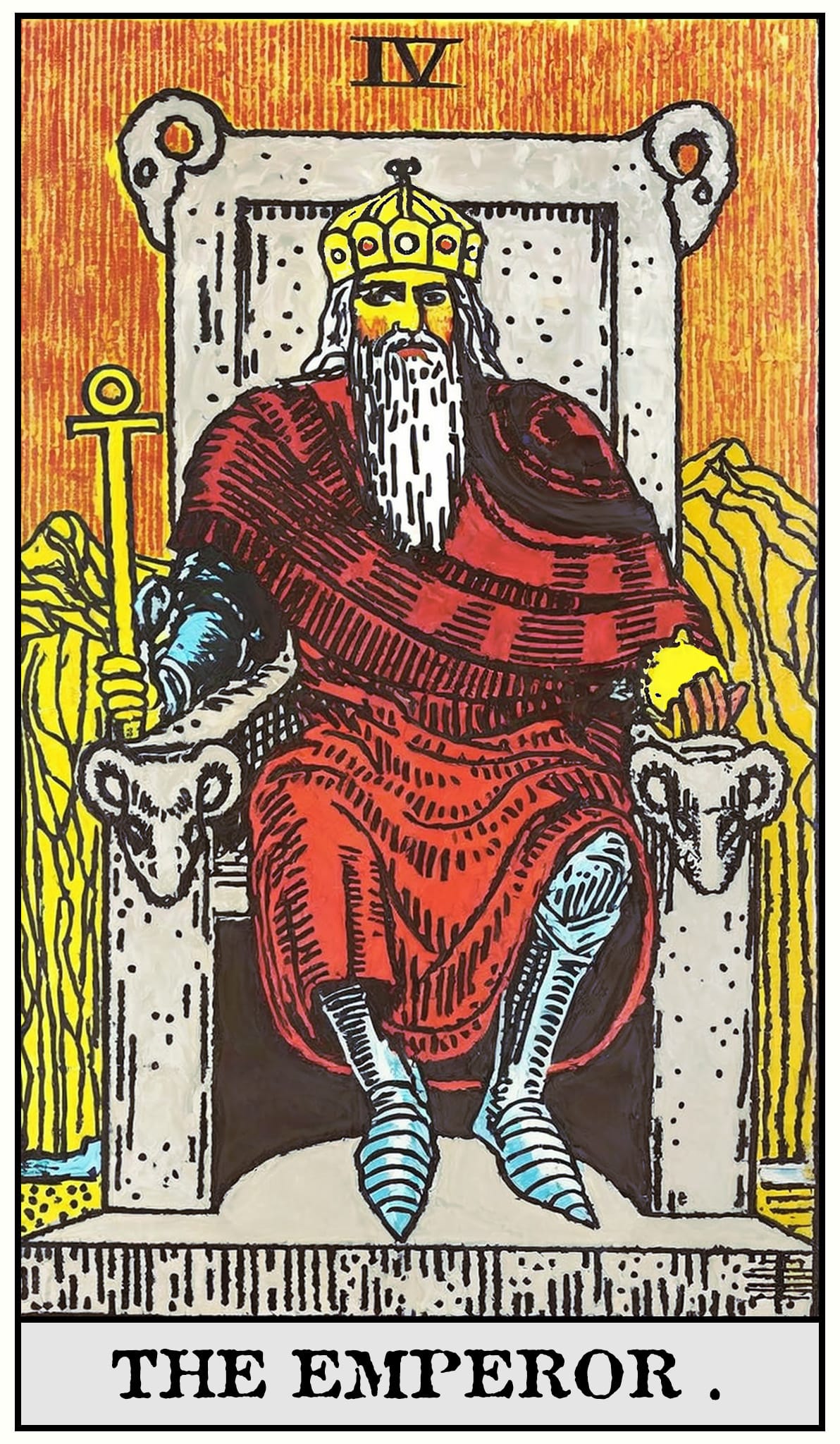
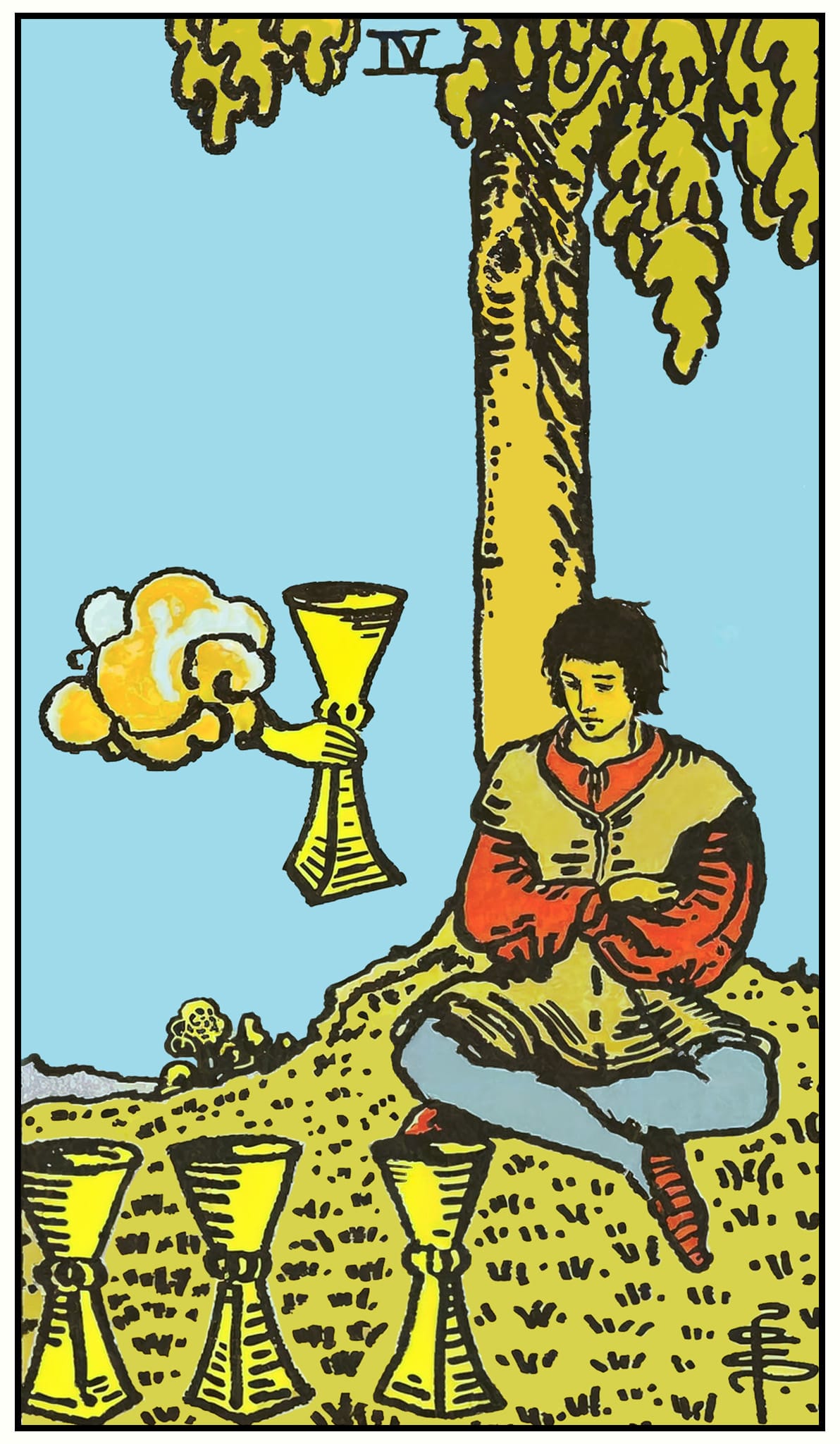
The Four of Pentacles is most often read as a warning about miserliness or materialism. The more precise reading identifies the mechanism, not the moral: the figure is not greedy in the ordinary sense. He is afraid, and the fear has organized itself into a posture that looks like wealth. The relevant question is not whether the holding is excessive — it is what the holding is protecting the person from having to feel or to risk. Until that question is answered honestly, no advice about loosening the grip will produce anything except a slightly more anxious version of the same posture.