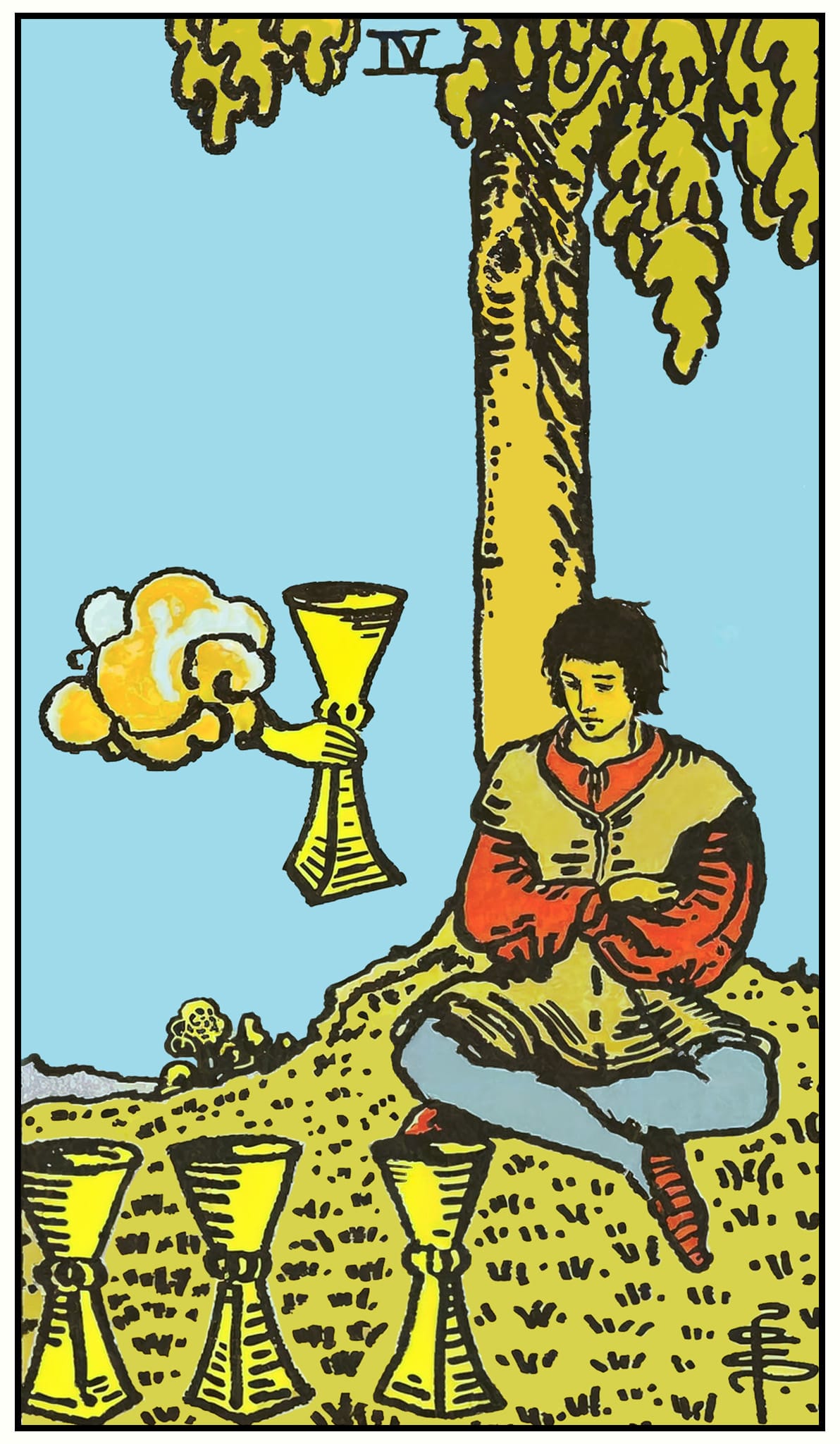
Four of Cups
A young man sits beneath a tree, arms folded, eyes downcast toward three cups in front of him — a fourth cup extended from a cloud at his side, unnoticed or not yet chosen to be noticed.
The Four of Cups names emotional stasis: the withdrawal into a posture of refusal that has begun to mistake itself for discernment. Three cups sit in front of the figure. A fourth is being offered. He does not look at it. The card is not about depression — it is about the practiced avoidance of something available, and the gap between the two is exactly what the card requires the reader to examine.
The cup is being offered. The figure has chosen not to look.
The Four of Cups is the person who cannot be reached: present in body, absent in availability, giving the conversation a fraction of the attention it is asking for. The three cups in front of him are the existing emotional inventory of his life — relationships, commitments, sources of meaning that are adequate, functional, not quite felt. The offered fourth is the new opening he is, in this moment, declining. In shadow, the Four becomes the cultivated unavailability that calls itself standards — the person for whom nothing is quite worth their full attention, who has developed a connoisseur's posture toward experience to avoid the risk of actually being moved by it.
The suit's first stagnation — the discrimination between necessary fallow and chronic refusal
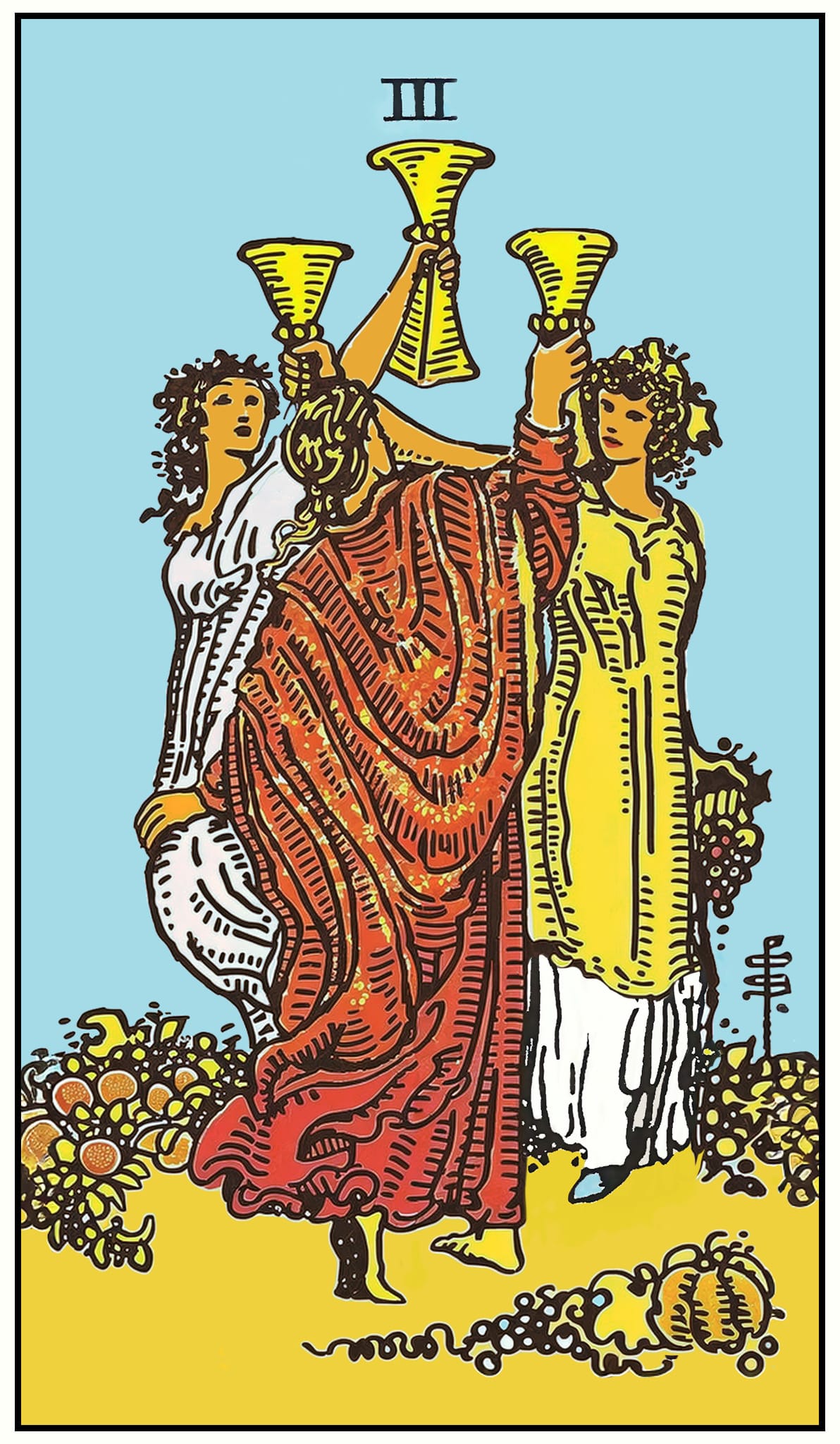
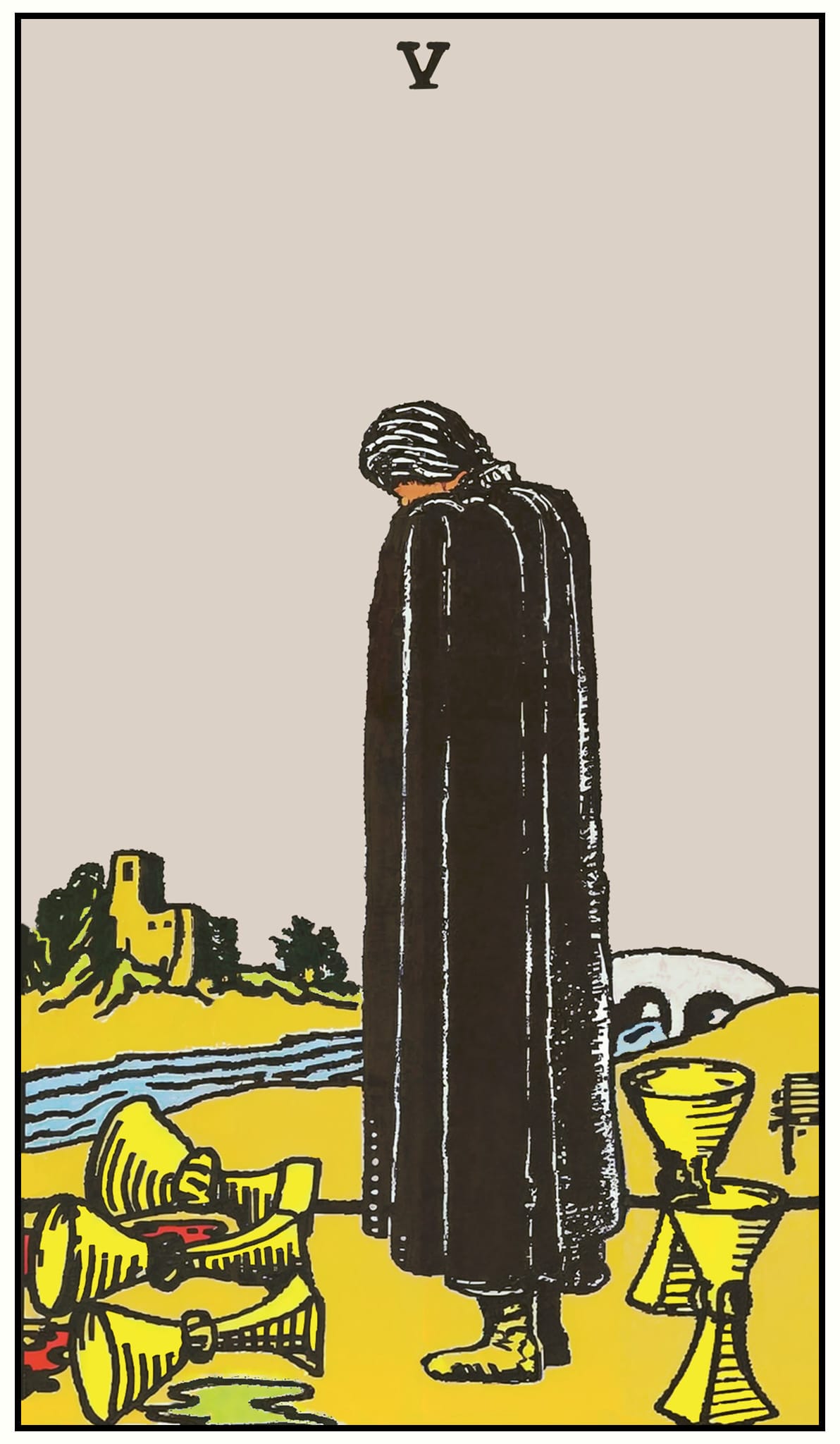
Up through the Three, the suit's water has been moving: opening, meeting, circulating. The Four is the pool that has stopped moving and is beginning to film over. Pollack notes that the card's presentation is rarely dramatic — it is the slow weather of disenchantment, not its crisis. Jung described depressive withdrawal as sometimes a genuine fallow period, the psyche regathering itself underground before the next movement. The Four can be that. But it can also be its imitation: a seasonal posture extended past its season. The inner work of this card is learning to distinguish between the two, which requires honesty about whether the withdrawal is still serving something.
The complete three-layer reading for all 78 cards — including the full psychological and archetypal layers — is in The Pocket Guide →
The posture of discernment and the posture of avoidance can occupy the same chair.
Shadow TrapThe unavailability mistaken for taste — the person who has constructed an entire aesthetic around not being quite satisfied, and calls the construction standards while it is actually fear of being genuinely affected.
Shadow GiftThe capacity to notice the withdrawal — to bring conscious attention to the moment the cup is being extended and the moment the gaze is being deliberately angled away from it — and to ask what risk the looking would actually involve.
Shadow readings for each card, by suit, are gathered in The Pocket Guide →
We do not read a reversal as an opposite; following Pollack, a turned card is the same energy blocked, withheld, or redirected — not inverted into its negation. A reversed Four of Cups often marks the emergence from the withdrawal — the figure lifting his gaze, the offered cup finally registered, the stasis beginning to break not through external force but through the slow return of appetite.
Why Apocrypha Does Not Read Reversals as Opposites →Sixty-three symbols across the full deck — cross-referenced by card and meaning — are mapped in The Symbol Dictionary →
What new opening have you been declining — and is the declining from genuine discernment, or from the fear of what saying yes would require you to feel?
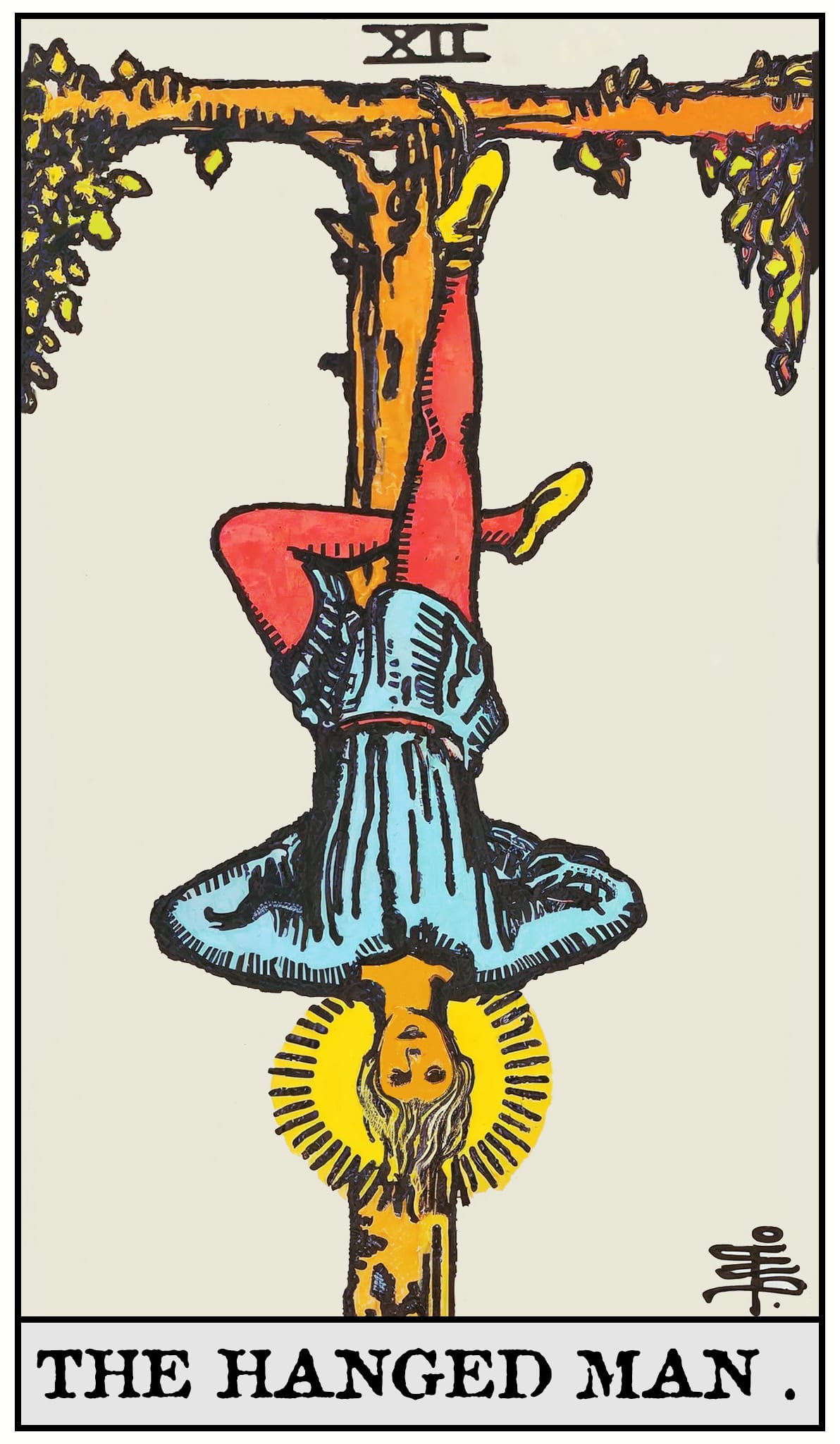
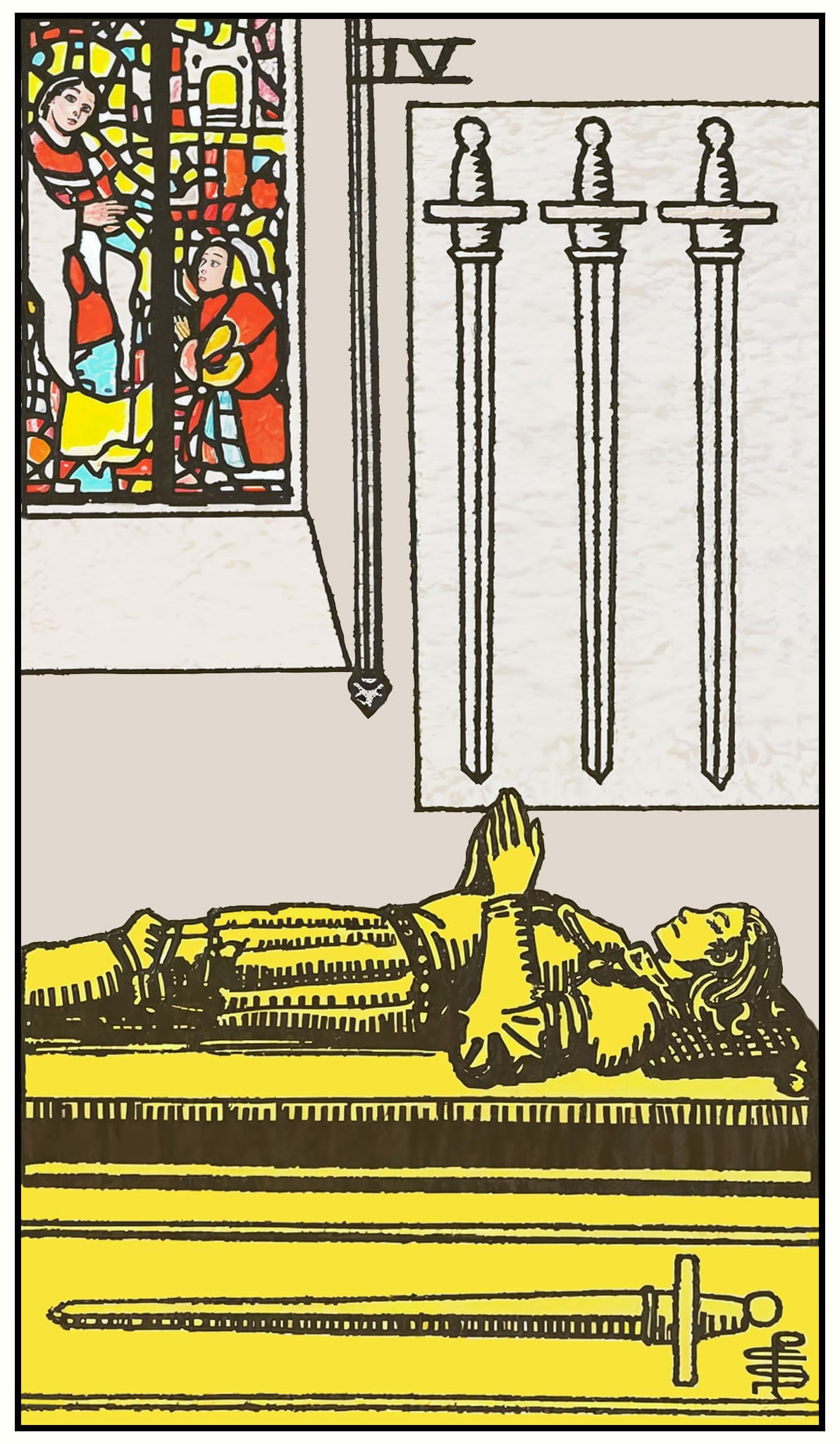
The Four of Cups is most often either pathologized as depression or validated as appropriate rest. Both miss the card's precision. It is not describing clinical withdrawal, and it is not describing necessary recuperation. It is describing a specific posture — the folded arms, the averted gaze — that has been practiced long enough to become automatic. The question the card actually asks is not "are you resting?" but "are you aware that the cup is there, and what are you deciding about it?"