Three of Cups
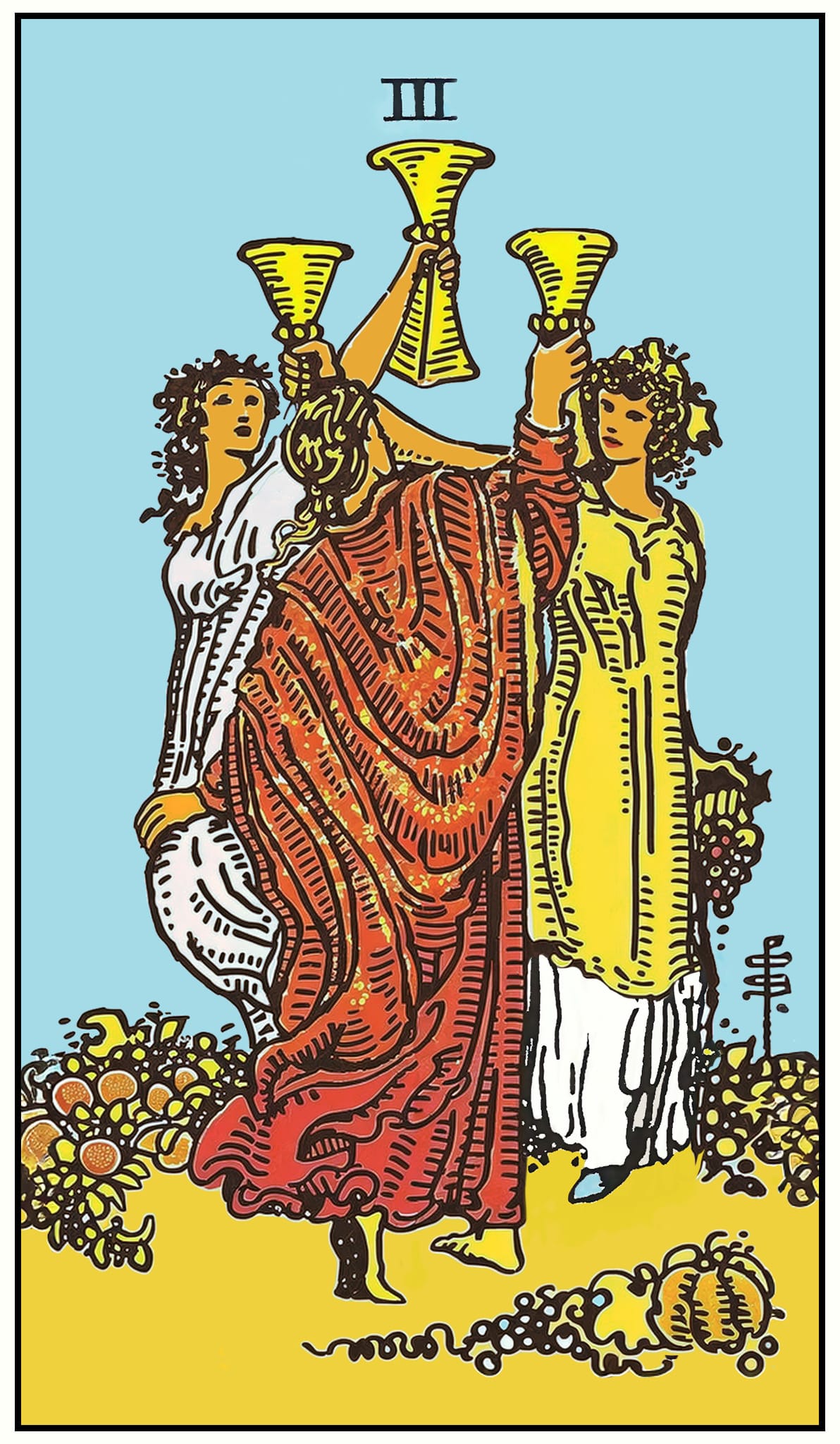
Three women dance in a circle with cups raised — fruit and vines at their feet, faces angled toward each other and not toward us, a late-harvest light over the whole scene.
The Three of Cups names communal feeling at its most genuine: the small circle that holds, the friendship that no longer needs to be negotiated, the celebration that has been earned rather than arranged. The card also carries a precise shadow — the performance of intimacy, the toast that covers an avoidance, the gathering whose coherence depends on an exclusion.
The small circle that holds — and the difference between its genuine and performed versions
The Three of Cups is the card of the friendship that has been through enough to require less maintenance — the collaborators whose work has become the third presence organizing their relationship, the reunion that runs four hours past its stated end. The figures are not looking at us. Real Three moments do not require an audience. In shadow, the card becomes the performance of intimacy: the toast substituting for the harder work of connection, the group whose coherence requires excluding someone inconvenient, the photographs that matter more than the gathering they document.
The necessary opening of the closed pair into wider circulation — feeling's first encounter with joy as structural
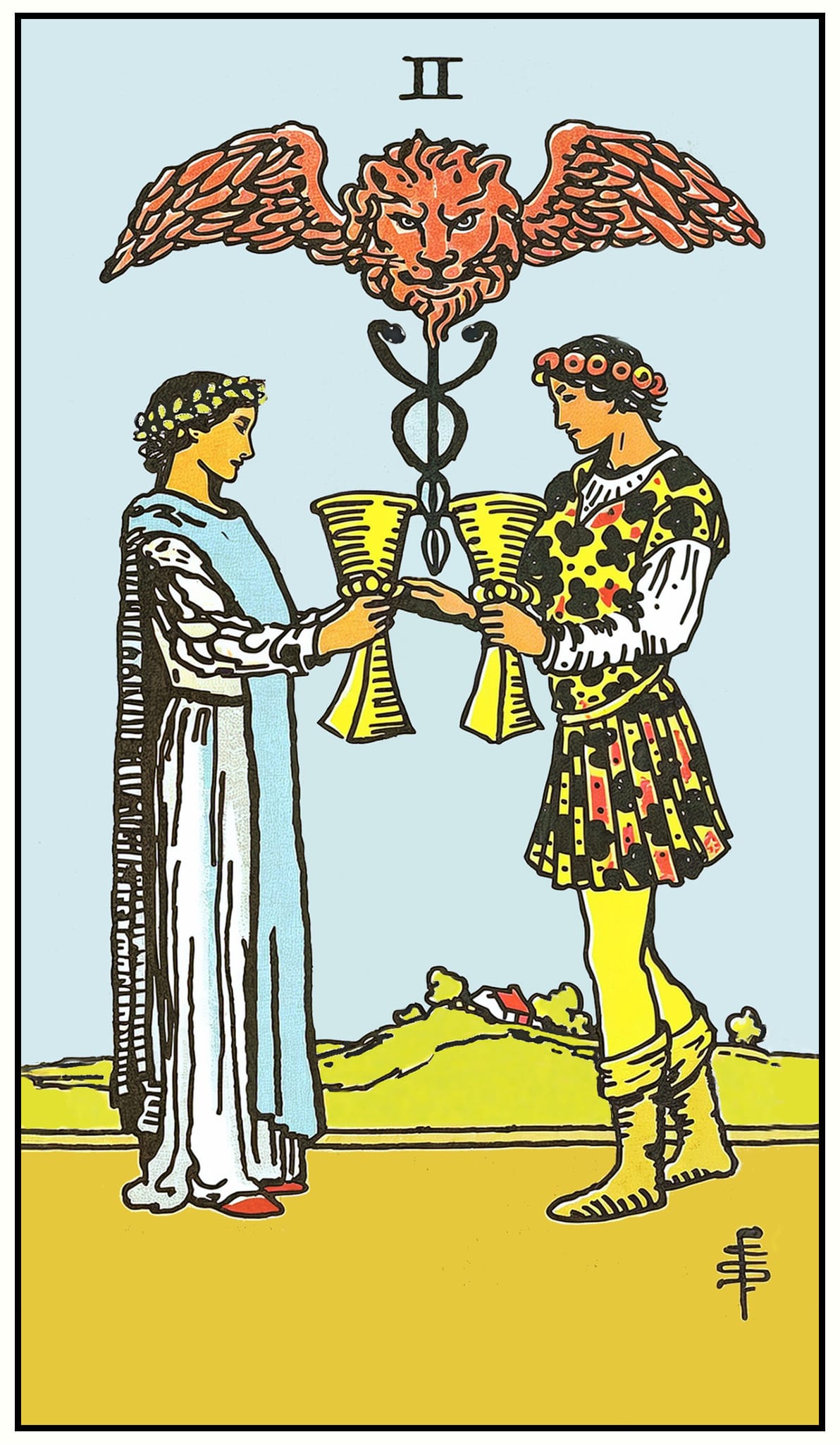
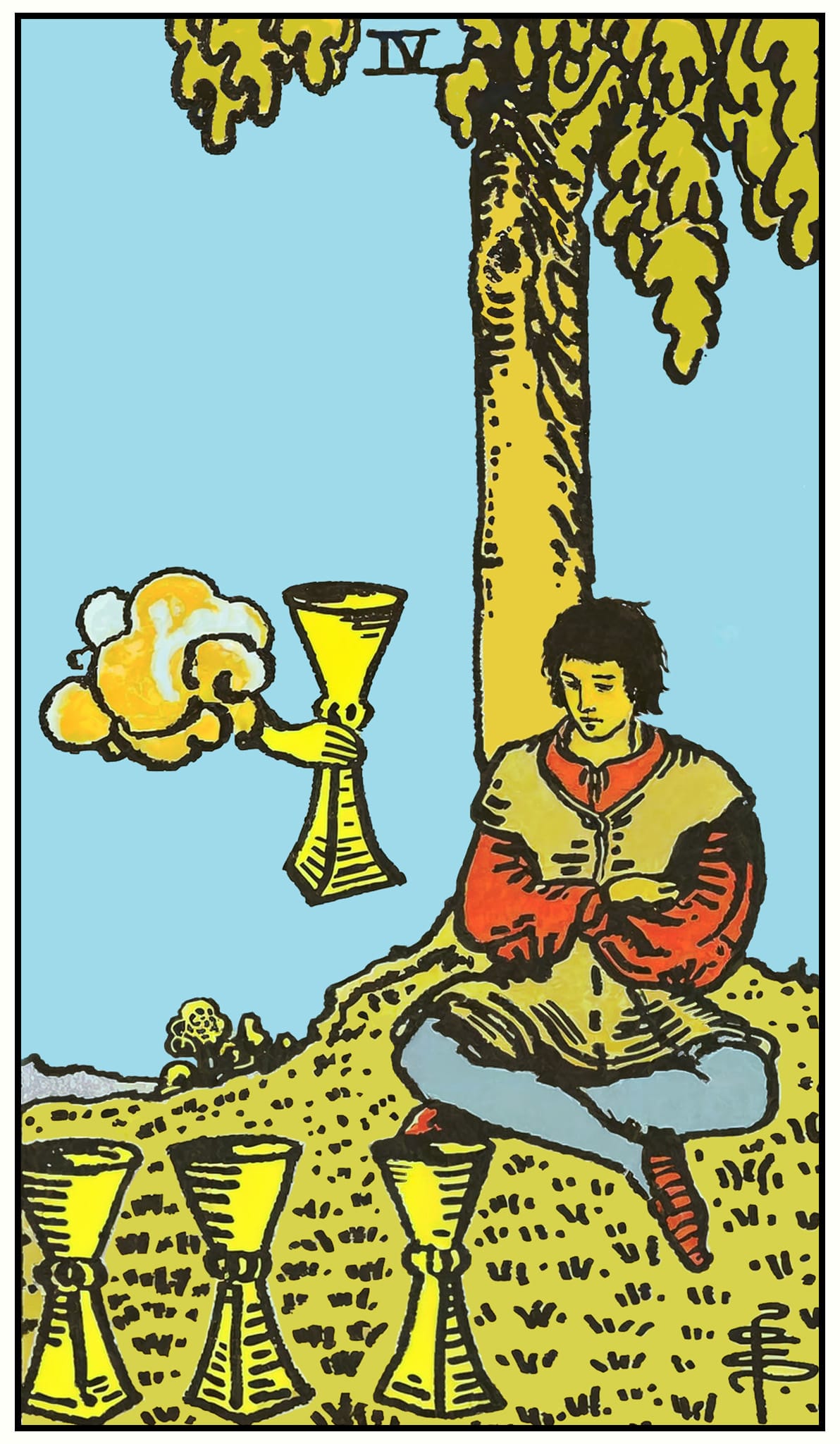
Pollack reads the Three as the card at which the closed pair between Two and Four is opened into a wider field. Feeling that cannot be shared with a third often cannot survive contact with reality. The suit's first note of uncomplicated joy appears here — the card will not return to this register for several cards. This is not incidental. The Three is one of the few configurations in the deck in which celebration is neither denial nor distraction but what von Franz would call a genuine metabolic function of the soul: the body's acknowledgement that something good has actually happened.
The complete three-layer reading for all 78 cards — including the full psychological and archetypal layers — is in The Pocket Guide →
The gathering that requires an excluded member to cohere is not this card.
Shadow TrapThe celebration used to paper over the absence of actual intimacy — the toast, the gathering, the group that looks like the Three from outside and is, from inside, organized around not saying certain things.
Shadow GiftThe capacity to receive genuine communal joy without either deflecting it as insufficient or converting it into documentation — to be inside the circle rather than observing whether the circle looks right.
Shadow readings for each card, by suit, are gathered in The Pocket Guide →
We do not read a reversal as an opposite; following Pollack, a turned card is the same energy blocked, withheld, or redirected — not inverted into its negation. A reversed Three of Cups often marks the circle that has closed — the friendship group that has calcified into a unit requiring maintenance rather than offering genuine meeting, or the communal warmth that has become exclusive rather than expansive.
Why Apocrypha Does Not Read Reversals as Opposites →Sixty-three symbols across the full deck — cross-referenced by card and meaning — are mapped in The Symbol Dictionary →
Which friendship have you allowed to thin out — and is the thinning from neglect, from distance, or from the quiet decision that the intimacy required was more than you were willing to sustain?
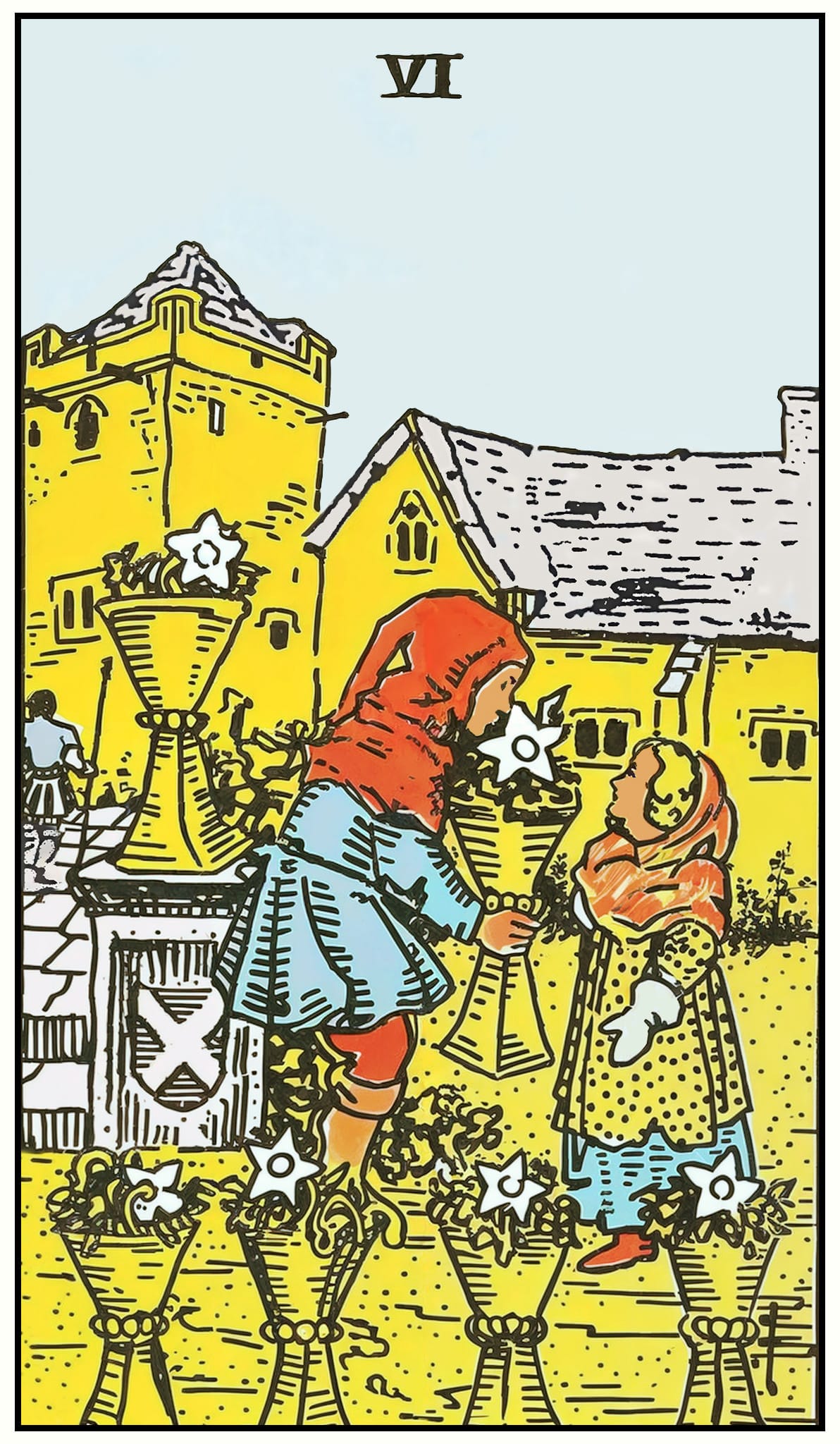
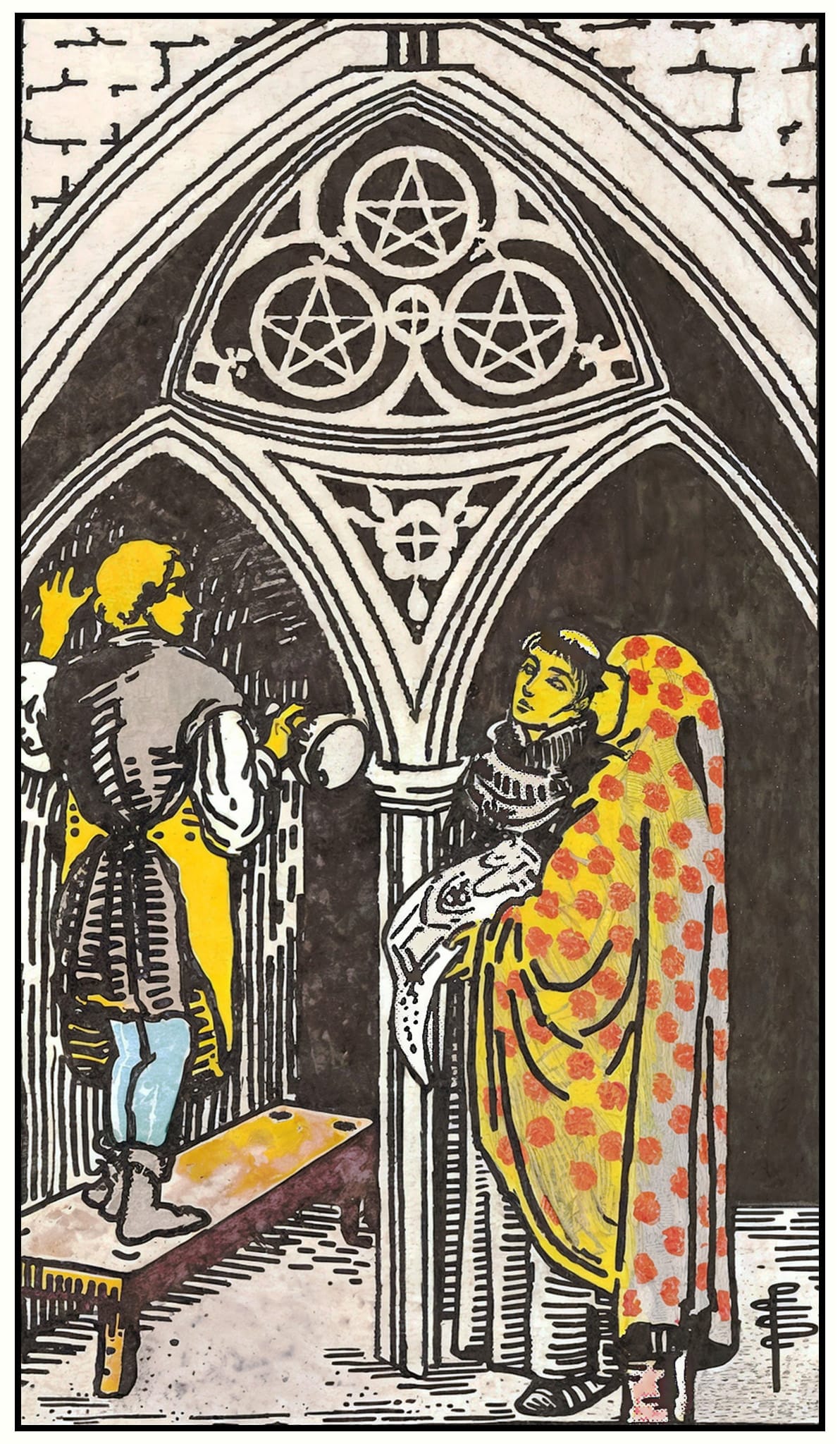
The Three of Cups is most often read as a social event incoming — a party, a reunion, a celebration. The more interior reading asks about the quality of the circle, not its occasion. The card specifically depicts people not looking at us. That detail is not decorative. It distinguishes genuine communal feeling from the performance of it, and the card's real content is always about which kind is present and which kind is being substituted for the other.