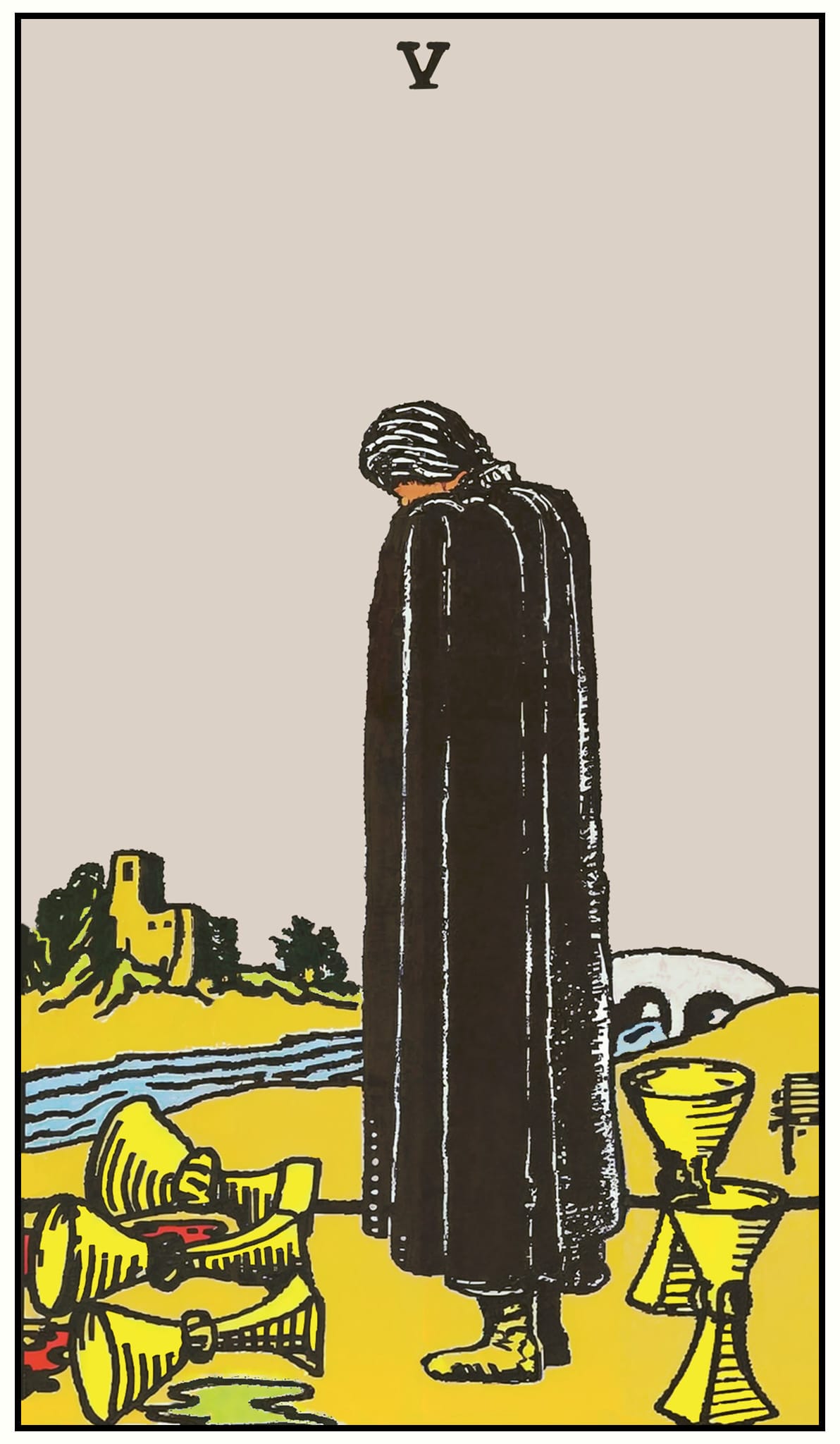
Five of Cups
A cloaked figure stands before three spilled cups, head bowed — two cups upright behind him, a river beside him, a bridge visible in the distance leading to a house on the far bank.
The Five of Cups names loss at its full address: the relationship ended, the investment collapsed, the self-image that did not survive contact with what actually happened. The card's most important structural detail is not the two upright cups behind the figure — it is that he has not yet turned to see them. The suit requires that the loss be looked at first, and at length, before the remainder can be honestly received.
The three cups must be looked at first — the two standing cups will not run away
The Five arrives as genuine loss: three cups on the ground, the contents spilled, the figure's posture showing that he knows it. Most popular tarot rushes to the two upright cups — see what you still have — and in doing so violates what the card most needs to teach: that the refusal to mourn produces a grief that governs from underneath. The figure in this card is doing the harder thing. He is looking directly at what was lost. In shadow, the Five is the grief converted into productivity before it has been entered — the person who, two weeks after a significant loss, is already explaining what they learned from it.
The suit meeting its first severance — and the cost of the Ace's openness made visible
The Ace's permeability is now the wound that openness made possible. There is no path through the suit that avoids this card; Cups asks the heart to remain a heart, and a heart that remains a heart will sometimes break. Pollack reads the Five as one of the cards most damaged by superficial tarot tradition, whose discomfort with grief leaks directly into how the reading is given. The two upright cups are a fact, not a consolation. Their meaning will become available later. Grief, when it is allowed to complete its movement, turns by itself. The practitioner's task is to resist the impulse to turn it prematurely.
The complete three-layer reading for all 78 cards — including the full psychological and archetypal layers — is in The Pocket Guide →
There are two ways to refuse this card, and both are refusals.
Shadow TrapThe loss translated into insight before it has been inhabited — the person who has learned the language of grief without having entered the room it describes, and whose fluency prevents them from noticing the gap.
Shadow GiftThe capacity to stand in the loss long enough for the grief to metabolize on its own timeline — which is the only process that eventually, without forcing, produces the capacity to turn and see the cups that are standing.
Shadow readings for each card, by suit, are gathered in The Pocket Guide →
We do not read a reversal as an opposite; following Pollack, a turned card is the same energy blocked, withheld, or redirected — not inverted into its negation. A reversed Five of Cups often marks the refusal to mourn — the figure who has turned away from the spilled cups before looking at them fully, and is now carrying unmourned loss into whatever comes next.
Why Apocrypha Does Not Read Reversals as Opposites →Sixty-three symbols across the full deck — cross-referenced by card and meaning — are mapped in The Symbol Dictionary →
What loss have you moved past before you finished mourning it — and what would it mean to go back, now, and spend some time with the spilled cups before counting the ones still standing?
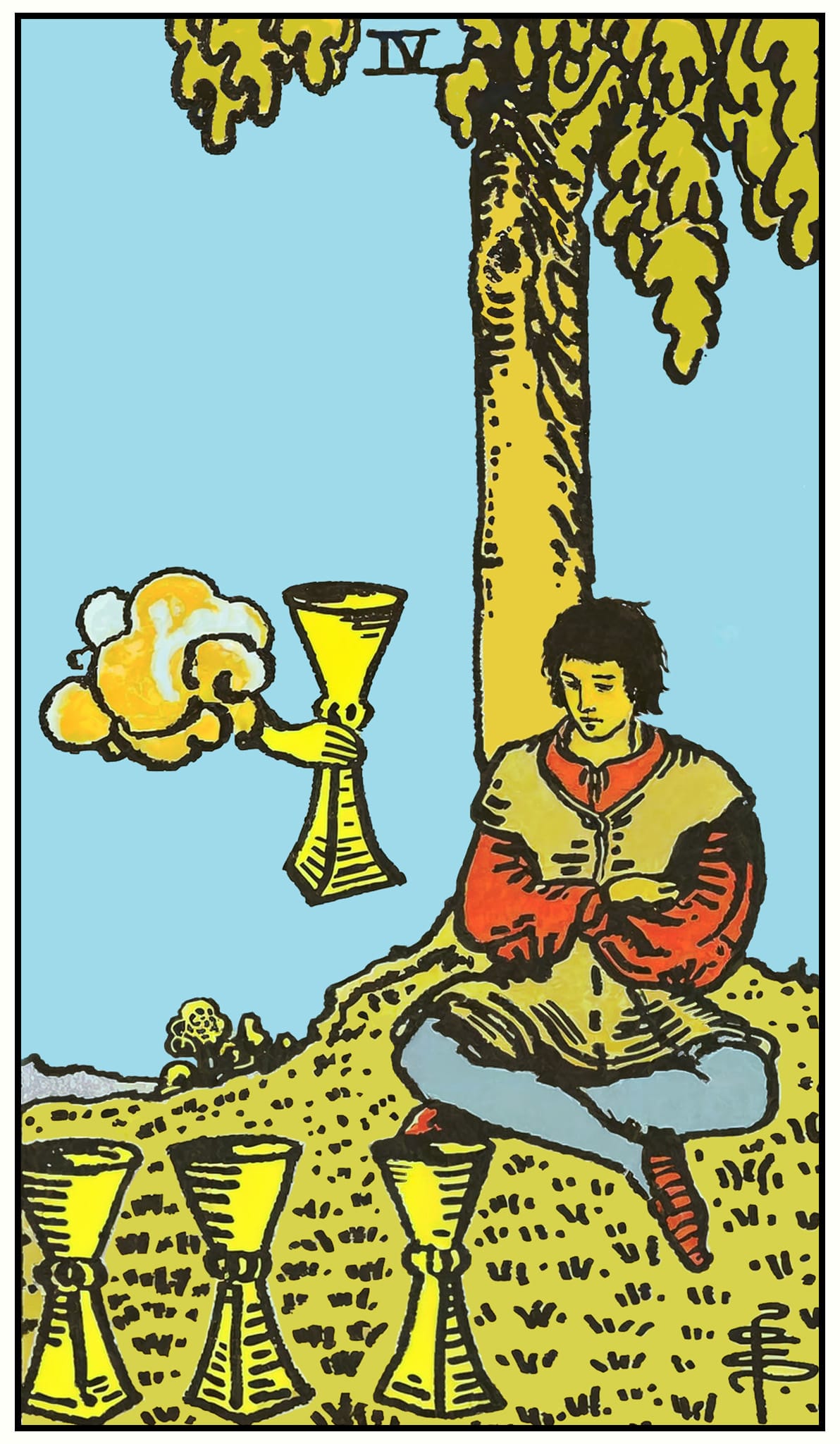
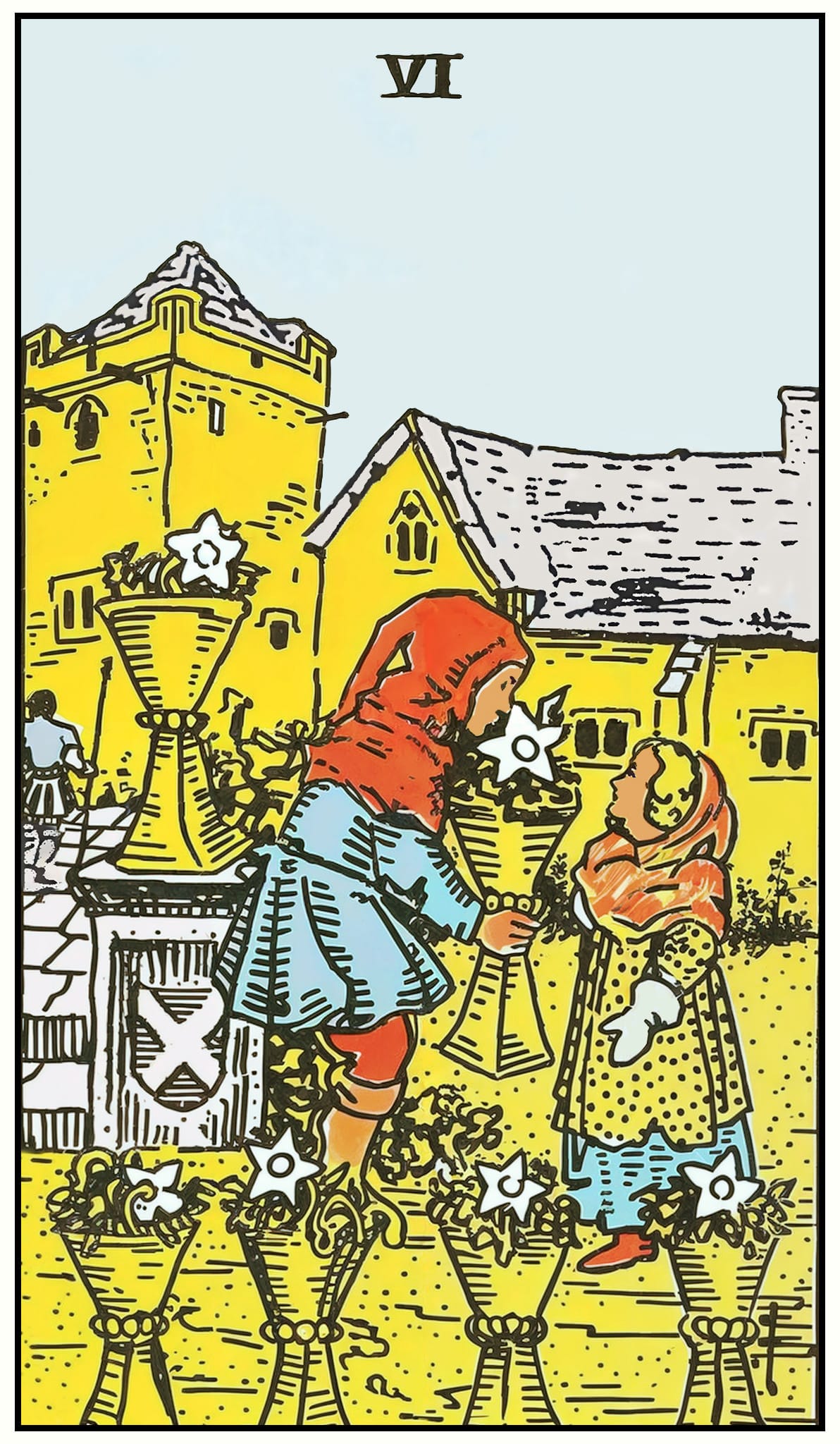
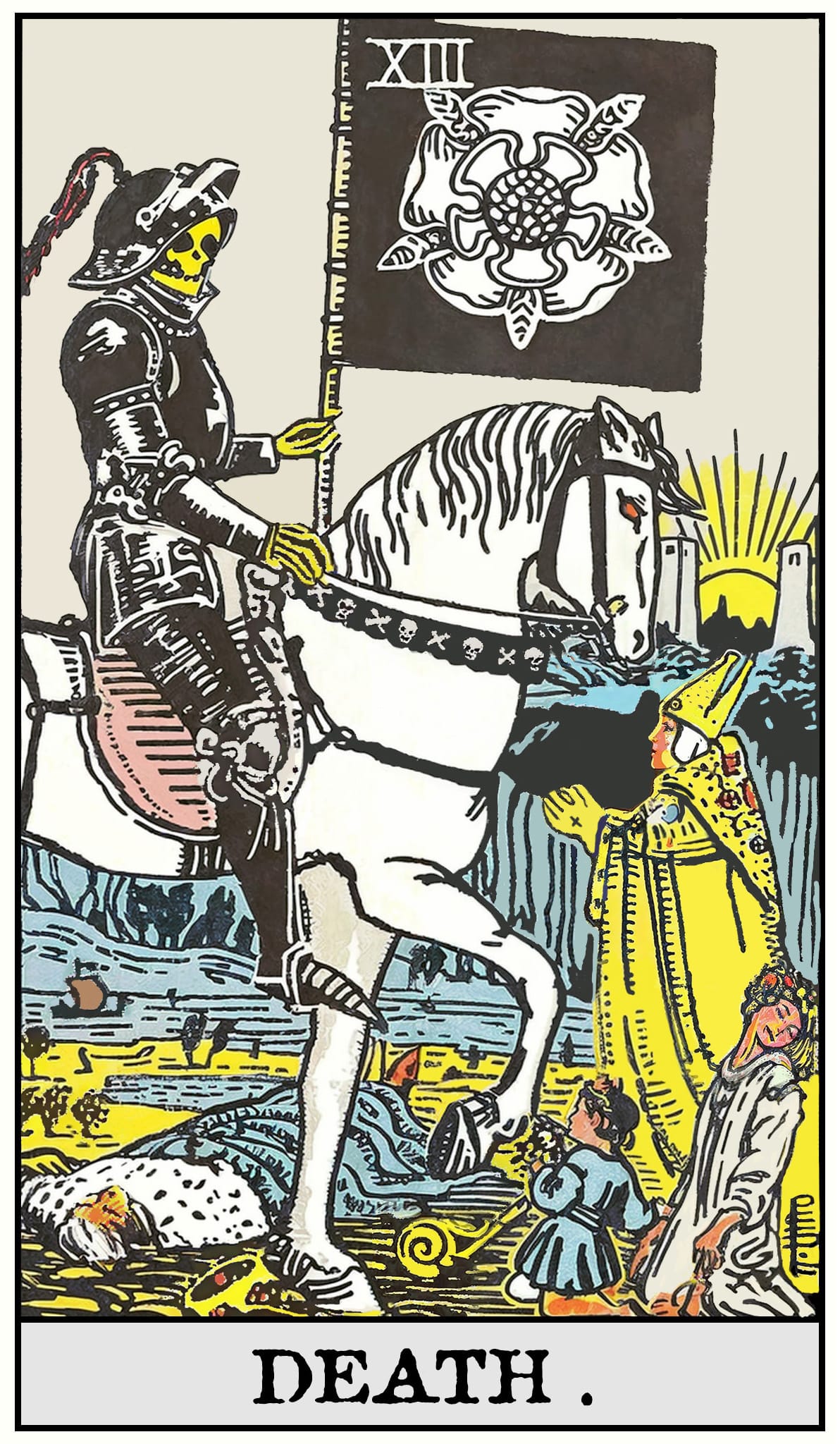
The Five of Cups is most often misread in the direction of premature consolation — readers see the two upright cups and want to offer them immediately. The card does not permit this without cost. The two upright cups are not available for honest reception until the three spilled ones have been genuinely acknowledged. A reading that skips directly to what remains is not comfort — it is the reproduction of the exact avoidance the card is warning against. The grief must be met first. The standing cups will wait.