Five of Pentacles
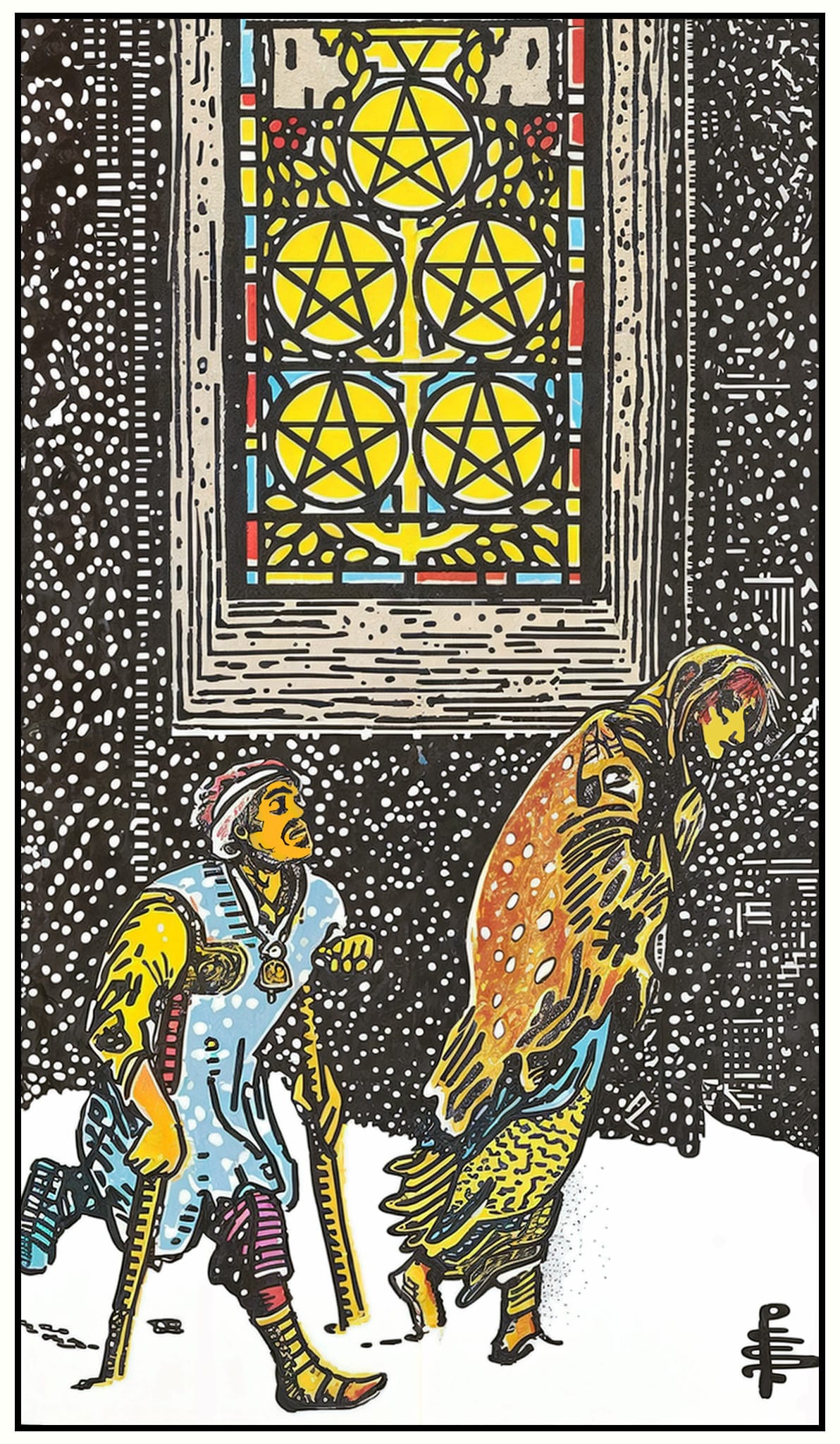
Two figures move through snow outside a lit church window — one on crutches, one hunched against the cold. The window blazes with warm light and five pentacles in the stained glass. They are not looking at it.
The Five of Pentacles names material hardship at its most concrete — and refuses to rush past the concreteness into psychological reading. Bodies in the cold. The warmth is there. The figures are not looking at it. The card's deepest question is not about the absence of resources but about the state that makes available resources invisible: the exhaustion, the shame, the conviction that one does not qualify for what is being offered.
The window is there. The warmth is real. The figures are moving past it.
The Five of Pentacles is the body that cannot work, the savings that did not last, the cold that is actual cold. To rush past this into psychological reading is to commit the error the church window is already committing — providing warmth in a form that the people outside cannot access. But the deepest layer of the card is not what is absent. It is what is present and not seen. The window blazes. The figures do not look at it. The shadow is not the poverty itself — it is the psychological state that makes help invisible: the shame that prevents asking, the exhaustion that removes the capacity to look up, the belief that one does not qualify for what is being offered.
The prior work of believing one is allowed — before the finding of resources, the willingness to receive them
Pentacles Five puts bodies in the snow in a way the other fifth cards do not. The suit that deals in the material has a material crisis, and it does not apologize for that specificity. The crack in the church wall lets light through — the figures would have to stop, turn, and look to see it. The specific work of this card is not the finding of resources. It is the prior act: the willingness to believe one is allowed to receive what is available, which is frequently the more difficult task, and frequently the one that is not addressed directly by anyone offering help.
The complete three-layer reading for all 78 cards — including the full psychological and archetypal layers — is in The Pocket Guide →
The card's shadow is not the cold. The shadow is the window walked past.
Shadow TrapThe help walked past not because it is absent but because asking for it would require admitting a need that has been managed as a private failure — the social support unasked for, the relationship in which help could have been offered but pride prevented the asking.
Shadow GiftThe capacity to stop, turn toward the window, and look — to bring the belief that one is allowed to receive into the specific situation where what is needed is available, before the cold becomes the only thing that is true about the moment.
Shadow readings for each card, by suit, are gathered in The Pocket Guide →
We do not read a reversal as an opposite; following Pollack, a turned card is the same energy blocked, withheld, or redirected — not inverted into its negation. A reversed Five of Pentacles often marks the beginning of the turn toward the window — the moment when the person in the cold has stopped moving long enough to register that the light is there, which is the precondition of everything that follows.
Why Apocrypha Does Not Read Reversals as Opposites →Sixty-three symbols across the full deck — cross-referenced by card and meaning — are mapped in The Symbol Dictionary →
What help have you been walking past because asking for it would require admitting that you need it — and what story about yourself is the not-asking protecting?
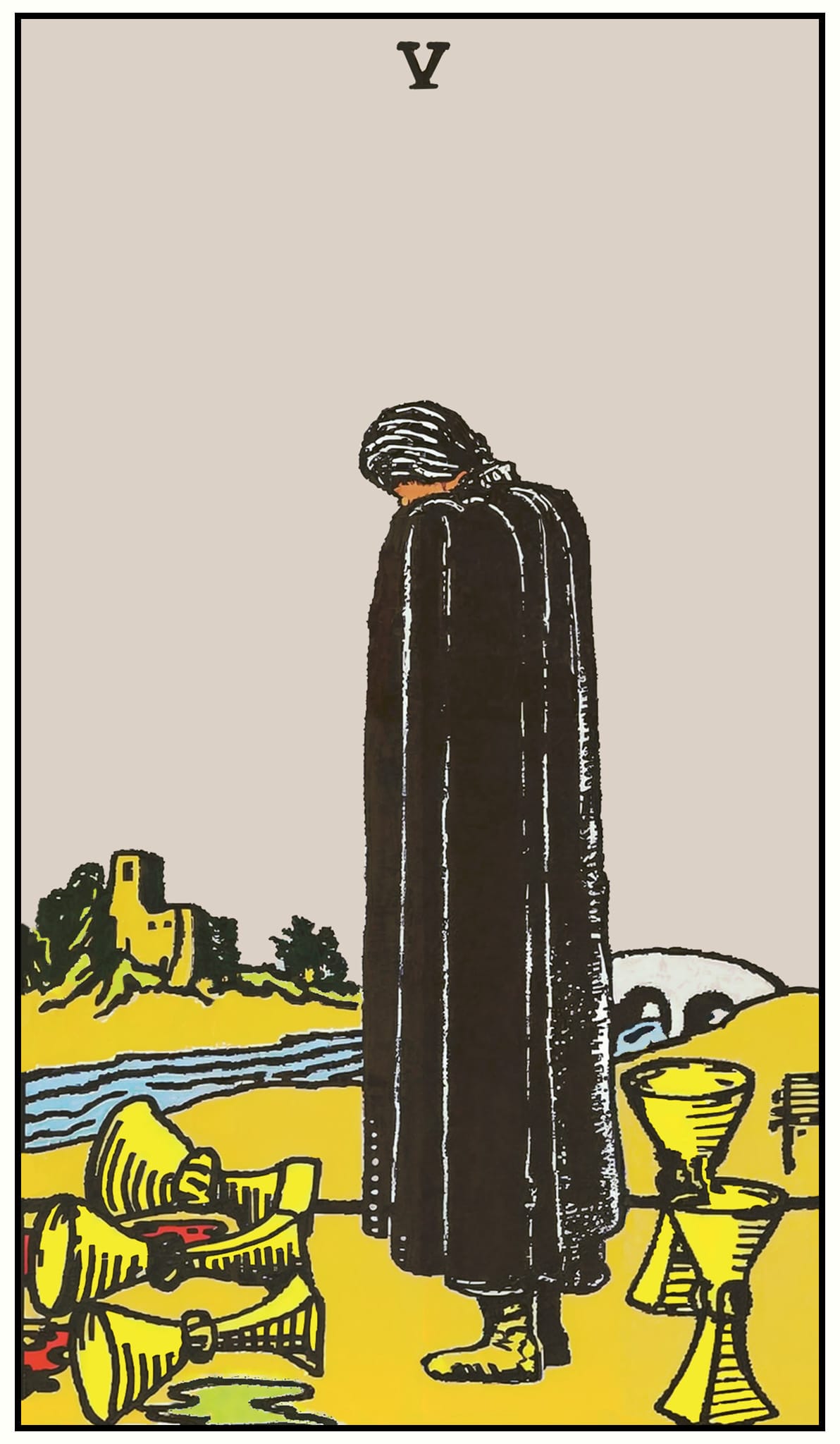

The Five of Pentacles is most often either softened into a metaphor for feeling poor or isolated, or rushed past toward the window and its warmth. Both misreadings protect the reader and the recipient from the card's actual content. The cold is cold. The help is there. The distance between the two is the card's subject, and that distance is not primarily logistical — it is psychological, and its name is the particular shame that converts need into failure before need can be named. The reading is not complete until both the cold and the window have been held simultaneously, without using one to cancel the other.