Section V

The Object

Wand · Cup · Sword · Pentacle · Scales · Lantern · Scroll · Keys · Chain · Scepter

The Wand

Instrument of Will
Appears In

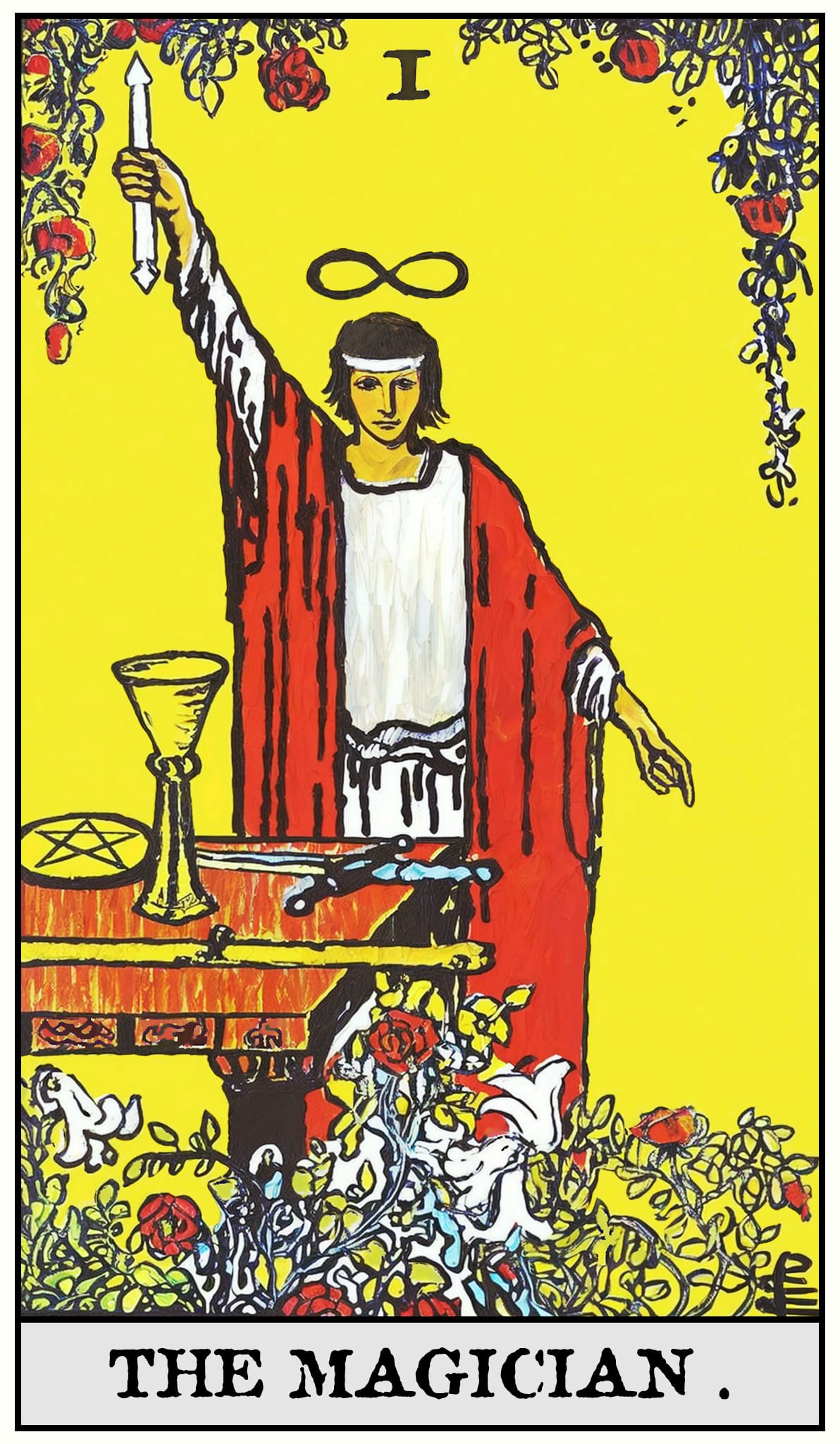
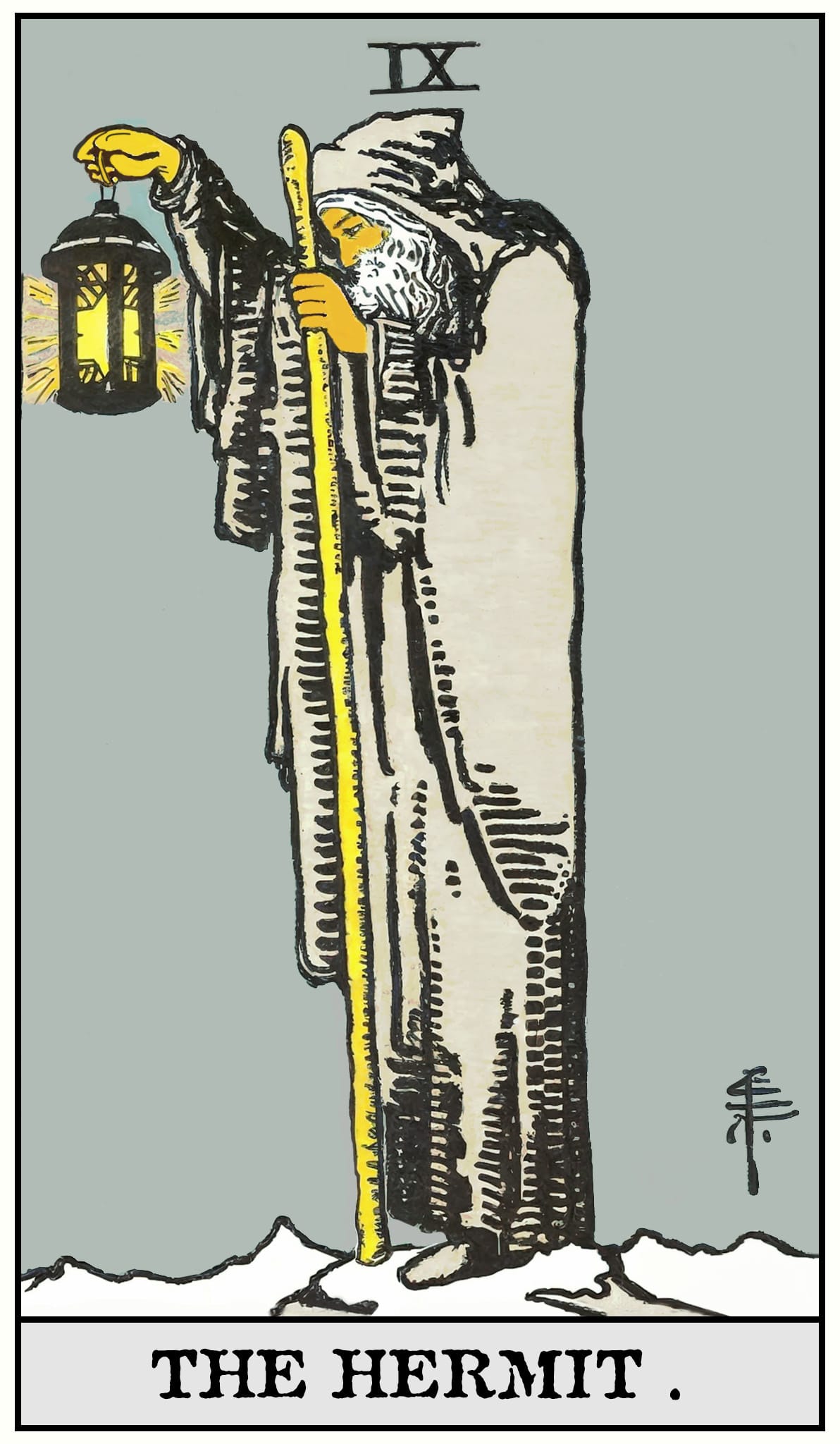
The wand is the tarot's instrument of will — not force, but direction. It is fire made portable. In the Magician's right hand it is raised toward heaven; the left hand points toward earth. Pollack's image for him is a conductor of current: openness above draws the energy down through the body, and the hand turned toward the ground carries that charge into the world of substance — into reality. The Hermit's staff keeps him upright on the mountain: will as patient persistence. The Ace of Wands shows the living wood — the staff that still sprouts because the will behind it has not been separated from its living source.

In Shadow

The wand as shadow trap is manipulation — will turned away from creation and toward control. Pollack notes the Magician's early predecessors were conjurers and tricksters. The wand skill that has not met the shadow of its own desire to impress becomes sleight of hand: using creative power to produce effects rather than realities.

Integrated

The wand integrated is creative will in its most direct form: the impulse to begin, to direct, to bring the interior fire into the exterior world. Not performance, not control. The branch that still has leaves on it because something in it is still choosing to become.
The Cup

Vessel of Emotional Life
Appears In

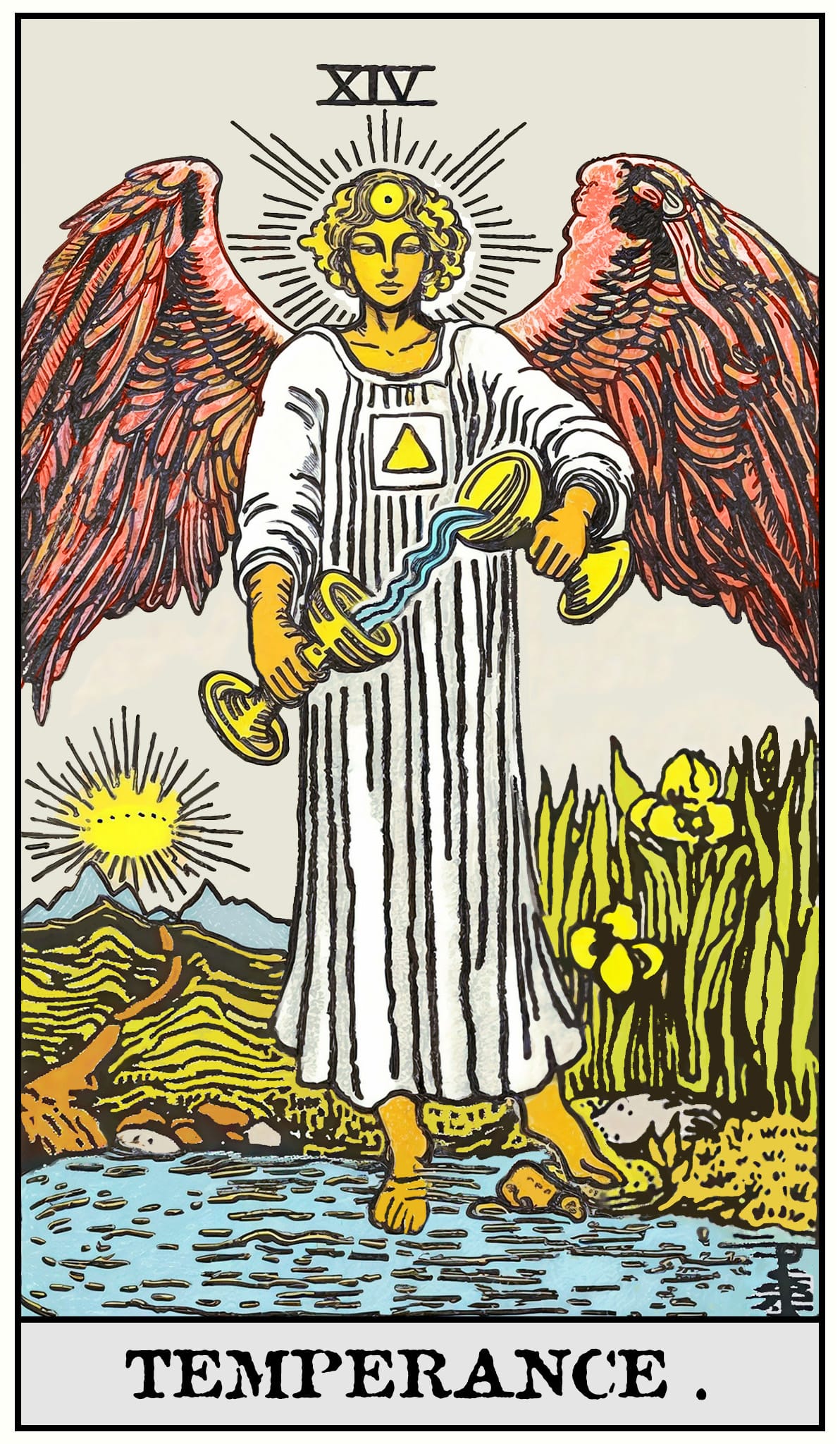
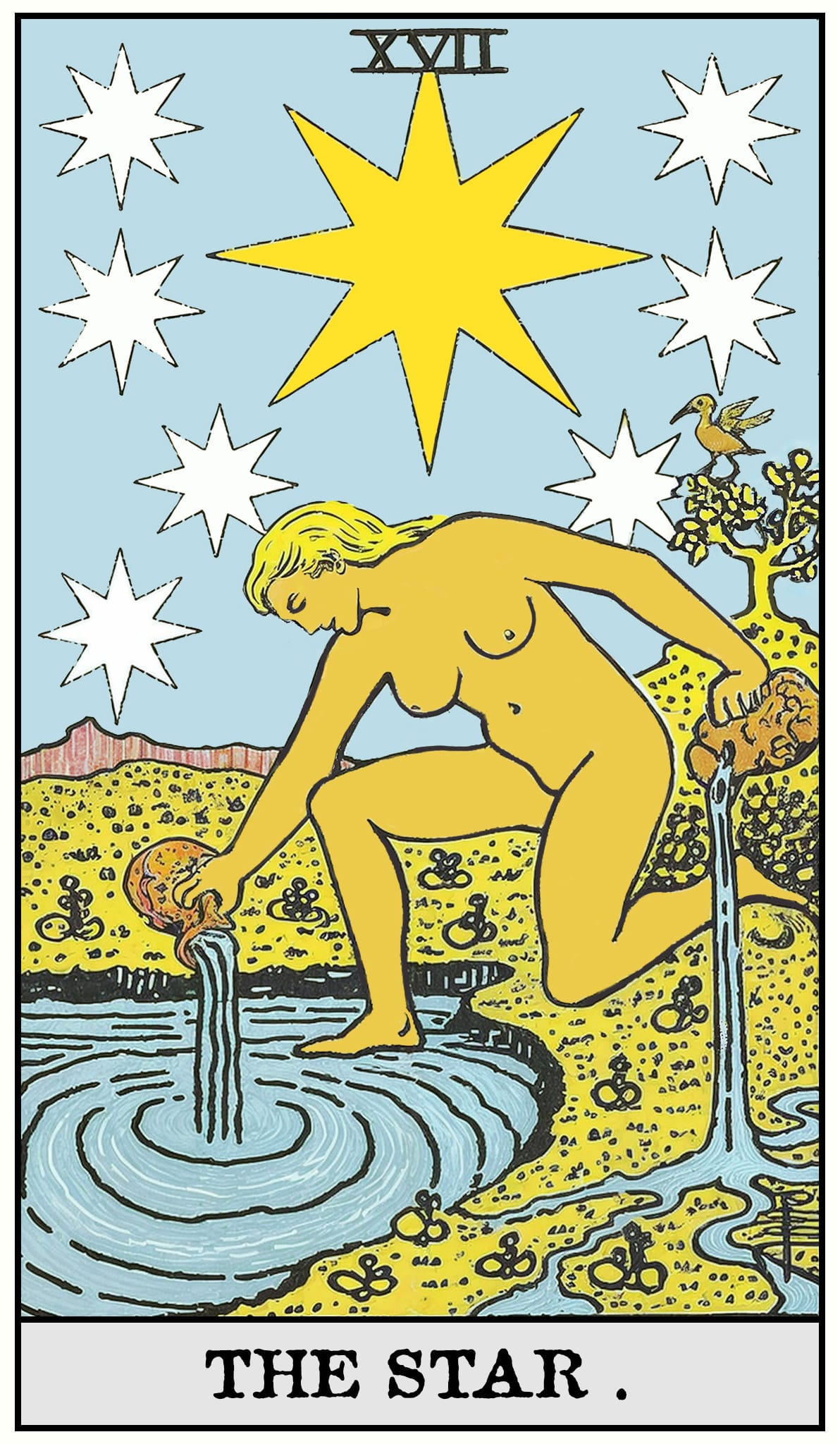
The cup is the vessel that makes the liquid real — without it, water disperses. The Ace of Cups shows the chalice overflowing, a dove descending: the gift of emotional capacity at its most unguarded. In Temperance the angel moves fluid between two cups, finding the ratio that neither suppresses nor floods. The Star's figure pours from a cup into the pool and onto the earth. In its suit, the cup passes through the full arc of emotional life: the joy of the Three, the grief of the Five, the fantasy of the Seven, the completion of the Ten. The cup is not the emotion —it is the capacity to hold it.

In Shadow

The cup as shadow trap is the vessel held closed — the emotional capacity maintained in reserve. The person who has cups but does not pour; who is available to receive but not to give. Or its opposite: the cup that is all overflow, never still enough to hold anything. Temperance shows the correct operation: not the choice between the cups, but the attentive flow between them.

Integrated

The cup integrated is the capacity for genuine emotional exchange — giving and receiving in proportion. Not the elimination of feeling but the full use of the vessel: poured out, refilled, used. Temperance's two cups are both necessary. The water makes both of them real.

The Sword

Instrument of Distinction
Appears In

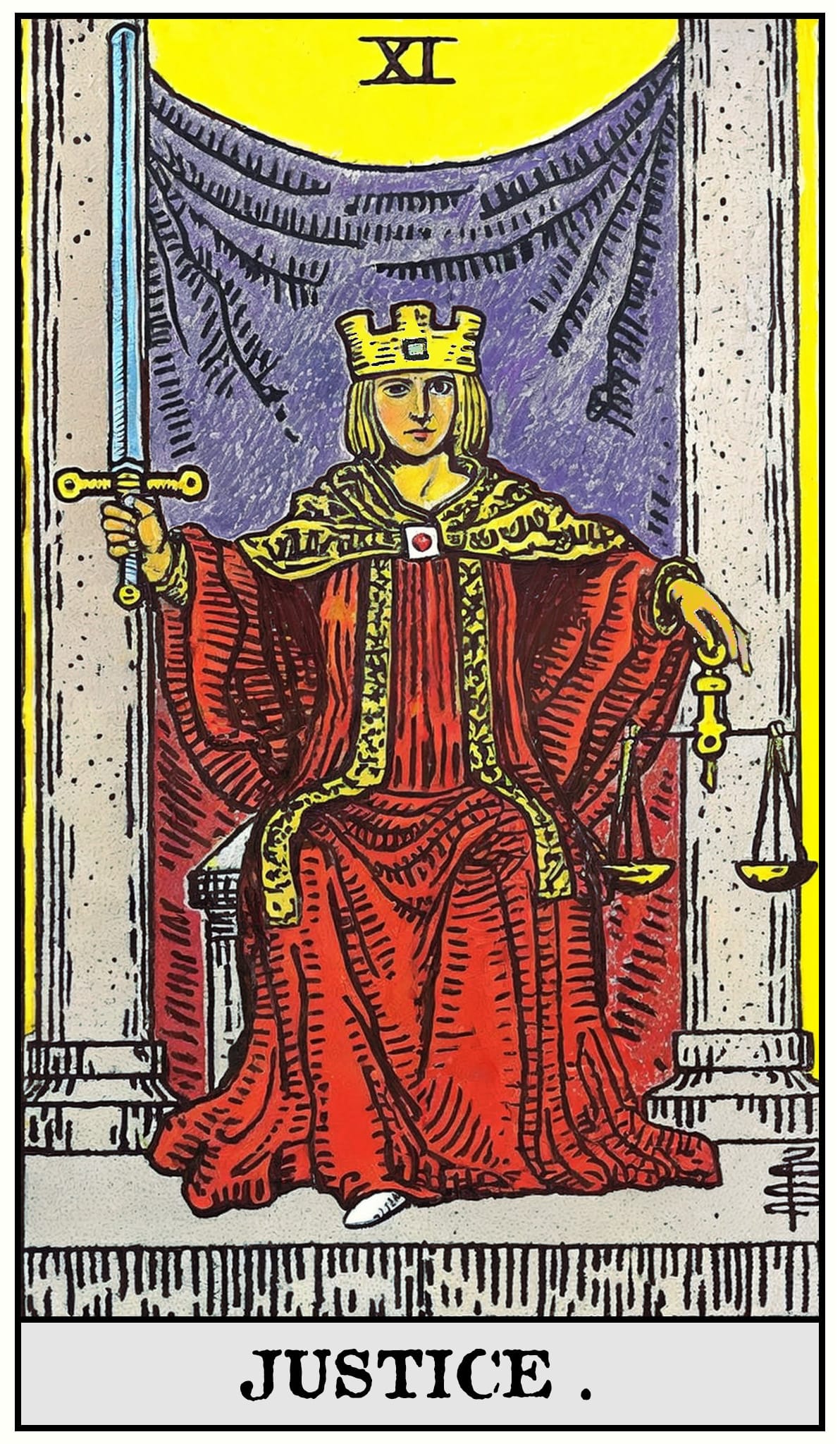
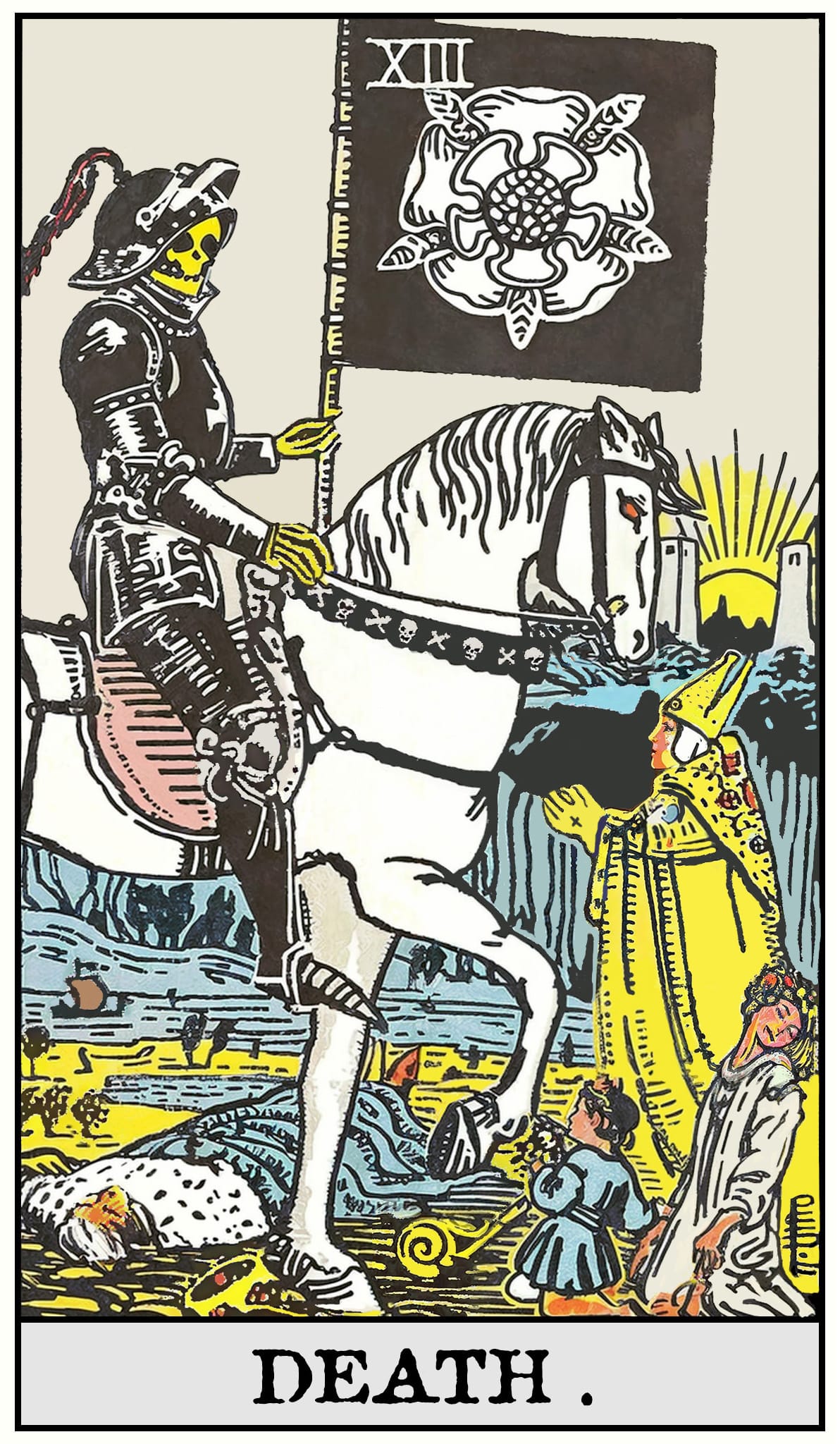
The sword is the archetypal instrument of distinction — it separates. The Ace of Swords emerging from cloud is crowned: this is the sword of truth, the capacity to make accurate cuts. The double-edged blade means the same operation that clarifies also wounds. Pollack's Justice holds the sword upright: not threatening but present. The sword of justice is the willingness to see clearly and say so — to make the cut that honesty requires. In the older decks Death carried a scythe —the blade at its most impersonal, a harvest that does not consult the harvested. The Rider-Waite- Smith gives Death a banner instead, but the principle survives: some cuts arrive on their own schedule.

In Shadow

The sword as shadow trap is the intellect that has lost contact with its purpose — the mind that cuts for the sake of cutting, that makes distinctions as a form of power rather than service. The Ten of Swords is this: the back full of blades placed there by the person who could not choose one clear cut and kept making smaller ones until no ground remained.

Integrated

The sword integrated is not the sword sheathed — it is the sword used once, clearly, for an accurate purpose, and put down. Justice does not keep the sword raised indefinitely. She holds it as a reminder. To know when to cut is a form of mercy.

The Pentacle

Spirit in Matter
Appears In

The pentacle is the tarot's emblem of earthly manifestation: the five-pointed star inscribed in matter, the spirit that has taken a concrete form. The Ace of Pentacles is a single coin beneath a garden archway: potential that has arrived. The Magician has the pentacle on his table alongside the other three tools — it is what his will can make in the world. Pollack reads the Pentacles suit as crystallised energy: money, work, and material reality as the condensed form of all the other elements. When it stops moving, it becomes weight rather than energy. When it moves, it is what creation looks like in the world.

In Shadow

The pentacle as shadow trap is the confusion of the object with the life it represents. The Four of Pentacles — the figure clutching coins to chest, feet, and head — is the shadow pentacle: material security as the defense against everything that cannot be measured. The person who has made their pentacle their protection has stopped the energy from moving.

Integrated

The pentacle integrated is the capacity to work in the material world with full attention — to value the concrete, to build and maintain and tend, without mistaking the form for the substance it carries. To hold a coin and know that it represents energy, not security.

The Scales

Balanced Perception
Appears In

The scales of Justice are the tarot's image of accurate perception: not moral judgment, not punishment, but the capacity to see what is actually there and say so. The sword points up, the scales are held responsive. Balance here is a dynamic state — the scales react to what is placed in them. Pollack notes that Justice differs from the Chariot's control precisely in this: she is not forcing the scales to stay level. She is reading them. The measurement is honest. The response follows from the measurement.

In Shadow

The scales as shadow trap is the judgment that assigns rather than measures. When Justice becomes verdict rather than instrument — when 'you deserve this' replaces 'this is what happened' — the symbol has entered its shadow. Clear accounting is not punishment. Punishment is what happens when the accounting is not honest.

Integrated

The integrated scales are the capacity to hold the evidence without rushing to conclusion — to feel the full weight of both sides before responding, and to accept an honest measurement even when it is unfavourable to the self. Justice holds the scales open. She has not yet decided.

The Lantern

Contained Inner Light
Appears In

The Hermit holds a lantern containing a six-pointed star — not a torch, but an enclosed light that illuminates the next step without overwhelming the dark. Pollack notes that the Hermit does not light the whole mountain; he lights the ground in front of him. This is a specific kind of consciousness: not the Sun's full noon revelation but the patient inner light that makes one careful step at a time possible. The lantern is held outward, not inward. It is directed at the path, not kept close to the chest.

In Shadow

The lantern as shadow trap is the light kept for the self alone — insight accumulated on the mountain and never carried back down, wisdom hoarded as a private possession. Its opposite is also shadow: the lantern thrust into other people's darkness uninvited, illumination used as intrusion. Both forget that the light is for a path.

Integrated

The lantern integrated is the Hermit's actual gesture: light held out at the height another climber can use. It does not flood the mountain and does not hide in the cloak. One step made visible, offered without insistence — the teacher's light rather than the performer's.

The Scroll & Book

Received & Living Wisdom
Appears In

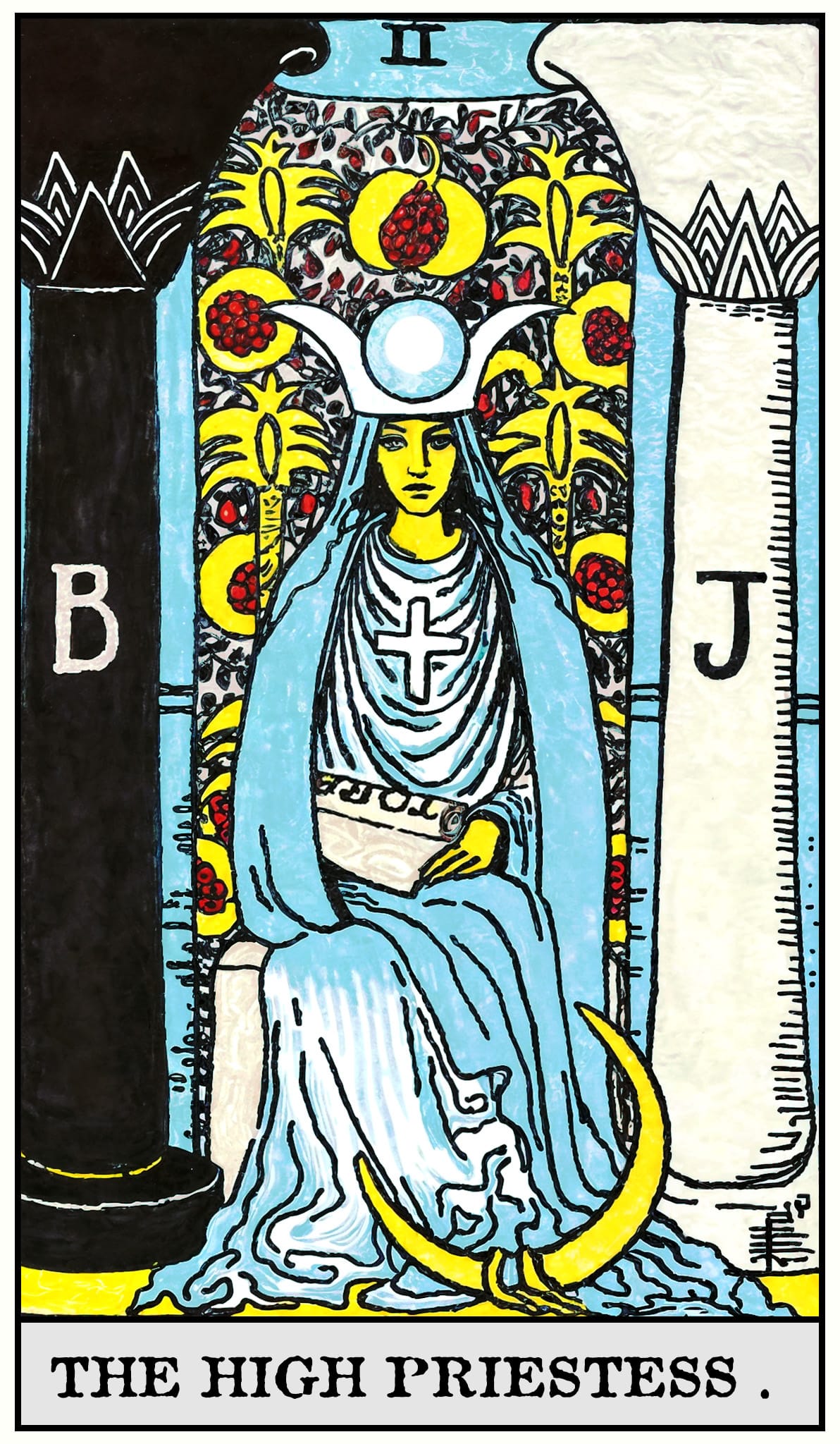
The scroll in the High Priestess's lap reads TORA — the living word that contains more than can be read from the outside. Pollack notes that for the Kabbalists the written Torah was only the shadow of a living Torah — a word older than the created world, holding all true existence within itself. The scroll is partly concealed in her cloak — not from malice, but because complete knowledge is not the condition for approaching it. The Hierophant's tradition codifies what the High Priestess's scroll holds as mystery.

In Shadow

The book as shadow trap is received wisdom defended against new experience. When the scroll becomes doctrine — when the living text becomes a fixed law — the shadow book appears. The institution that holds knowledge in order to remain the institution.

Integrated

The integrated scroll is the capacity to approach received wisdom as if it were still alive — to read with the expectation of being changed rather than confirmed. The High Priestess's scroll is partly hidden. Complete knowledge is not required. Approach with what you have.

The Keys

Access to Hidden Knowledge
Appears In

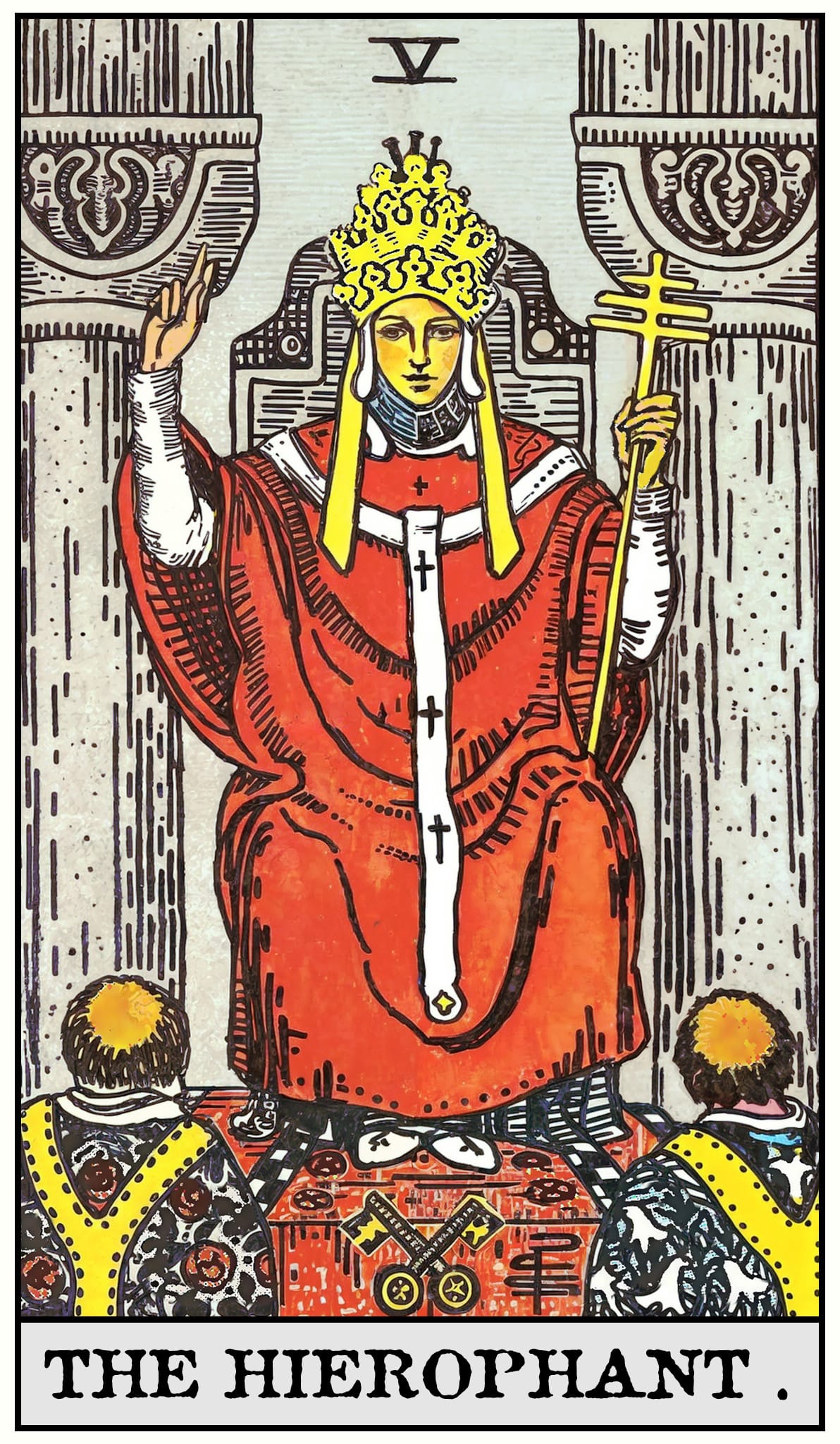
The crossed keys below the Hierophant's throne represent access to the locked chambers of knowledge — the power to open what is ordinarily sealed. In the Church tradition, the keys of St. Peter open heaven and earth. In the tarot, they are structural: knowledge has gatekeepers, and the Hierophant is the current form of those gatekeepers. The keys are not the knowledge. They are the access to it — and therefore the power to grant or withhold the approach.

In Shadow

Keys as shadow trap is the protection of access as a source of power — the gatekeeper who needs the door to stay locked, the expert whose authority depends on the subject remaining obscure. Knowledge guarded this way stops circulating and begins to serve only the one who holds the key.

Integrated

The integrated key is the capacity to hand it over — to teach the access rather than perform it, to make the locked chamber enterable by others. The genuine teacher works toward their own redundancy. A key that is copied and given away loses nothing; it multiplies the rooms that open.

The Chain

The Illusory Bond
Appears In

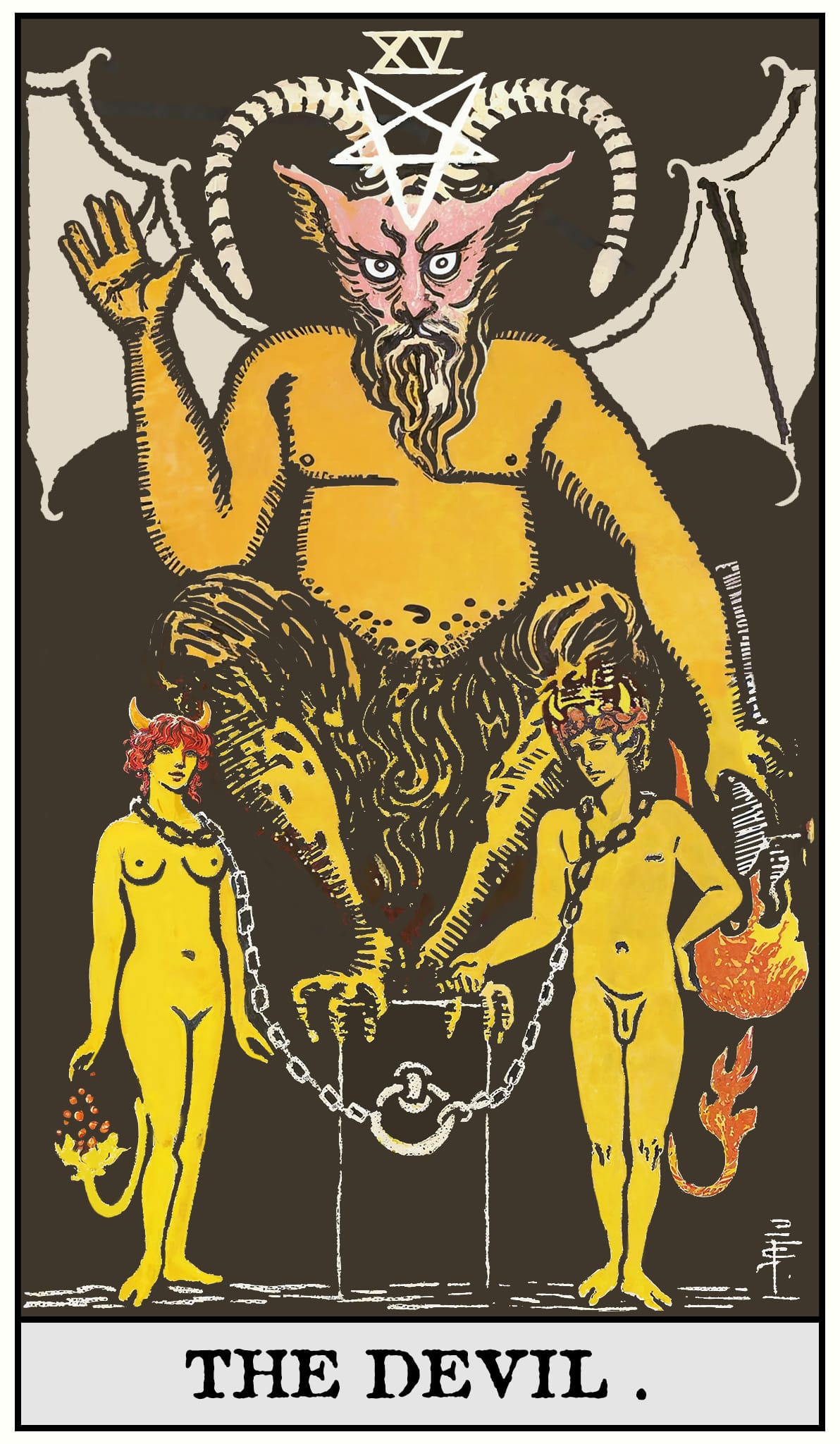
Pollack's essential reading of the Devil's chains: they are loose. The man and woman before the Devil could remove them at any moment. They do not because they believe they cannot. This is the most precise symbolic statement in the Major Arcana about psychological bondage: it is maintained by the belief in its own necessity, not by external constraint. The chains are not symbolic of evil or sin —they are symbolic of the belief that no alternative exists, the same belief that Pollack identifies as the Devil's primary power.

In Shadow

The chain as shadow trap is the bondage accepted as the nature of reality. Worn long enough, loose chains are forgotten as loose. The shadow of the Devil card is not the Devil — it is the moment of recognising the loose chain and still not removing it.

Integrated

The integrated chain is the conscious recognition of what actually constrains and what only appears to. To remove the chain is not to be free of all limits — some limits are real and serve life. It is to be free of the ones maintained only by the belief that they cannot be removed.

The Scepter

The Insignia of Authority
Appears In

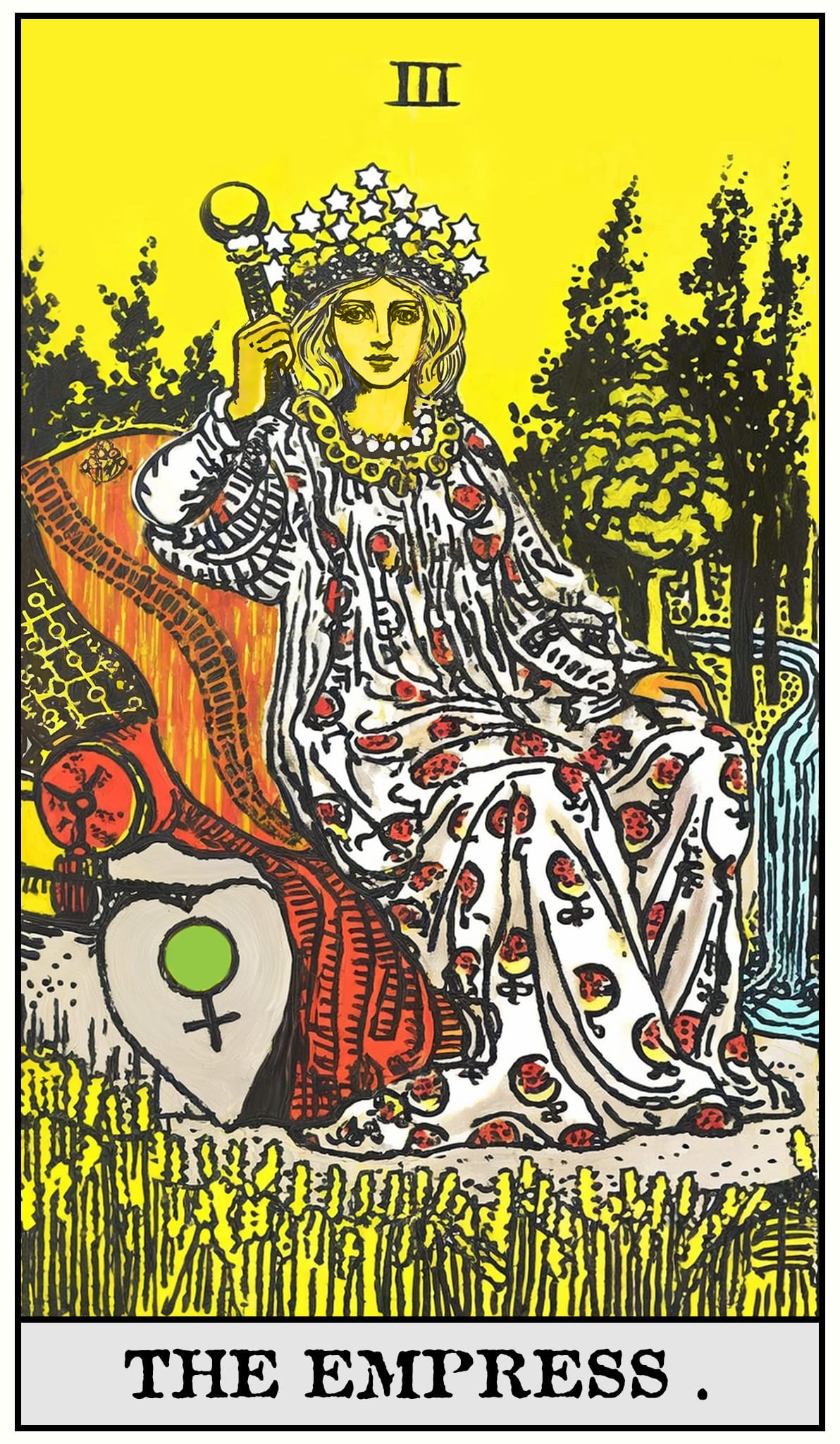
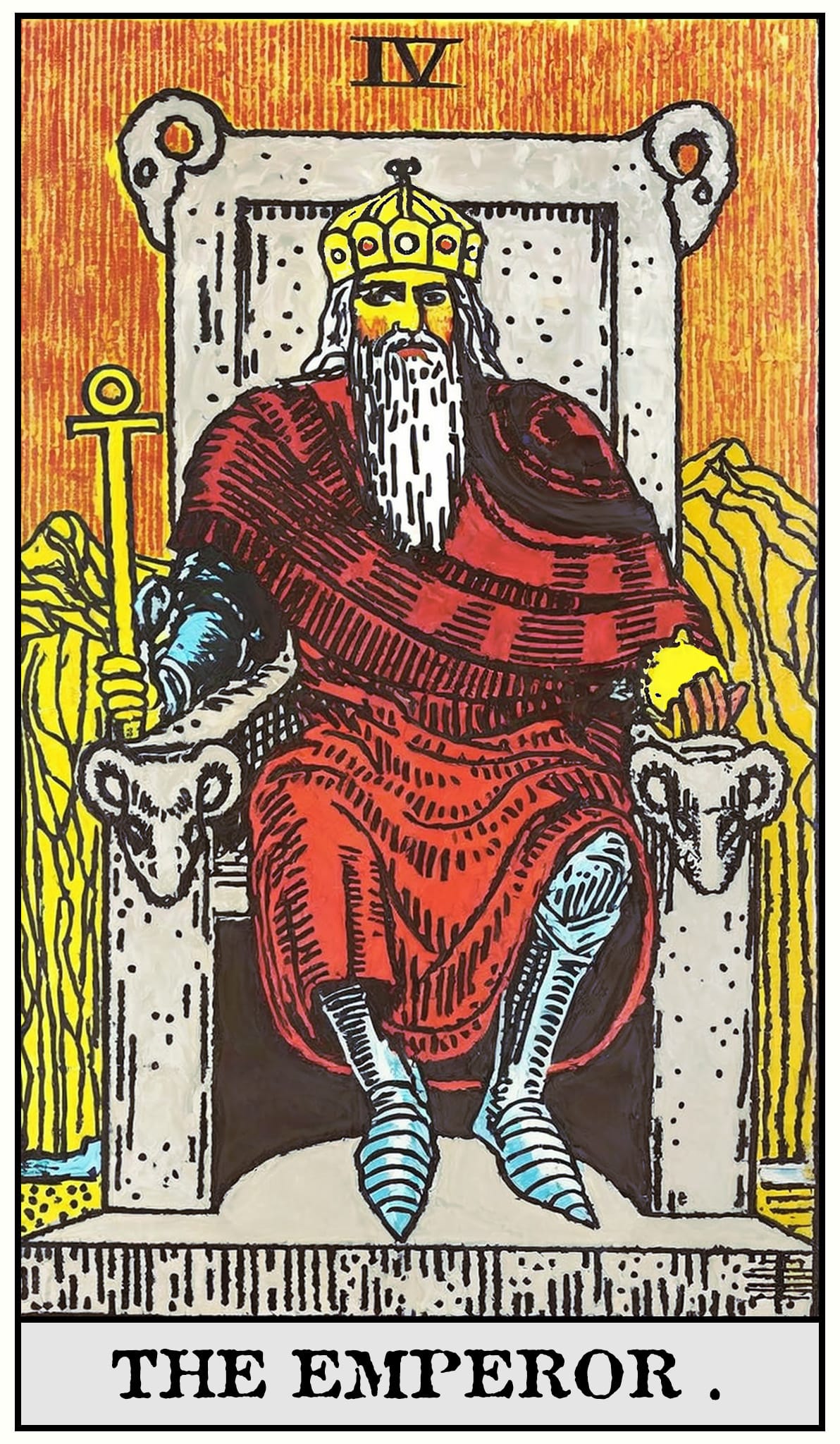
The scepter differs from the wand in what it marks: not will applied but authority acknowledged. The Emperor's scepter and orb are insignia, not instruments — they represent the settled nature of the power already in place. Death's staff bearing the black flag with a white rose is the scepter of transformation: impersonal authority, moving through what it has always moved through. The scepter marks the position, not the person.

In Shadow

The scepter as shadow trap is the authority that has become the identity — when the insignia of the role must always be visible, when the person inside the role has been replaced by the role itself. The Emperor who cannot put down the orb.

Integrated

The integrated scepter is held by someone who could set it down. Authority worn as lightly as the World dancer wears the wreath — present and functional but not defining. To hold the scepter without being held by it.