Section III

The Animal

Lion · Serpent · Dog & Wolf · Dove · Horse · Eagle · Bull · Crayfish · Sphinx

The Lion

Shadow Animal
Appears In

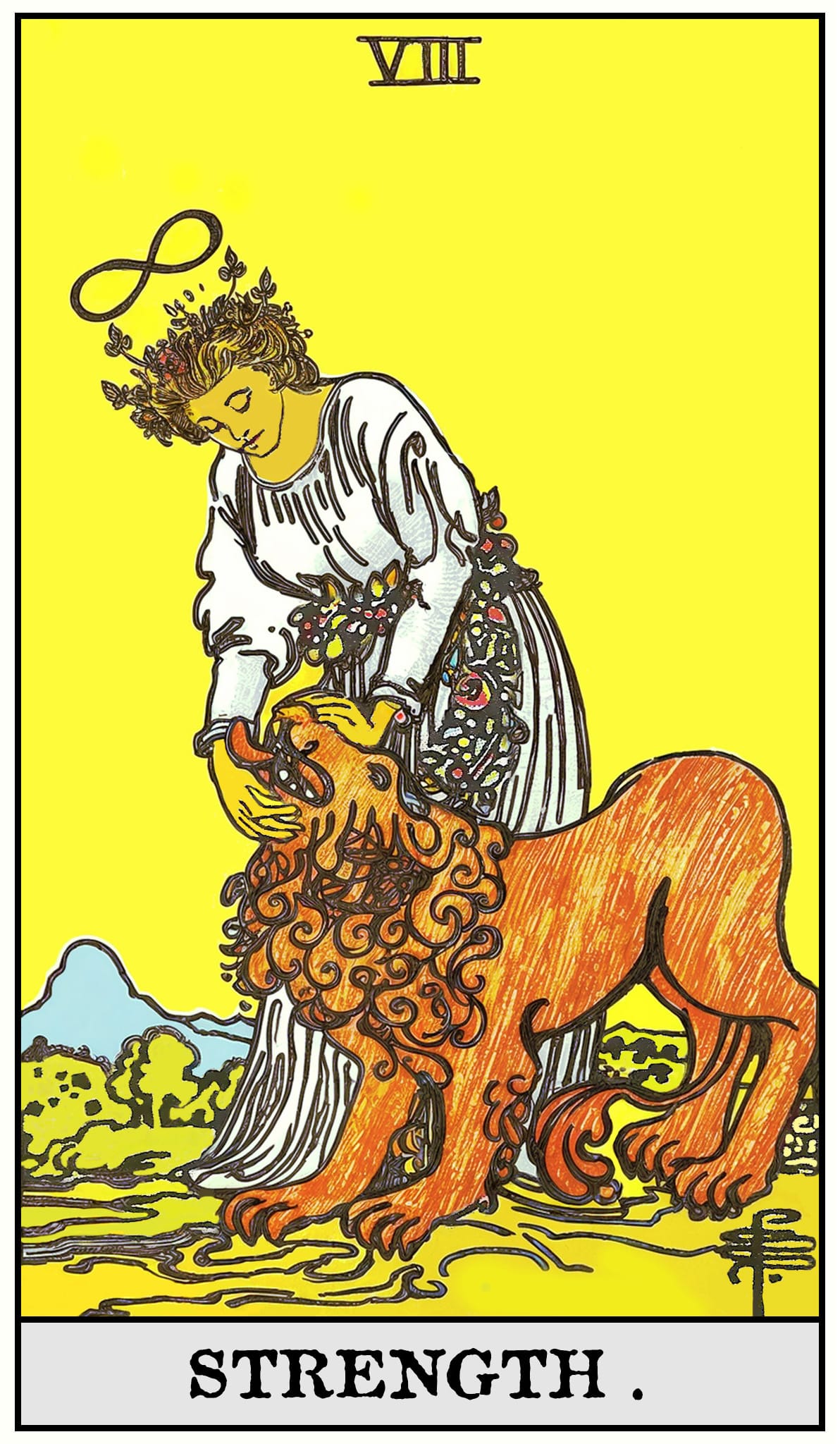
The lion is the tarot's primary shadow animal. It represents the full spectrum of instinctual life — desire, rage, hunger, grief, sexuality — everything that civilised self-presentation has required to be smoothed over. In Strength, the figure does not cage the lion or kill it. She opens its mouth and looks inside. This is the central distinction in Pollack's reading of the second line: the charioteer treats inner feeling as fuel and keeps his hands on its direction at every moment, while the figure of Strength lets the passions come forward to be met — the first movement past the ego's management. The lion is tamed and released simultaneously; it is released because it is met.

In Shadow

The lion projects outward — the person whose emotion feels excessive, whose intensity makes you uncomfortable, whose 'too much' quality provokes a disproportionate reaction. The lion projected outward is always a lion exiled from within. To find the lion intolerable in another is to identify where in your own interior it has been sent away.

Integrated

The lion befriended is not tamed — it is aligned. Its energy does not explode uncontrolled; it moves in the direction the conscious self has chosen. Strength does not suppress the lion. She opens its mouth and looks inside. This is what integration looks like: not stillness, not control, but contact.
The Serpent

Symbol of Suppressed Wisdom
Appears In

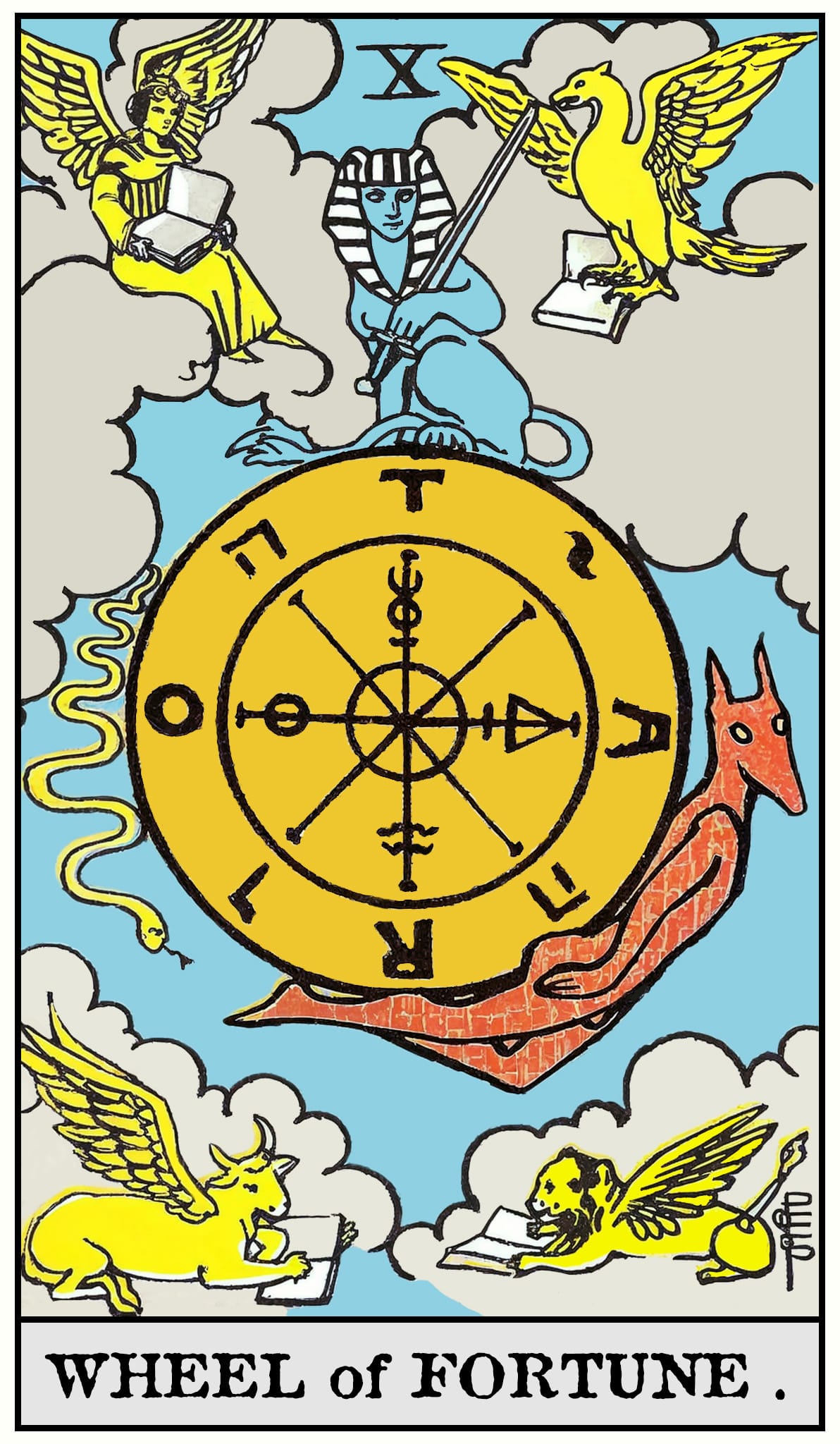
The serpent carries more suppressed meaning than almost any other symbol in the Western visual tradition. It is simultaneously: wisdom made forbidden (the Gnostic serpent who gives the knowledge the limiting god withheld); transformation through shedding (the only creature that dies and renews itself in a single gesture); sexuality and bodily life; and death without visible aggression— death by contact alone. In the Wheel of Fortune it descends on the left as a god- figure rises on the right. Pollack reads this not as battle but as rhythm: the cycle of descent and ascent that constitutes the fundamental movement of all living systems.

In Shadow

The serpent trap is self-knowledge declared dangerous. What you were told was corrupting — your instinct, your sexuality, your capacity to see institutions for what they are — is often precisely what you most need to claim. The shame attached to the serpent is the shadow's lock. To project the serpent onto others is to call dangerous the knowledge you have not permitted yourself.

Integrated

The integrated serpent is the knowledge that you can transform completely without ceasing to be yourself. The Wheel's serpent descends; the god-figure rises. Neither is the final state. The rhythm is. To integrate the serpent is to accept the cycle — descent, renewal, and the shed skin left behind.

The Dog & the Wolf

Two Aspects of Instinct
Appears In

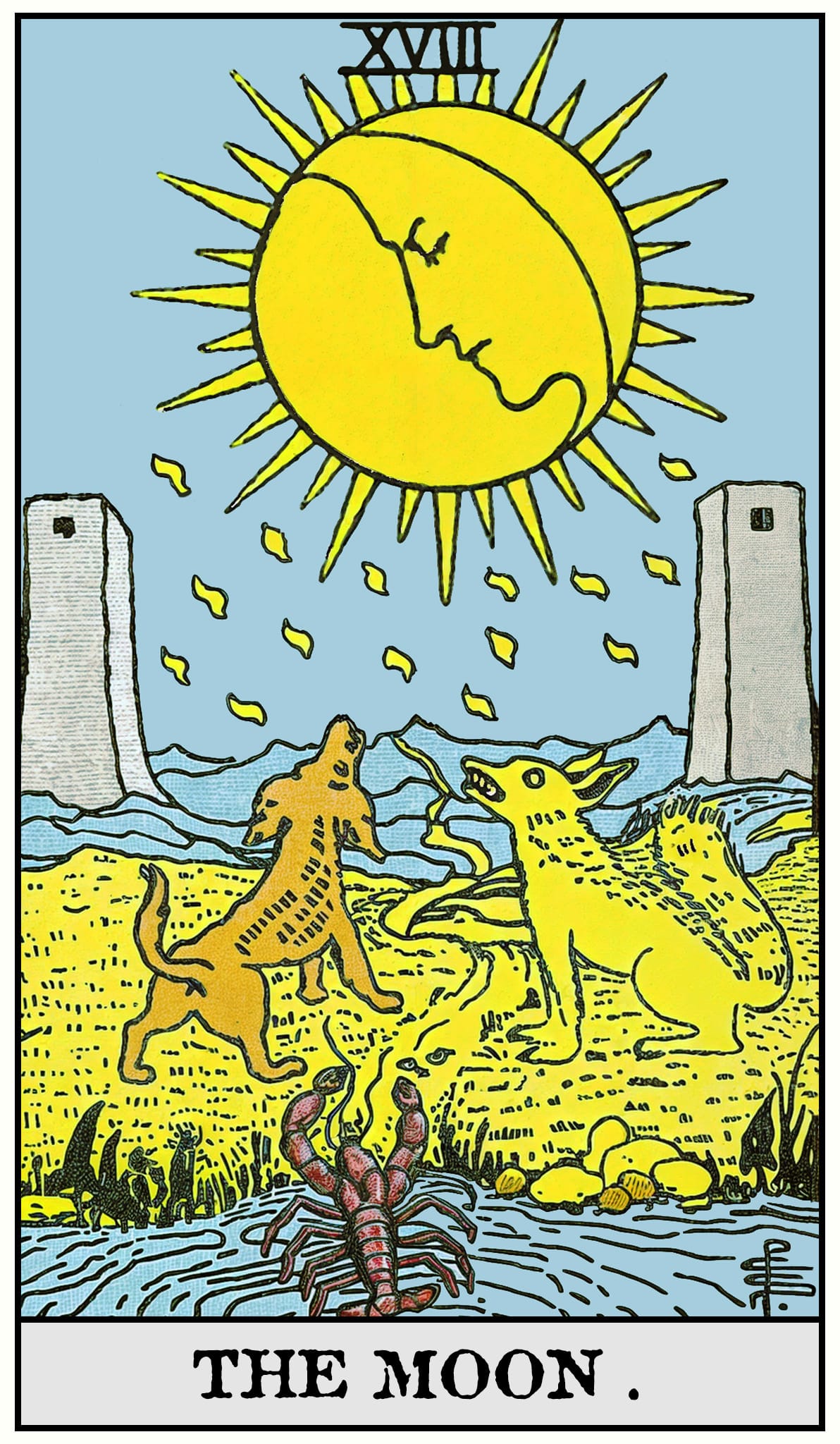
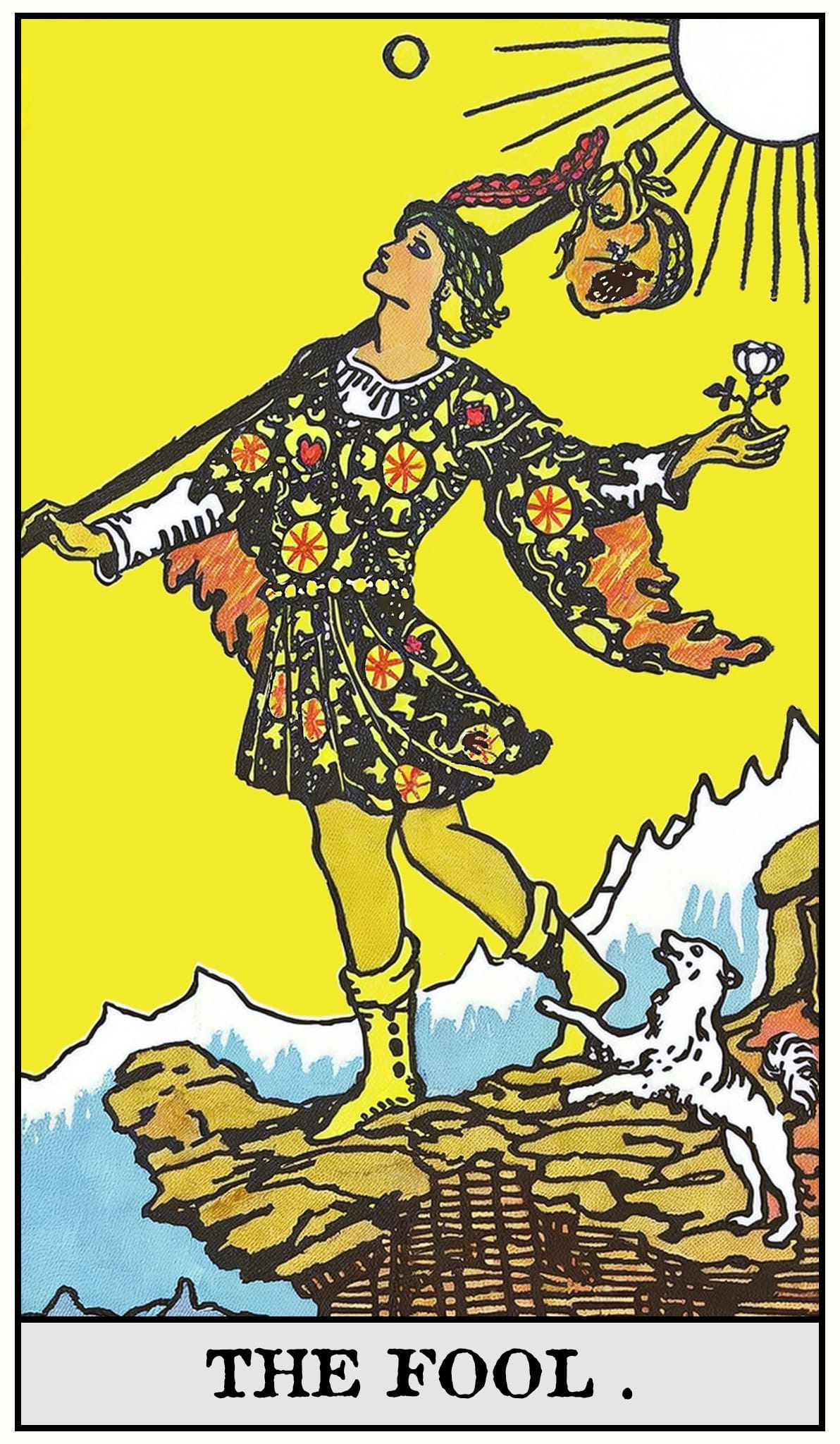
The dog and the wolf appear together only in the Moon card, howling at the same thing from either side of the path. Pollack reads them as two aspects of the same archetype: the dog is the domesticated instinct — tamed, loyal, socialised; the wolf is the same energy in its uncontained form, responding to the lunar pull without apology. Together they bracket the path that must be walked between the two towers. The Fool's small dog at his heels is the same figure in its most benign form: the instinct that accompanies the beginning, that barks its warning or bids farewell at the threshold.

In Shadow

The dog-wolf split as shadow trap is the belief that only one of the two is acceptable. The person who has made peace with the dog but cannot acknowledge the wolf carries the wolf as shadow: the antisocial impulse, the hunger that does not apologise, the loyalty to instinct rather than approval. The wolf projected onto others becomes the 'dangerous' quality in those who have not learned to be safe.

Integrated

Dog and wolf integrated is not the domestication of the wolf — it is the coexistence of both within a single life. The Moon's path requires that both be acknowledged before it can be walked. The fully human person can be both responsive to others and answerable to the interior pull.

The Dove

Spirit Descending
Appears In

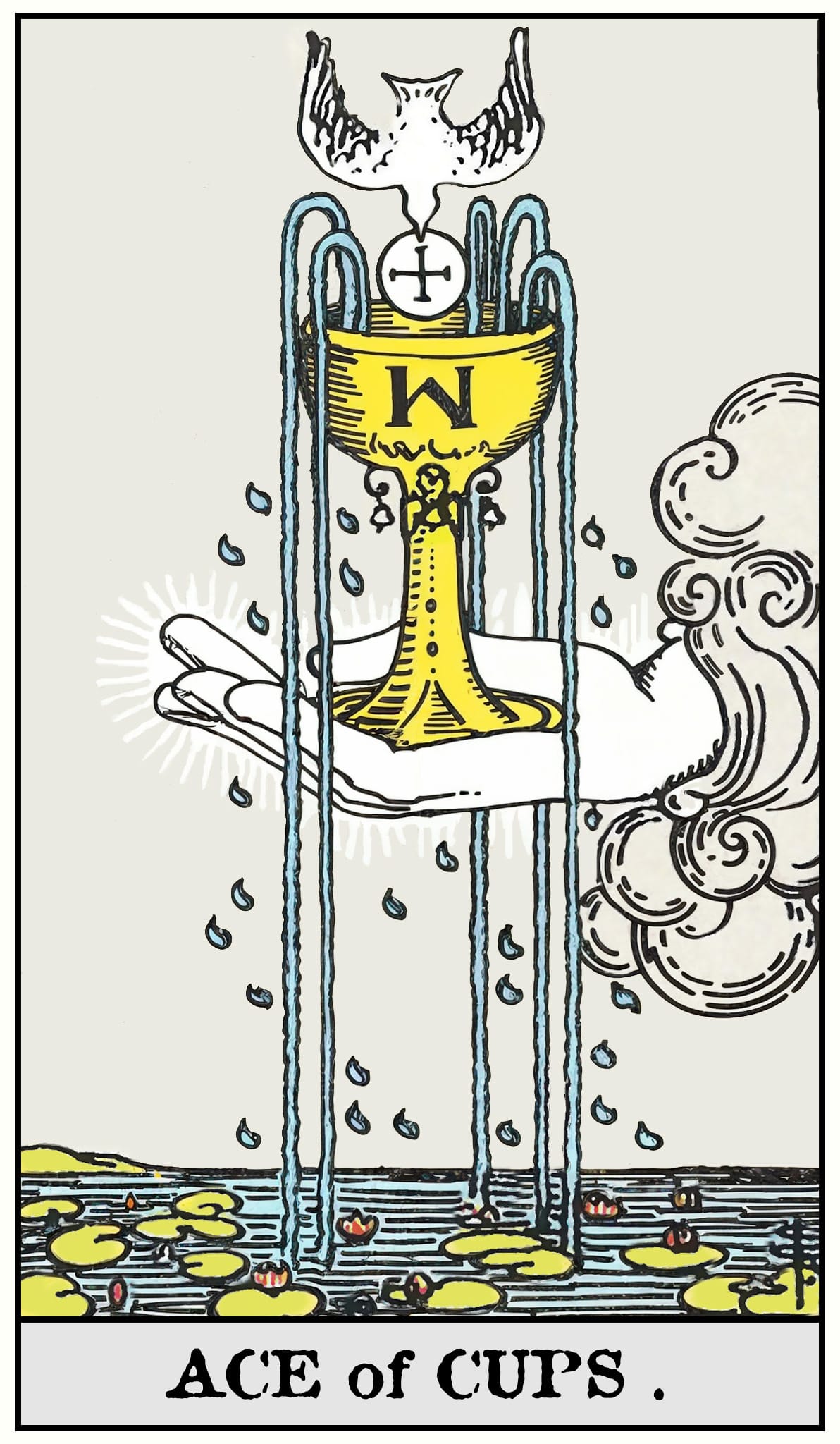
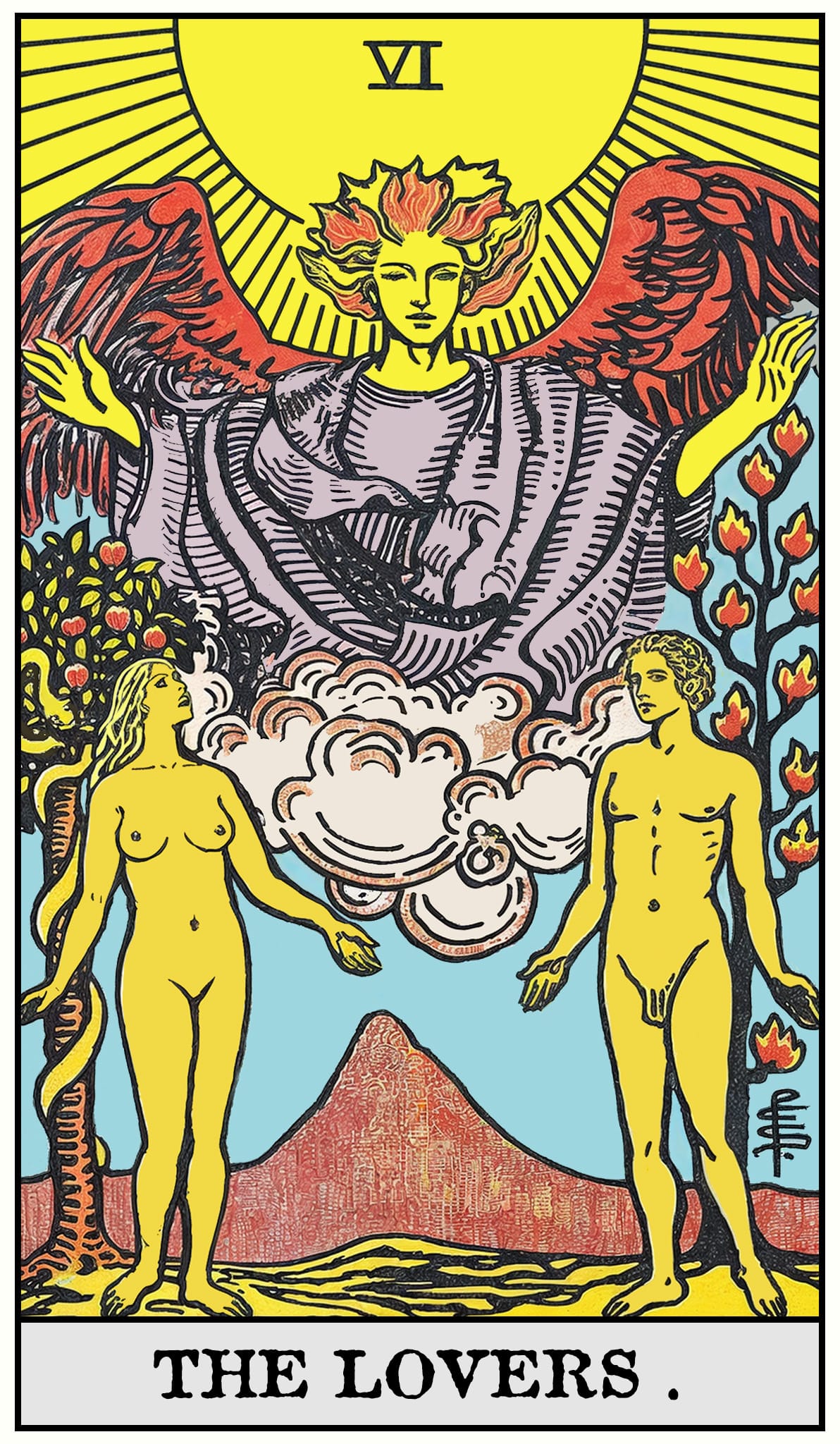
The white bird — dove, angel, spirit descending — is the moment at which the spiritual becomes immediate. In the Ace of Cups, a dove descends directly into the chalice: the spirit entering the emotional vessel. In the Lovers, the great figure above represents cosmic love — not romantic but ordered by a larger intelligence. The white bird marks the contact between levels: the higher energy moving into the lower without destroying it.

In Shadow

The dove as shadow trap is the longing for contact with something greater that becomes a substitute for contact with what is present — waiting for the spirit to descend while not attending to the cup already in hand. Spiritual aspiration misused as an escape from the actual.

Integrated

The dove integrated is the capacity to be genuinely moved — to let the spiritual register as felt experience rather than idea. The Ace of Cups shows the dove landing. The chalice does not reach up; the spirit descends. Integration is the receptivity that makes the landing possible.

The Horse

The Body's Power
Appears In
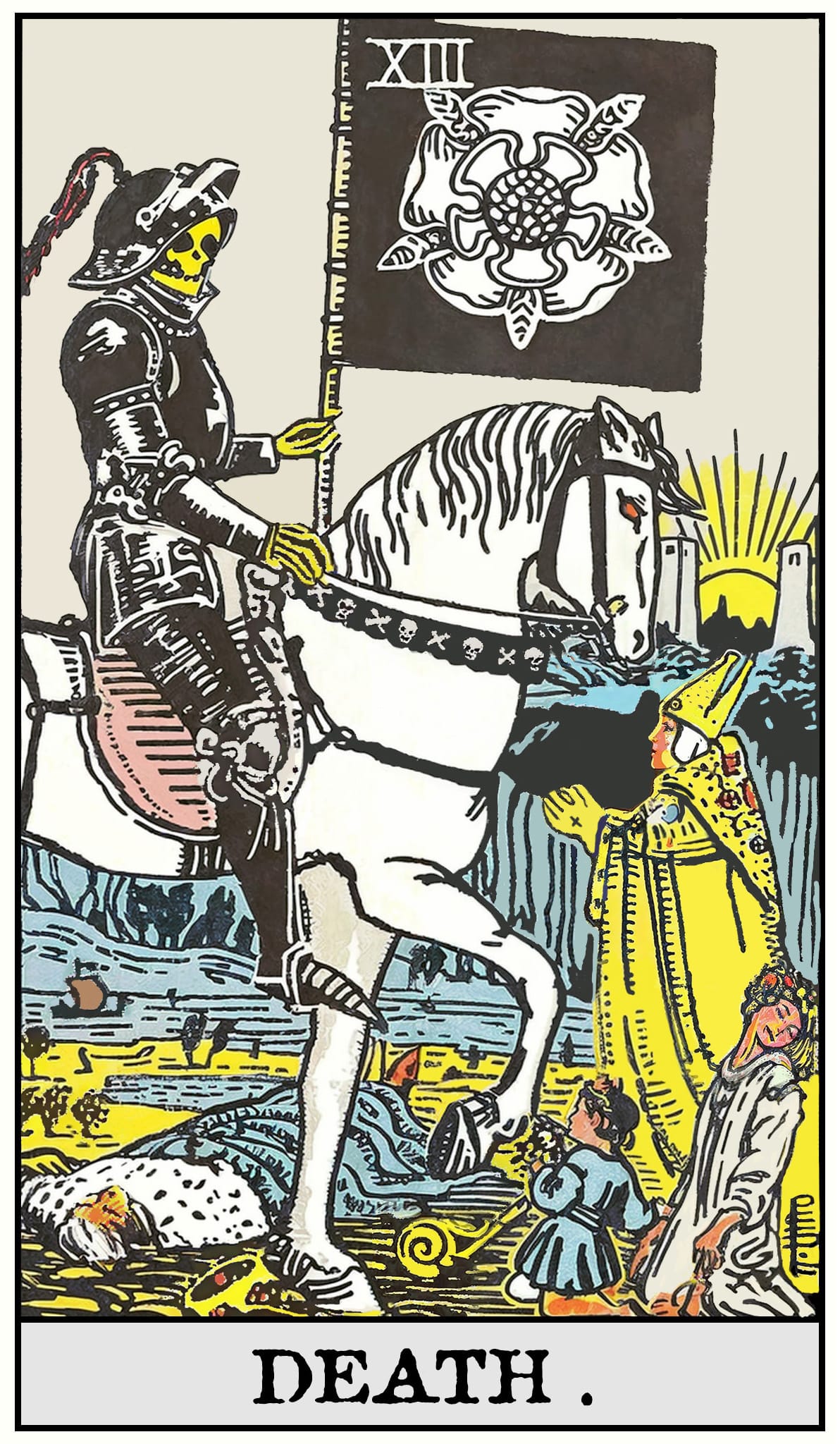
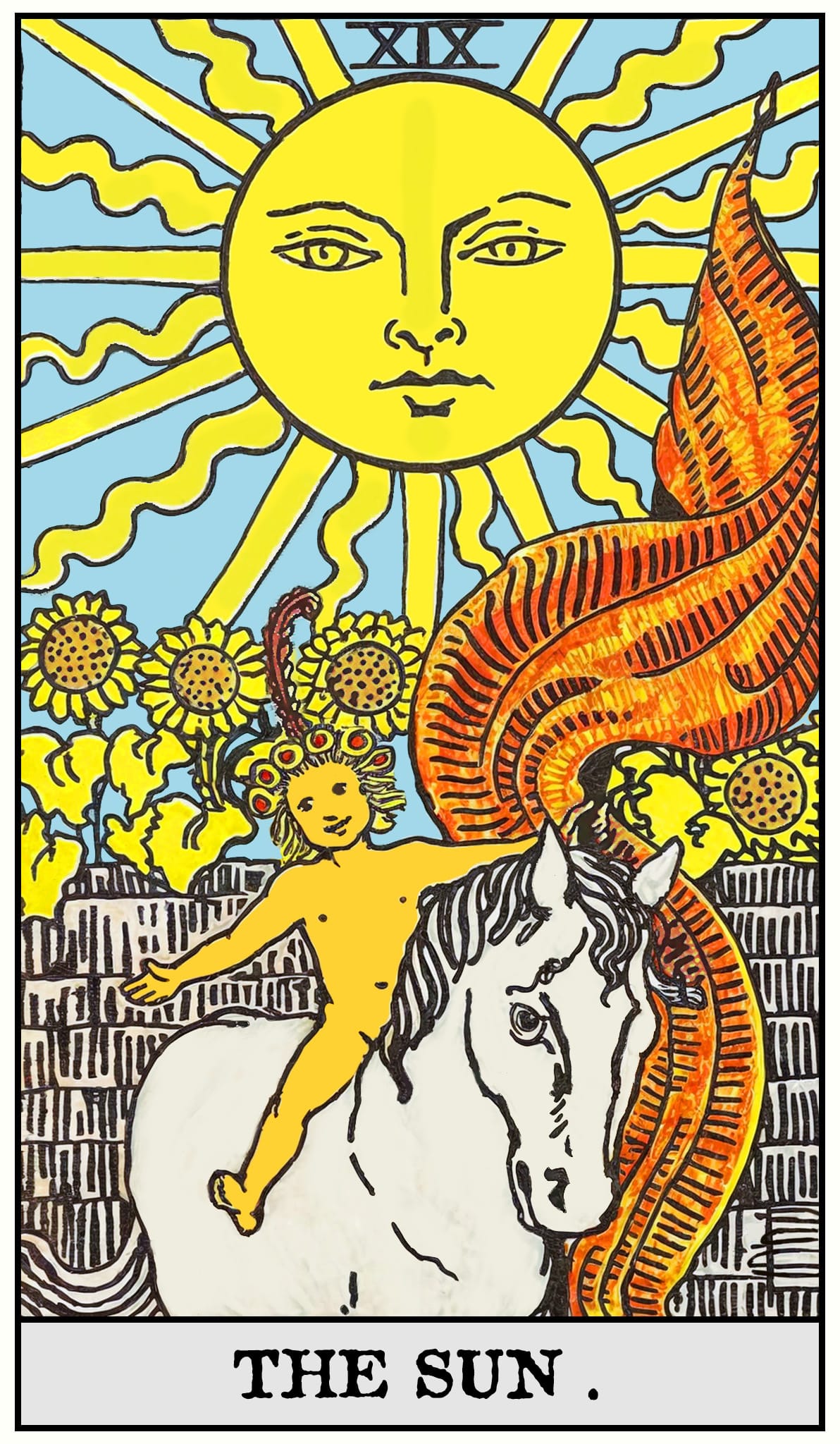
DeathXIIIDeathThe SunXIXThe SunKnights of all four suits

The horse carries the psychic weight of the body's power harnessed or at liberty. In Death, the white horse is the force that moves history: indifferent to the fallen king, patient, unstoppable. In the Sun, the same white horse reappears bearing the unarmored child in pure joy. Same animal, different relationship. The Knights of the four suits each ride in a different manner — the relationship of conscious intention to physical force. The rider who sits on the horse without contact is the shadow form; the rider who feels the horse and responds is the integrated form.

In Shadow

The horse as shadow trap is the body's power unacknowledged — the figure who travels without noticing the terrain, who directs without feeling what carries the direction. The body bears us through our lives. To be absent from it is to be absent from the journey itself.

Integrated

The Sun child rides without reins not because there is no direction but because the surrender of control has made the horse and rider one movement. The integrated horse is the Jungian relationship between ego and the autonomic: the rider who feels the horse and chooses direction without fighting what moves.

The Eagle

The Four Living Creatures · Elevated Instinct
Appears In

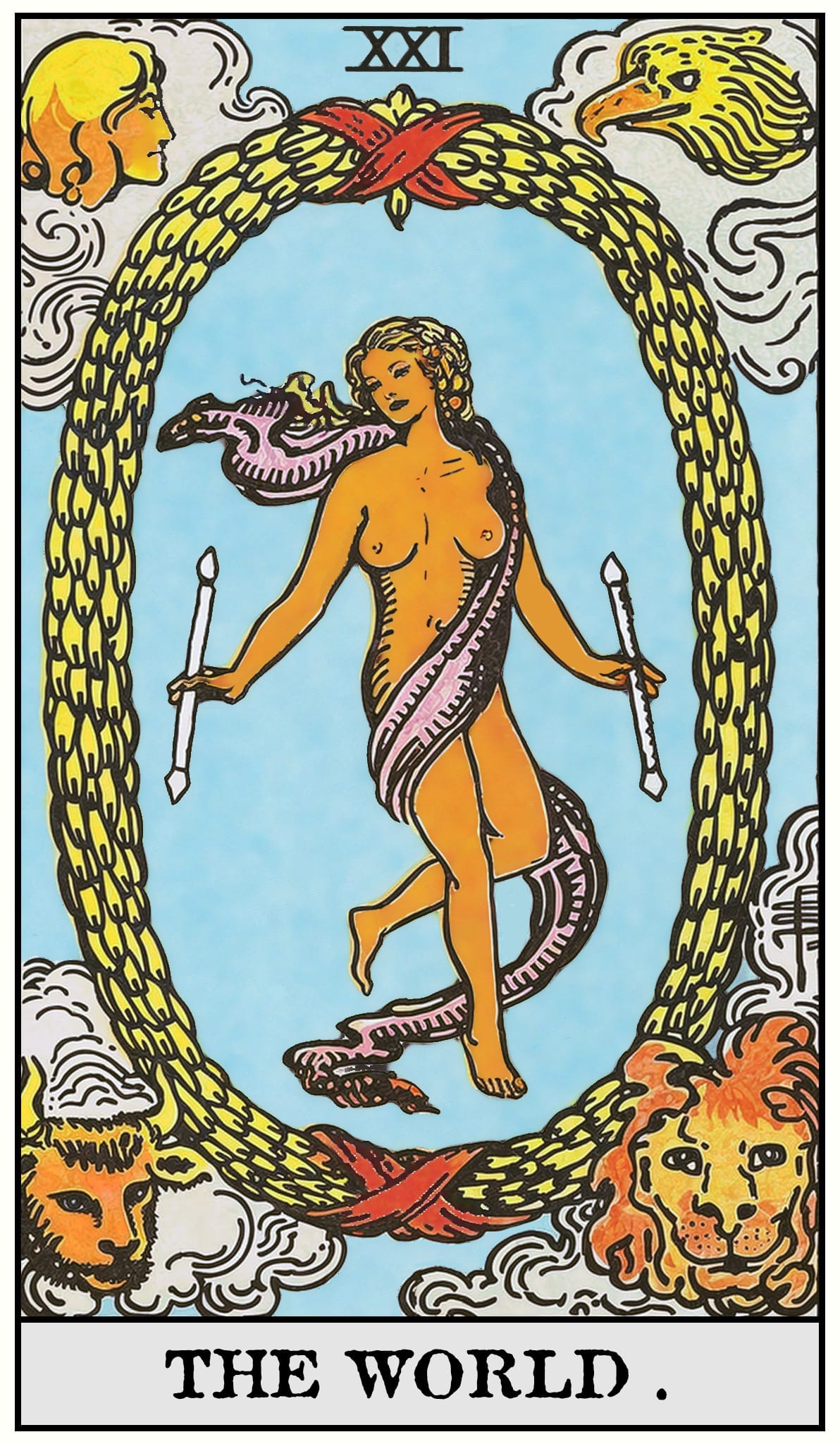
The four creatures at the corners of the Wheel and the World — lion, bull, eagle, man — are the four fixed signs of the zodiac, the four elements, and the four evangelists. The eagle is Scorpio transformed: the instinct that has ascended, desire sublimated into vision. On the Wheel each creature reads a book — they are watchers who understand rather than actors who respond. The eagle does not hunt in these images. It sees. The Scorpio-eagle axis names the full arc: from the scorpion that moves underground to the eagle that moves above everything.

In Shadow

The eagle as shadow trap is vision used as exemption — the perspective so elevated that nothing on the ground can touch it. The person who understands every situation from above and enters none of them has turned sight into a hiding place. Desire that has been sublimated too early does not disappear; it circles.

Integrated

The integrated eagle is instinct that has genuinely climbed — passion refined into perception without being abandoned. It can see the whole field and still descend to act in it. The height serves the life below; it does not replace it.

The Bull

Fixed Earth · Patience
Appears In

The bull at the corner of the Wheel and the World is Taurus — the fixed earth sign, the principle of patience and physical persistence. It reads its book like the other three creatures: not acting but understanding, not responding but witnessing. The bull as shadow is the force most associated with the refusal to change direction. Its gift is exactly this: it does not require crisis to move. It moves when the time is right, at the right pace, with the full weight of what it knows.

In Shadow

The bull as shadow trap is stubbornness that mistakes momentum for integrity — the force that will not be redirected regardless of the evidence, not from conviction but from inability to change without losing the sense of self. The will that has become indistinguishable from its own inertia.

Integrated

The bull integrated is steadiness: not inertia but genuine rootedness. The capacity to remain in one place long enough to understand it deeply. The body's knowledge is slow, reliable, and not available to those who move too fast.

The Crayfish

The Unconscious Rising
Appears In

The crayfish emerges from the pool in the Moon card — partially visible, coming up from the unconscious toward the two towers and the path between them. It has not yet left the water. It is the first movement of what lives in depth toward the surface of awareness. In natural history, the crayfish moves backward and sideways; it navigates by feel rather than forward sight. Pollack notes it as the symbol of unconscious material making its first approach toward consciousness— not yet arrived, but in motion.

In Shadow

The crayfish as shadow trap is the content pushed back under the surface each time it begins to rise — the dream dismissed on waking, the recognition postponed, the feeling renamed before it can finish arriving. What is repeatedly refused at the waterline does not return to rest. It waits, and it grows stranger in the waiting.

Integrated

Integrated crayfish energy is the willingness to let the unconscious surface at its own pace — to receive what rises without demanding it arrive in finished form. The material comes up sideways, in fragments, by feel. Integration is standing at the pool's edge and not pushing it back down.

The Sphinx

The Riddle Figure
Appears In

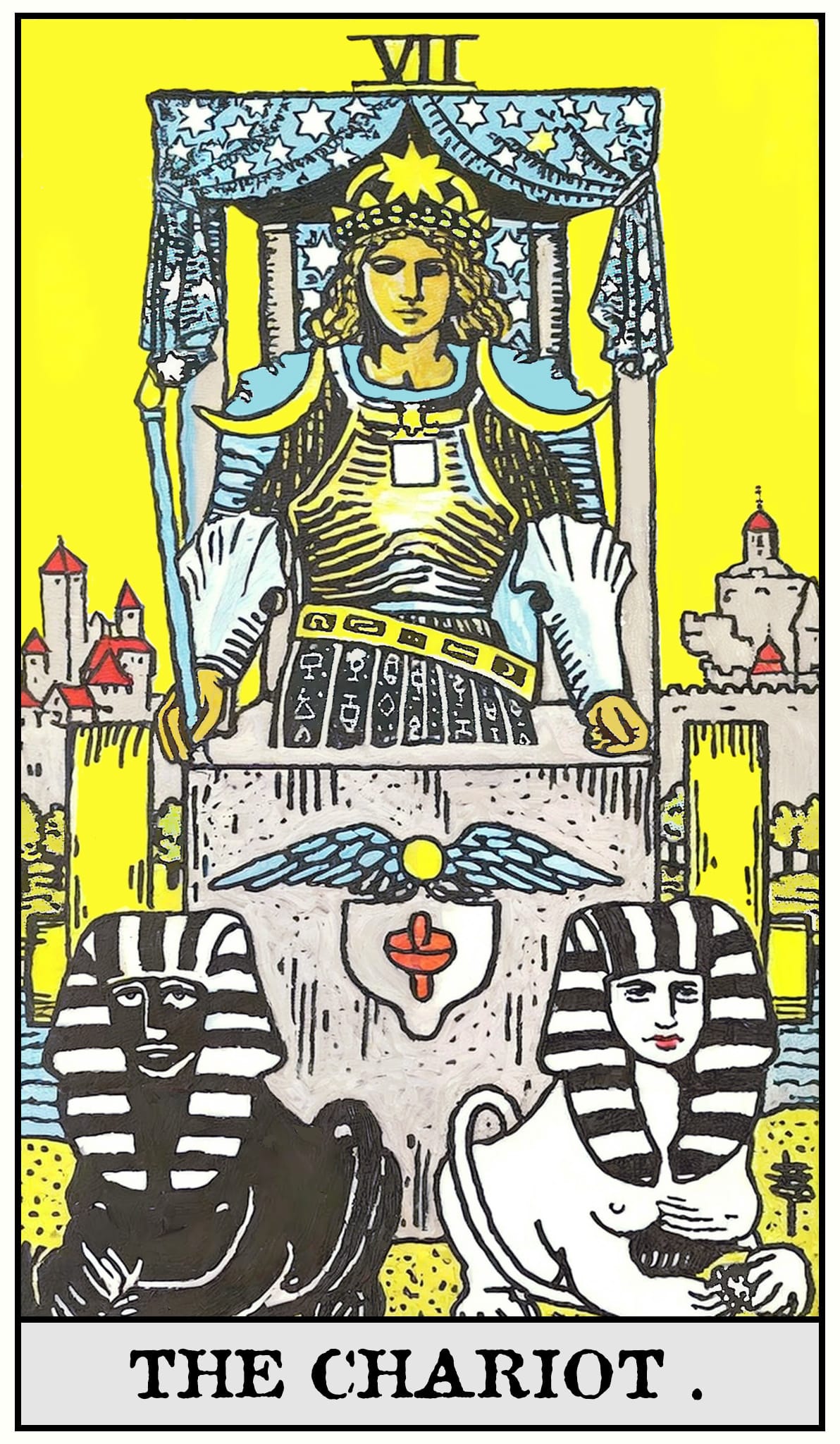
The sphinx is the boundary figure: human intelligence in an animal body. In the Chariot, two sphinxes — one black, one white — are harnessed to the vehicle but not yoked together. Pollack notes they face in different directions. The charioteer holds no reins; he wills them forward through concentrated intention. The sphinx on the Wheel sits at the top, having solved the riddle of the cycle. These are two very different relationships to the same figure: one controlled, one transcended.

In Shadow

The sphinx as shadow trap is the riddle maintained as a source of power — the mystery never quite answered, the inner nature kept in sphinx form. The person who uses incomprehensibility as a defense against assessment.

Integrated

The sphinx integrated is the riddle accepted and lived with rather than solved. The Sphinx's question — what walks on four legs, then two, then three — is a question about the arc of the full human life. Integration includes the decline, not only the ascent.