Section II

The Celestial

Sun · Moon · Stars · Sky · Lightning

The Sun

Celestial Symbol
Appears In

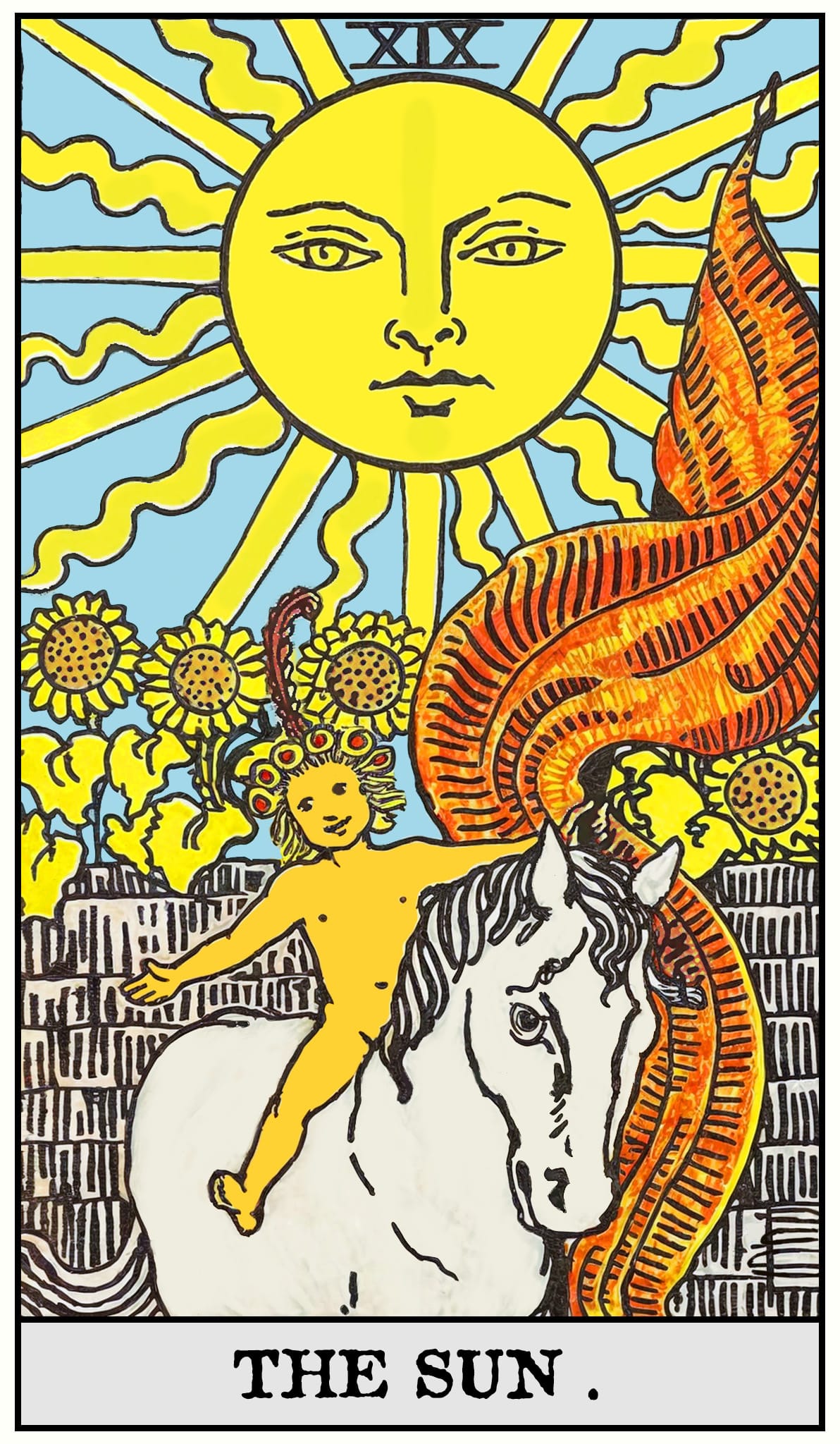
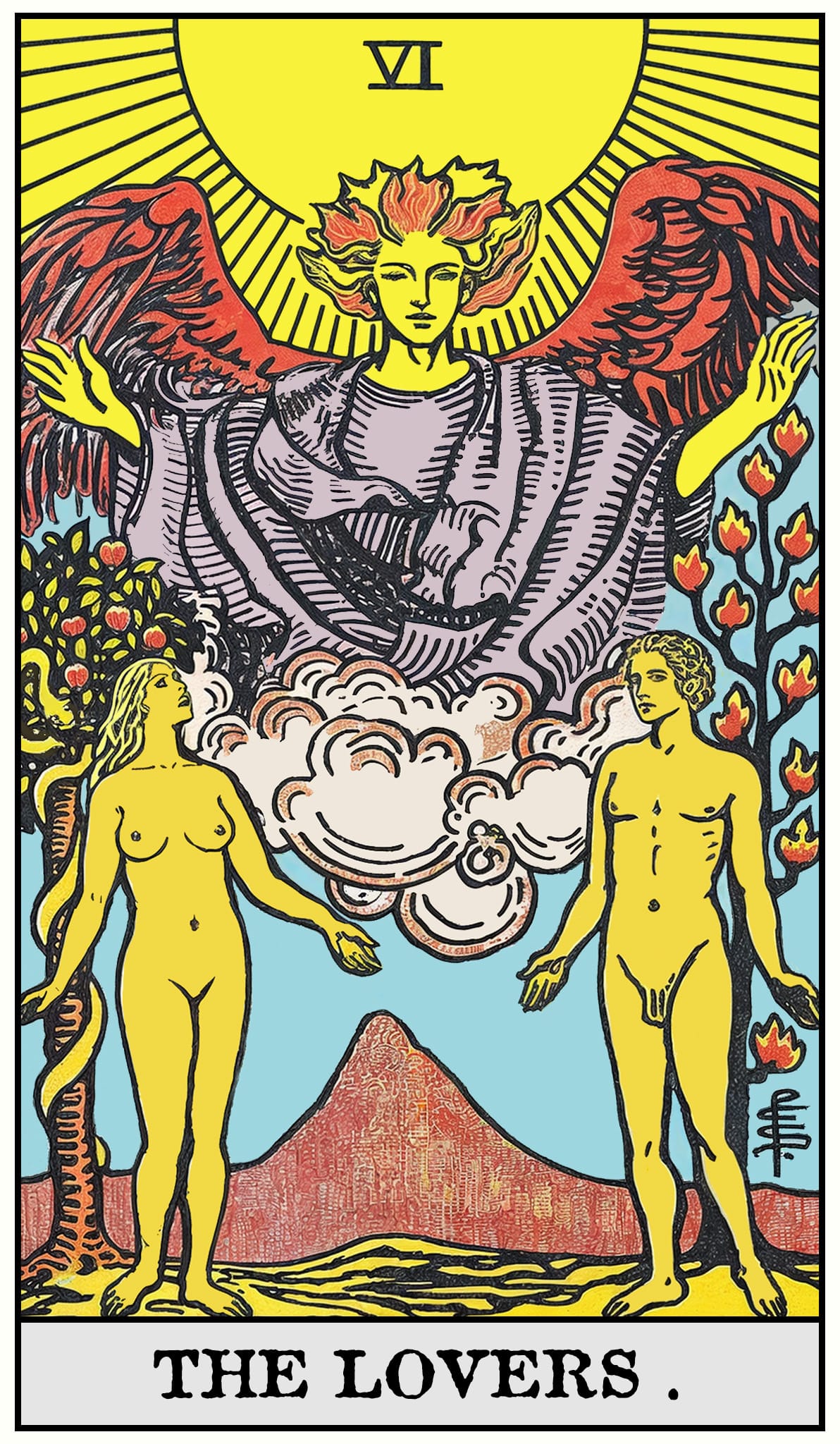
The Sun in the Major Arcana is consciousness at its most direct: warmth, clarity, the light that shows what is actually there. The Sun card shows a child before a sunflower wall, riding a white horse — innocence under full light, before complexity has introduced shadow. The light does not judge; it makes visible. In the Lovers, it shines equally on the man and the woman and the angel above them. In the Moon, it is absent — replaced by reflected light. Pollack reads the Sun as the card of the conscious mind in its most straightforward form: not the deep or the mysterious, but the simply and powerfully present.

In Shadow

The Sun as shadow trap is the demand for perpetual brightness — forced positivity, the denial of shadow in the light. The person who insists that everything is fine, who can operate only in the noon of emotional life, denies what the Moon will later require: navigation without full clarity. The Sun shines equally on growth and rot. The shadow Sun chooses not to see the rot.

Integrated

Integrated solar energy is genuine vitality — the warm animal pleasure in being alive that is not performed for an audience. The Sun card's child rides forward without armouring. To inhabit the Sun without denying the Moon is to feel alive without requiring it to always be noon.
The Moon

Celestial Symbol
Appears In

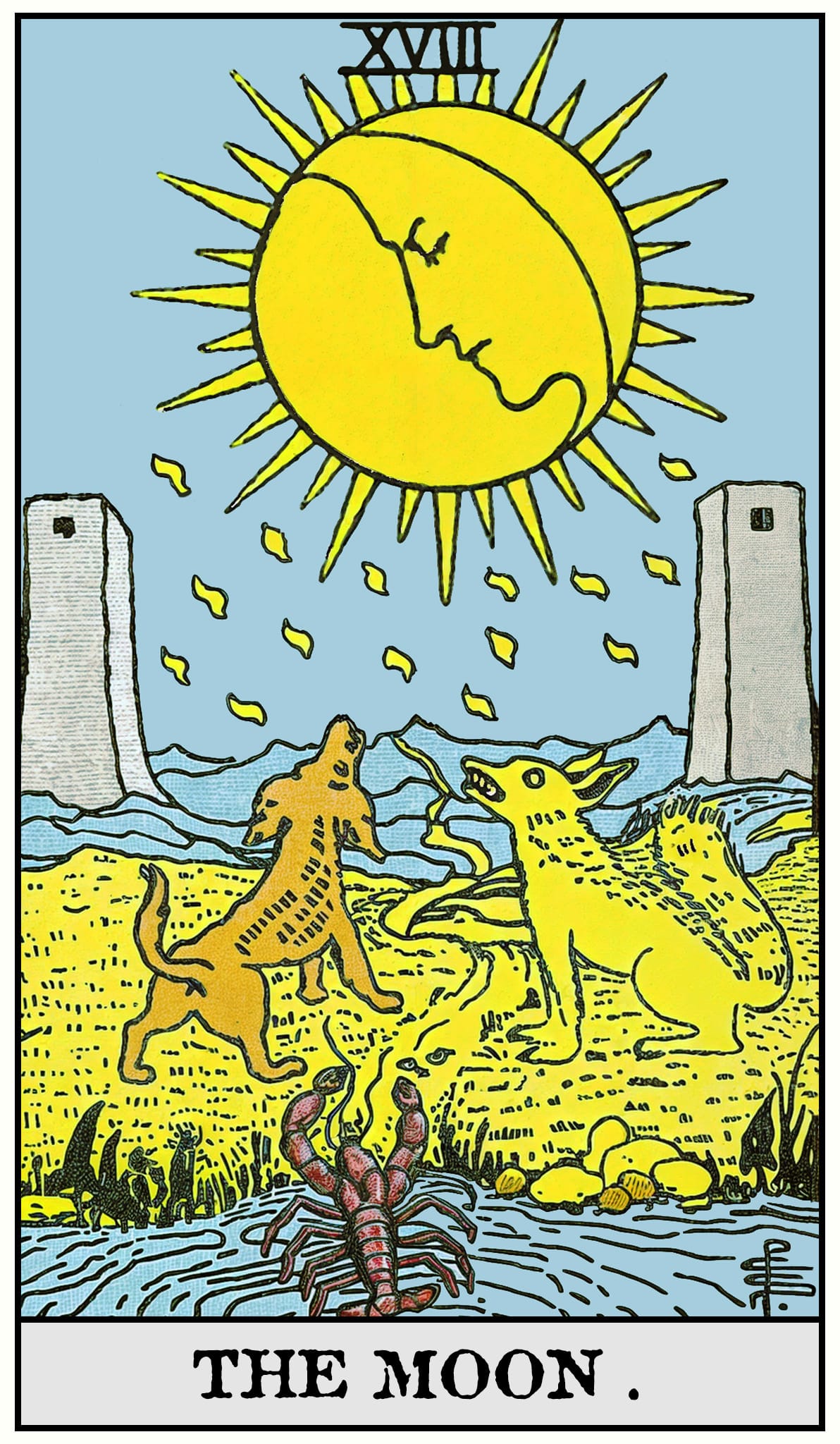
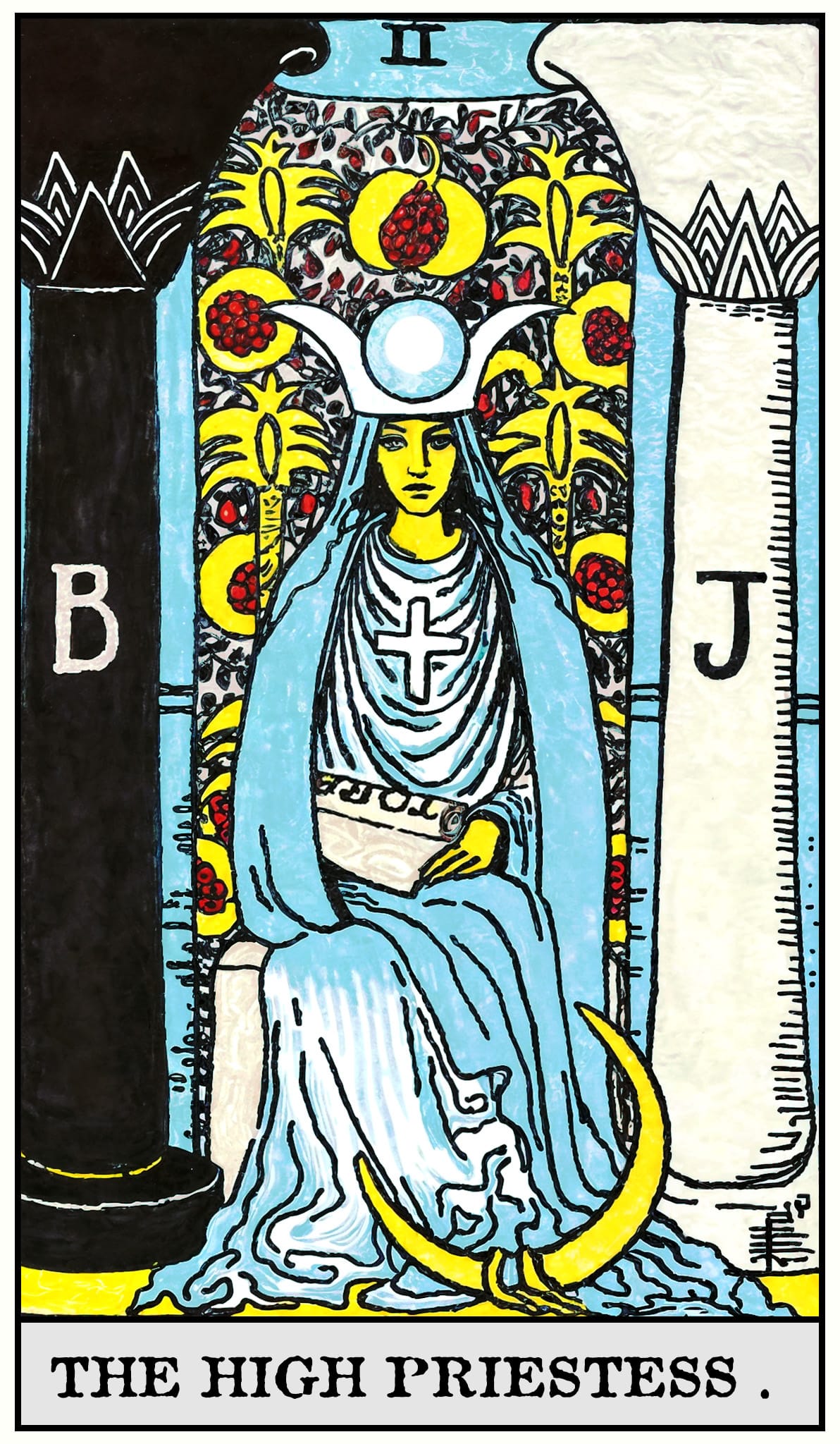
The moon is reflected light: consciousness at one remove from its source, illuminating by indirection, showing everything with uneven emphasis. The High Priestess's crescent at her feet marks her as a moon figure — the guardian of the threshold between conscious and unconscious. The Moon card makes explicit what the High Priestess only implied: the crayfish rising, the path between two towers, the dogs howling at something humans cannot hear. Pollack notes that the Moon demands we travel without full clarity. The path is lit, but not illuminated. This is not a deficiency — it is the condition of any journey that goes into the genuinely unknown.

In Shadow

The Moon as shadow trap is the seduction of familiar confusion. We know the path through anxiety so well by now that we would rather walk it in the dark than wait for the light that might show us something we have not prepared ourselves to see. The shadow Moon mistakes the enforced incompleteness for wisdom and makes a home in the half-light rather than continuing toward the Sun.

Integrated

Integrated lunar consciousness is the ability to navigate the interior by feel — to read dreams, to trust the body's knowledge, to move through complexity without demanding that it resolve before you can continue. The Moon does not ask for understanding. It asks for trust in the process.

The Stars

Celestial Symbol
Appears In

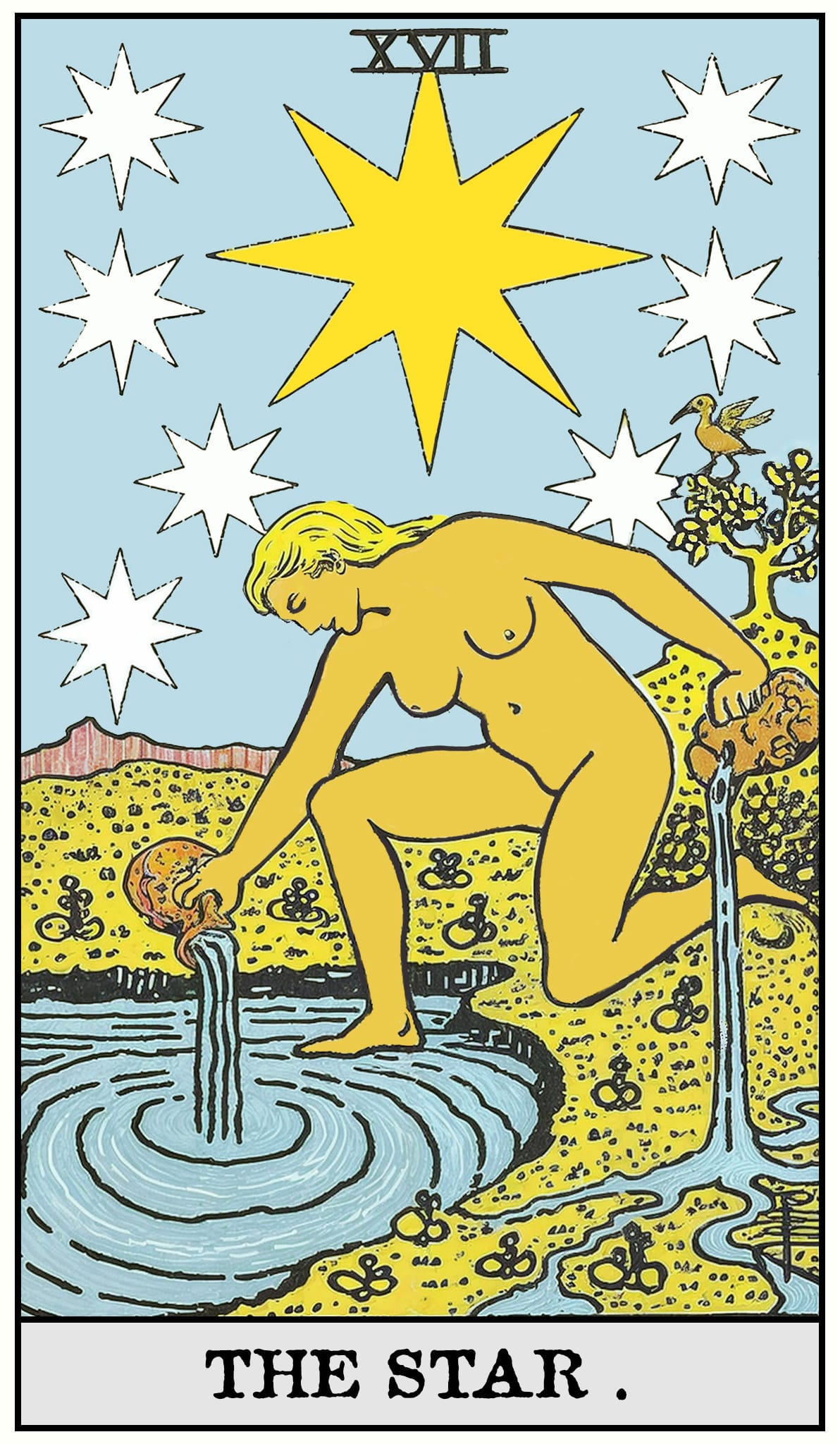
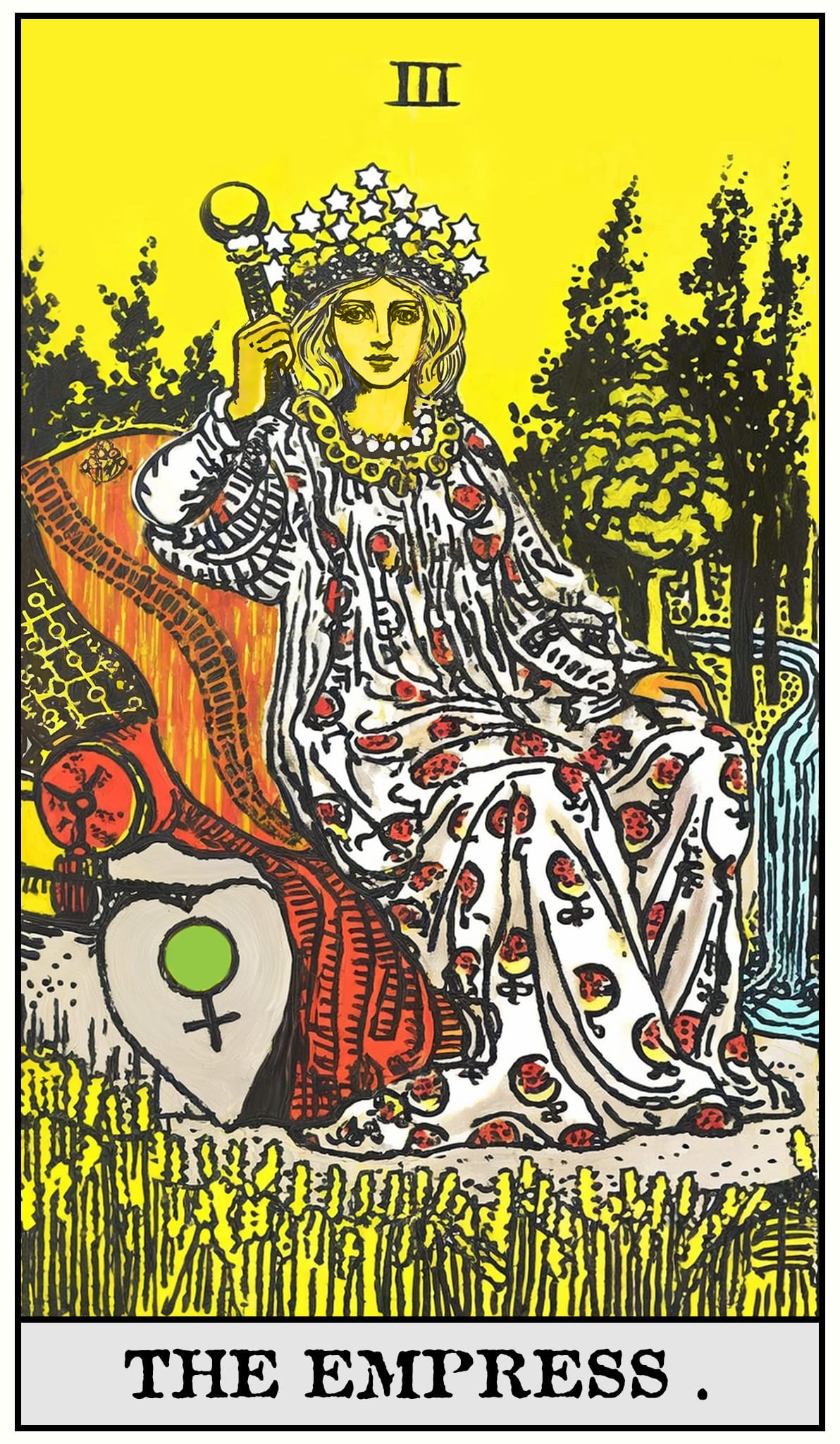
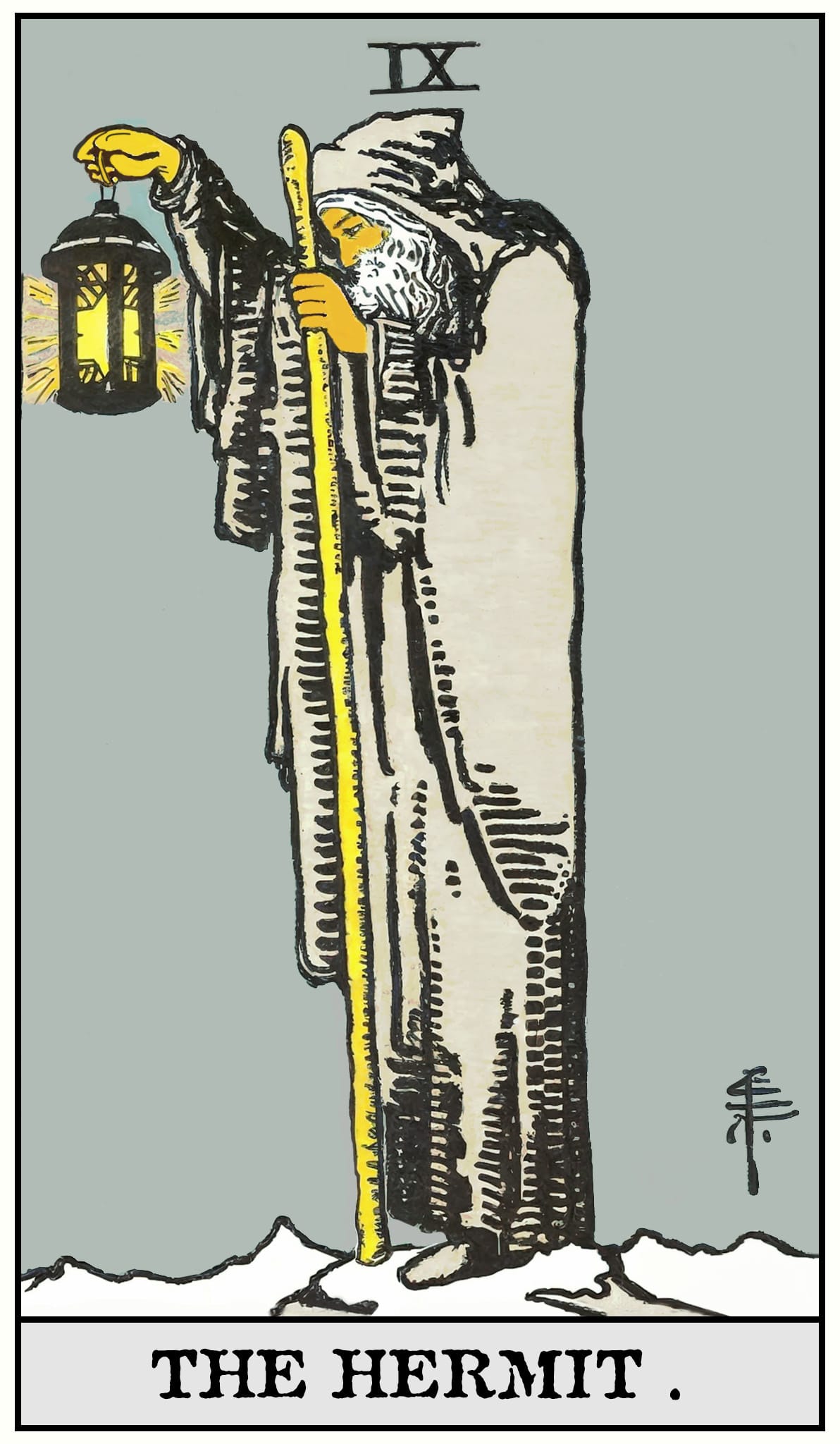
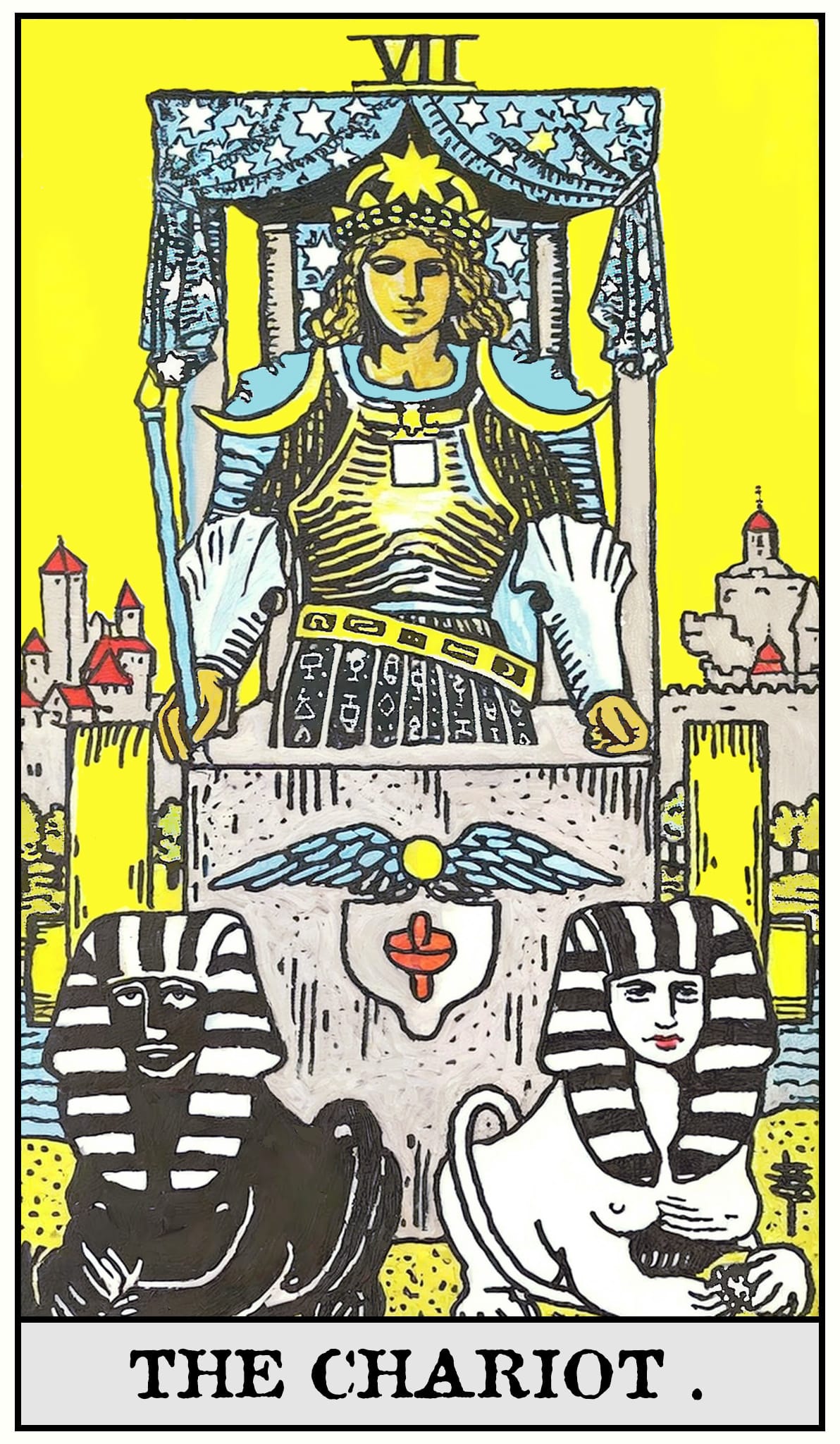
The Star's eight-pointed figure pours two streams simultaneously: one into the pool of the unconscious, one onto the earth. This is not naive hope — the Star follows the Tower in Pollack's sequence. After the structure collapses, after the lightning has struck, the pouring continues. Stars are light from objects that may no longer exist in their original form. Elsewhere in the deck the star is worn rather than inhabited: the Chariot's canopy and crown of stars, the Empress's crown of twelve, the six-pointed star sealed inside the Hermit's lantern. What the Star offers is not restored equilibrium but continuation despite the loss of it. Pollack reads this as the ground-level grace that exists once the Tower's illusions have been cleared away — the natural state that precedes the Moon's complexity.

In Shadow

Stars as shadow trap is hope disconnected from the work the hope requires. After the Tower moment, the Star offers comfort, but the shadow version rushes from Tower directly to Star, bypassing the Moon's demand that the depths be navigated. Premature return to hope is the Star's shadow: the beautiful light used to avoid looking at what still needs to be processed.

Integrated

The integrated Star quality is precisely what Pollack identifies: the capacity to continue pouring regardless. Not in denial of the damage, not in defiance of what happened — but because this is what this figure does. Renewal is not the restoration of what was destroyed. It is the discovery of what continues.

Clouds & the Divine Above

Celestial Symbol · The Threshold Layer
Appears In

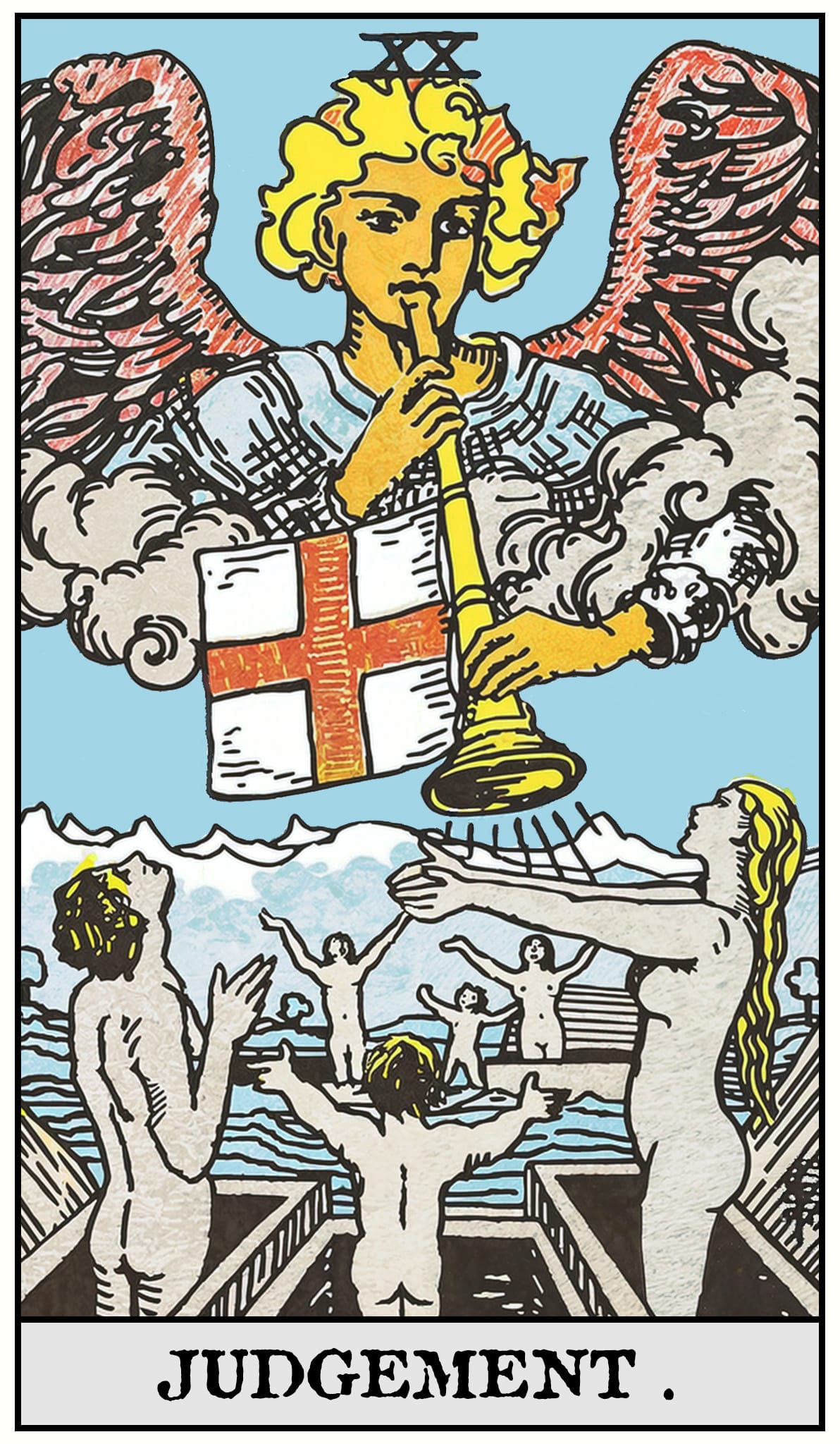
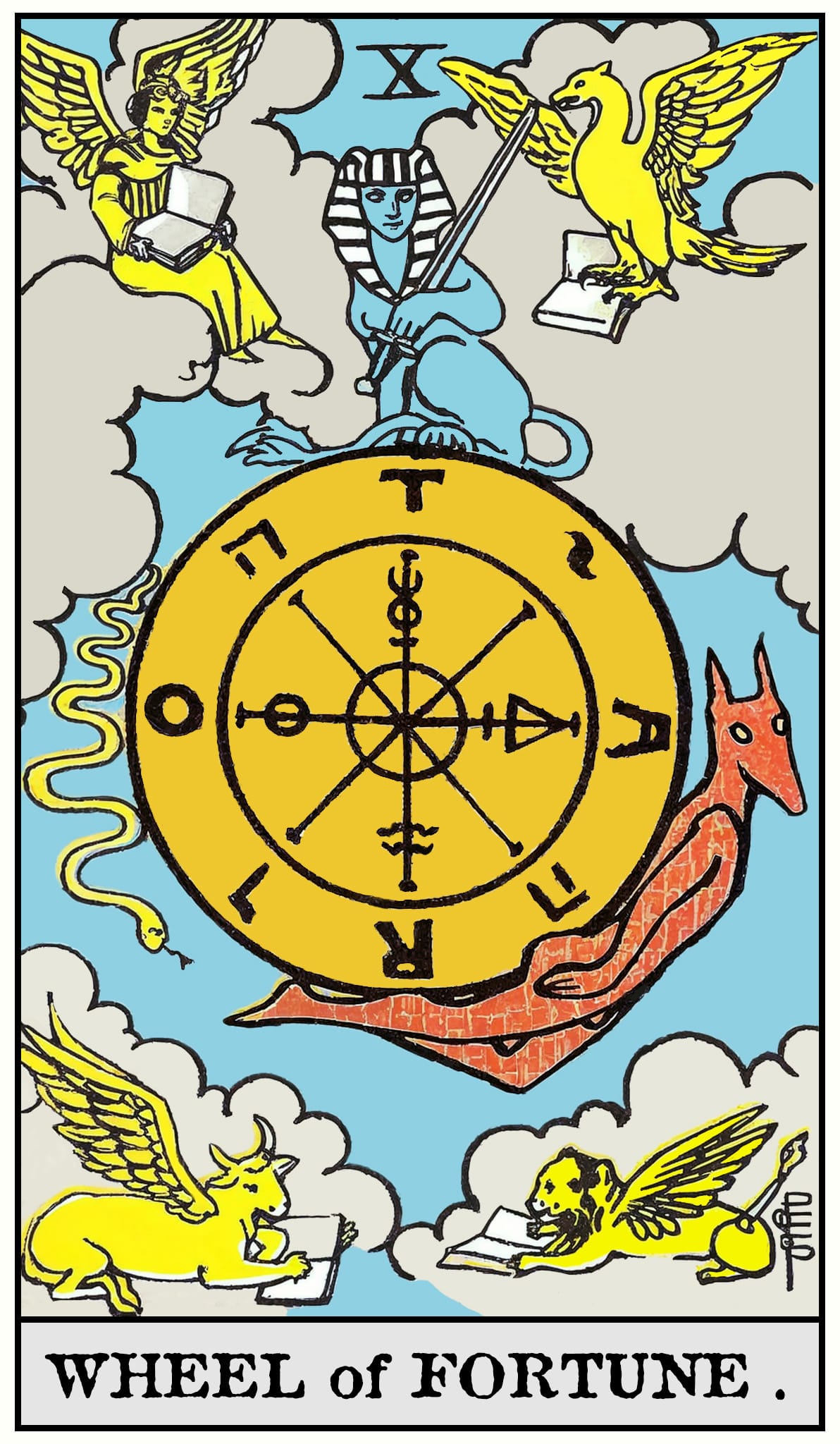
Clouds in the Rider-Waite-Smith mark the boundary between the human and the divine — the threshold at which ordinary consciousness meets something that exceeds it. An angel descends from cloud in Judgement and the Lovers. A hand reaches from cloud in the four Aces. The Wheel turns through cloud. Clouds in this tradition are not weather events but theological statements: what follows or precedes the visible. They mark the layer through which the higher energy moves downward and through which the human figure is addressed from above.

In Shadow

The cloud as shadow trap is the expectation of intervention from above — the waiting posture, looking up for instruction, validation, or rescue rather than attending to what is already present at ground level. When the divine is consistently located above and outside the human figure, the natural shadow is the person who has learned to wait rather than act on what they already know.

Integrated

Integrated cloud consciousness is the recognition that the divine is not withheld behind a barrier but present in the offer already made. The hand reaching from cloud does not deliver from above into a passive receiver. It offers what was always available to anyone willing to reach back.

Lightning

Celestial Event · The Revelation Strike
Appears In

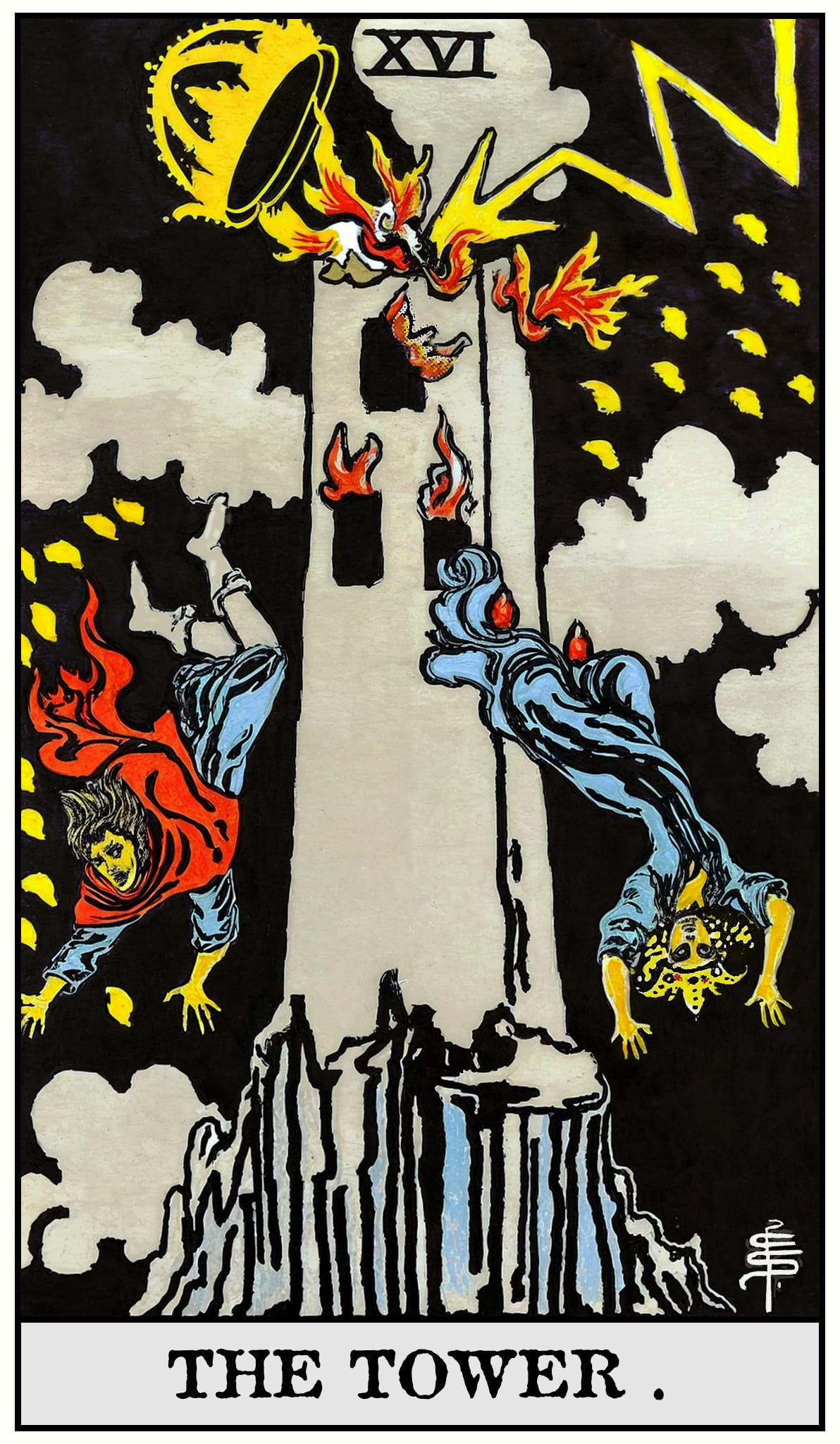
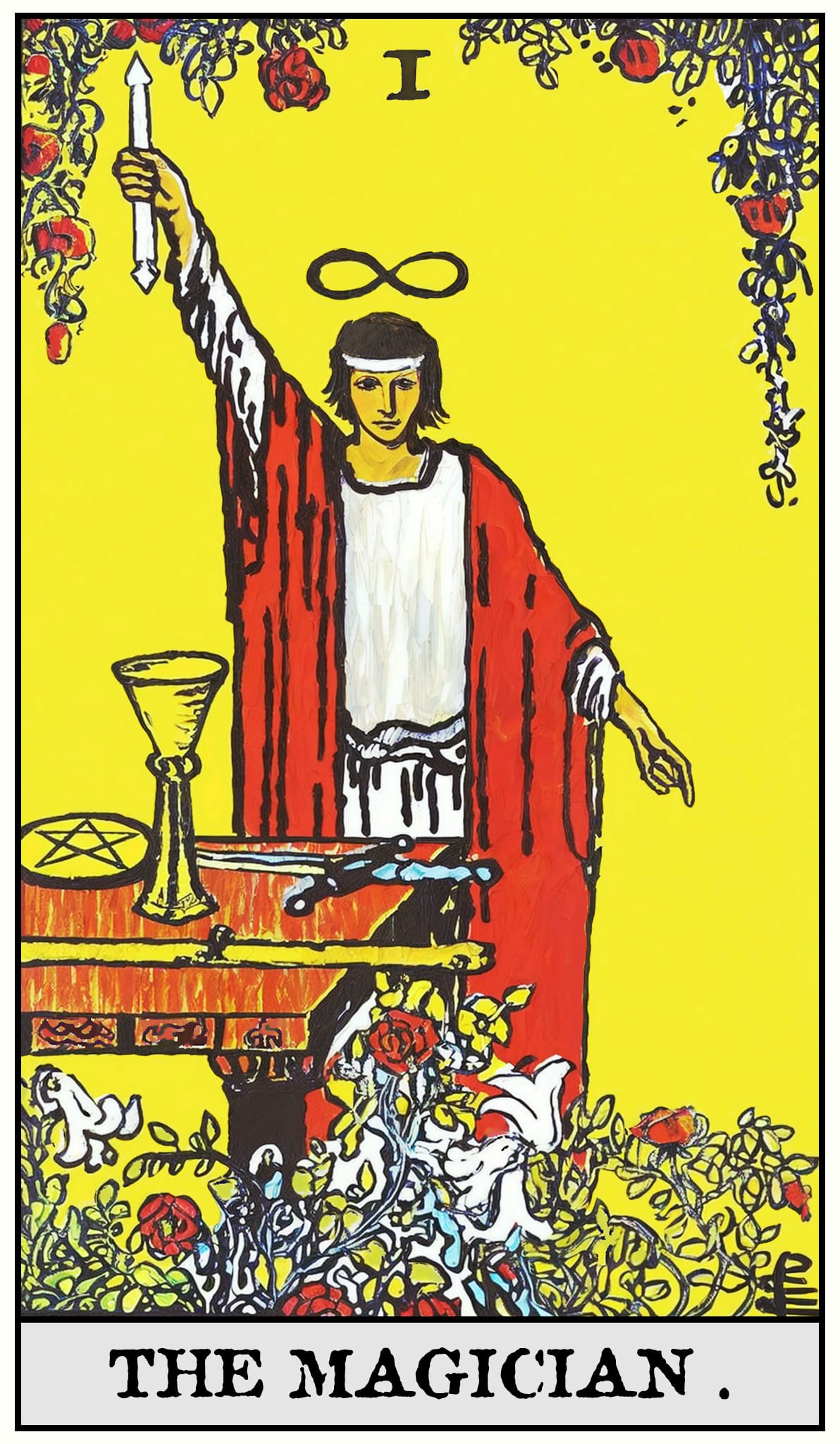
Lightning in the Major Arcana is revelation at a force consciousness cannot moderate. In the Tower it strikes the crown — the false certainty at the top of the self- constructed belief system. Pollack observes that the falling drops of fire take the form of the Hebrew yod, the letter that opens the divine name, and reads them as grace rather than anger. The lightning is not punishment. It is the universe refusing to allow permanent imprisonment in illusion. The Tower's violence derives from psychological principles, not external force: the structure was raised against everything it could not admit, and the pressure that finally breaks it has been gathering on the inside. The Magician shows the same current in its channelled form — drawn down deliberately, through a body prepared to receive it.

In Shadow

Lightning as shadow trap is the revelation postponed until it must arrive as catastrophe. The person who will not examine the structure voluntarily guarantees that it will be examined involuntarily. The shadow is not the strike itself — it is the years of reinforcement that made the strike the only remaining way through.

Integrated

Integrated lightning is the willingness to be corrected before the correction becomes destruction — to let a cherished certainty take the strike while it is still small. The Magician's posture is this integration: the same voltage that demolishes the Tower, received on purpose and grounded into work.