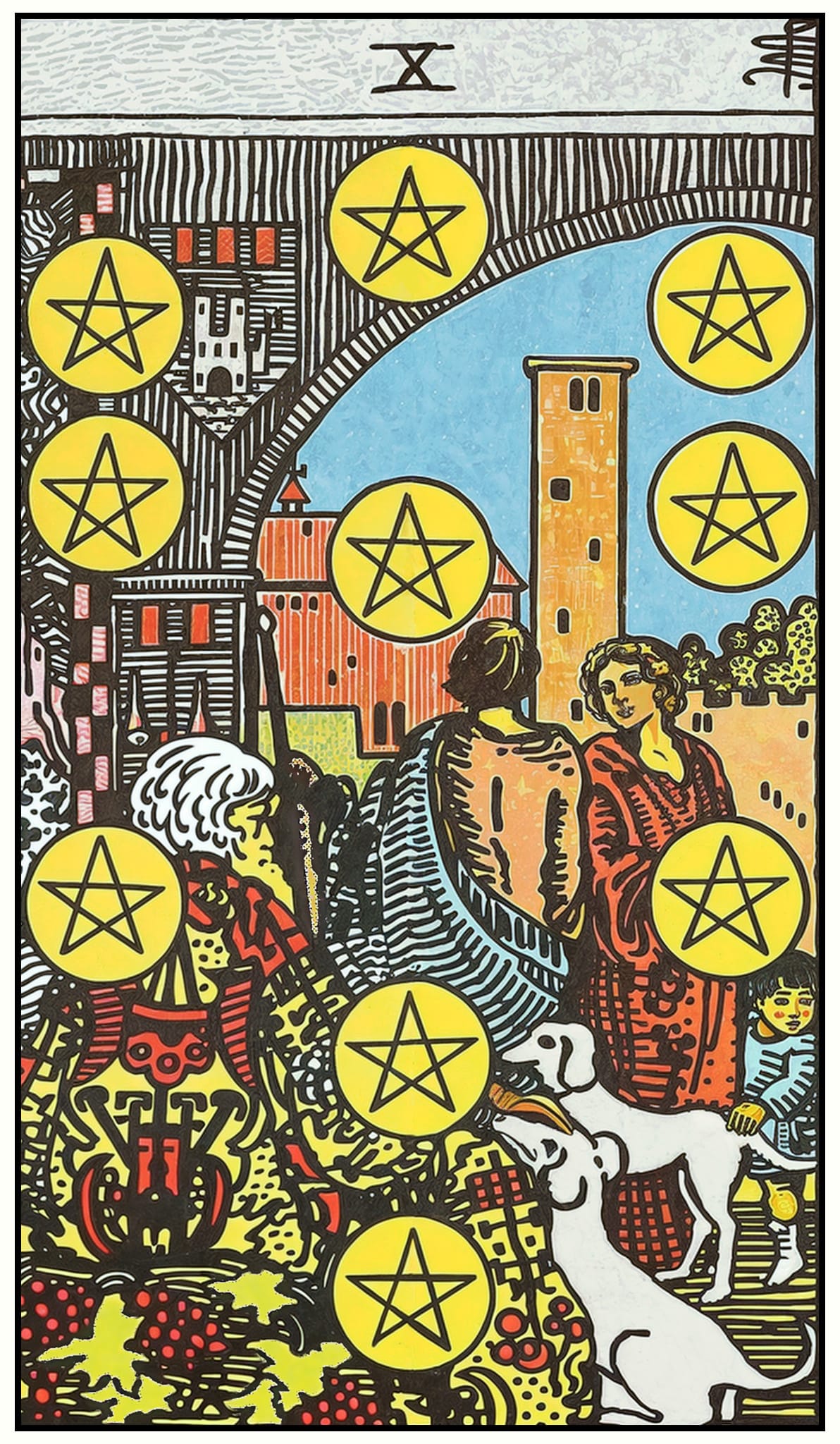
Ten of Pentacles
An old man sits in an archway at the scene's edge, two white dogs resting under his hands — a young couple absorbed in each other, a child reaching toward the dogs, ten pentacles in the Tree of Life pattern above. The old man watches what he built, from outside it.
The Ten of Pentacles names the completed structure passed forward — and the particular position the passing-forward assigns to the builder. Everything is here. Everyone is here. The old man who built it or inherited it and passed it forward sits just outside the action, attended to by dogs rather than people, watching rather than participating. This is the card sentimental tarot calls the happy family. It is also the card of the builder who has been superseded by what they built.
The inheritance is real. The arc from builder to witness is also real. The dogs know.
The Ten of Pentacles is the house, the family, the estate, the institution — completed, functioning, passed forward to those who will now live inside what was built before they arrived. The ten pentacles hang in the Kabbalistic Tree of Life pattern: ordered completion, the full map of material existence. Everything and everyone is present. The old man at the archway, who made this possible, sits just outside the scene — present but peripheral, the dogs the only figures who attend to him directly. The couple does not yet know what the builder knows. The child will find out.
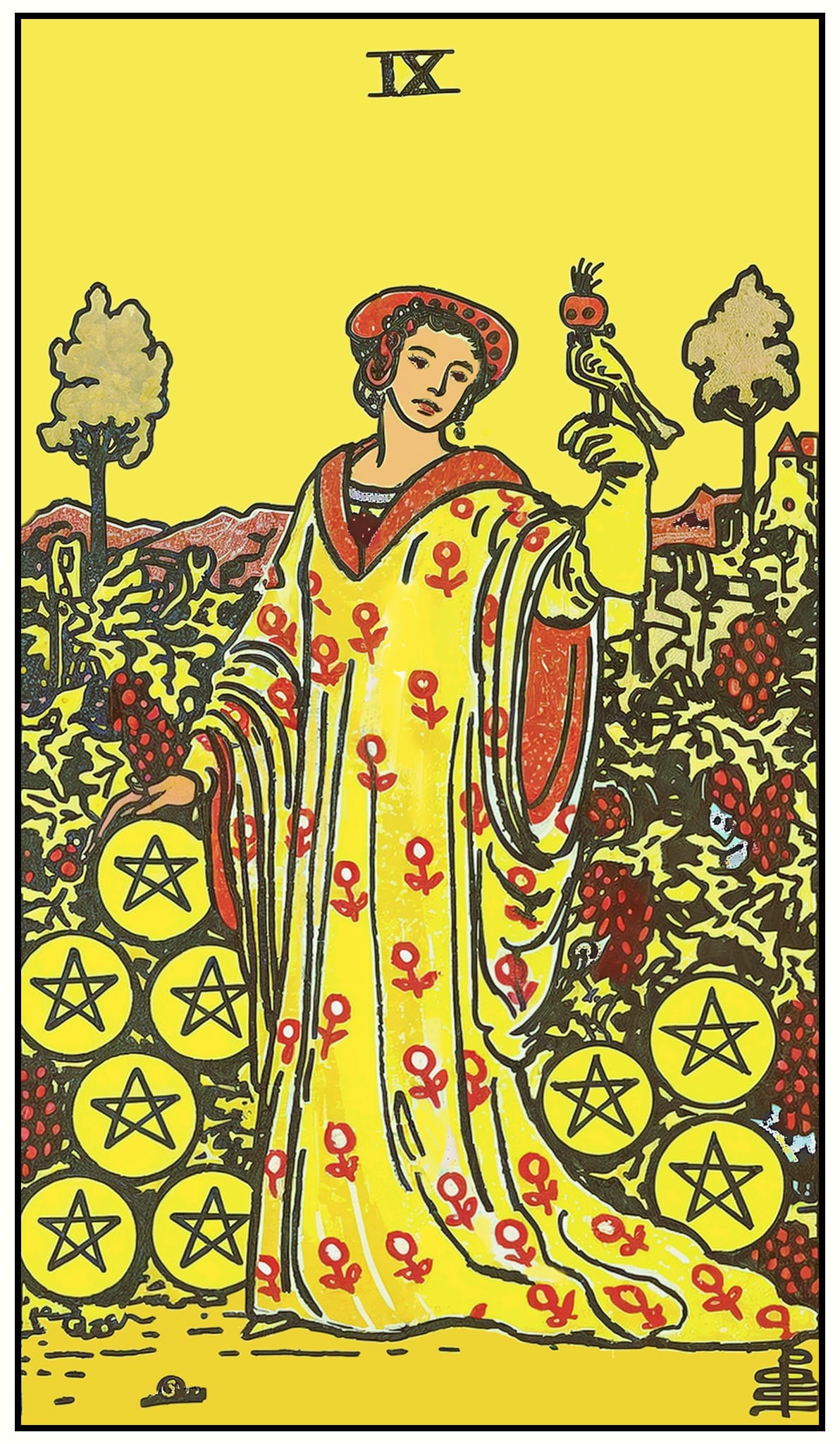
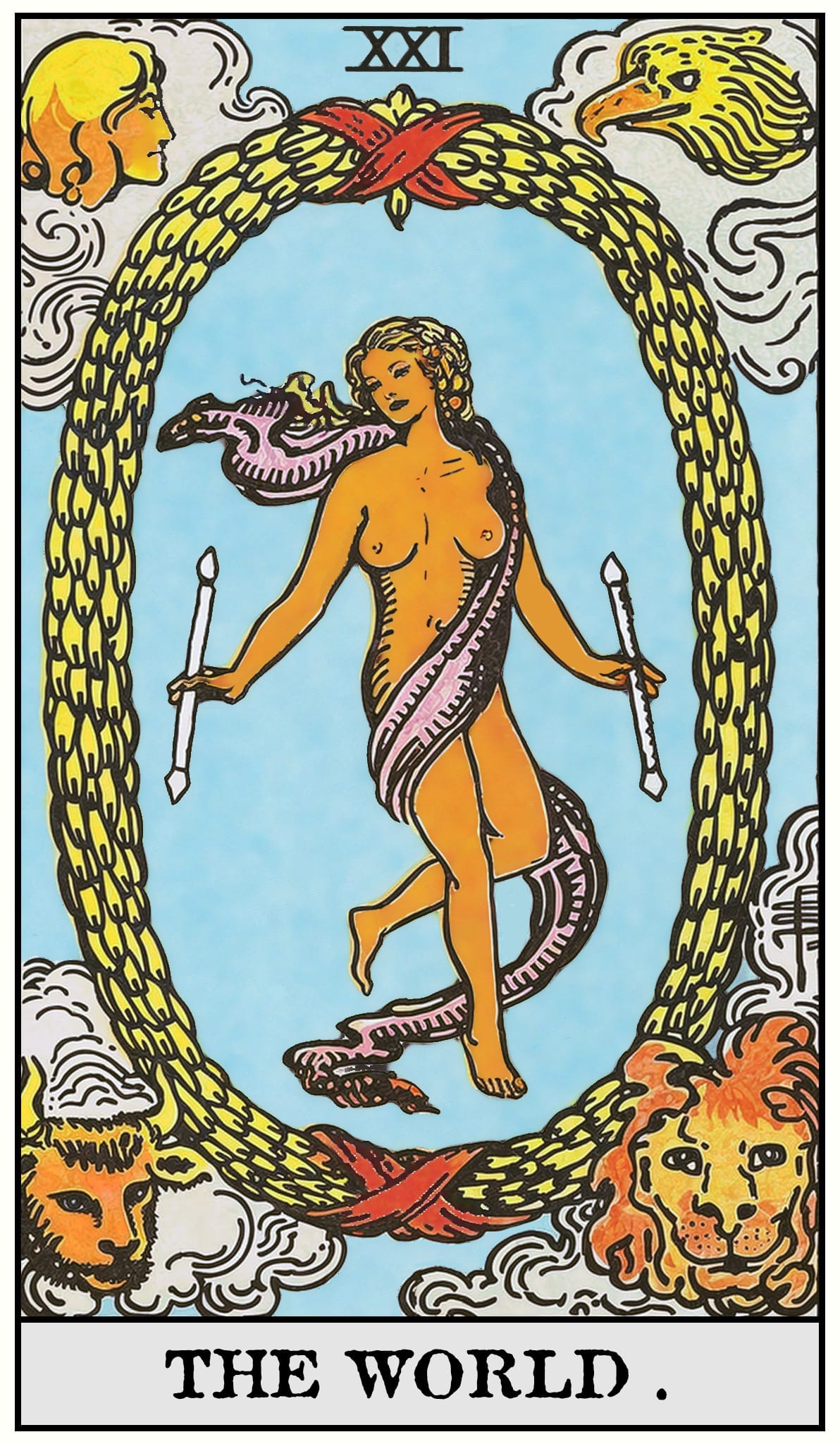
Pentacles ends in transmission — the suit that began with a gift received closes with a gift given forward, at the cost of moving from centre to margin
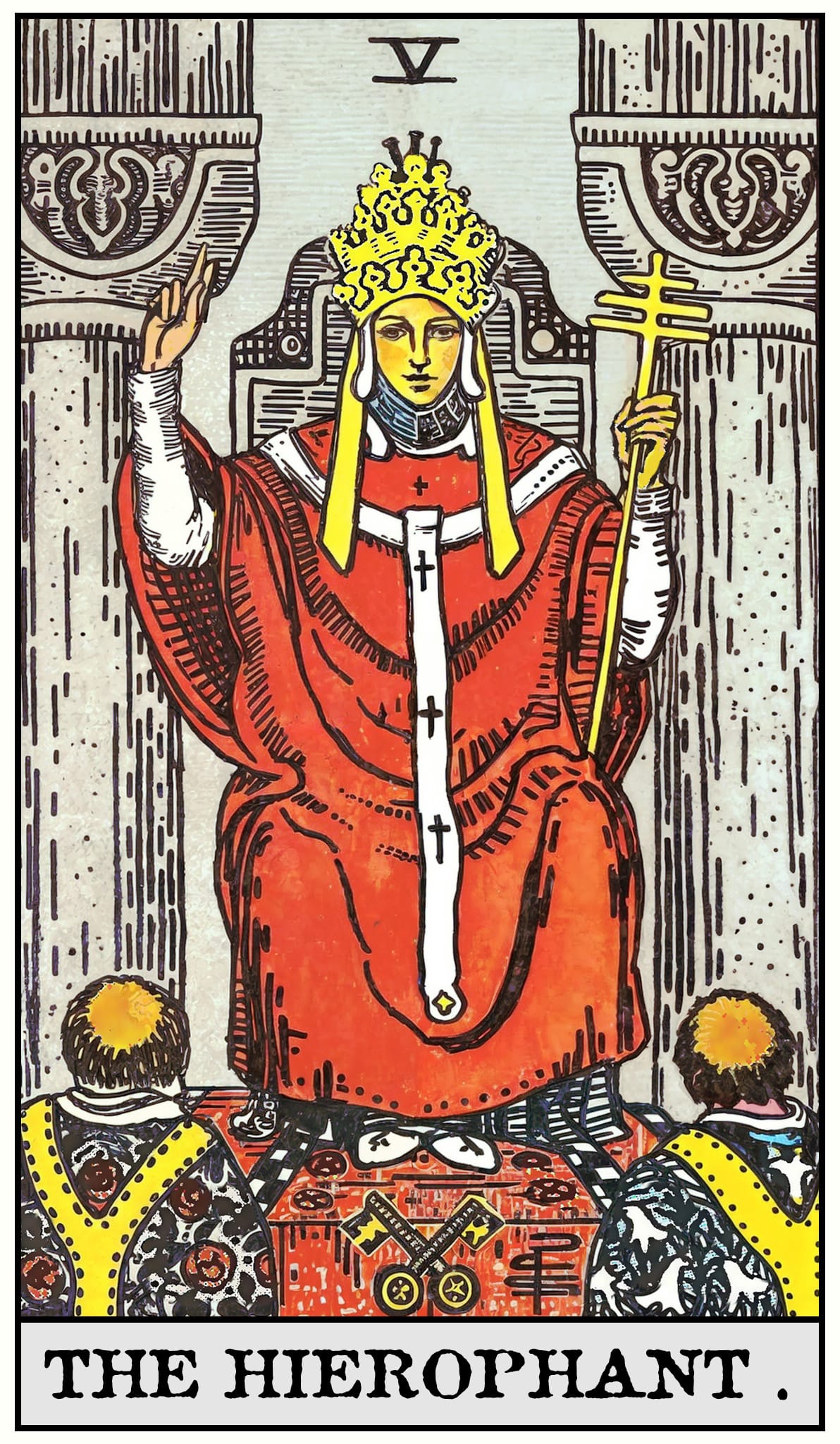
Where Wands ended in fire too long carried, Cups in the held fullness of emotional life, and Swords in earned discernment, Pentacles ends in the act of passing on. The Hierophant's echo is here — not the institution but the living act of transferring what was learned across generations. What the Ten transmits is not only money or property. It is a way of inhabiting the material world: the habits, the capacities, the particular relationship to earth that one generation learned and now deposits in the next. The old man's robe carries all of this in its pattern. Whether the couple will read the pattern is not the Ten's responsibility. The Ten's responsibility was the passing.
The complete three-layer reading for all 78 cards — including the full psychological and archetypal layers — is in The Pocket Guide →
The builder who watches what they built from outside it has not failed. They have completed.
Shadow TrapThe inability to move to the archway — the builder who cannot relinquish the centre of the structure they made, who remains in the foreground past the point where the structure needs them there, and whose continued centrality begins to prevent the structure from becoming fully the next generation's.
Shadow GiftThe capacity to inhabit the archway with the elder's form of attention — watching what was built with the specific satisfaction of the person who knows what the building cost, and who has made peace with the fact that the dogs know and the couple does not yet, and that this is how it is supposed to be.
Shadow readings for each card, by suit, are gathered in The Pocket Guide →
We do not read a reversal as an opposite; following Pollack, a turned card is the same energy blocked, withheld, or redirected — not inverted into its negation. A reversed Ten of Pentacles often marks the inheritance broken — the structure that did not survive the transmission, either because it was built on premises that did not transfer, or because the generation receiving it was not prepared to receive it, or because the passing was not completed before it was necessary.
Why Apocrypha Does Not Read Reversals as Opposites →Sixty-three symbols across the full deck — cross-referenced by card and meaning — are mapped in The Symbol Dictionary →
What have you built that no longer needs you — and can you bear to watch it continue without you at its centre? And what would it mean to take the archway's position: present, peripheral, attending to the whole?
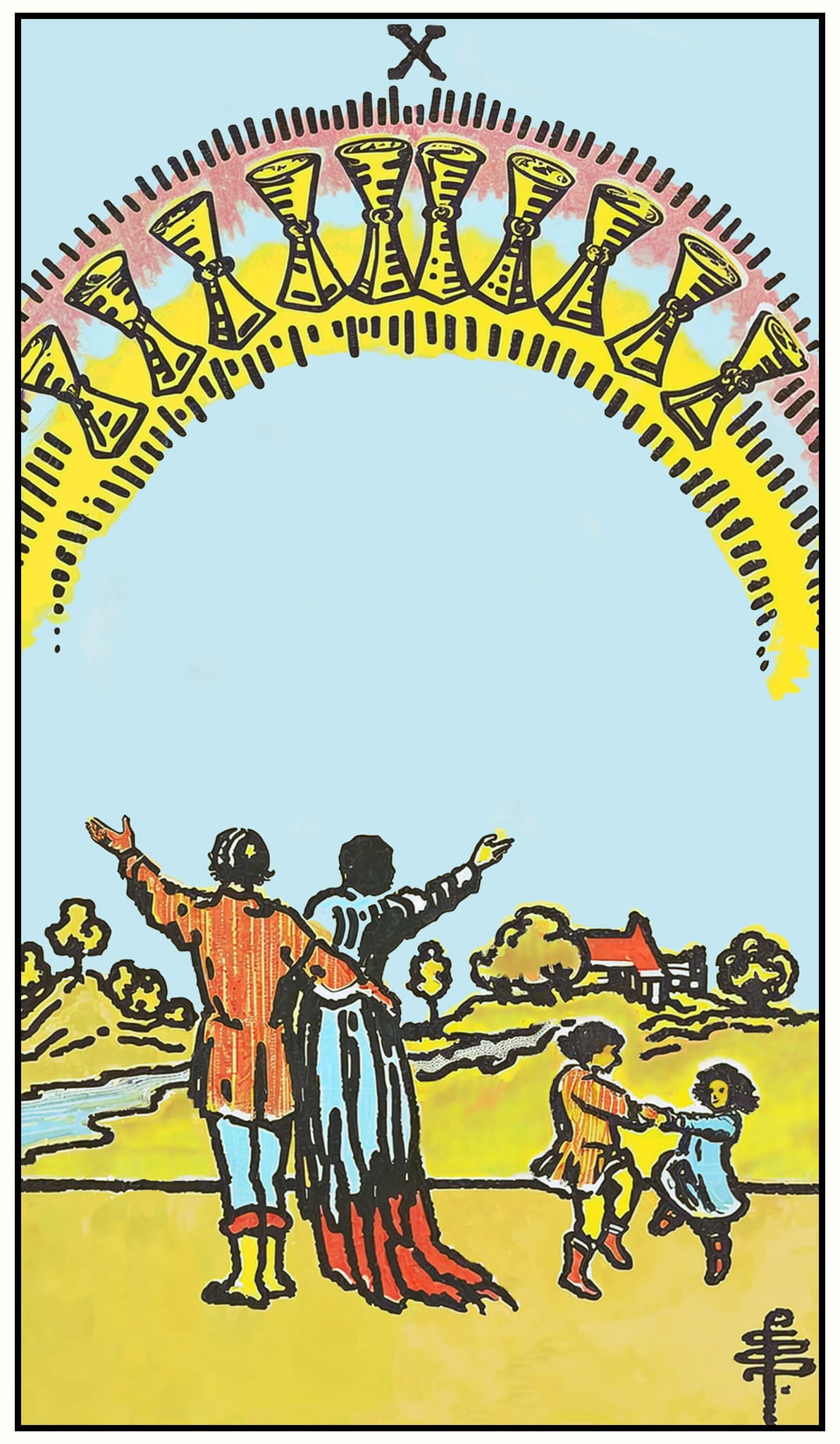
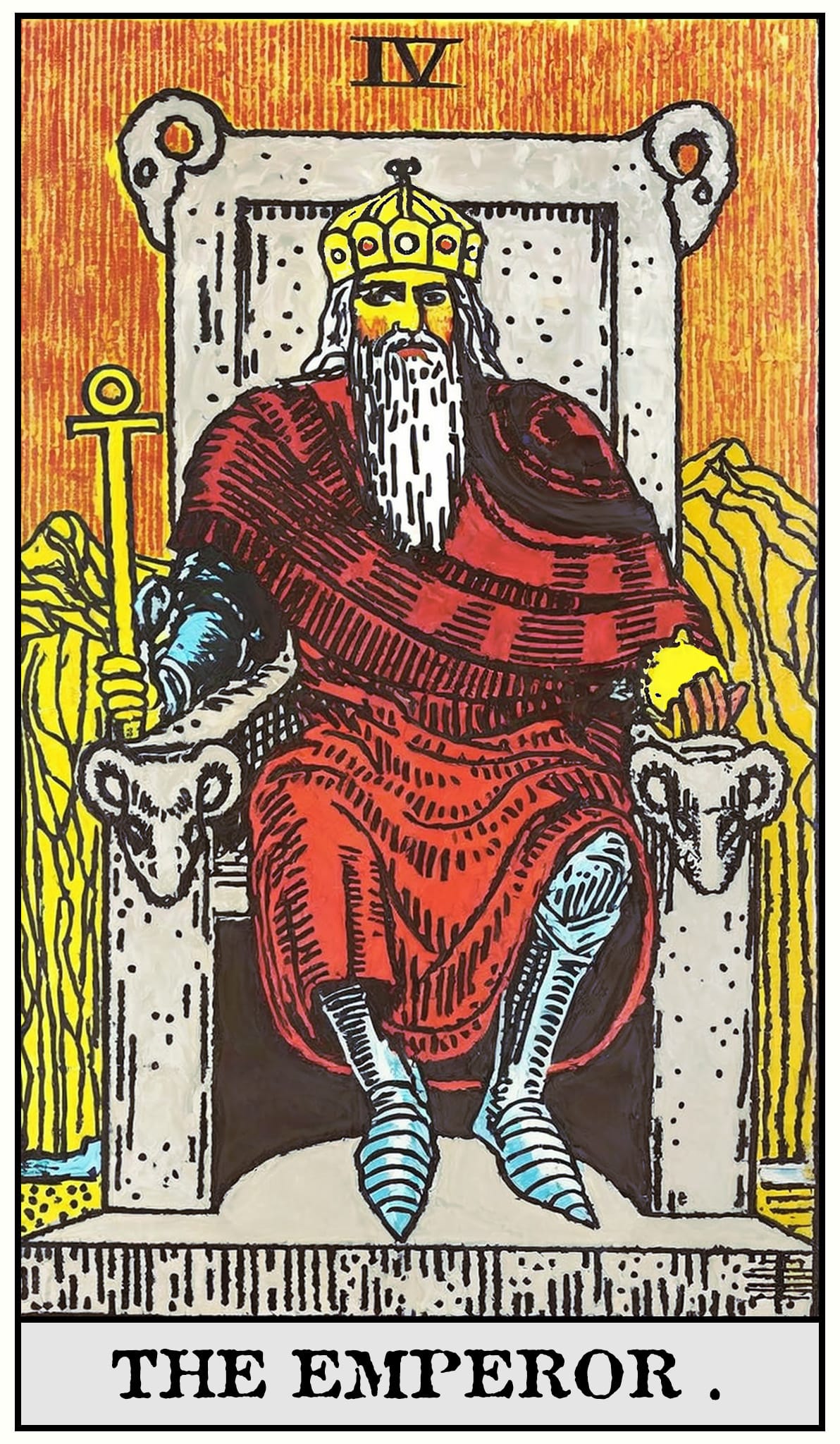
The Ten of Pentacles is most often received as the best possible outcome — wealth, family, legacy confirmed. The more precise reading holds the old man's position at the archway alongside the abundance, because the archway is not a consolation prize. It is the specific cost of having built something that works. The card asks the person receiving it to hold both simultaneously: the completed structure and the position the builder inhabits once the structure is complete, which is not the centre and is also not absence. The dogs know what this is. The question is whether the person reading the card can recognize it as success rather than as loss.