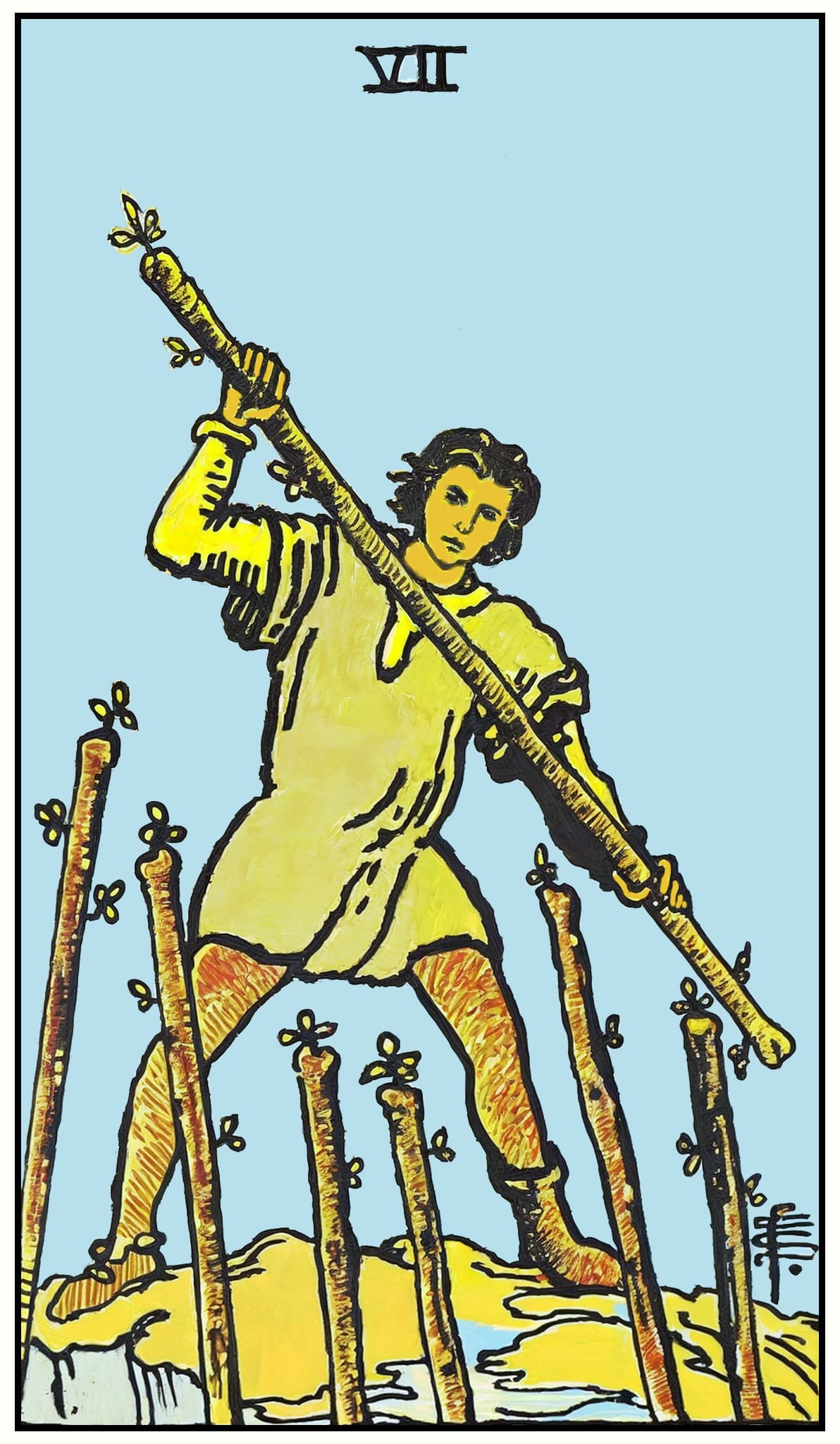
Seven of Wands
A figure holds his ground on a higher slope, one wand raised, six pressing upward from below — the footing uneven, the odds visible, the position held anyway.
The Seven of Wands names the trial that comes with visibility: the position that must now be defended, the distinctive voice that has drawn challengers, the person who said something true and is now being required to stand behind it. The card does not romanticize the defence. The footing is uneven. The figure is outnumbered. He is holding, and the cost shows.
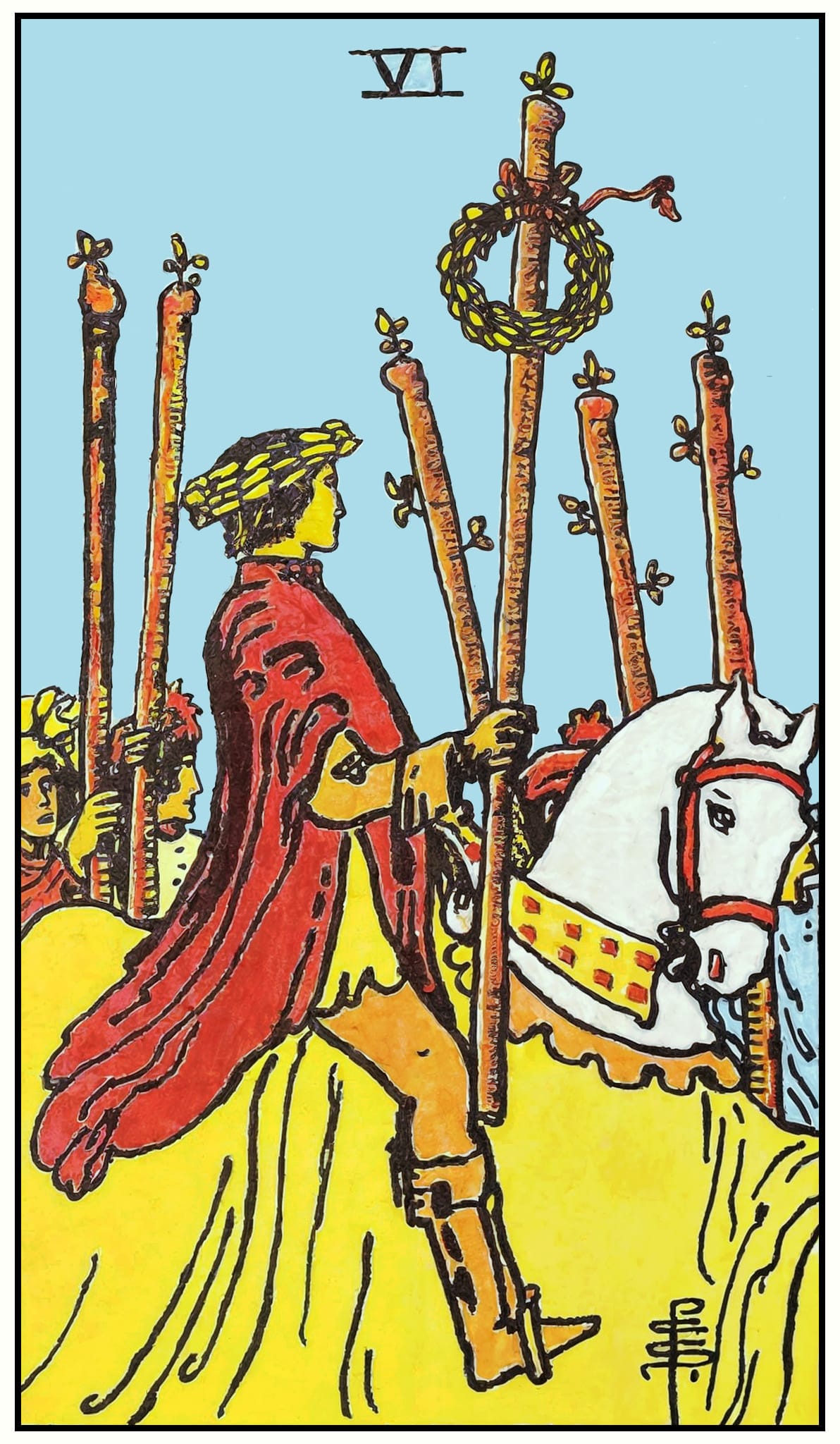
The predictable consequence of the Six — the world that was watching now pushes back
The Seven follows the Six with exact logic: recognition generates contest. The figure who was celebrated in the procession is now on a hill, outnumbered, defending the work or the position or the voice that earned the recognition. The card does not ask whether the defence is justified. It asks whether the person can hold without becoming the holding. In shadow, the Seven produces the chronic combatant — the person who, having once won this fight, never comes down from the hill, for whom every exchange becomes a confrontation and every room contains challengers.
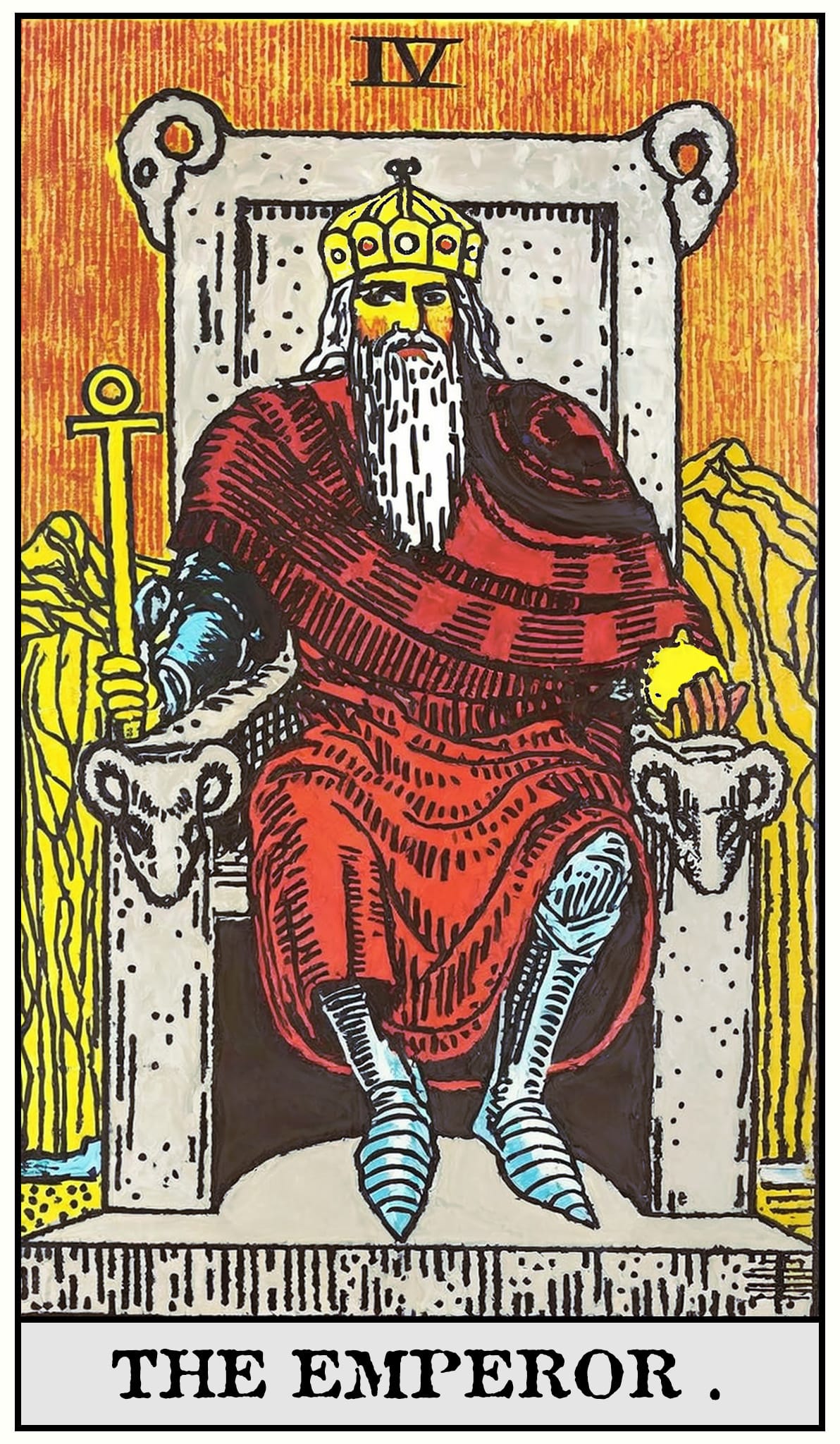
The suit's first encounter with isolated resistance — and with the Emperor's shadow in Wands' clothing
The Seven is Wands' first fully solitary trial. The Five was also conflict, but it was crowd-conflict, diffuse, even playful in register. The Seven is singular: one position, many opponents, the outcome genuinely uncertain. Pollack notes the asymmetry in the footing — one foot higher, one lower — as the card's structural precision. The principled stand is never on stable ground. The card also carries the Emperor's shadow: the wand raised in defence and the wand raised in stubbornness look identical from outside.
The complete three-layer reading for all 78 cards — including the full psychological and archetypal layers — is in The Pocket Guide →
The position worth defending and the position defended past that point look the same from the outside.
Shadow TrapThe principle that has quietly calcified into a posture — the person who continues to fight not because the ground is worth holding but because they have forgotten how to stop, and the hill has become home.
Shadow GiftThe capacity to distinguish between the conviction that requires defence and the habit of defensiveness — and to lower the wand when the field has been quiet long enough to trust it.
Shadow readings for each card, by suit, are gathered in The Pocket Guide →
We do not read a reversal as an opposite; following Pollack, a turned card is the same energy blocked, withheld, or redirected — not inverted into its negation. A reversed Seven of Wands often marks the capitulation that precedes the surrender of something worth keeping — the exhausted collapse of a position that deserved to be held, abandoned not because the fight was lost but because maintaining it had become too costly to continue.
Why Apocrypha Does Not Read Reversals as Opposites →Sixty-three symbols across the full deck — cross-referenced by card and meaning — are mapped in The Symbol Dictionary →
What are you currently defending — and is the thing being defended still alive enough to deserve the energy the defence is consuming? And the second question: what would you do with yourself if you were no longer in this fight?
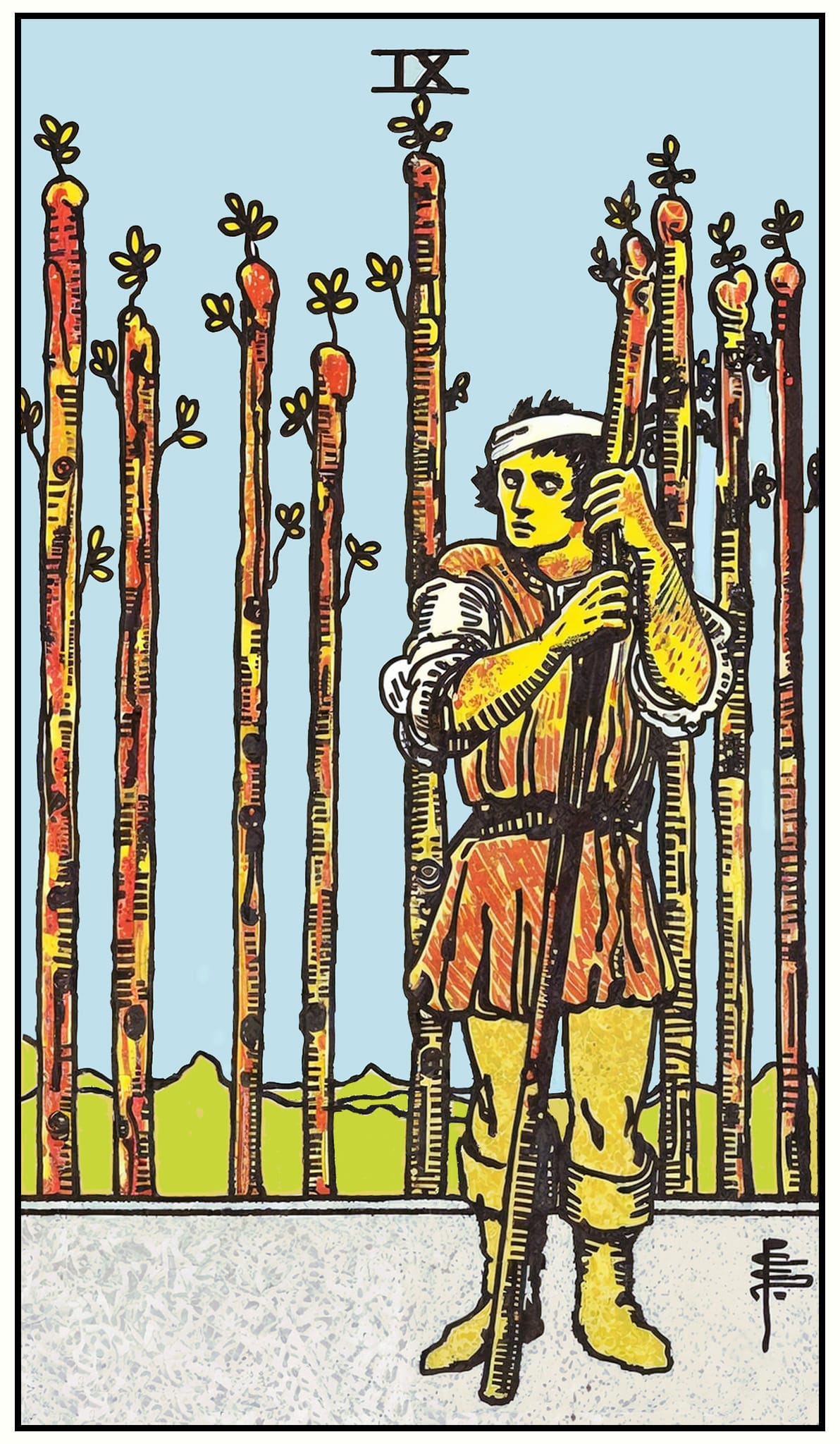
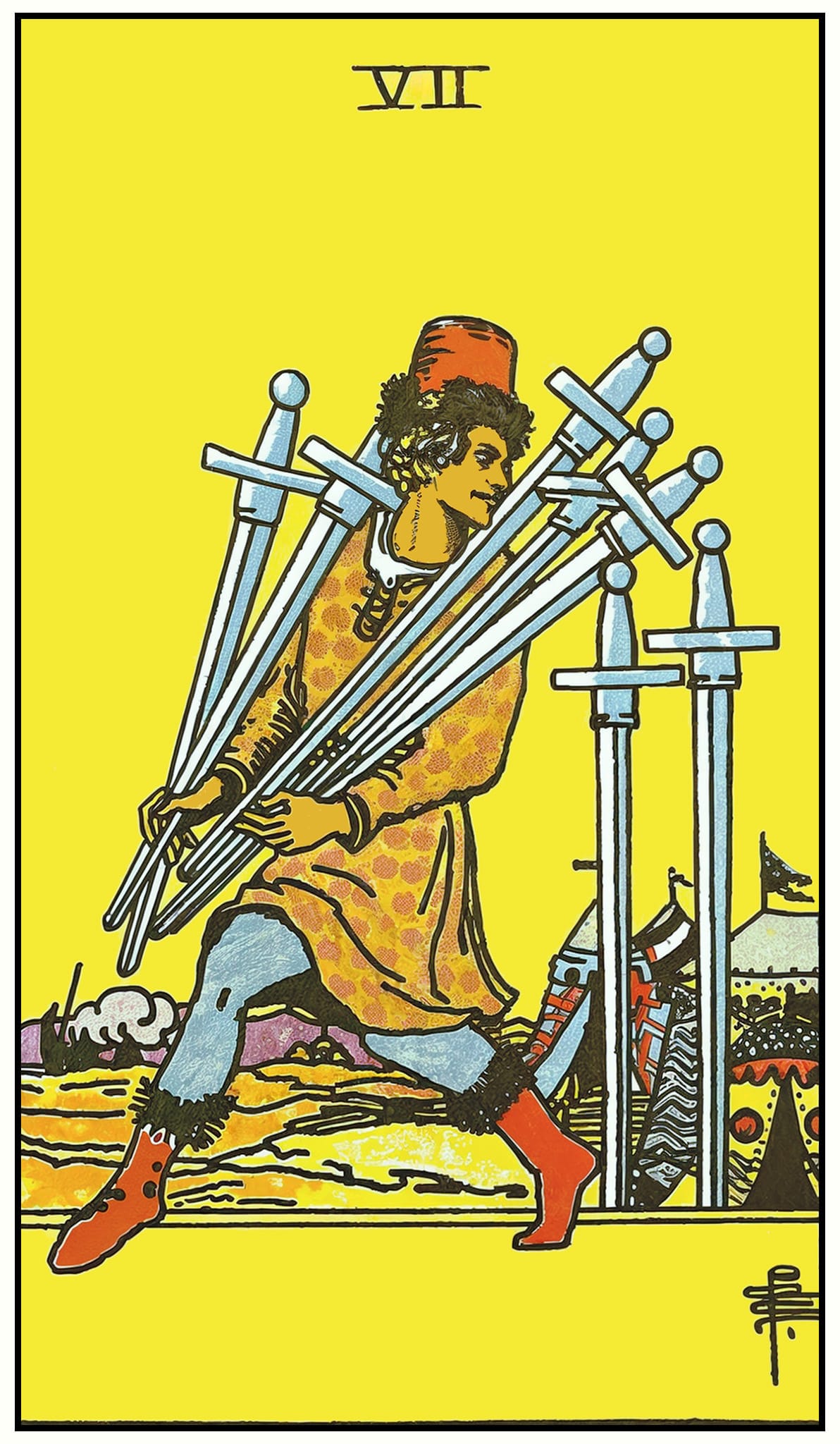
The Seven of Wands is most often read as encouragement to persist, and sometimes that is the correct reading. The more demanding application asks whether the persistence is in service of the position or has become its own end. The card's shadow is not cowardice — it is the person who has built an identity around the fight and can no longer see the fight's object clearly. The correct question is not "should I give up?" but "what, precisely, am I holding, and is it still what I thought it was?"