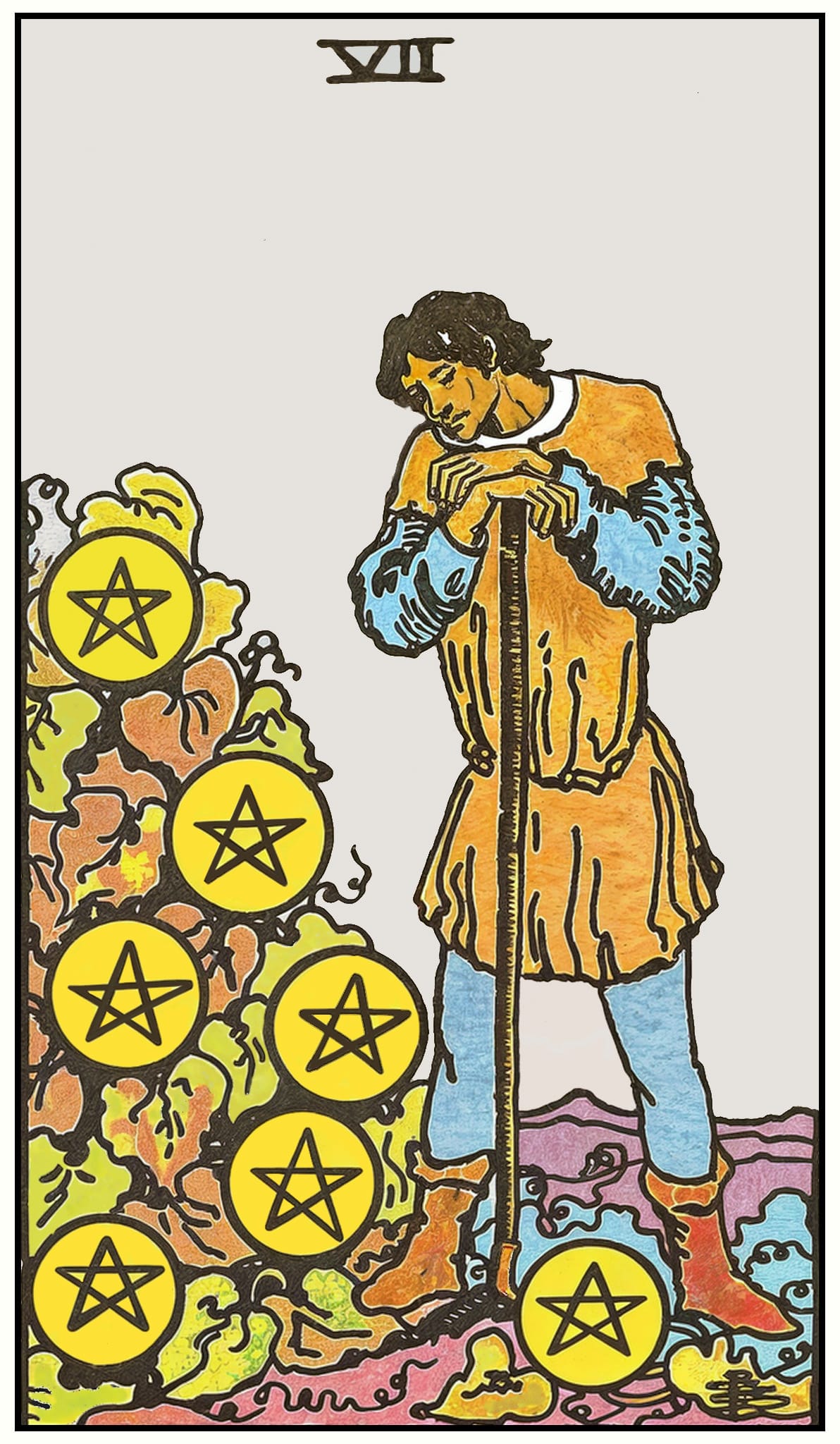
Seven of Pentacles
A figure leans on his hoe, looking at a vine heavy with seven pentacles — the work of the season done, the harvest not yet ready, the body at rest but the attention entirely given to what grows.
The Seven of Pentacles names the investment that has not yet returned — and the honest account of what that interval feels like from inside. The vine is real. The growth is visible. The pentacles are formed and almost ready, and they are not ready yet. Popular tarot reads this as patience rewarded. That reading addresses the pentacles but not the figure. The seven pentacles will ripen or they will not. The figure will be changed by the waiting regardless.
The harvest is not yet ready. The hoe is at rest. These are not problems.
The Seven of Pentacles is the business in year three, the manuscript in revision, the relationship past the honeymoon and not yet arrived at the deeper register. Everything is proceeding. Nothing is finished. There is nothing more to do but tend and wait, and the tending is, for now, the act of waiting. The card does not promise the harvest. It observes that the vine is growing and the figure is present. In shadow, the Seven is the waiting that becomes passivity — the person who has learned to perform the posture of patient investment without examining whether the vine is actually tended or merely watched.
Pentacles more than any other suit teaches that matter has its own time — and that the waiting is not separate from the making
The Seven is the suit's individual trial — the craftsman who built the Three's cathedral, survived the Five's cold, and refused the Four's grip must now remain inside a process operating on its own schedule. Pollack reads the Seven as the card that asks not will it grow but who are you becoming while you wait. A year of tending has changed the hands, the back, the quality of attention the figure brings to a vine. The investment is not only in the pentacles. It is in the investor. This is what the Seven needed to be before the Eight's mastery became possible: the humbling by matter's timeline that precedes skill becoming second nature.
The complete three-layer reading for all 78 cards — including the full psychological and archetypal layers — is in The Pocket Guide →
The faithful servant's formation and the passive waiter's avoidance are not the same posture.
Shadow TrapThe waiting that has become the permanent alternative to acting — the person who has learned to inhabit the Seven's posture indefinitely because the interval before the harvest is less demanding than either harvesting or accepting that the vine will not produce what was planted for.
Shadow GiftThe recognition that the formation the waiting produces is the point — that the figure leaning on the hoe is not simply delayed but is being shaped by the delay, and that what the harvest will find when it arrives is a person changed by having waited well.
Shadow readings for each card, by suit, are gathered in The Pocket Guide →
We do not read a reversal as an opposite; following Pollack, a turned card is the same energy blocked, withheld, or redirected — not inverted into its negation. A reversed Seven of Pentacles often marks the impatience with the vine's timeline — the person who has pulled up the investment before the harvest, or who is about to, not because the vine is failing but because the interval has become intolerable and action feels better than continued waiting.
Why Apocrypha Does Not Read Reversals as Opposites →Sixty-three symbols across the full deck — cross-referenced by card and meaning — are mapped in The Symbol Dictionary →
What has the waiting been making of you — separate from whatever it was you were waiting for? And is what it has been making useful for what comes next, regardless of whether the pentacles ripen?
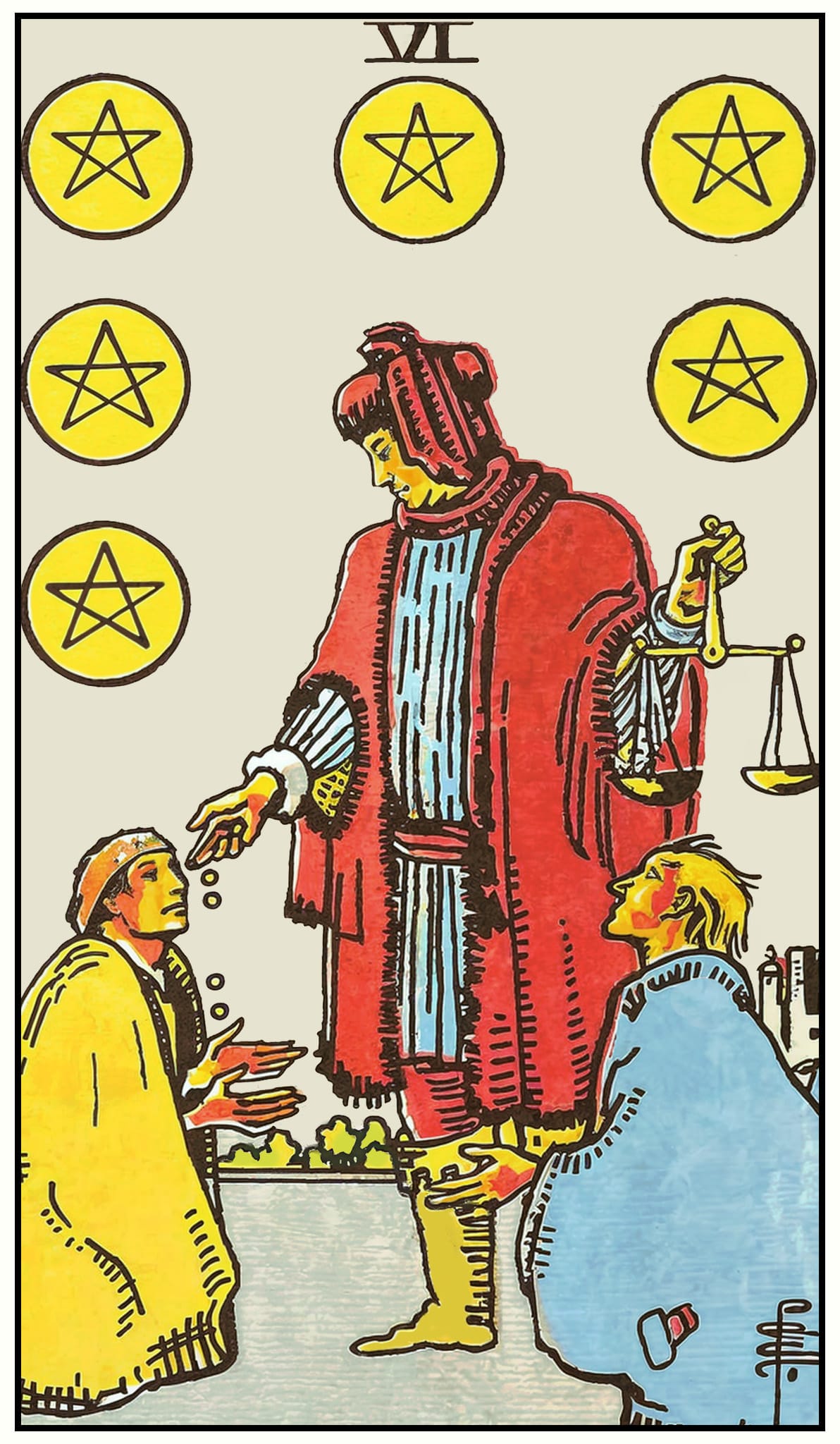
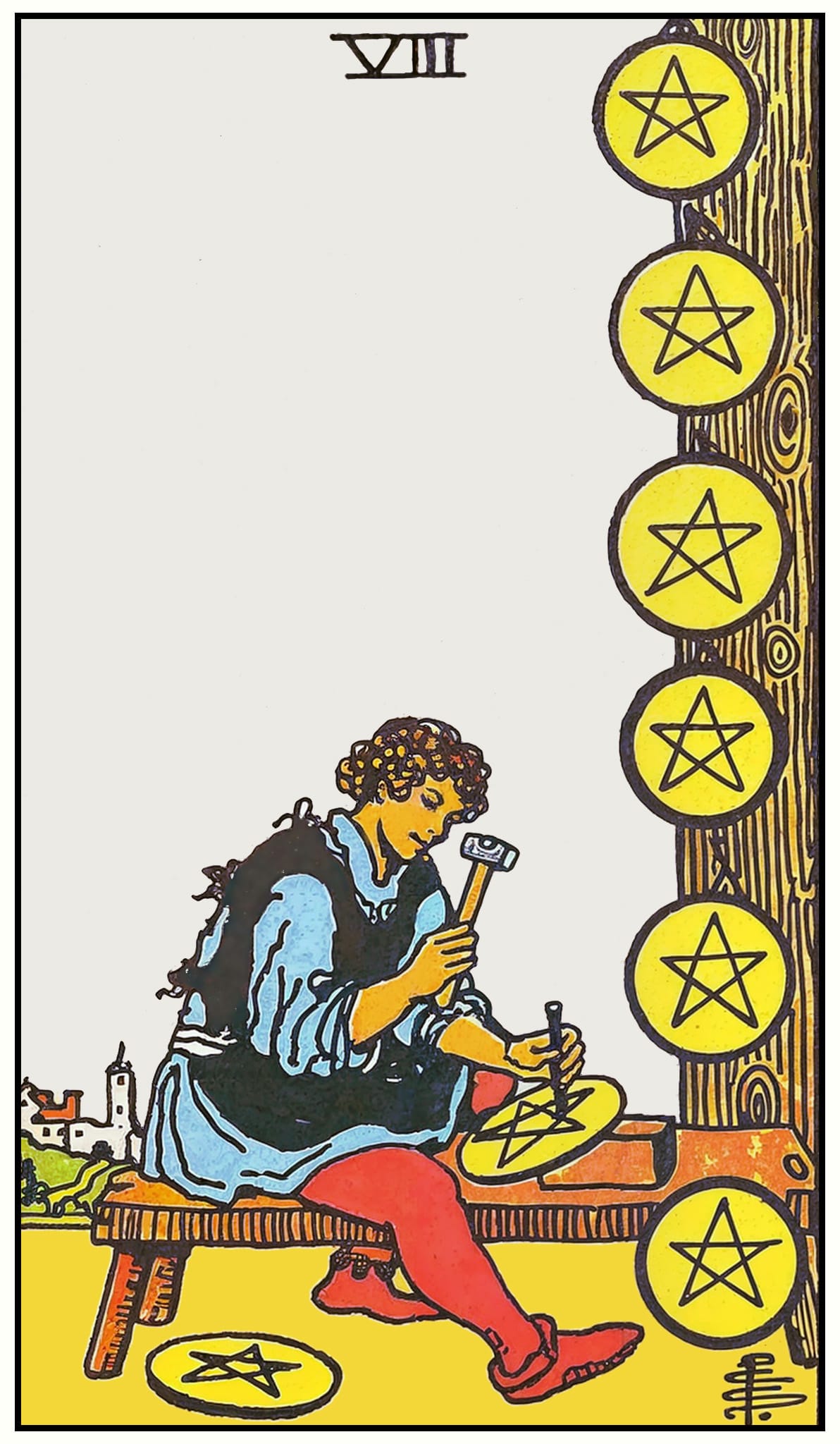
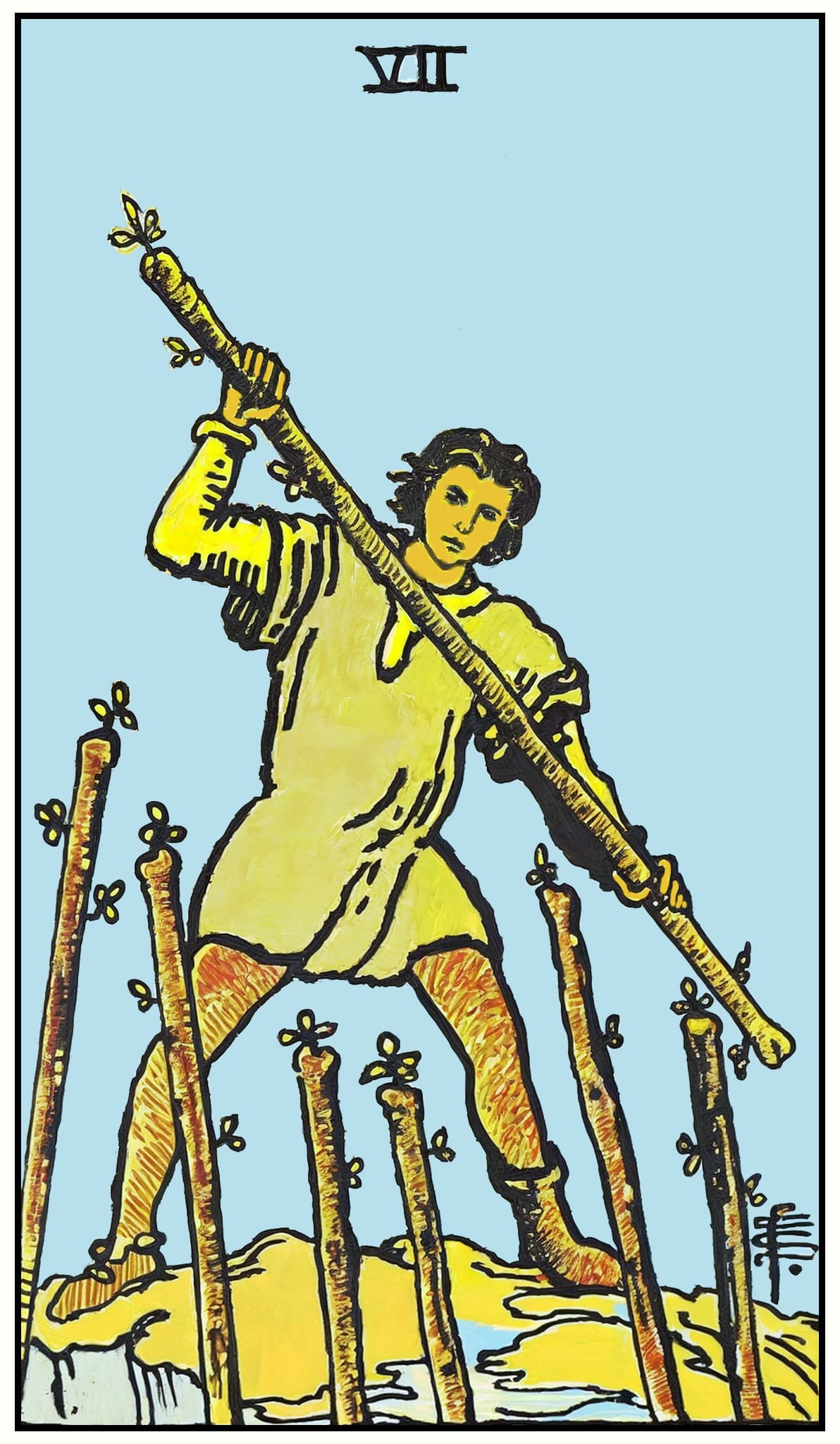
The Seven of Pentacles is most often read as encouragement to be patient — the harvest is coming. The more demanding reading asks about the formation happening in the figure while the vine grows. The card is not about the pentacles. The pentacles will do what they will do. The card is about what the period of unreturned investment does to the person who tends it — whether it produces the quiet deepening of attention that precedes mastery, or whether it has become the indefinite deferral of a decision the person is not yet ready to make.