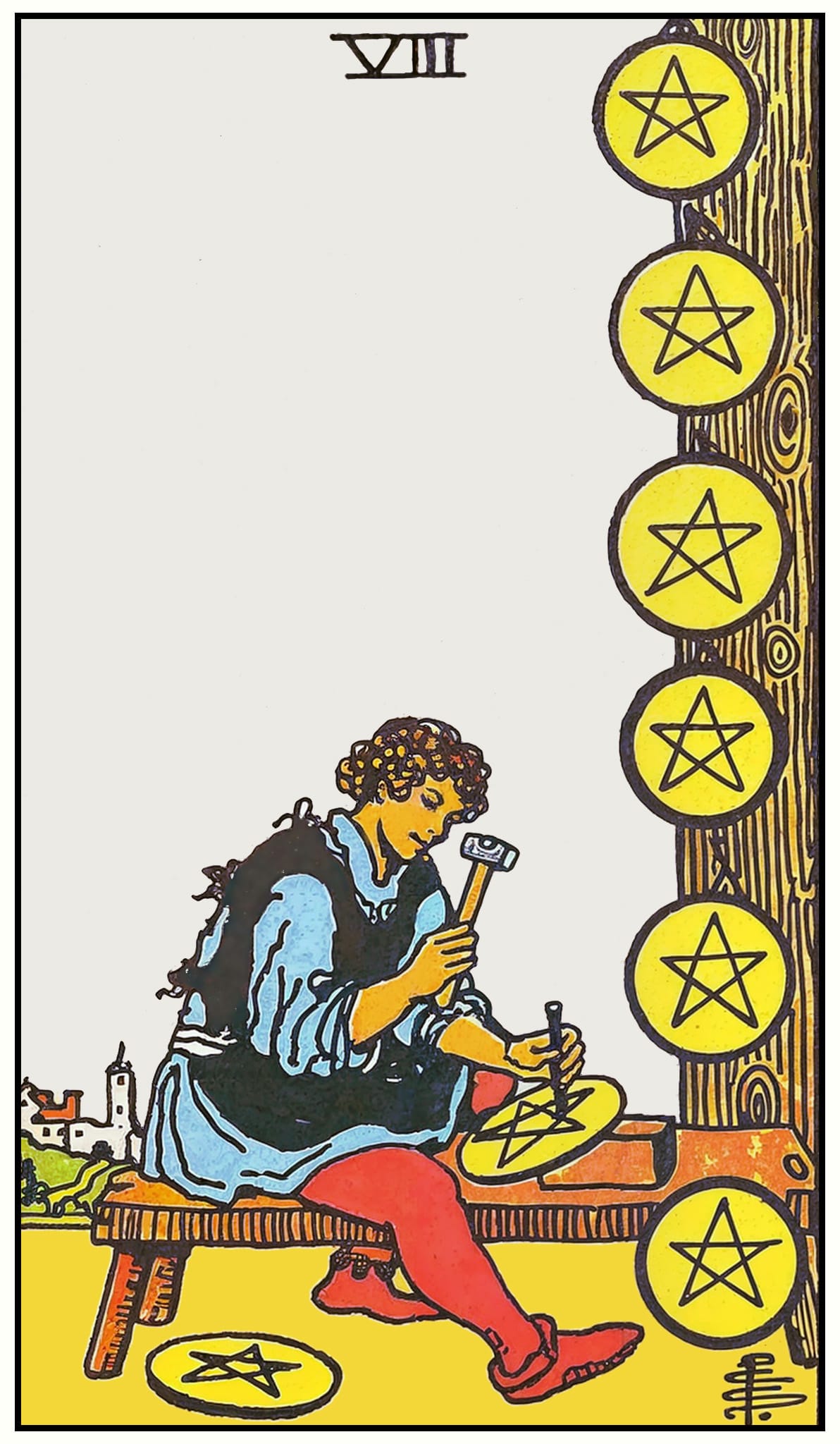
Eight of Pentacles
A craftsman at his workbench carves a pentacle, seven more mounted on a post beside him — his back to the distant town, the work not for the town, not yet.
The Eight of Pentacles names the practice: not the breakthrough, not the recognition, not the harvest — the daily return to the bench and the making of the thing again. The seven pentacles on the post are not trophies. They are the record of the sessions that preceded this one. The eighth is being made because the craftsman came back. The shadow is the bench used as a way of not entering the town.
The craftsman came back. That is the whole content of this card.
The Eight of Pentacles is the act of returning to the bench: the daily practice, the manuscript revised again, the scales played for the ten-thousandth time not because the scales are interesting but because the hands that have played ten thousand scales play everything else differently. The seven pentacles are the record of the returns that preceded this one. They are not achievements — they are evidence. In shadow, the bench becomes the avoidance: the craftsman using the practice as a reason not to enter the town, the town representing the vulnerability and the commerce and the relationships that craft, eventually, is supposed to serve.
Skill repeated until it begins to work through the craftsman rather than being executed by him — the Seven's waiting made active
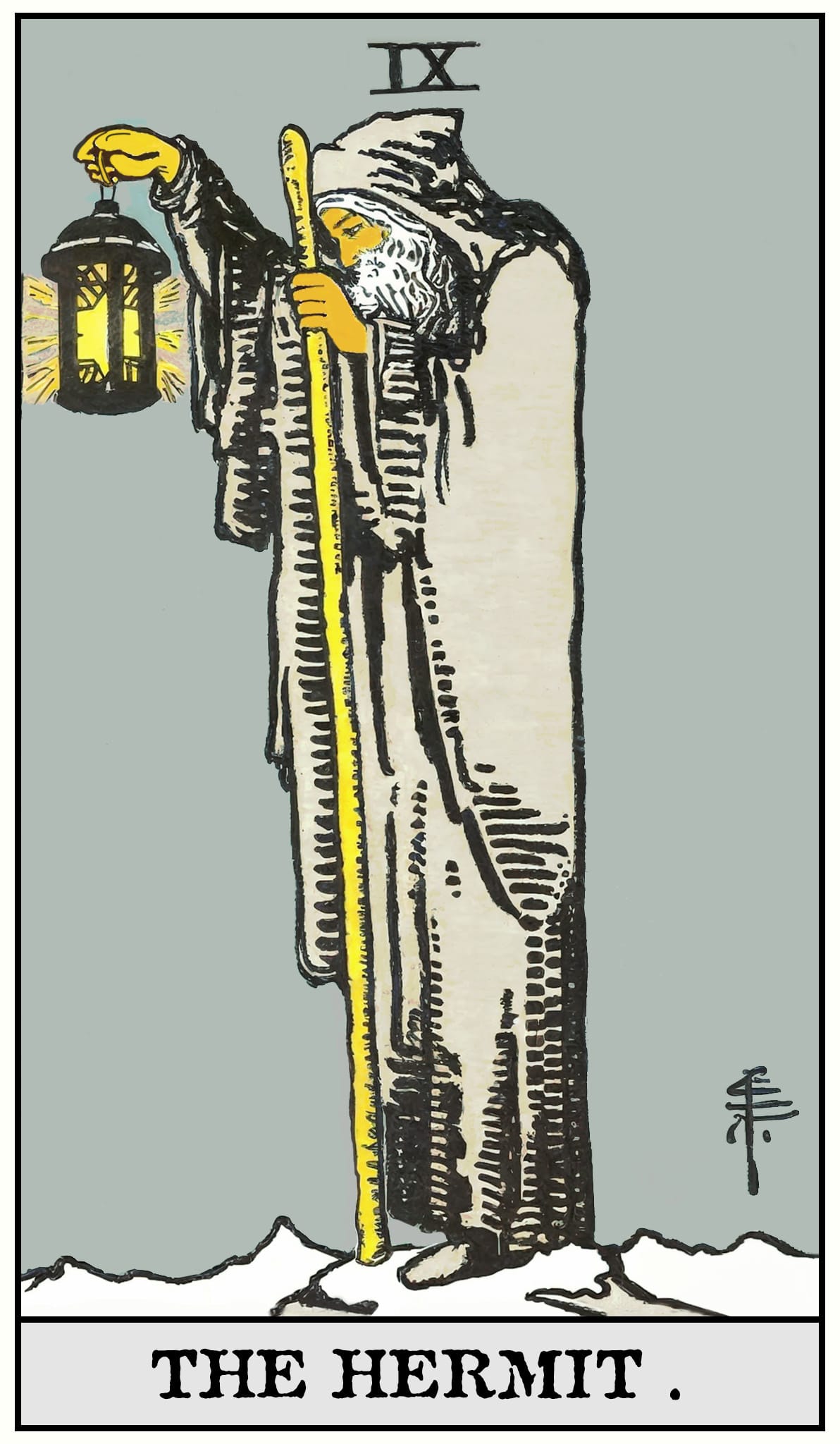
This is what the Seven of Pentacles was preparing: the hands that have forgotten how to be unskilled, the eye that identifies the flaw before the mind has named it. Pentacles' deepest claim is that spirit becomes visible through matter worked long enough — not inspired, not gifted, but worked. The Hermit sits in the background of this card — both figures are solitary, both withdrawn from the world's noise. But the Hermit holds his lantern outward. The Eight's craftsman has his back to the path. His solitude is still for making. He will turn around when the work is ready to be shown.
The complete three-layer reading for all 78 cards — including the full psychological and archetypal layers — is in The Pocket Guide →
Mastery can be a form of hiding. The back turned to the town is purposeful — purposeful avoidance is still avoidance.
Shadow TrapThe practice that has become the reason not to show the work — the craftsman who keeps returning to the bench past the point where the bench serves the making, because the town and its response are more frightening than the next revision.
Shadow GiftThe capacity to recognize when the practice has produced something worth showing — when the eighth pentacle is genuinely different from the first, and when continuing to work in private has become the substitution of craft for the vulnerability that craft is ultimately in service of.
Shadow readings for each card, by suit, are gathered in The Pocket Guide →
We do not read a reversal as an opposite; following Pollack, a turned card is the same energy blocked, withheld, or redirected — not inverted into its negation. A reversed Eight of Pentacles often marks the practice interrupted — the craftsman pulled away from the bench before the skill has reached the point of second nature, the daily return broken by circumstance or by the internal resistance that finds a reason not to sit down and begin.
Why Apocrypha Does Not Read Reversals as Opposites →Sixty-three symbols across the full deck — cross-referenced by card and meaning — are mapped in The Symbol Dictionary →
What would your work look like if you did it as though no one would ever see it — and what would change if you then turned around and showed it anyway?
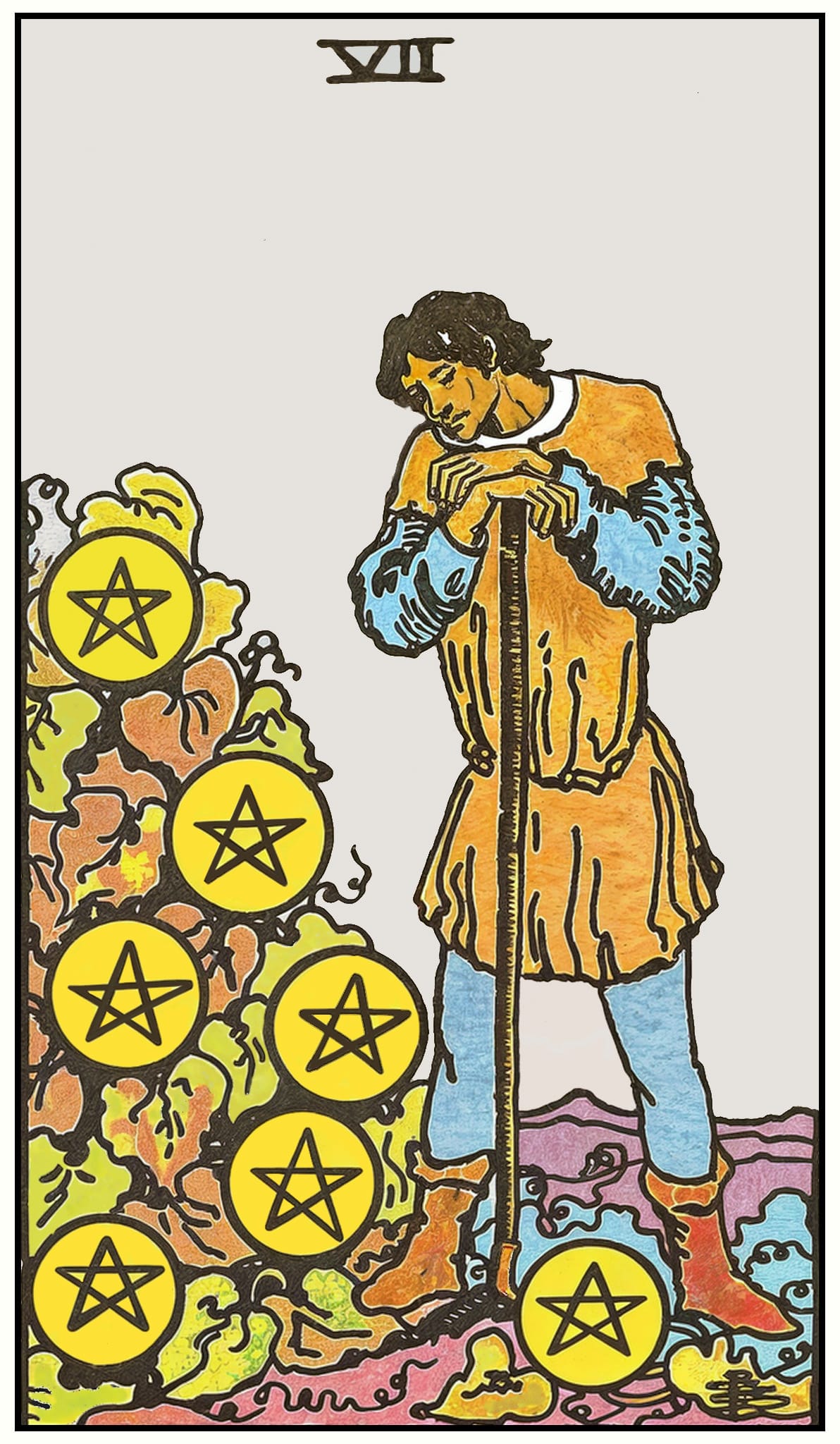
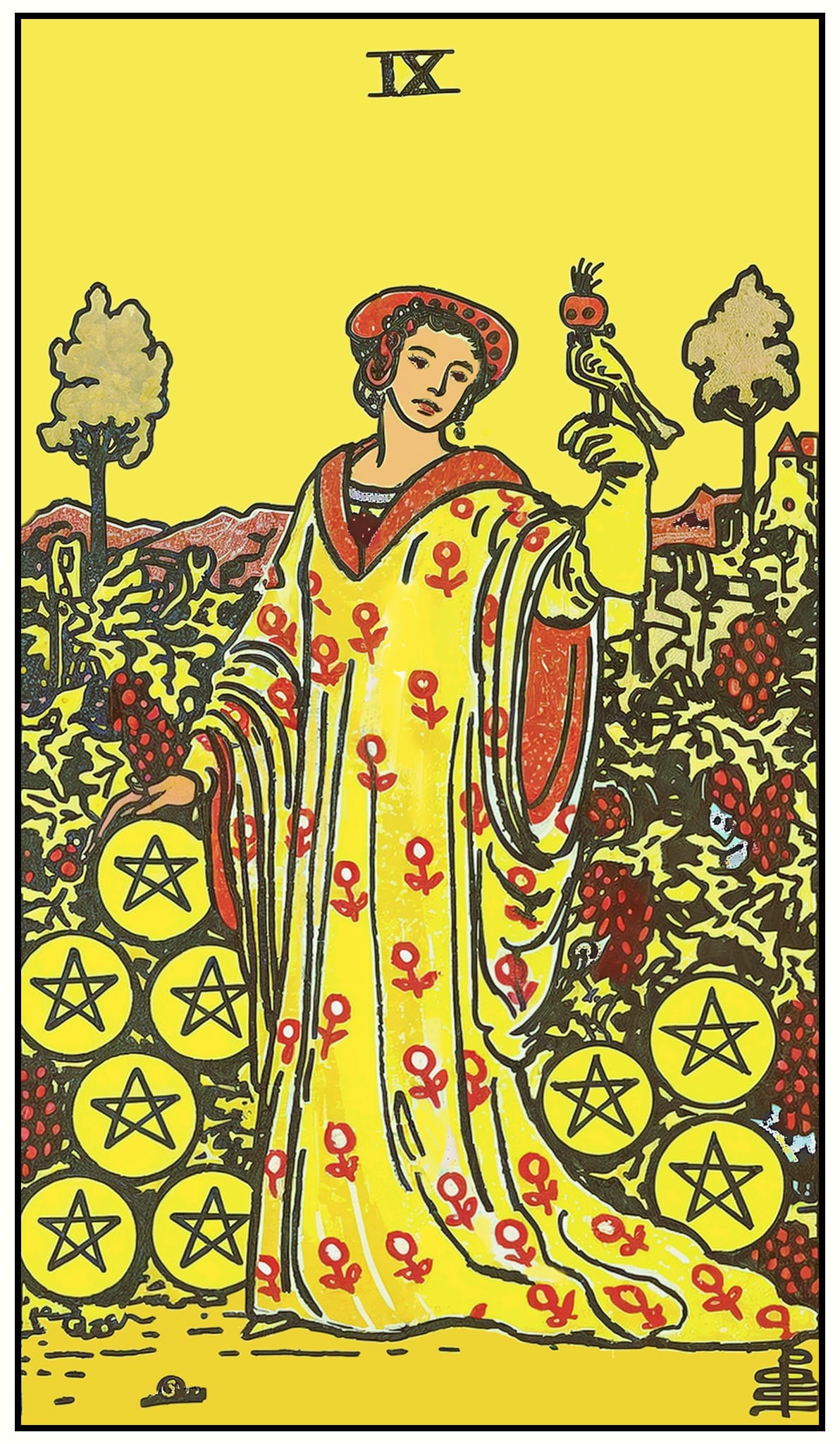
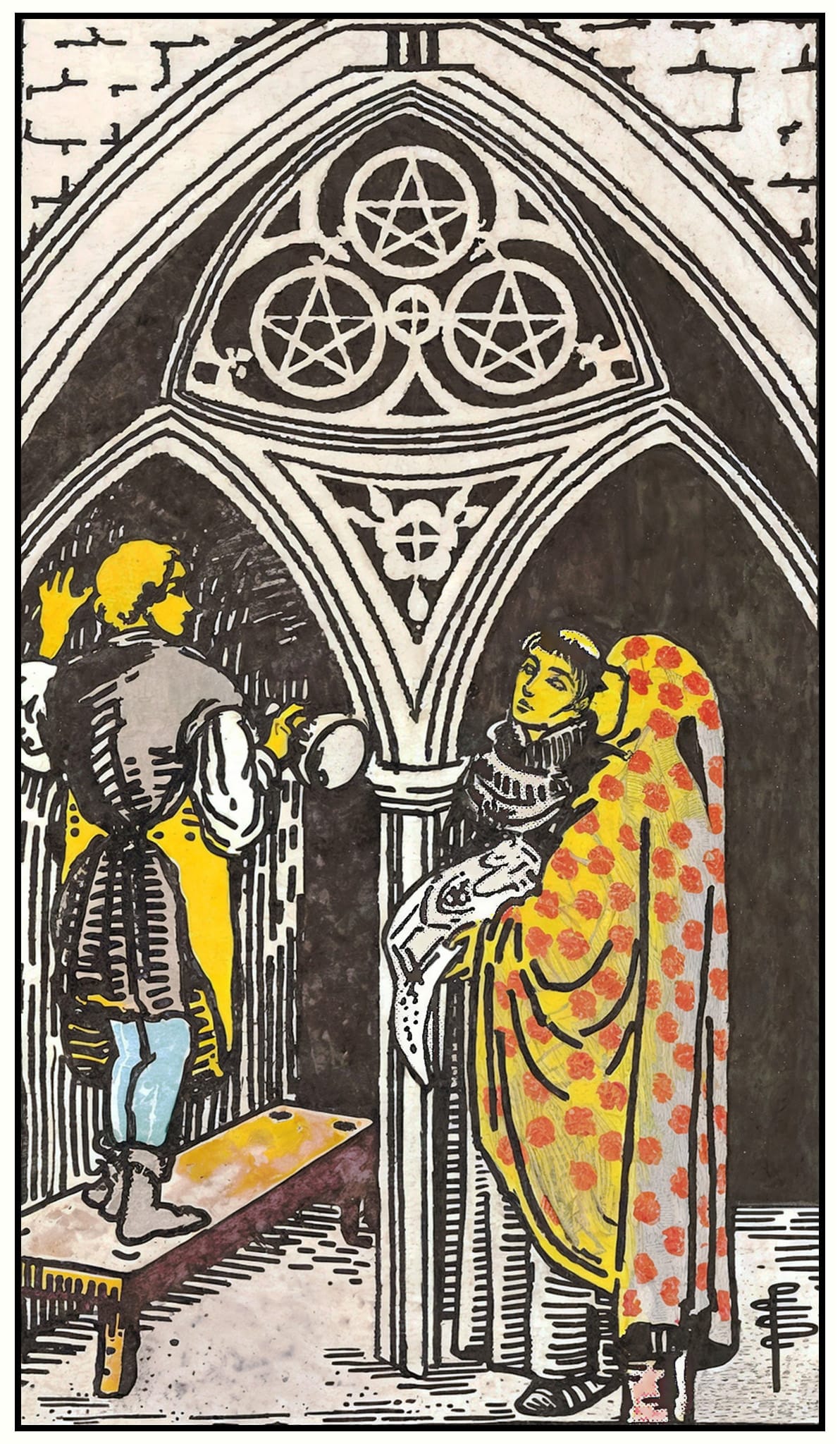
The Eight of Pentacles is most often read as encouragement to practice diligently. The shadow the card carries — which is less often addressed — is the practice used as shelter. The bench is real and the work is real and the seven pentacles are evidence. The question the card eventually asks is not whether the practice is happening but what the practice is for — whether the craftsman's back to the town is the temporary discipline of a person developing something worth showing, or the permanent posture of a person who has confused the making with the living.