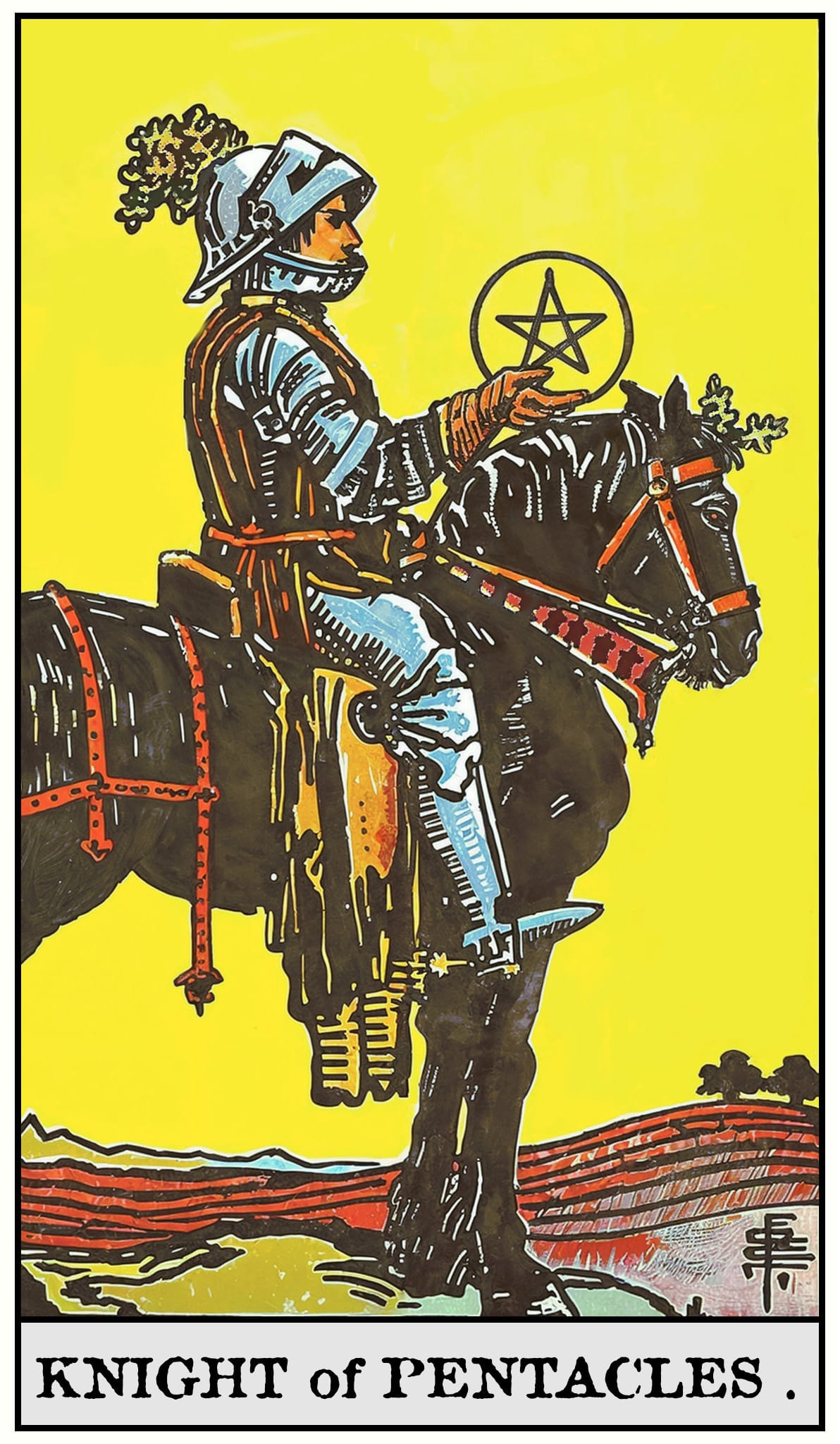
Knight of Pentacles
A knight sits on a heavy, unmoving horse in the middle of a ploughed field — holding the pentacle before him with both hands, looking at it with the expression of someone who has made a decision and is simply carrying it out.
The Knight of Pentacles names the capacity to remain present in work that does not reward impatience. He is the only Knight who is not in motion, and his stillness is not a failure of drive — it is the thing the other three Knights do not yet possess: the understanding that certain fields can only be ploughed by someone who has stopped performing urgency.
The figure who refused the flight — presence, repetition, and the tolerance of seasons that are not yet harvest
Every other Knight in the deck carries the virtue and the shadow of motion: forward momentum that has not decided where it is going. The Pentacles Knight has decided. His decision is to be precisely here, doing precisely this, for as long as it takes. He will be underestimated — is consistently underestimated in readings, by everyone who came looking for the gallop. The ploughed field behind him is the evidence they overlooked. Its shadow appears when the same thoroughness calcifies into resistance: the person who cannot move when the field genuinely needs to be left.
Not a fourth puer — the one who refused the flight the other three Knights perform
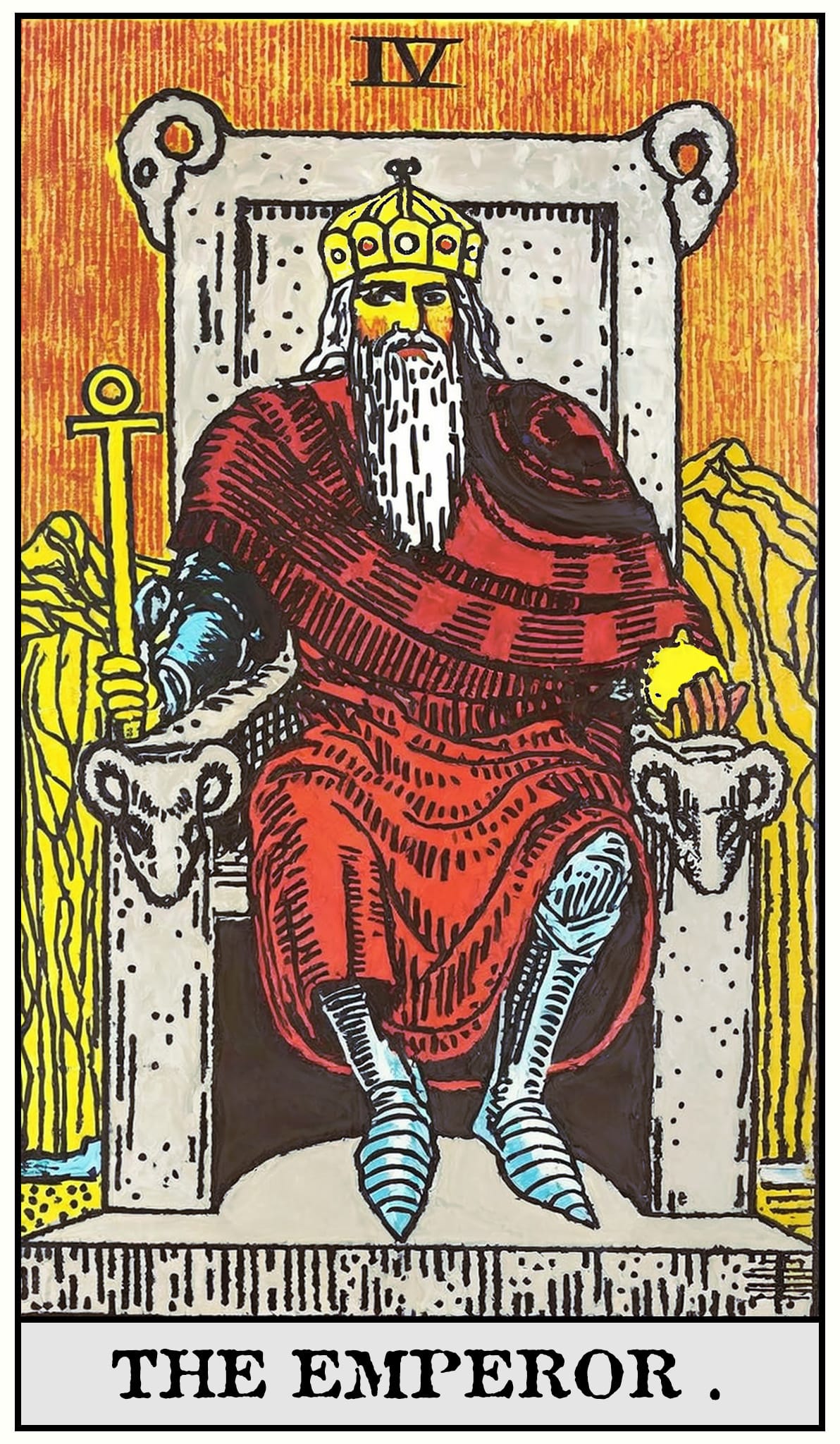
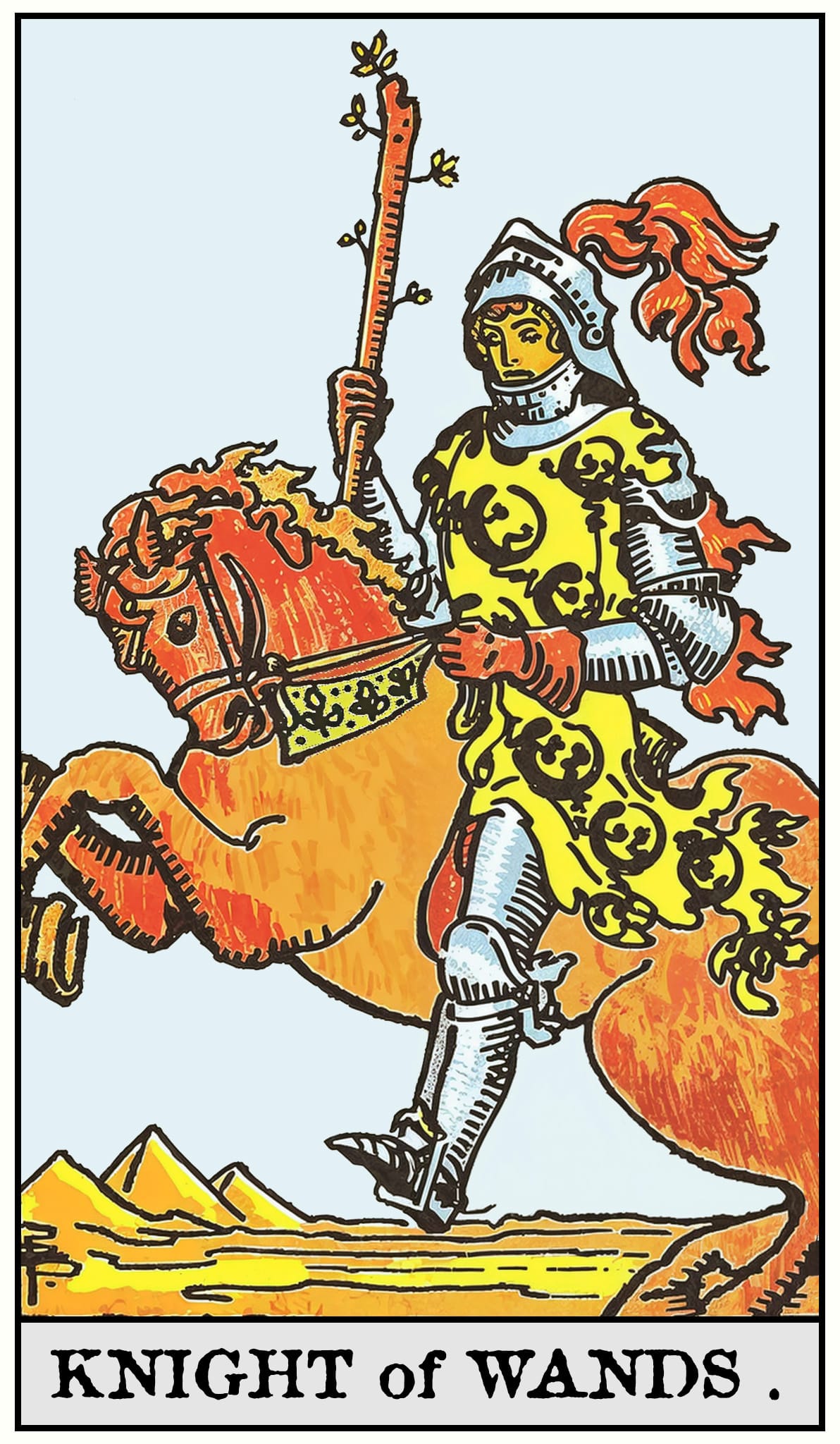
Pollack's reading of the three preceding Knights traces each as a form of the puer aeternus — the eternal youth — in his element's register: the onset-addict, the idealization-addict, the certainty-addict. Each is, in his way, in flight from the work that would require landing. The Pentacles Knight is the structural answer to all three: the one who understood that the field does not care about enthusiasm, that seasons do not accelerate for ambition, and that presence — not fire, not feeling, not sharpness — is what earth ultimately asks of those who want to work it.
The complete three-layer reading for all 78 cards — including the full psychological and archetypal layers — is in The Pocket Guide →
What distinguishes thoroughness from rigidity is whether the person can recognize when the season has changed.
Shadow TrapThe steadiness that has become immovability — the Knight who continues ploughing a field that has been exhausted, because stopping would require him to admit that his pace, which was once a strength, has become an evasion.
Shadow GiftThe capacity to do the work that no one else is patient enough to finish — to maintain a pace through the long middle of a project, after the initial excitement has passed and before the outcome is visible, without requiring external validation to continue.
Shadow readings for each card, by suit, are gathered in The Pocket Guide →
We do not read a reversal as an opposite; following Pollack, a turned card is the same energy blocked, withheld, or redirected — not inverted into its negation. A reversed Knight of Pentacles often marks the thoroughness turned inward as stagnation — the capacity for sustained work now applied to not moving, the same discipline that built the field now used to remain in it past the point of usefulness.
Why Apocrypha Does Not Read Reversals as Opposites →Sixty-three symbols across the full deck — cross-referenced by card and meaning — are mapped in The Symbol Dictionary →
Where in your life are you performing the appearance of momentum while avoiding the slower, less visible work that would actually move something forward? And where is your steadiness the most useful thing you bring — even if no one is naming it?
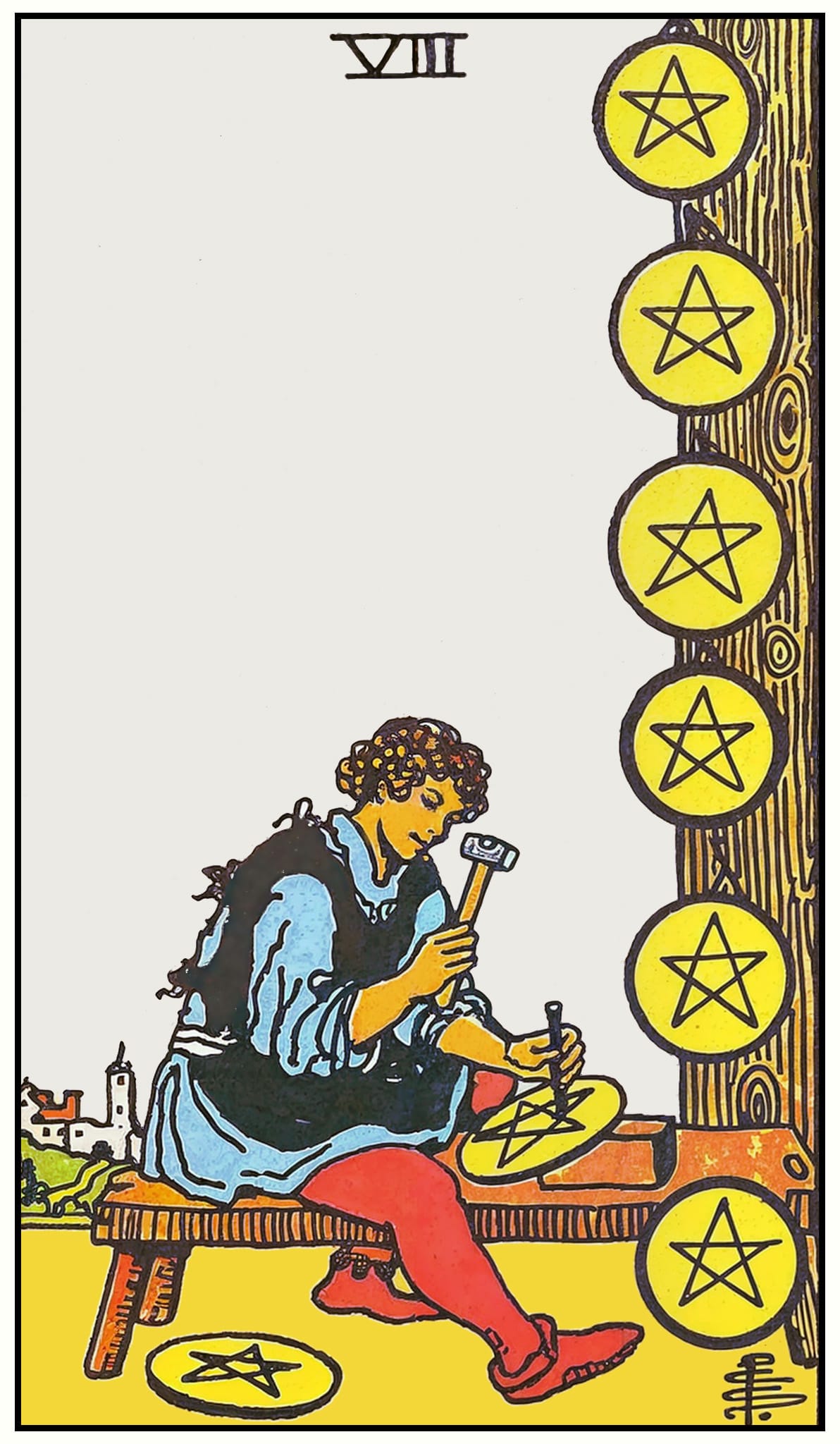
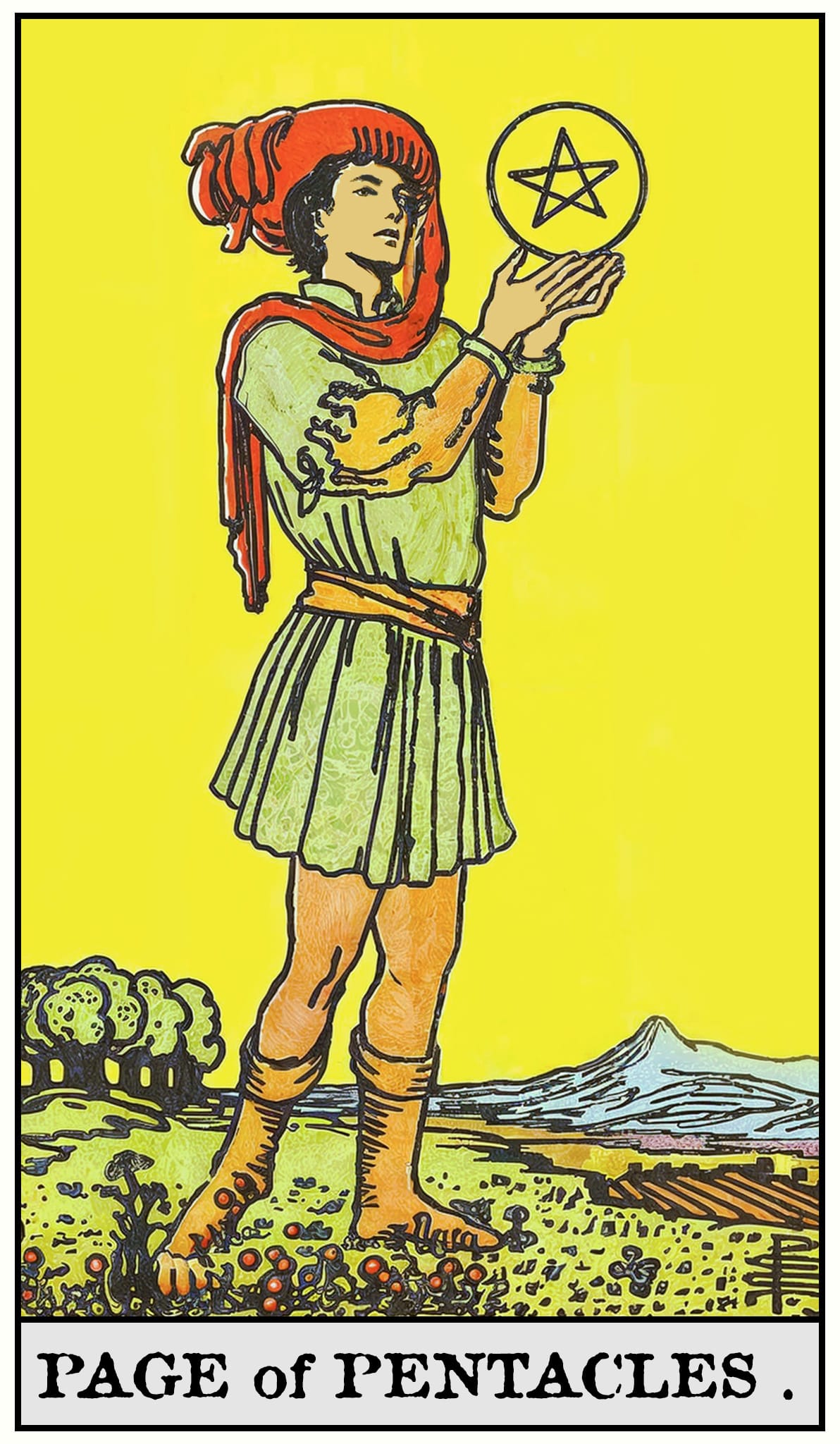
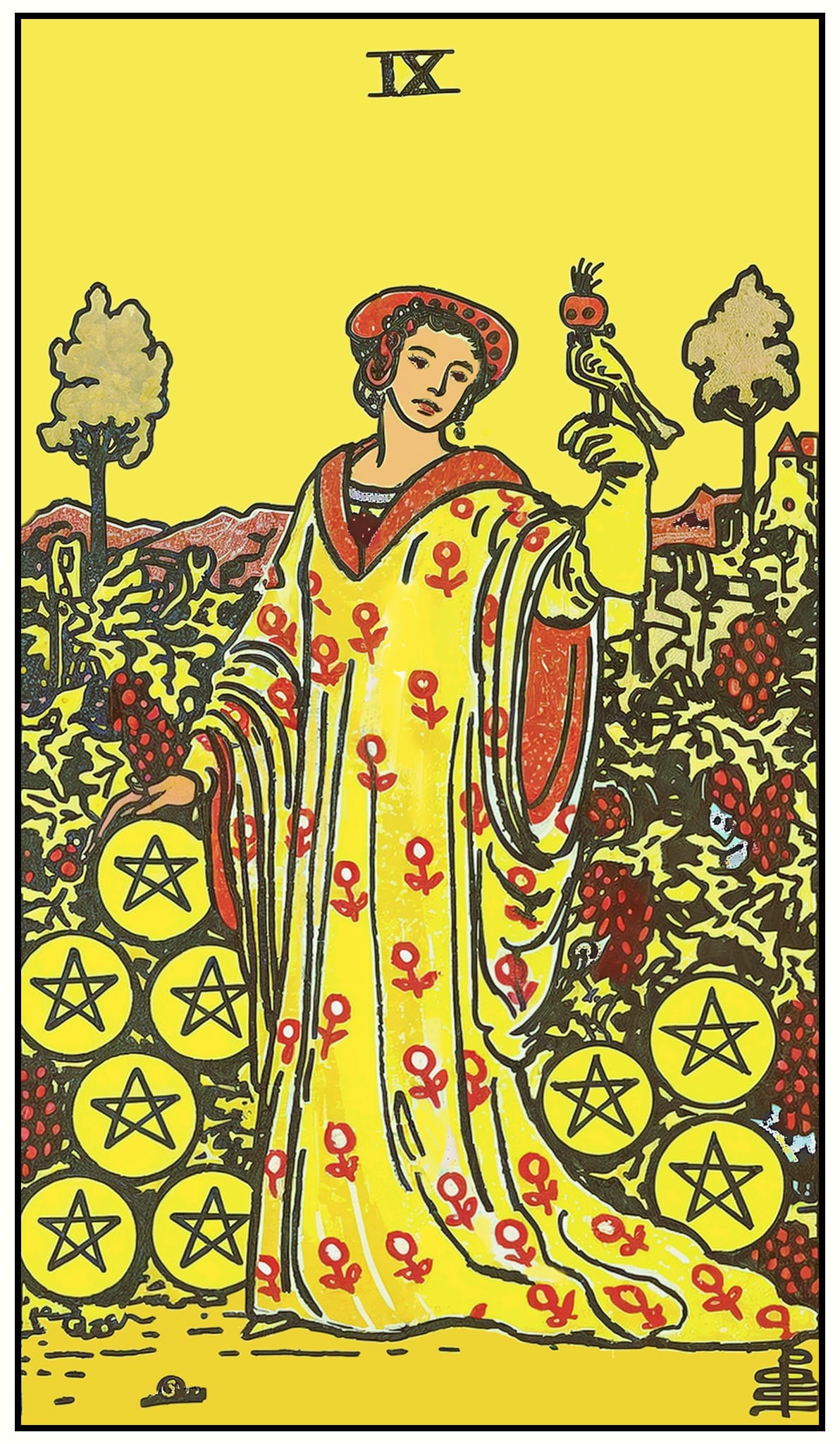
The Knight of Pentacles is almost universally undervalued in readings, because tarot culture prizes movement, and this Knight refuses it. The most important correction is not to read his stillness as stuckness — to ask not "why isn't he going anywhere" but "what has already been done, and what is he in the process of doing right now." The field behind him is the answer.