Two of Wands
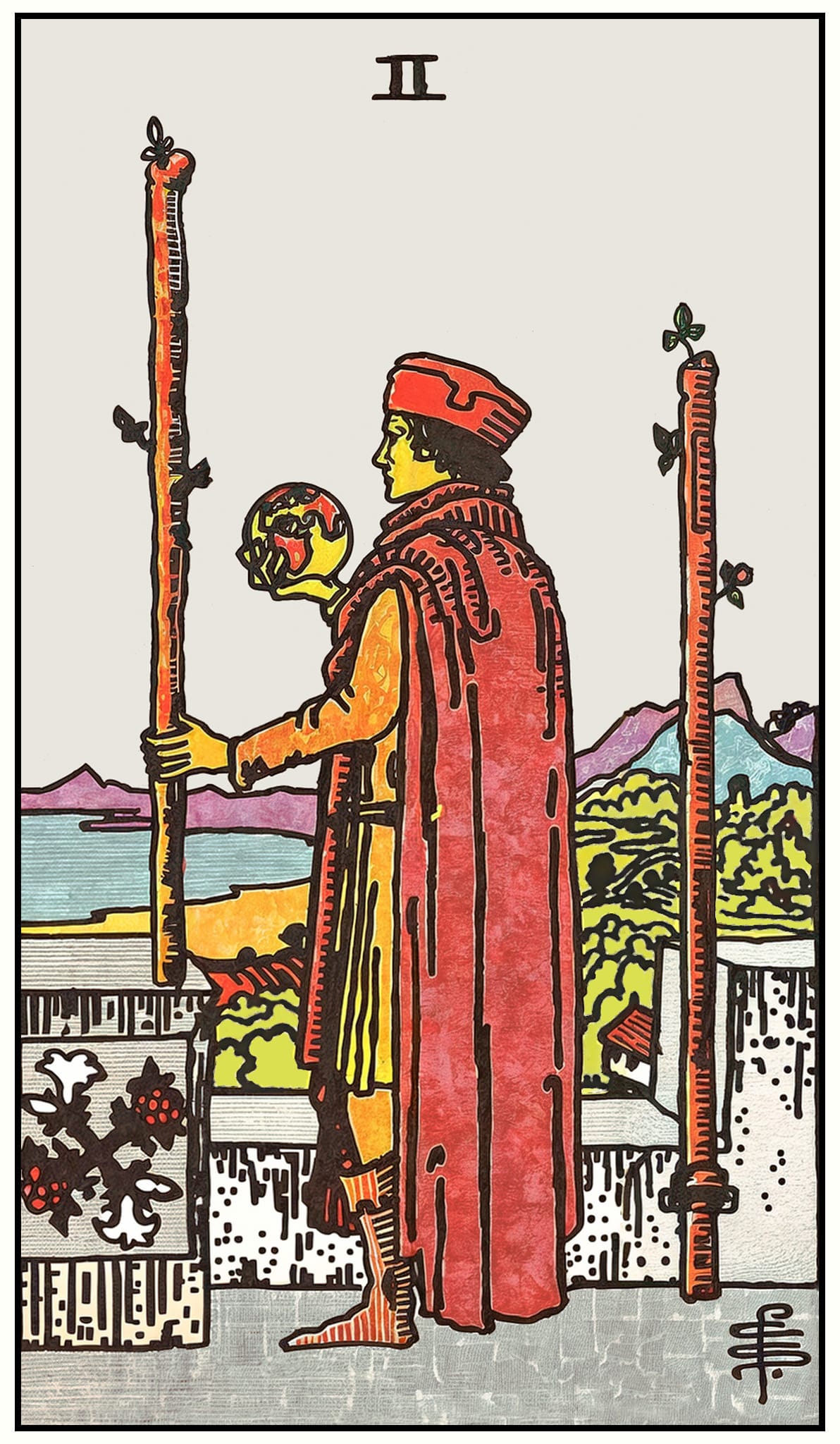
A figure stands on a battlement, a small globe in one hand and a wand fixed to the wall in the other — the world held in the palm, the horizon enormous, the ships still in the harbour.
The Two of Wands names held power: the vantage point from which movement is possible, plans are being weighed, and nothing has yet been decided. It is the card of the deliberating founder, the surveying strategist, the self that has accumulated enough to move but has not yet chosen a direction. Its danger is the gratification of having options becoming a substitute for taking one.
The view from the position of strength — and the reluctance at the edge of the excitement
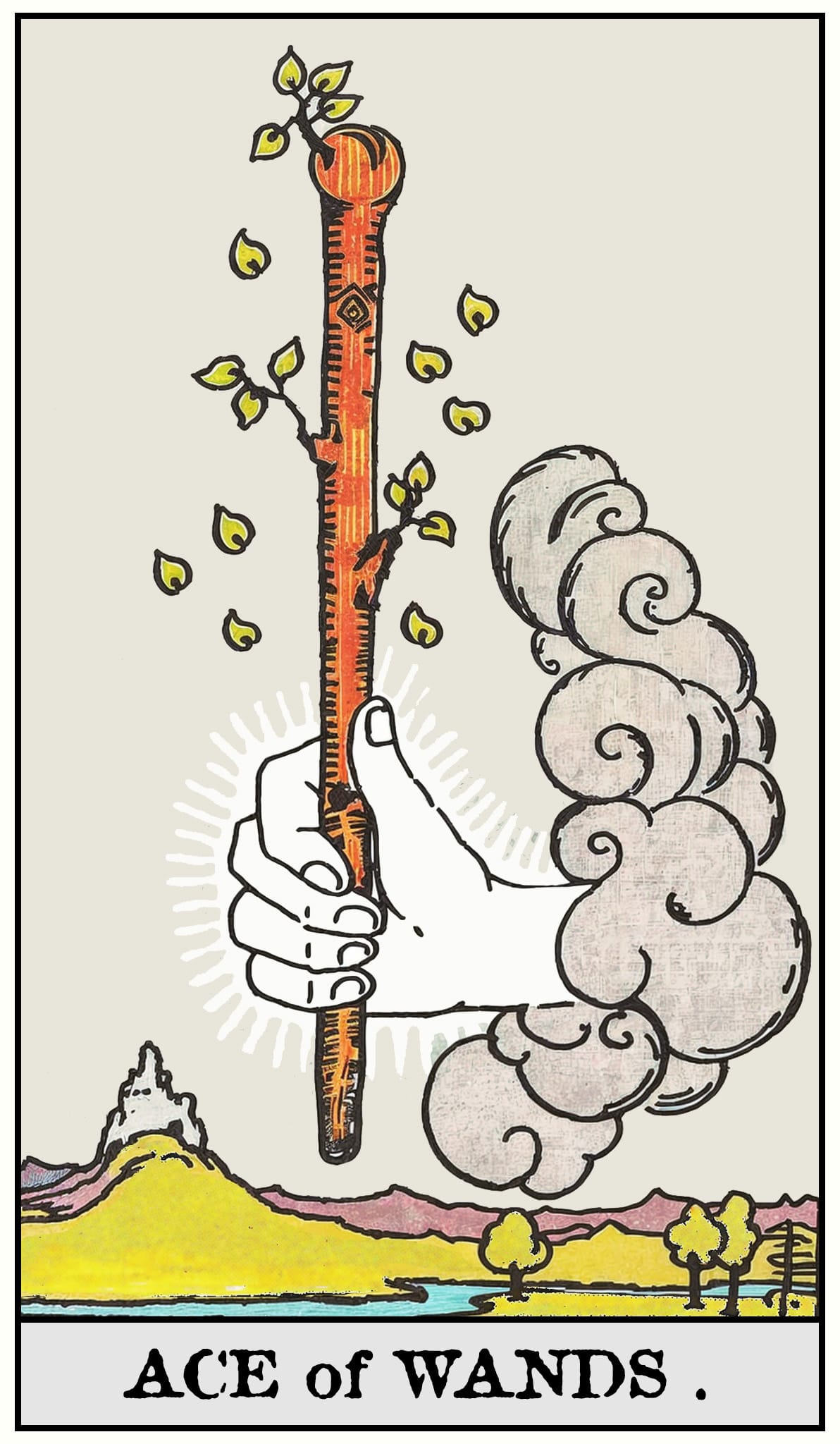
The Ace's surge has found a vantage. The Two of Wands holds resources accumulated and options surveyed; nothing has been decided, but the capacity to decide is present. It often appears for the person who has built something stable and now feels the next horizon pulling — plans being weighed, maps being read. Its shadow is paralysis dressed as deliberation: the globe in the hand becomes an end in itself, the gratification of having options substituting for the discomfort of choosing one. Some people spend entire chapters of a life on this battlement, mistaking the view for the journey.
Fire's first encounter with the cost of specificity
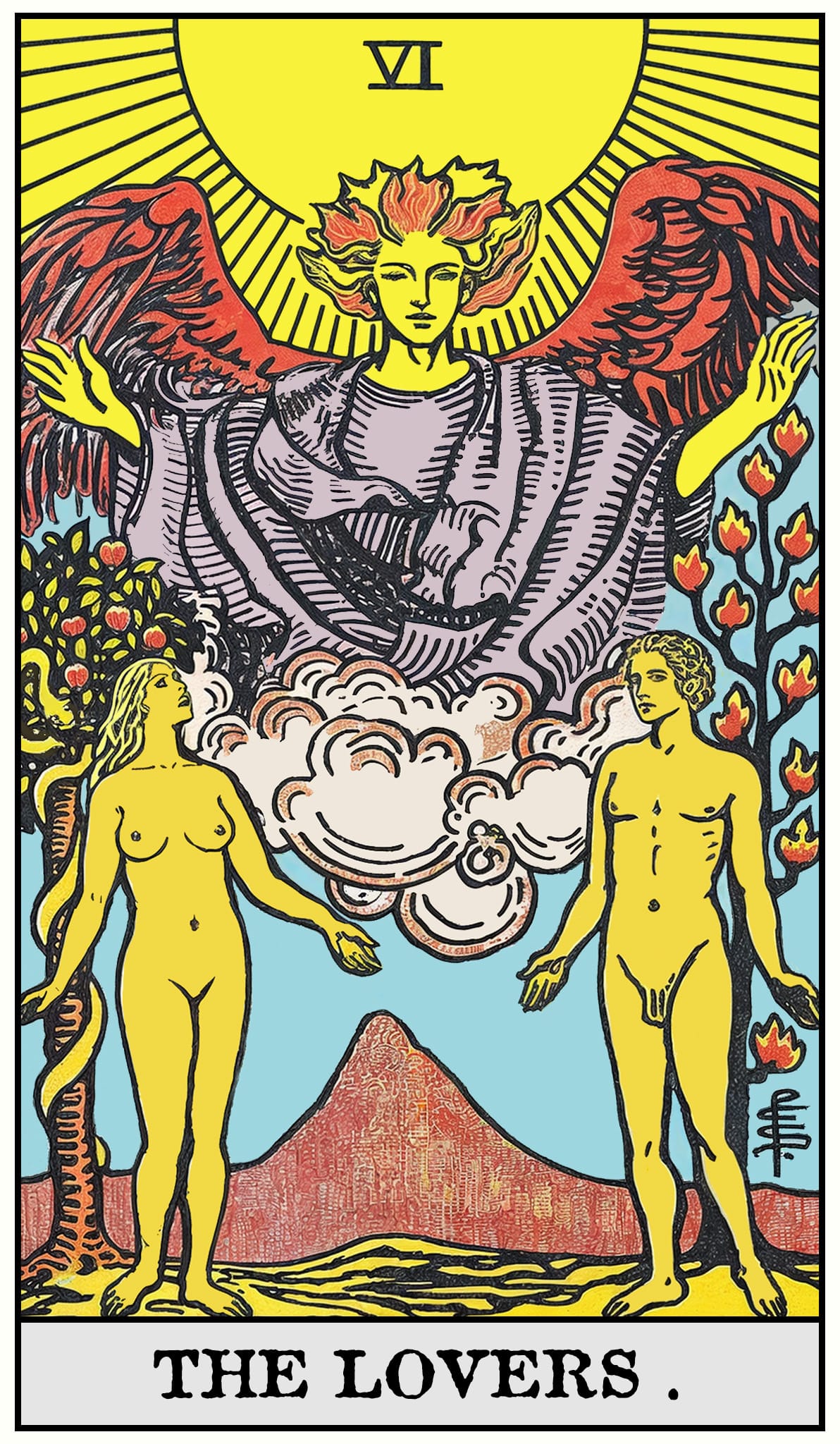
The Two of Wands is where the suit first meets direction, and with direction, loss. One wand is held free; one is already fixed to the wall — already given to a past commitment, no longer available. Every choice the Two approaches carries this weight: to move toward one horizon is to renounce the others. The card does not yet know this consciously; it feels only a strange reluctance at the edge of its own excitement. This is the suit's first encounter with what the Lovers at VI will later name fully: the irreversibility written into every genuine commitment.
The complete three-layer reading for all 78 cards — including the full psychological and archetypal layers — is in The Pocket Guide →
The world in the hand can become a reason never to put it down.
Shadow TrapThe permanent deliberation — the person for whom the surveying has replaced the choosing, and the horizon has become a way of avoiding the terrain between here and there.
Shadow GiftThe capacity to hold the view long enough to choose wisely, then to set the globe down and move — accepting that the unchosen horizons will not wait, and neither will this one.
Shadow readings for each card, by suit, are gathered in The Pocket Guide →
We do not read a reversal as an opposite; following Pollack, a turned card is the same energy blocked, withheld, or redirected — not inverted into its negation. A reversed Two of Wands often marks the decision that has been made but not yet acknowledged — the seeker who has already chosen, on some level, and is maintaining the appearance of deliberation to delay the moment of commitment.
Why Apocrypha Does Not Read Reversals as Opposites →Sixty-three symbols across the full deck — cross-referenced by card and meaning — are mapped in The Symbol Dictionary →
Which of the horizons in front of you have you been treating as a substitute for choosing one — and what is it costing you to keep them all available?
The Two of Wands is most often read as a positive card of vision and planning, and it is — but only if the deliberation is moving toward a decision. When this card appears repeatedly, or when it appears alongside cards of stagnation or avoidance, the question is not what the seeker is planning but why the plan has not yet become a move. The view from the battlement is useful. It is not a destination.