Six of Swords
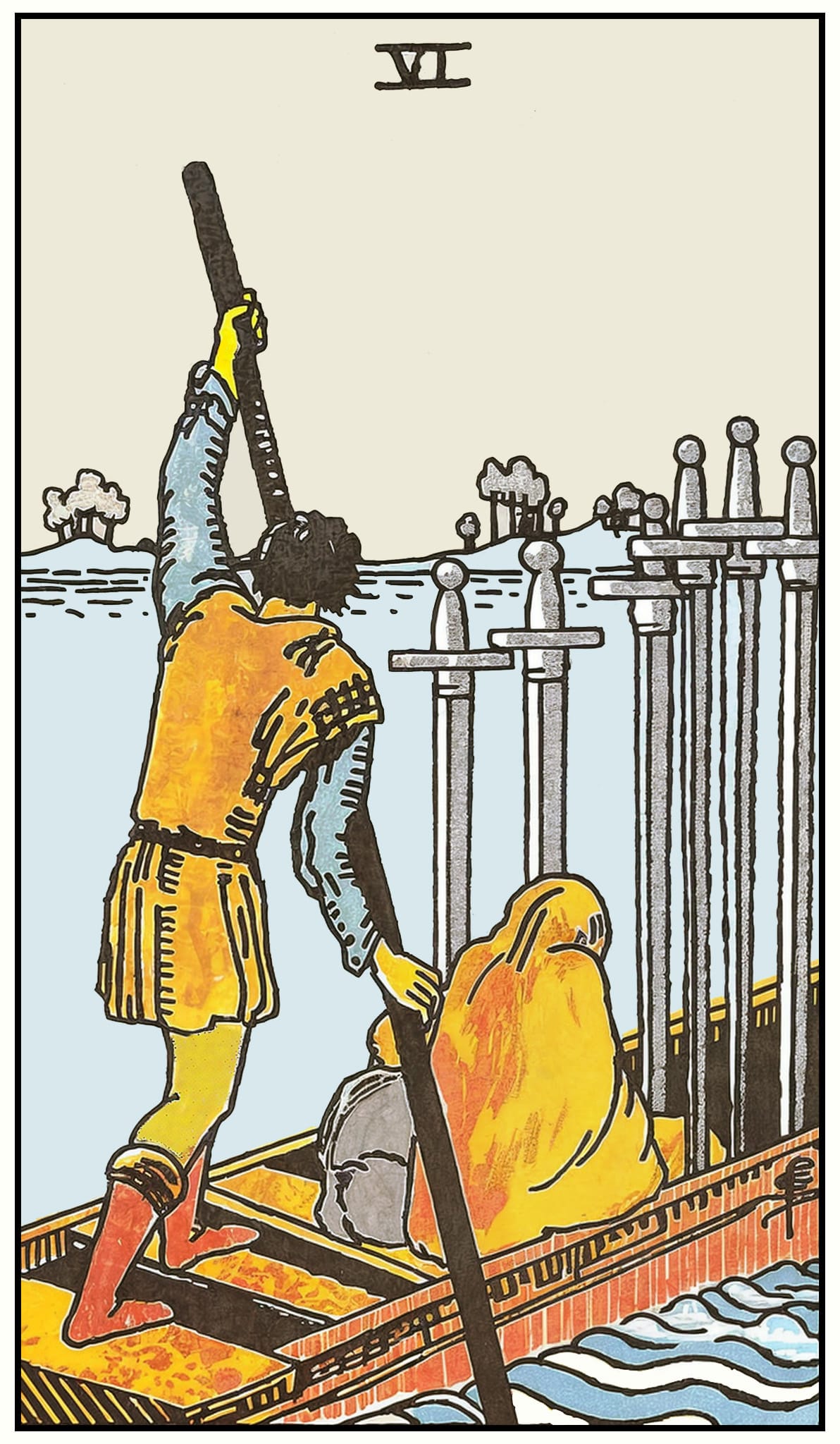
A ferryman poles a boat across still water — a woman and child sit cloaked in the prow, turned away, six swords standing upright in the bow. The water on the near side is choppy; the far side, calm.
The Six of Swords names passage: not healing, not resolution, but the movement away from the place of acute pain toward somewhere that might, eventually, allow healing to begin. The swords are still in the boat — the experiences that cut are carried into the crossing. The woman does not look back. The arrival has not yet happened. This is transit honoured as its own condition, not treated as a problem to be solved.
She is not healed. She is moving. These are different, and both are real.
The Six of Swords arrives as the first easing in the suit: not the resolution the Five requires but the movement in a better direction. The conversation that ends not in reconciliation but in the decision to stop. The city left after the marriage ended. The treatment begun after the diagnosis. The swords are still in the boat — the grief and the clarity-that-hurt have not been set down. They are being carried into transit. The shadow is the crossing that never arrives: some people live permanently between the rough water and the calm, the boat perpetually mid-crossing, never committing to the far shore because the far shore would require encountering what is there.
Air in transit — the mind decided, for now, to travel with its wounds rather than stand still inside them
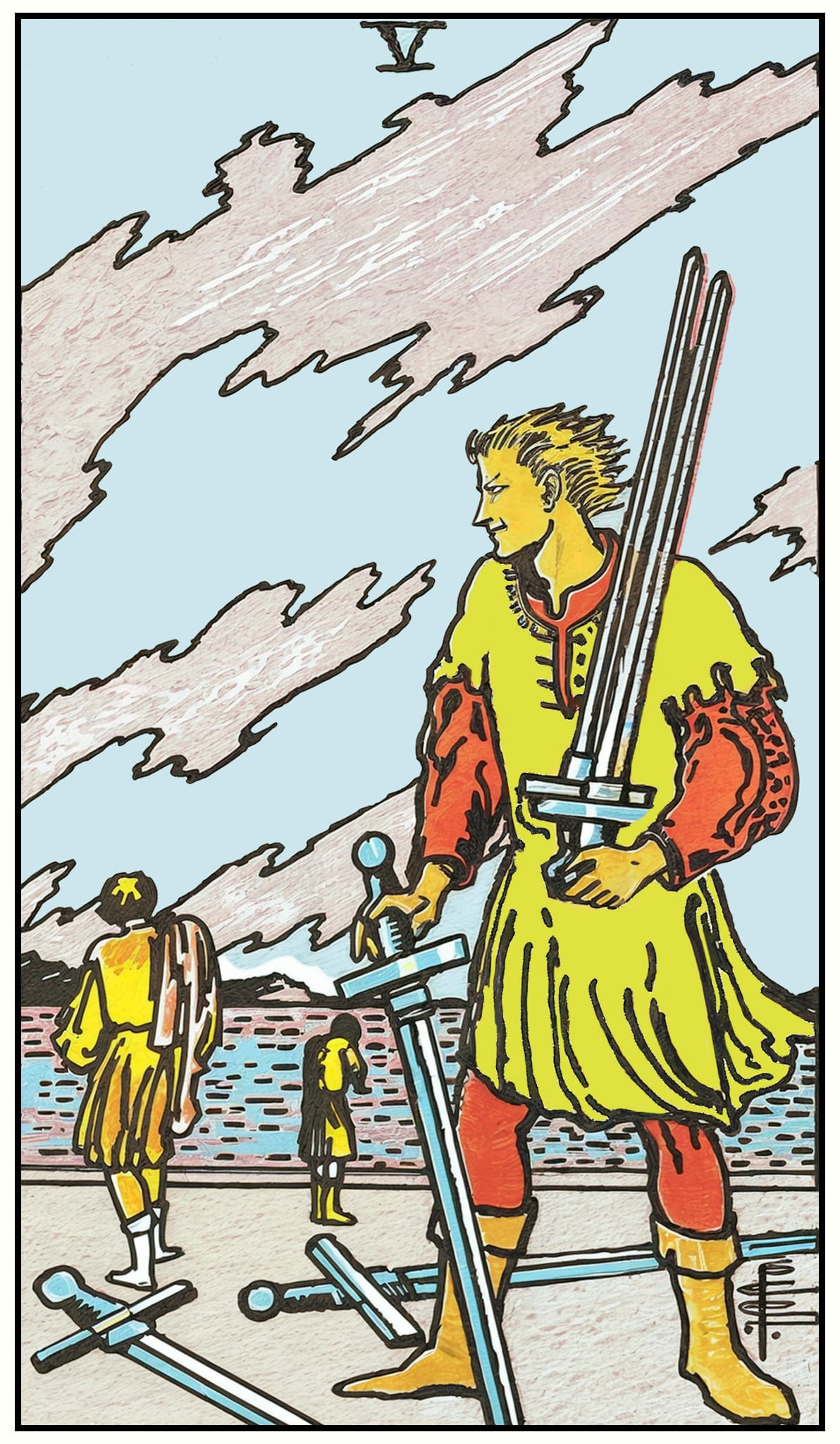
After the Three's grief, the Four's forced rest, and the Five's hollow victory, the Six is the suit's first directional movement that is not conflict. The mind has not resolved its wounds. It has chosen, for now, to carry them in the direction of eventual resolution rather than to remain in the place of injury. Pollack reads the Six as the recovery that is not yet recovery — the necessary interval between crisis and integration. The swords in the bow are carried upright, which is the difference between this card and abandonment: the experiences that shaped us do not stop being ours when we stop bleeding from them. The skill is in learning to stow them.
The complete three-layer reading for all 78 cards — including the full psychological and archetypal layers — is in The Pocket Guide →
Transit is a condition with its own integrity. It is not a destination.
Shadow TrapThe permanent crossing — the person whose entire emotional and mental life exists in the interval between the crisis they are leaving and the shore they have never fully landed on, for whom arrival would be more disorienting than the suspended passage has become.
Shadow GiftThe recognition that transit is honourable, that mid-crossing is a real and necessary place, and that it does not have to be rushed — but that the far shore is there, and that arriving eventually is what the boat is for.
Shadow readings for each card, by suit, are gathered in The Pocket Guide →
We do not read a reversal as an opposite; following Pollack, a turned card is the same energy blocked, withheld, or redirected — not inverted into its negation. A reversed Six of Swords often marks the passage blocked — the person who needs to leave the place of crisis and cannot, whether by external circumstance or by the internal conviction that the crossing would require leaving something that cannot be left, or arriving somewhere they are not certain they can inhabit.
Why Apocrypha Does Not Read Reversals as Opposites →Sixty-three symbols across the full deck — cross-referenced by card and meaning — are mapped in The Symbol Dictionary →
What are you in the middle of that you have been treating as a problem to be solved rather than a crossing to be made — and what would it mean to be in the boat without demanding that the far shore appear sooner than the ferryman can take you there?

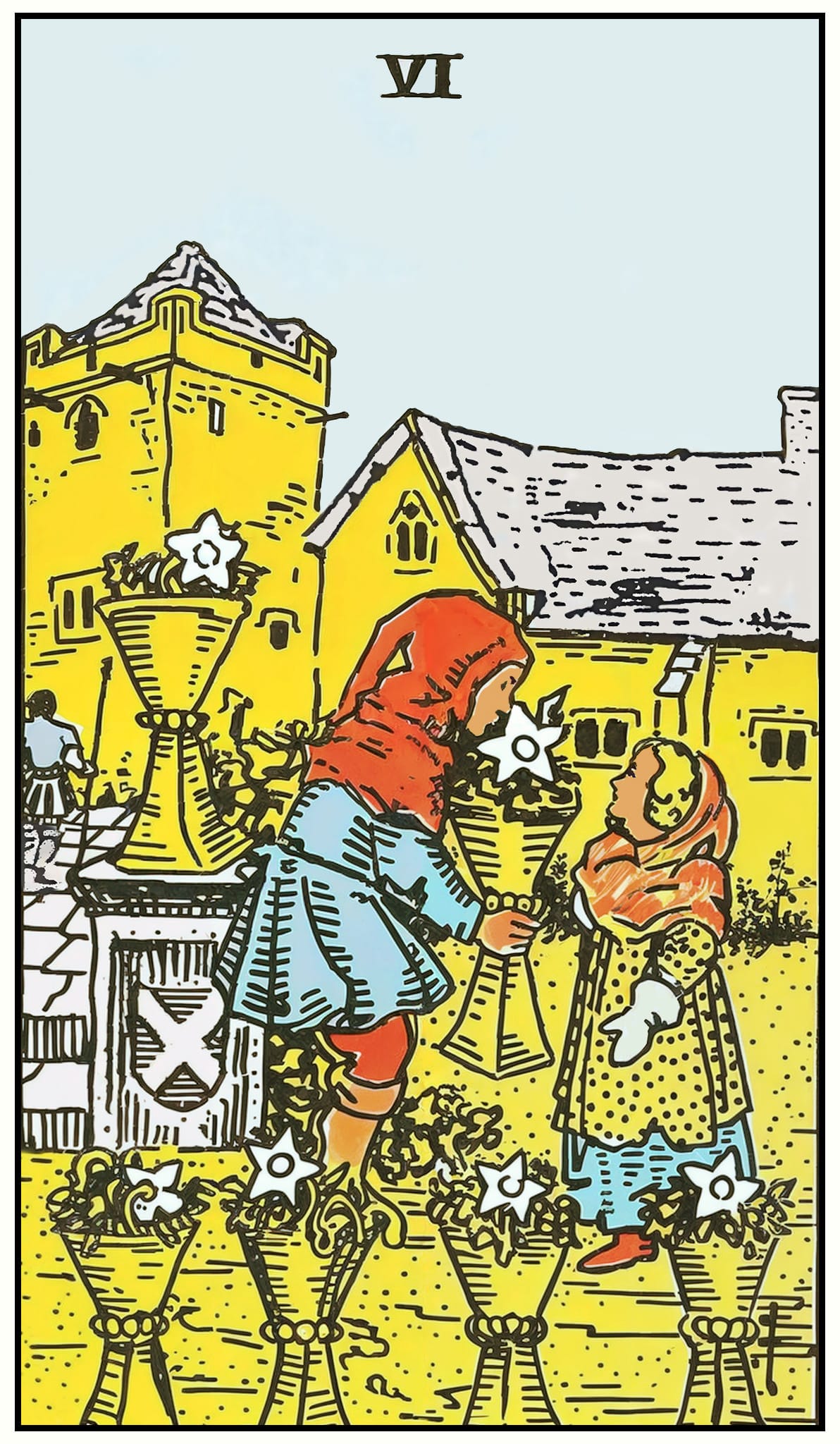
The Six of Swords is most often read as relief — the worst is over, movement is happening. This is accurate and also incomplete. The card describes transit, not resolution, and the distinction is the whole content of the reading. The swords are still in the boat. The crossing is real and the calm water is real and the arrival has not happened yet, and the card is asking the person receiving it to be honest about which part of that description applies to them — the movement, or the swords, or the shore not yet reached.