Four of Wands
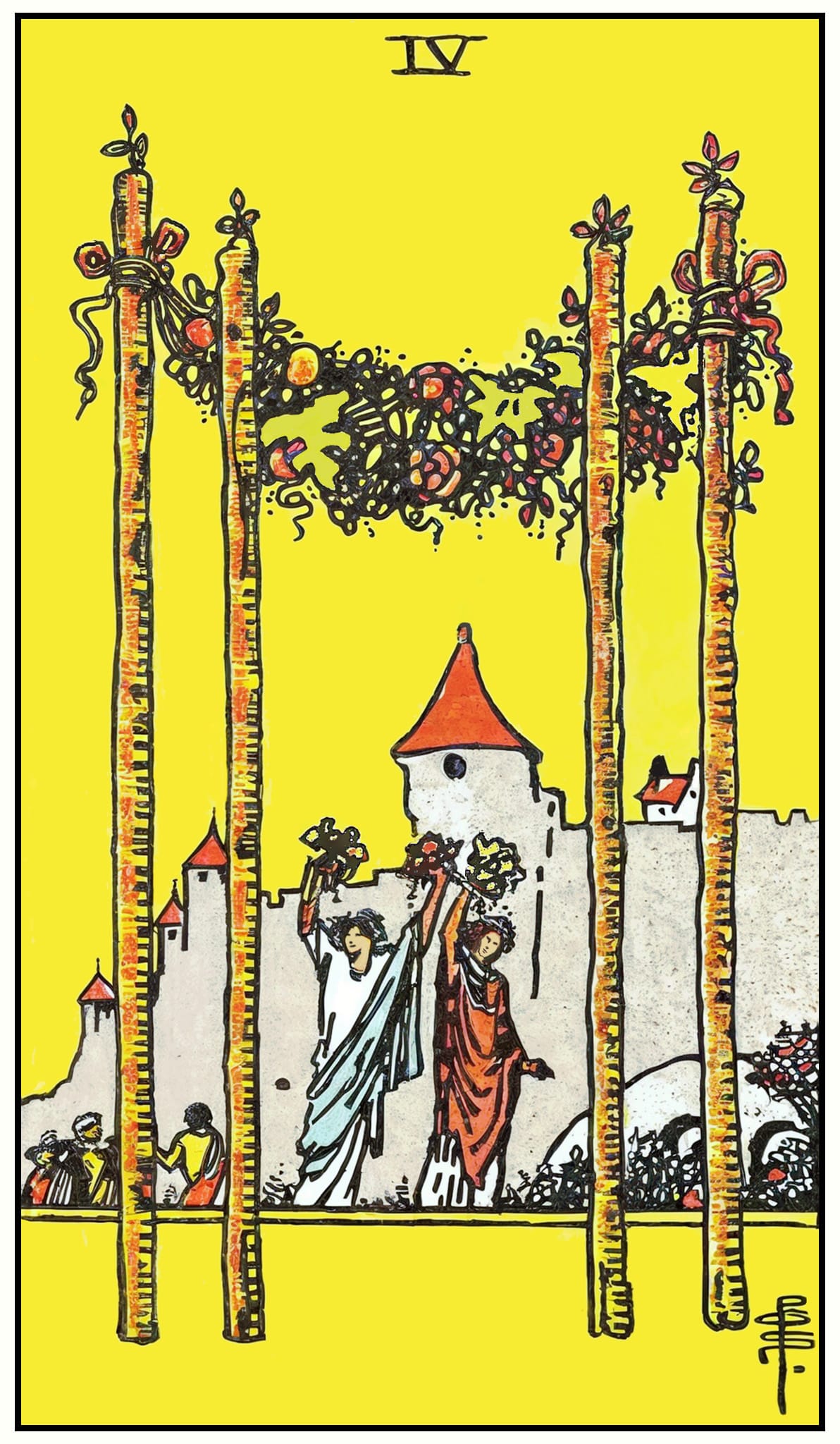
Four wands stand garlanded with flowers and fruit, forming the bones of a canopy; behind them, figures dance with raised bouquets, and further still, a castle — the first roof, open on all sides, fire earning a hearth.
The Four of Wands names the first plateau: the arrival at a milestone earned, the brief and genuine pause between the long stretch of beginning and what comes next. The four wands form the bones of a shelter — not yet a house, but proof that a house is possible. The shadow is the celebration that mistakes itself for the destination.
The genuine pause — and the awareness that it is a pause, not the end
The Four of Wands marks the arrival at the first significant threshold: the wedding, the housewarming, the milestone reached after sustained effort. People who draw this card often feel a double note — genuine celebration threaded with the quiet awareness that this is a pause, not a destination. The shadow is the celebration that mistakes itself for completion: wedding photographs replacing marriage, the launch party substituting for the work the launch was supposed to begin. The four pillars become a museum to themselves. The card is only as good as the seeker's willingness to move through it.
Fire stabilizes for the first time — and discovers that it can also rest without going out
The Four is where Wands' energy first learns that it can hold a form without burning it down. The accumulated momentum of Ace through Three has produced something stable enough to stand for a moment. Notice the openness: no walls between the pillars, only canopy above. This is shelter without enclosure — the version of stability that has not yet ossified into a defended position. This card is most often missed in retrospect; people remember the crises and forget the small clearings that made continuing possible. To recognise the Four while inside it is itself a form of attention the suit rarely gets.
The complete three-layer reading for all 78 cards — including the full psychological and archetypal layers — is in The Pocket Guide →
The milestone celebrated past its term becomes the thing that prevents the next one.
Shadow TrapThe pause extended indefinitely — the person who has made the Four into a permanent address, and whose pillars have become not a shelter but a frame for a photograph of a life that has stopped moving.
Shadow GiftThe capacity to receive the plateau fully — to celebrate without irony, to rest without guilt — and then to walk through the open sides of the canopy when the rest is complete.
Shadow readings for each card, by suit, are gathered in The Pocket Guide →
We do not read a reversal as an opposite; following Pollack, a turned card is the same energy blocked, withheld, or redirected — not inverted into its negation. A reversed Four of Wands often marks the milestone that cannot be celebrated — the arrival at a threshold that should offer rest but doesn't, either because the surrounding circumstances won't permit it or because the seeker has not yet allowed themselves to register that something was genuinely achieved.
Why Apocrypha Does Not Read Reversals as Opposites →Sixty-three symbols across the full deck — cross-referenced by card and meaning — are mapped in The Symbol Dictionary →
What in your life are you refusing to celebrate because you are afraid the celebration will make you complacent — and what would it cost you to stop for long enough to mark, genuinely, what has been built?
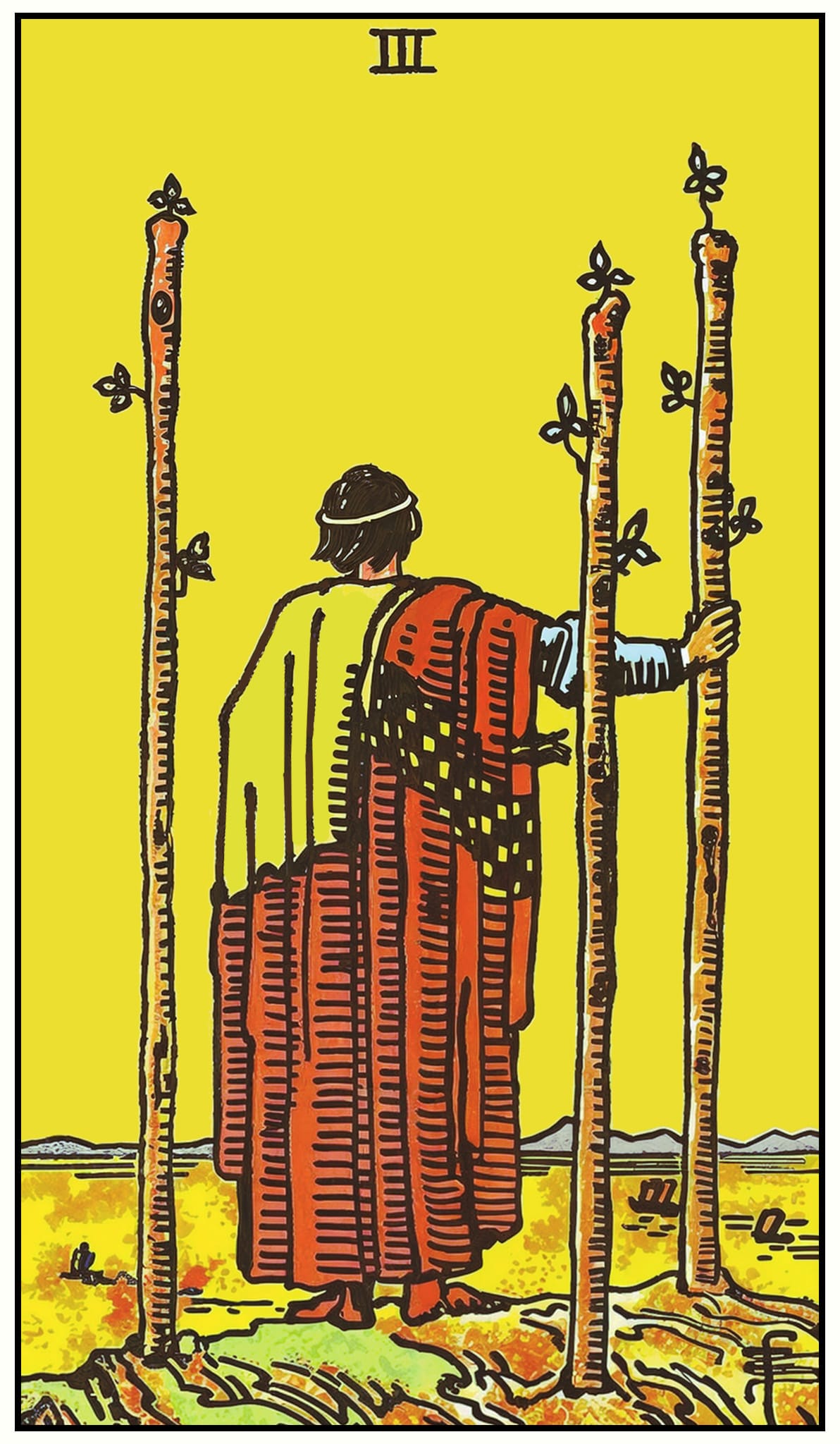
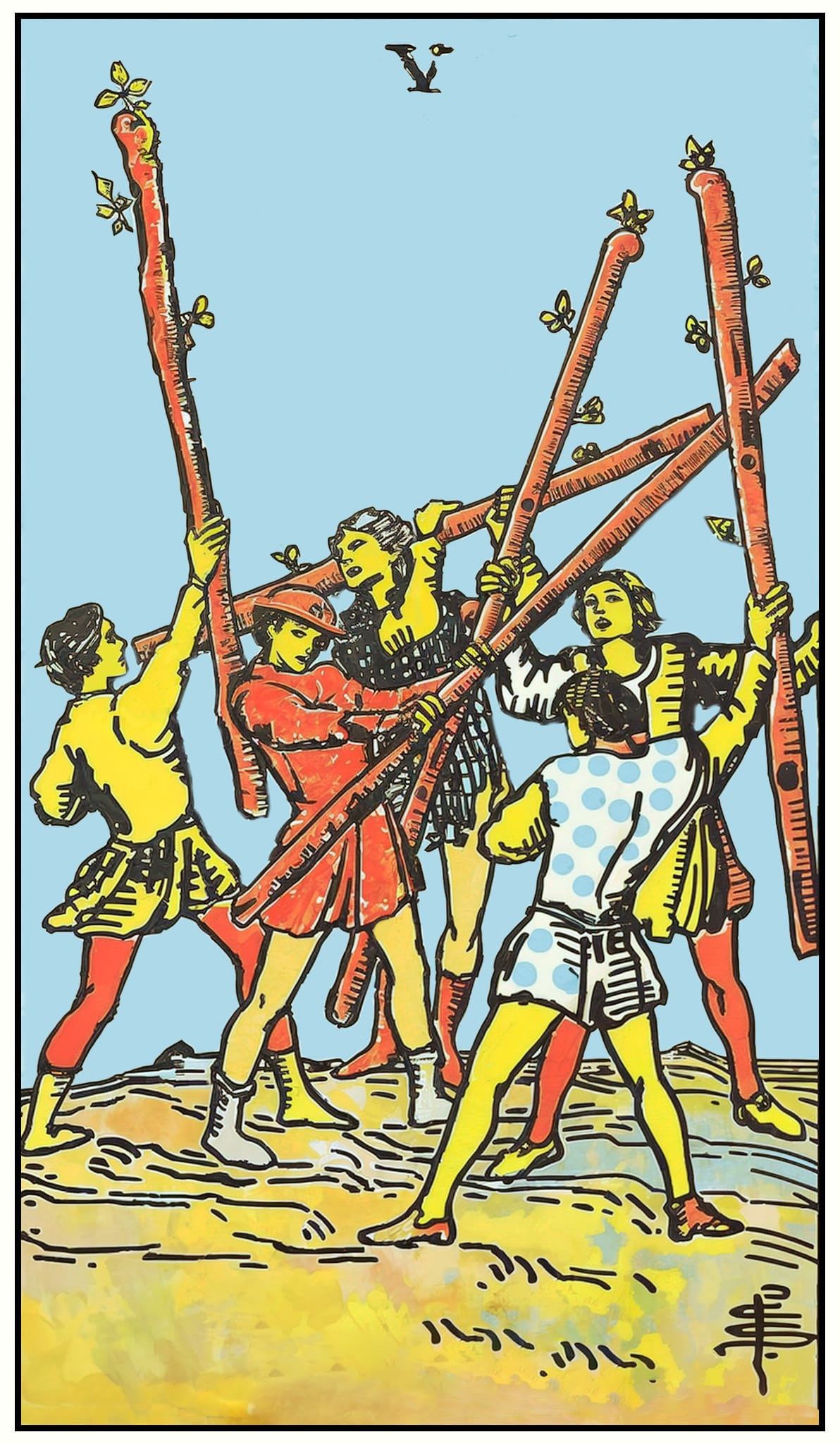
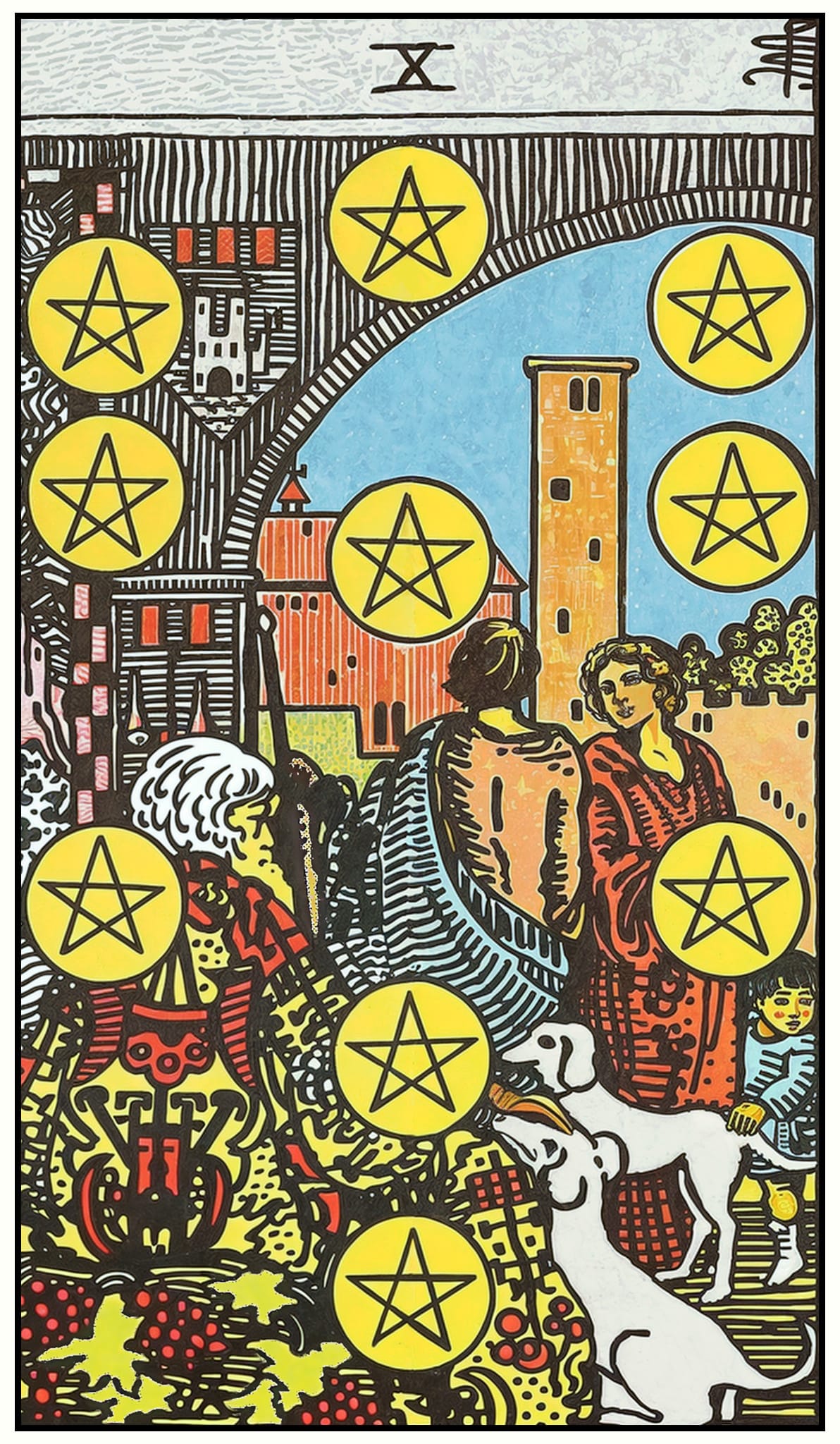
The Four of Wands is the card most consistently underread in the suit because it has no crisis in it. Readers tend to move through it quickly toward the Five's conflict or the Six's triumph. The card's actual instruction is the pause itself: to notice the threshold, to receive the rest it offers, to recognise the shelter before walking out of it. A reading that rushes through the Four has enacted the card's shadow in the act of reading.