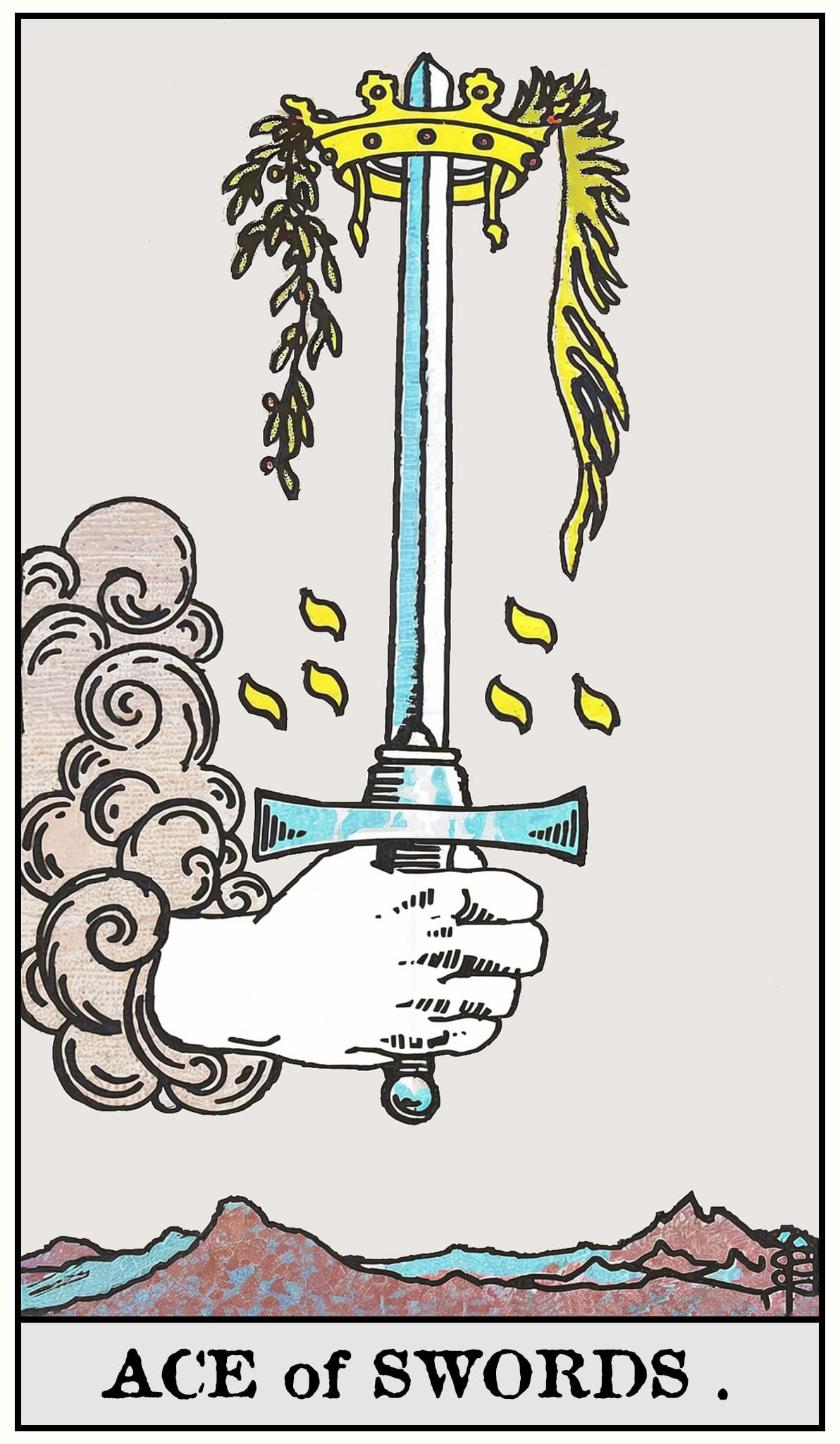
Ace of Swords
A hand emerges from a cloud gripping an upright sword, a crown floating at its tip hung with palm and olive branches — bare mountains in the distance, the blade clean, unused.
The Ace of Swords names the arrival of clarity: the kind that reorganizes the room, that shows you what the situation actually is rather than what you hoped or were told it was. The card does not offer comfort. It offers precision — and precision, in the right moment, is its own form of relief. The shadow is already present in the image: whose hand holds the sword next will determine whether this is clarity or aggression.
The diagnosis delivered plainly — and what happens to the sword after it leaves the cloud
The Ace of Swords arrives as the sentence finally written after months of circling, the conversation that had been postponed beginning, the thing that is true suddenly undeniably visible. The suit does not begin with comfort — it begins with exactness. In shadow, the Ace becomes the mind mobilized as a weapon: the person who mistakes the willingness to cut through for the virtue of cutting through, who prizes precision above proportion, and has learned to call cruelty honesty. Truth has edges. Not every edge needs to be shown in every room.
Thought before it has been recruited for an argument — the Justice impulse at its uncontaminated source
Swords is the suit of the mind meeting itself, and the Ace is its uncompromised starting point — perception before it has been bent by desire, thought before it has been assigned to a position. Pollack reads the Ace as the suit's promise: that the mind can be this clean. The rest of the suit is the evidence of what it costs to keep it that way, through conflict, grief, self-deception, and fear. What the Ace holds — the capacity for exactness before training, before pressure — is what the suit will spend its entire arc either protecting or losing.
The complete three-layer reading for all 78 cards — including the full psychological and archetypal layers — is in The Pocket Guide →
The instrument of precision becomes, in the wrong hands, the instrument of domination dressed as honesty.
Shadow TrapThe clarity weaponized — the person who has learned that cutting through produces results and has stopped noticing what the cutting is doing to the things it passes through, and to the relationships that were once the reason for any of it.
Shadow GiftThe recognition that the Ace's precision is a capacity, not a mandate — that clarity in service of truth is the card's gift, and clarity deployed in service of winning is something else that wears the same face.
Shadow readings for each card, by suit, are gathered in The Pocket Guide →
We do not read a reversal as an opposite; following Pollack, a turned card is the same energy blocked, withheld, or redirected — not inverted into its negation. A reversed Ace of Swords often marks the clarity suppressed — the thing that has been known for some time and is being held back from itself, the sentence that exists completely in the mind and has not yet been allowed to leave it.
Why Apocrypha Does Not Read Reversals as Opposites →Sixty-three symbols across the full deck — cross-referenced by card and meaning — are mapped in The Symbol Dictionary →
What do you already know — have known for some time — that you have been postponing the clarity of fully knowing? And what does the postponement protect you from?
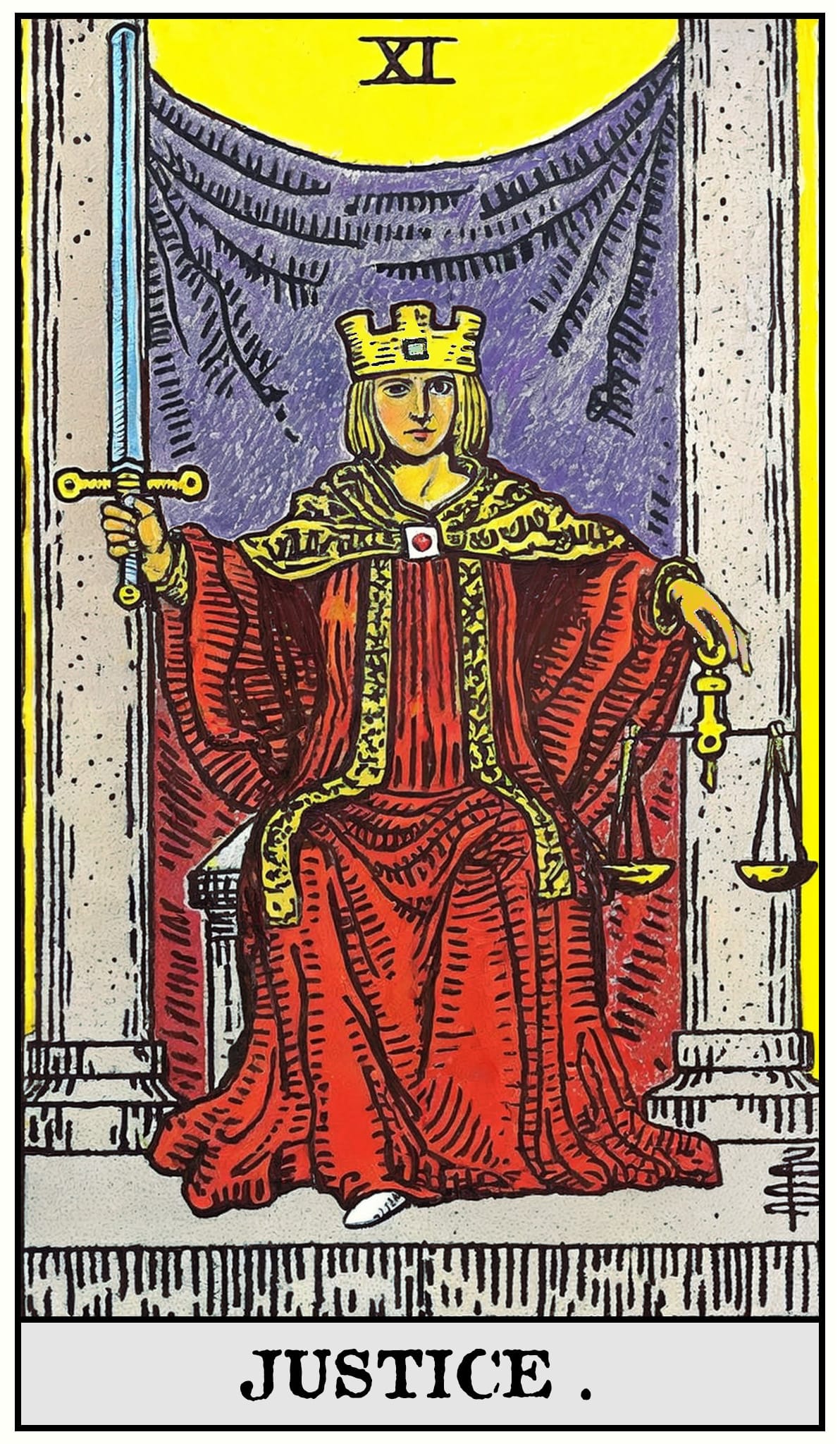
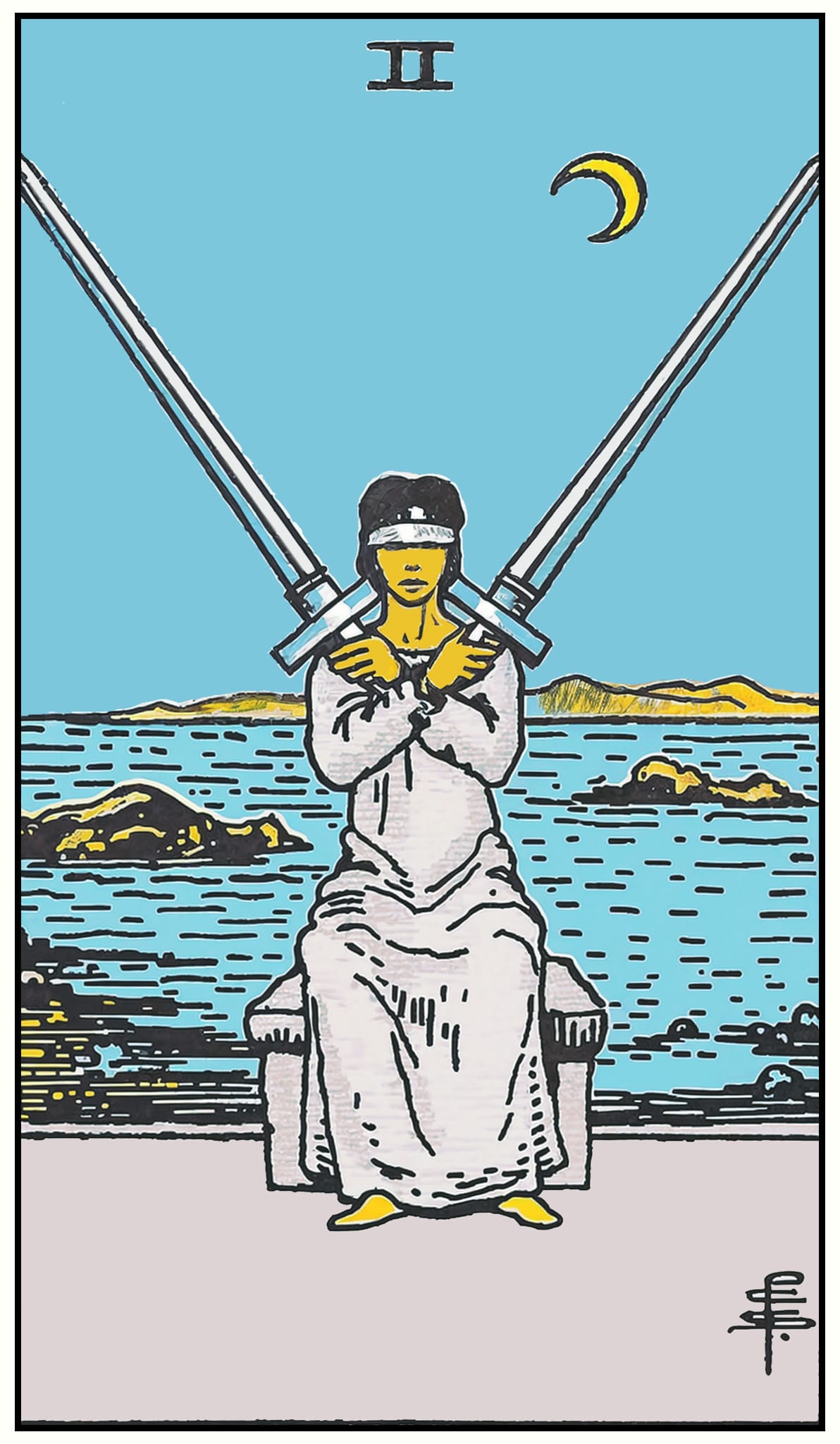
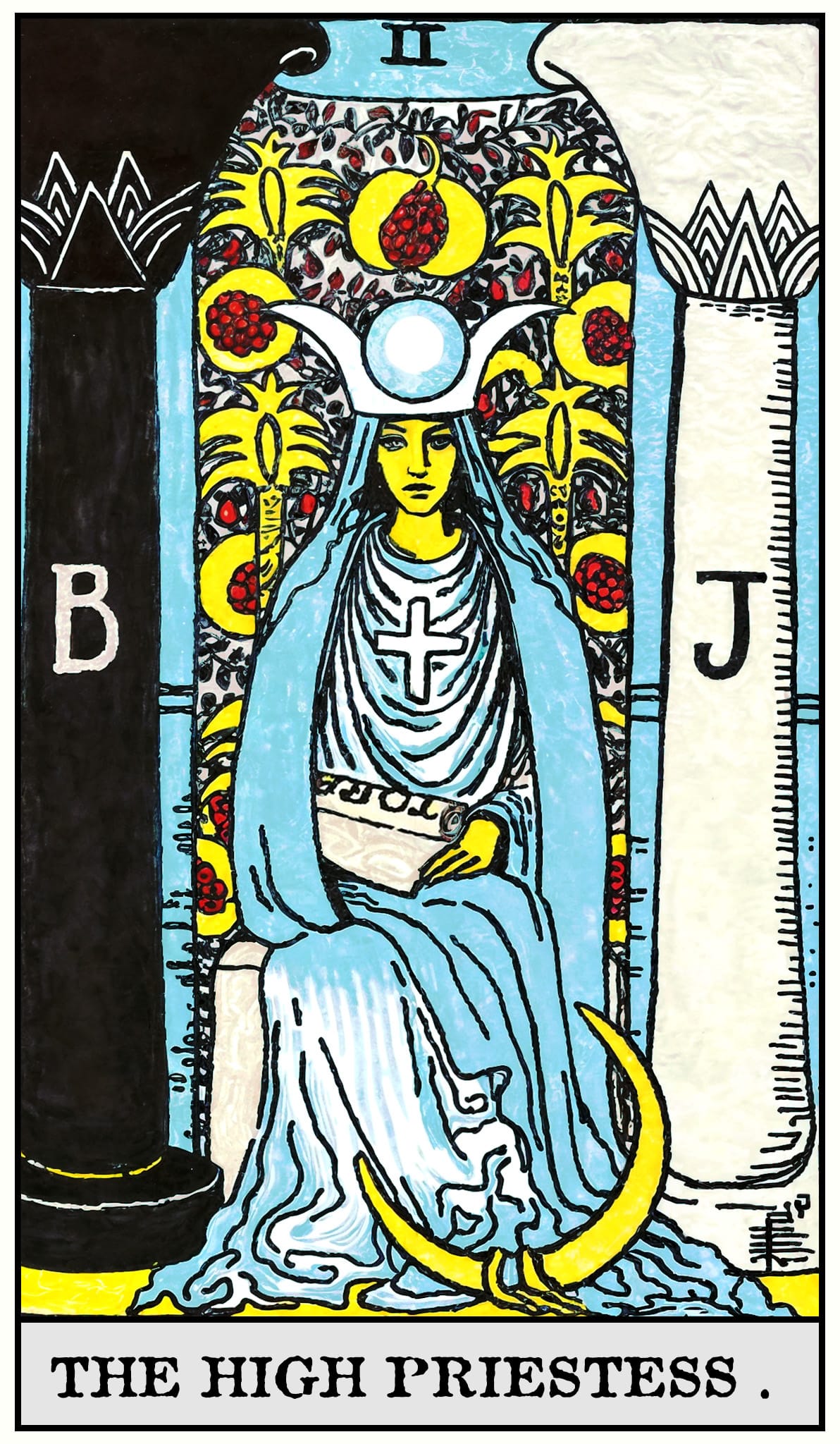
The Ace of Swords is most often read as breakthrough energy — clarity, truth, the cut that finally frees. The shadow embedded in the same image is less often discussed: the sword is still in the cloud's hand in this card, and the cloud is not handing it to anyone in particular. The question the Ace always carries is whether the precision it offers will be used in service of what is true or in service of what the holder needs to be true. Both uses feel identical from the inside.